
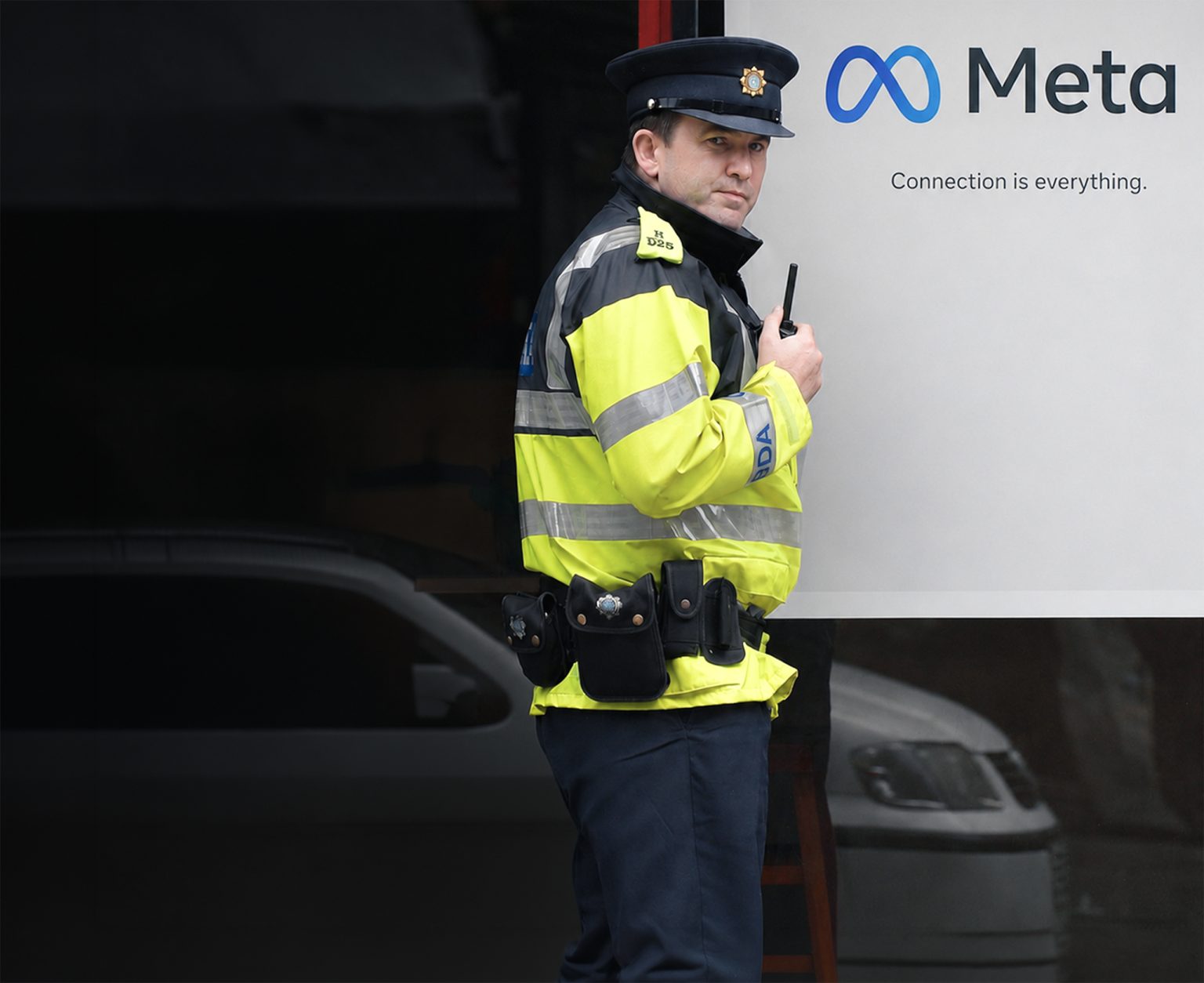
Ireland’s media regulator has launched a probe into Facebook-owner Meta over possible breaches of the European Union’s online speech regulations, highlighting its role as “one of the most powerful” media regulators in the world.
Comisiún na Meán, the Irish media regulator, has opened investigations into Meta's Instagram and Facebook over two possible infringements of the EU’s Digital Services Act (DSA), including alleged "manipulative and deceptive interface designs".
Under the DSA, relevant state authorities such as Comisiún na Meán can investigate major online platforms and search engines headquartered in Ireland, and fine them up to 6% of global turnover for breaches of the EU’s online content rules.
The rules require large online platforms to tackle what the EU defines as illegal and harmful content, with the aim of “empowering” citizens and “minimis[ing] the possibility of malicious actors” using the media platforms to “inflict harm on Europe”, according to the European Commission’s (EC) website.
Under the act, the relevant EU authorities have the ability to flag and effectively force the removal of digital content they consider problematic.
In the case against Meta announced on Monday, 5 May, the first alleged infringement relates to concerns that EU users cannot easily exercise control over what they see online and may be steered by algorithms into highly personalized feeds, the commission said in a press release.
The second suspected breach concerns whether Facebook and Instagram's interfaces “deceive or manipulate” users away from modifying the content they see.
Meta has denied wrongdoing.

Harmful Content
Speaking on the investigation, the regulator’s digital services head John Evans claimed that recommender algorithms like the ones deployed by Meta are "pushing" users into seeing more “harmful content”.
“Coimisiún na Meán recognises the concerns that many people have about recommender systems, and the potential harm that these algorithms can potentially cause by repeatedly pushing harmful content into the feeds of users, especially children and young people”, he said.
“Our message is clear: it is unacceptable for platforms to prevent people from using their rights under the law, or to try to manipulate people away from making empowered choices about whether or not recommender system feeds control what they see online.”
The investigation into Meta comes at a time when EU member states are pursuing further restrictions to online access through use of social media bans and digital ID.
France, Spain and Germany are all considering introducing social media bans for children based on age restrictions, while Ireland is working on a digital wallet which will verify a user's age based on their Personal Public Service (PPS) number.
Last month, EC President Ursula von der Leyen said the EU's age verification app for online platforms is technically ready and will soon be available to use.

EU's Technology Agenda
According to a report from the judiciary committee of the US Congress released in February, Ireland plays a “particularly important” role in the EC’s “technology agenda”.
The investigation into Meta is not the first time the Irish regulator has opened investigations into international media organizations. In the last six months, it has opened investigations into X, TikTok and Microsoft's LinkedIn over potential breaches of other EU online content rules.
The reason these global media and technology companies come under the auspices of Comisiún na Meán is that a significant number of them have their head office in Ireland.
It is for this reason that the Trump Administration’s report described the Irish regulator as “one of the most powerful in the world” and stressed that Irish elections are “particularly important to the European Commission’s tech agenda”, according to the report titled The Foreign Censorship Threat, Part II: Europe’s Decade-Long Campaign to Censor the Global Internet And How It Harms American Speech in the United States.
Comisiún na Meán is under the auspices of Ireland’s Minister for Communication Patrick O'Donovan and has been the centre of recent controversies over issues of freedom of the press in the European nation.
Following nationwide fuel protests in Ireland in April, the minister for communication said he would be ordering the media watchdog to conduct a review of “skewed” media coverage of the protests, alleging that media organizations gave preferential treatment to those in favor of the protests.
While the Irish government did not pursue an investigation, the minister’s comments elicited a strong response from Ireland’s National Union of Journalists, which described the remarks as "sinister and deeply disturbing".
Comisiún na Meán also ordered a national radio station’s staff to undergo terminology training after the commission investigated a complaint made against one of its broadcasters over the use of the phrase “illegal immigrants” by a contributor discussing US politics.
Silencing Political Opposition
Both the DSA and Comisiún na Meán came under fire in the February report from the US Congress.
The report described the DSA as “the culmination of a decade-long European effort to silence political opposition and suppress online narratives that criticize the political establishment”.
Further, it adds, “though often framed as combating so-called ‘hate speech’ or ‘disinformation’, the EC worked to censor true information and political speech about some of the most important policy debates in recent history – including the COVID-19 pandemic, mass migration, and transgender issues”.
The report claims that European regulators classify conventional political discourse on immigration and other sensitive topics as “illegal hate speech”.
In one instance, it says that TikTok reported to the EC that it censored over 45,000 pieces of alleged “misinformation”. This included political speech on topics including “migration, climate change, security and defence and LGBTQ rights”, ahead of EU elections in 2024.