
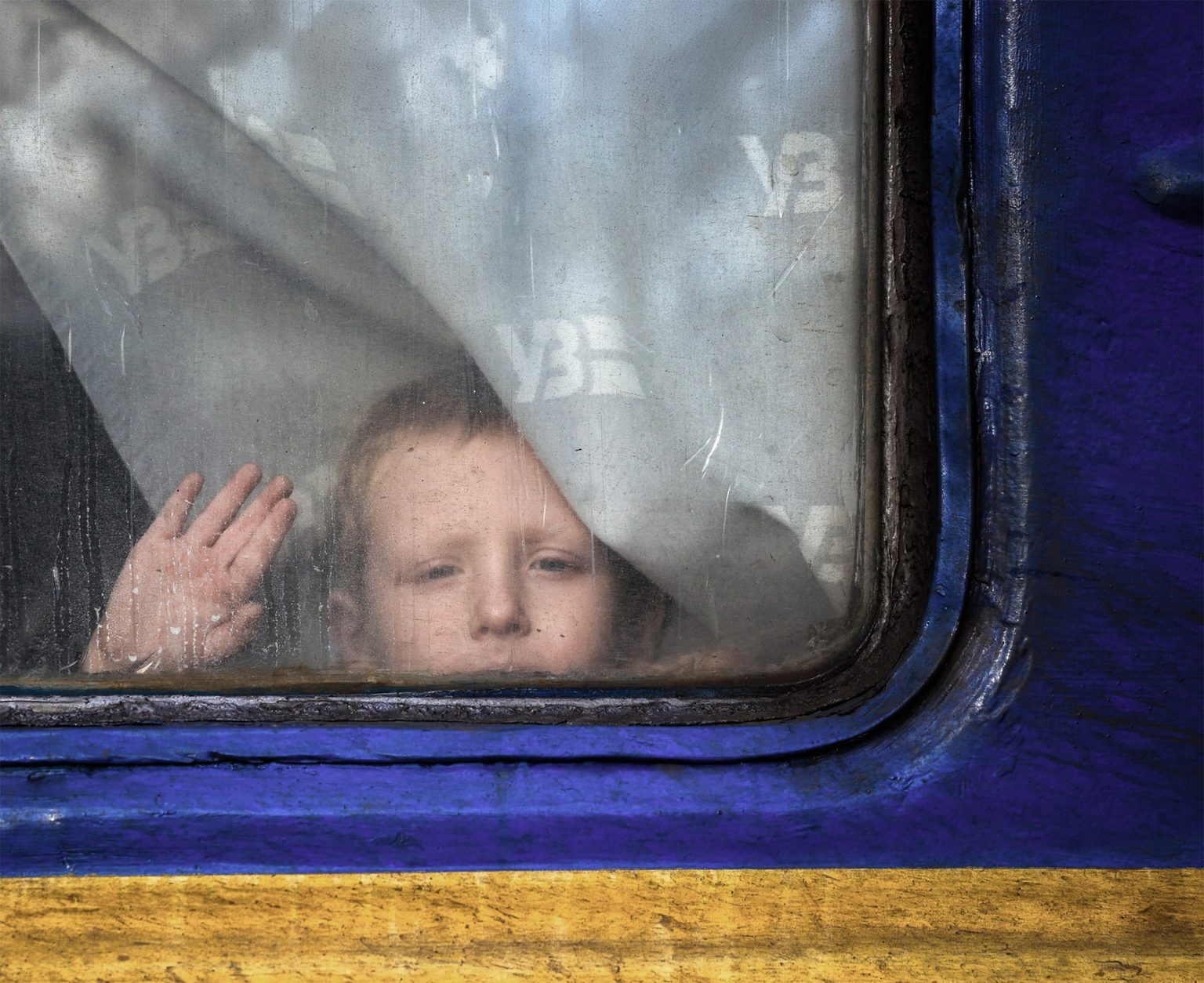
At the beginning of 2026, Ukraine’s Ministry of Justice published demographic data for 2025. Although the death rate fell by 2% from 2024, Ukraine still recorded three deaths for every child born, as it has in every year since Russia invaded. The long-term decline in births began when Ukraine was still part of the Soviet Union and accelerated in 2014.
The highest fertility rates, with occasional year-on-year increases, persist only in the west of the country, primarily in the Lviv and Volyn oblasts. Even there, however, the birth rate has fallen significantly since the beginning of the Russian invasion. The intermittent annual increases remain at the level of statistical noise, amounting to no more than a few dozen births.
One in Three
Although the Ukrainian nation has survived in recent years with a ratio of one birth to three deaths, the country is in an even worse position because that ratio does not include the hundreds of thousands of Ukrainians who have emigrated. Compared with 2021, the birth rate in 2025 fell by a factor of 1.6. At the same time, 485,296 deaths were recorded in 2025.
While there were 1.22 children per Ukrainian woman in 2021, the figure in 2025 was between 0.8 and 0.9. Population replacement requires a fertility rate of 2.1.
Analysts explain the marked decline as the result of several factors: heavy human losses beyond the male population, the separation of families, the forced departure of millions of citizens abroad and long-term insecurity and security risks.
For now, however, the exact pace of population decline cannot be predicted. It is possible that the birth rate will rise after the war. It is also possible that the war will continue for several more years and that couples who have postponed starting a family until peace comes will remain childless.
A Bleak Future
According to demographers, a catastrophic demographic decline can already be foreseen in several parts of Ukraine even if peace or a ceasefire with the aggressor were agreed immediately. The northern parts of the Sumy and Chernihiv oblasts were already dying through natural decline before the war. The invasion has only accelerated the region’s aging and population loss.
Demographers also foresee the emergence of a 30 km-wide depopulated border belt along the new Russian-Ukrainian border and possibly also the Belarusian-Ukrainian border. From Kyiv’s point of view, building schools, hospitals and other non-defensive infrastructure there will not be viable given the possible continuation of the war.
According to demographers, farmers will be able to use land in the border area and minerals can be extracted, but it will be an inhospitable and demographically lost territory. In practice, investment in the northeast may be resisted not only by the state, which is likely to focus on the development of central Ukraine, but also by the private sector.
Russia’s Demographic Winter
In 2023, Russia reached an inglorious record: fewer children were born in the country than during the difficult 1990s. In 2024, the Russian birth rate fell even lower than the year before. In 2025, it declined for the 11th year in a row, with political instability playing a significant role. Several areas, however, had already begun dying off under communism.
Because of that instability, 2025 was a watershed year. According to demographers, Russia’s birth rate fell to its lowest level in two centuries. Russia’s fertility rate stands at 1.418 children per woman, making the situation alarming despite all the measures being taken. The high abortion rate, which the Kremlin is trying to reduce, is blamed for the demographic winter, but critics say the authorities are fighting the effect rather than the cause.
Since spring 2025, official demographic statistics in Russia have been classified. Data on births, deaths and even the total population are no longer being published. Non-state observers in Russia and in exile see the move as an effort to hide the country’s catastrophic demographic trajectory.
“There are more and more Armenians, Tajiks and Kyrgyz in Moscow, and there is a tendency towards a decline in the number of members of the Slavic population”, the Moskovsky Komsomolets portal wrote on 6 November 2025, citing research by staff at the Institute of General Genetics of the Russian Academy of Sciences.
The same report was picked up by the major regional media outlet Regions, as well as by some of the most widely read portals on the Russian internet, including Lenta, which is accessible only with a Russian VPN, and Gazeta. Although migrants from Tajikistan and Uzbekistan still predominate in Russia, the share of citizens from Bangladesh and India is growing significantly. The Kremlin intends to bring in hundreds of thousands, and potentially up to several million, more migrants from those countries.
Compared with Ukraine, however, Russia has a much more secure hinterland and a more stable future, attracting hundreds of thousands of migrants and pushing its demographic indicators into somewhat better territory.
Time will tell how Ukraine copes with its population decline.