
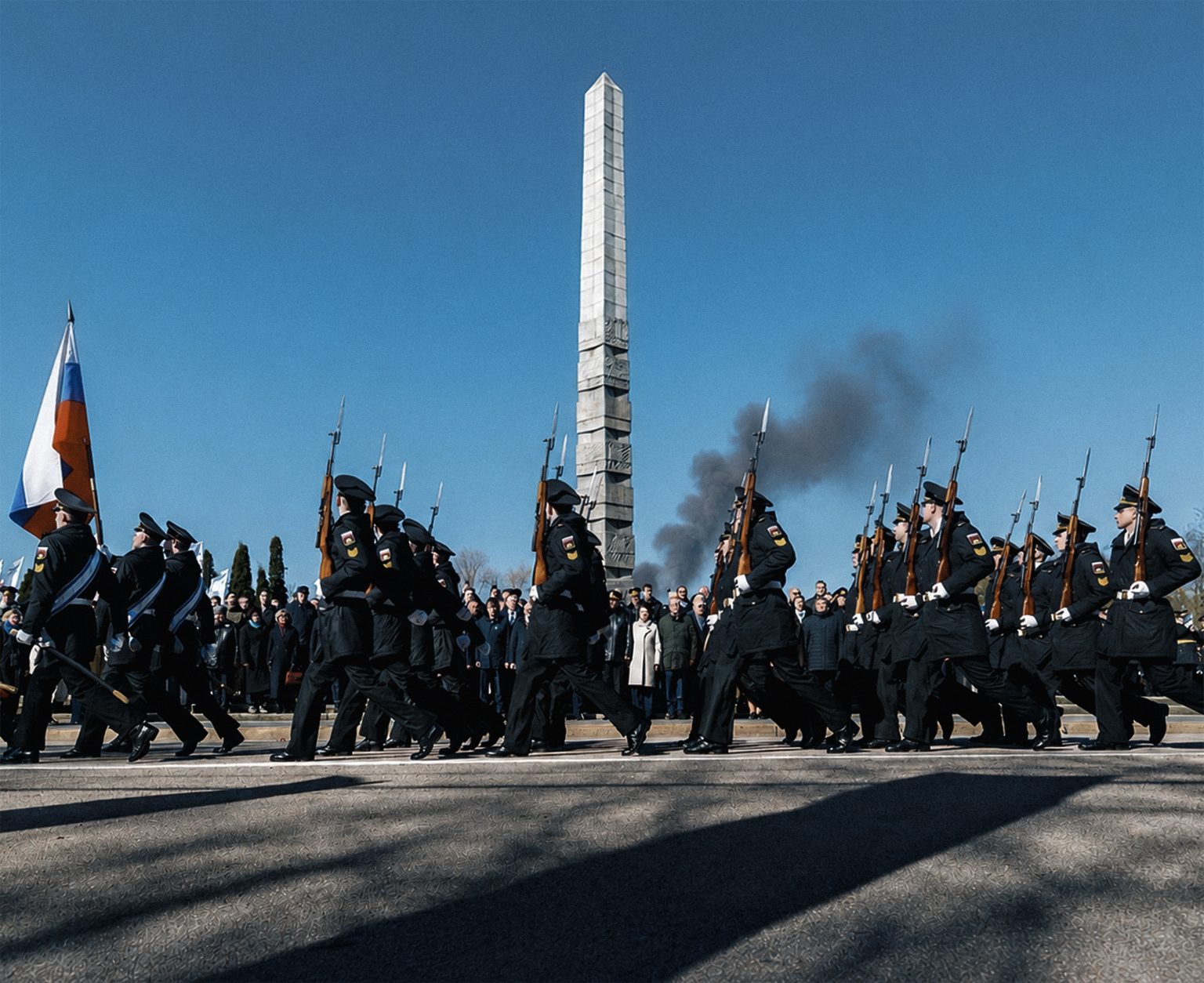
A 37-year-old programmer set himself on fire in the city of Kaliningrad on 24 February 2025, the third anniversary of Russia’s war against Ukraine.
The case was reported in early May by the Russian exile investigative outlet IStories, in cooperation with the Estonian portal Delfi Estonia and Lithuania’s public broadcaster LRT. The story drew on material from the Estonian Foreign Intelligence Service.
A Sensitive Site?
Okunev chose as the site of his suicide a memorial to the 1,200 soldiers of the Soviet 11th Guards Army who died during the capture of the city in April 1945. The symbolism may explain why the authorities tried to keep his death secret.
IStories wrote that Kaliningrad Oblast Culture and Tourism Minister Andrey Yermak was especially concerned that the self-immolation had taken place near the Great Patriotic War memorial. The symbolism was too obvious.
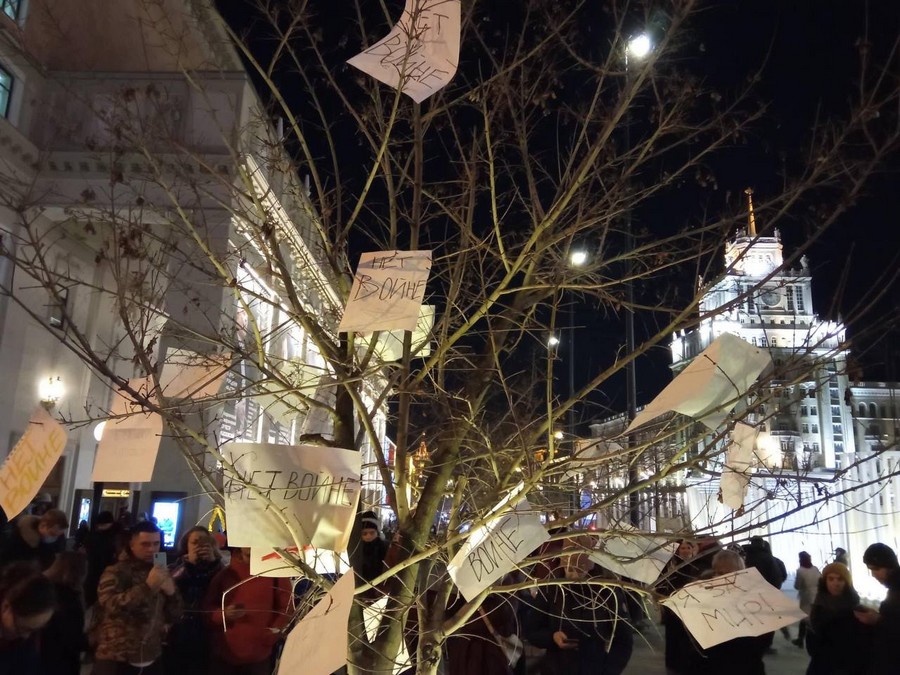
Despite the large number of security cameras in the area, Okunev’s charred body was found only shortly before 7 a.m. by a passer-by, about two hours after his death. Nearby, the words “No to War” had been spray-painted in the snow.
The city’s original name was Königsberg, known for centuries in Slovak as Kralovec and in pre-revolutionary Russia as Korolevets. Its current name dates from 1946, after part of Prussia was annexed by the Soviet Union.
From Intelligence Reports to Family Testimony
IStories wrote that it had reconstructed what happened using Russian Investigative Committee documents, interviews with Okunev’s relatives and colleagues, and European security sources.
The incident was reported to the head of the city administration, Yelena Diatlova. According to the intelligence report, she personally took charge of the matter. She was reportedly assisted by Yevgeny Maslov, the head of the local service for the protection of cultural heritage sites. At their instigation, the scene was cleaned within three hours.
Officials were probably most concerned that journalists might learn of the death. Neither Diatlova nor Maslov responded to reporters’ questions. Relatives and friends described Okunev to investigators and later to journalists as hard-working and reserved.
Historical Parallels
Self-immolation and other forms of suicide have rarely been used as acts of political conviction, but Central European history offers several examples.
At the Munich Conference in September 1938, representatives of the four powers reached an agreement that set the conditions for maintaining peace between Czechoslovakia and Germany.
The Munich Agreement specified exactly which areas Czechoslovak troops and border guards had to evacuate, and by when. The Prague government accepted the conditions for preserving peace with Germany. It ordered the mobilized army in the borderlands to abandon its defensive positions and withdraw inland.
More than 30 conscripted soldiers took their own lives within days of the order. The best-known case was that of 24-year-old Sgt Arnost Hrad. On the evening of 3 October, the crew of a frontier blockhouse in a heavy fortification was preparing equipment for removal when a shot rang out from deep inside the fortress. Hrad had killed himself. In a farewell letter to his mother, he wrote, among other things: “The order is to leave the territory. I, as a soldier, must obey, but death will relieve me of this duty.”
A commemorative plaque on the wall of the fortress has marked Hrad’s death since 1994.
A more famous example came in 1969, when Jan Palach, a history student at Prague University, burned himself to death in Prague in protest against the Soviet occupation of Czechoslovakia and the onset of normalization. His protest has been commemorated in songs, films and streets named after him in Slovakia and abroad, including the 2018 Czech film Jan Palach and works by several Italian musicians.