
Let us talk about what capitalism actually is. Karl Marx must be credited with being among the first to understand that it was not merely an economic system.
It was also an answer to the question of who was to rule. Capitalism means the rule of natural law and of the consumer. It is the rule of independent traders, producers and bankers who have acquired political power. Parliament is the expression of that power.
Their vital interest is a limited state bound by law. Such a state provides security for life and property, and enforces contracts. The social order that follows leads to rapid economic growth, the enrichment of society and technological change that gradually transforms the world.
It leads to today’s affluence, to 40 extra years of life and to the fact that we no longer have to visit most of our children in the cemetery. Unfortunately, it has also led us to forget almost completely how and why we became rich in the first place.
The First Merchant Democracy Was in Russia
The independent merchant republics were oligarchies. They were ruled by the richest merchants, bankers and manufacturers. Ironically, the first democracy with a popular vote, for men only, of course, appeared in Russia: the Republic of Novgorod, the easternmost affiliate of the Hanseatic League. The fusion of capitalism and democracy came much later.
The historian Reinhold C. Mueller wrote that Venice alone had as many as 12 banking houses around 1300, in addition to highly developed glassworks, shipyards and a number of trading firms with operations throughout Eurasia and parts of Africa. Many already had a legal form resembling today’s joint-stock company.
The same could be found in Genoa and later in Siena, Lucca and Florence. In these cities, in the “Dark Ages”, stood the headquarters of international banks with a pan-European presence, such as Banco de’ Medici. North of the Alps, they were rivaled by the Fuggers, who regarded improved double-entry bookkeeping as their secret weapon.
Correspondent banking, promissory notes, syndicated loans, tradable government bonds, structured finance products, securitization, mortgage and pawn loans, options and bearer shares were already common. Banks financed trade, mines, manufacturing and shipbuilding.
Manufacturing and maritime trade both boomed thanks to limited liability and bank financing. Branches of Italian banks in Bruges, including the Medici, Chigi and Pazzi banks, provided capital and financial instruments for the Flemish tanning industry. The Riccardi, Bardi, Peruzzi and Medici banks financed the French, English and Scottish kingdoms.
The largest Genoese financial institution, the Bank of St George, or Casa di San Giorgio, faced fierce competition in its dealings with the Spanish kingdom from the Fuggers, financiers to the Habsburgs. The Fuggers dominated banking in central Europe. They also invested heavily in other sectors, for example in mining towns in what is now Slovakia and in mines in Austria. International banks everywhere also faced domestic competitors, which in turn sought to expand abroad.
The reverse side of economic growth was recurring and devastating financial crises. Because banks operate on fractional reserves and are interconnected, they fall like dominoes across Europe in times of crisis. For the clients of failed banks, the result is often personal disaster. Crises usually begin with a political cataclysm, namely war or the inability of a large and powerful kingdom to repay its obligations to bankers.
The United Provinces of the Netherlands
The Ottoman Empire greatly weakened the northern Italian merchant republics’ main business: trade with the Far East. The later discovery of new sea routes to India, China and America destroyed that trade altogether.
As these republics began to decline, a new great trading republic emerged farther north in Europe. The United Provinces of the Netherlands could come into being and secure their independence only because the old continent was a decentralized system of states. The provinces established themselves as a political order without a king or a court. They became a “headless commonwealth”, combining secure property rights, the rule of law, religious tolerance and intellectual freedom with a high level of economic prosperity.
This had a similar effect on the peoples of other European countries as post-war Austria and the western part of Germany had on us in socialist Czechoslovakia, when we looked at them from behind the Iron Curtain. It is therefore not surprising that other nations wanted to follow the Dutch example.
The Dutch-American historian K. W. Swart noted that foreigners and Dutch alike tended to see the Dutch Republic as unique in allowing an unprecedented degree of freedom in religion, commerce and politics. In the eyes of contemporaries, it was the combination of liberty and economic supremacy that created the true miracle of the Dutch Republic.
The success of the Dutch experiment was of particular interest in England, where the idea that prosperity was the reward for liberty had already taken root.
The Dutch commercial republic was not Europe’s only example. The Old Swiss Confederacy should not be forgotten. Like the Netherlands, it was a decentralized commercial republic ruled by merchants and manufacturers, and it predated the Dutch Republic. Yet the Netherlands was of far greater historical significance, because it alone became the inspiration and model for the Kingdom of England.
British Technological Superiority
After two revolutions in the 17th century and the final expulsion of the Stuarts, Europe’s first great and powerful kingdom, England, effectively became a merchant republic. Venice writ large.
Formally, England remained a kingdom. In practice, however, it was ruled by ordinary merchants and manufacturers. The House of Commons, which still governs Britain today, is precisely that: the house of the commoners. Freedom and legal security for life and property made Britain the world’s financial and technological leader in the 18th century.
Competition between entrepreneurs leads to innovation. Innovation lay behind Britain’s technological superiority in arms and naval technology. That advantage enabled Britain to build a world empire.
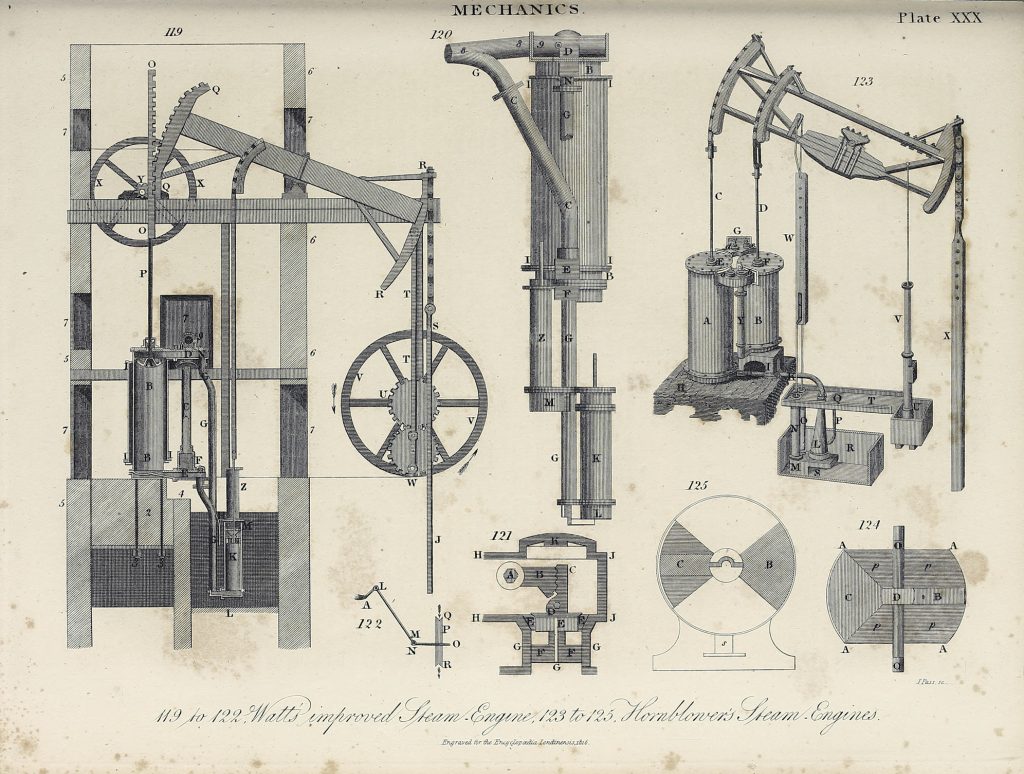
In 1769, the entrepreneur James Watt patented his improved version of the Newcomen steam engine. Steam engines entered use in 1776. The modern world was born. Thanks to capitalism and freedom, Britain became so powerful and attractive during the 18th and 19th centuries that its social model was gradually adopted across Europe. Europeans then collectively exported it to their colonies and diasporas.
As a result, between 1820 and 2020, the planet’s population increased tenfold. Over the same period, global gross domestic product per capita, measured in constant prices, increased fifteenfold. The number of people living in absolute poverty, defined as less than $2.15 a day, fell from 90% of the world’s population in 1820 to less than 10% in 2020.
Who Won the Duel of the Selfish?
The economist Ludwig von Mises wrote that capitalism does not need a monument. If you want a monument, look around you. Europe and its diaspora, the best places to live in history, were not enriched by the good, selfless, enlightened and wise rule of anointed bureaucrats and intellectuals supposedly serving the public good. Nor were they enriched by leveling regional disparities. That is the story of China. And it was a road to poverty, backwardness and a totalitarian hell with zero personal freedom.
The American historian John K. Fairbank wrote that even the mandarins had no freedom. Those of us who lived behind the Iron Curtain understand this very well. Communist rulers lived in material luxury. But the luxury of freedom, and of security for life and property, was not granted even to them.
In addition to Christianity itself, the power struggles of often selfish, greedy, avaricious and power-hungry medieval clergy, and of equally selfish, greedy, avaricious and power-hungry medieval European kings, contributed significantly to the emergence of European freedoms. Both sides in the dispute pursued their own advantage.
European prosperity was the result of a competitive struggle among selfish, greedy, avaricious and unscrupulous businessmen, who pursued no public good, only their own benefit. Their interest dictated that, in a free market, they should try to provide the best and highest-quality services to equally selfish, greedy, avaricious and unscrupulous consumers.
They still cheat and deceive. But a side effect of competition is innovation. It makes us all richer. Europe’s fragmentation also contributed greatly to the fact that European entrepreneurs were free to compete with one another and to cast off elites in different parts of the continent.
Revolts by commoners against elites would not have been possible if the old continent had been centralized like China. They would not have succeeded. The center would always have had enough power to suppress local rebellions. Europe grew rich because it was remarkably under-governed.
What Cannot Be Denied to Marx
The medieval Catholic Church began its power struggle with medieval kings triumphantly. After a few centuries, however, it was losing to them. The culmination of that struggle in northern Europe was the Reformation. But the rights and privileges acquired by the new social class, the bourgeoisie, during the contest between states and the Church were never relinquished.
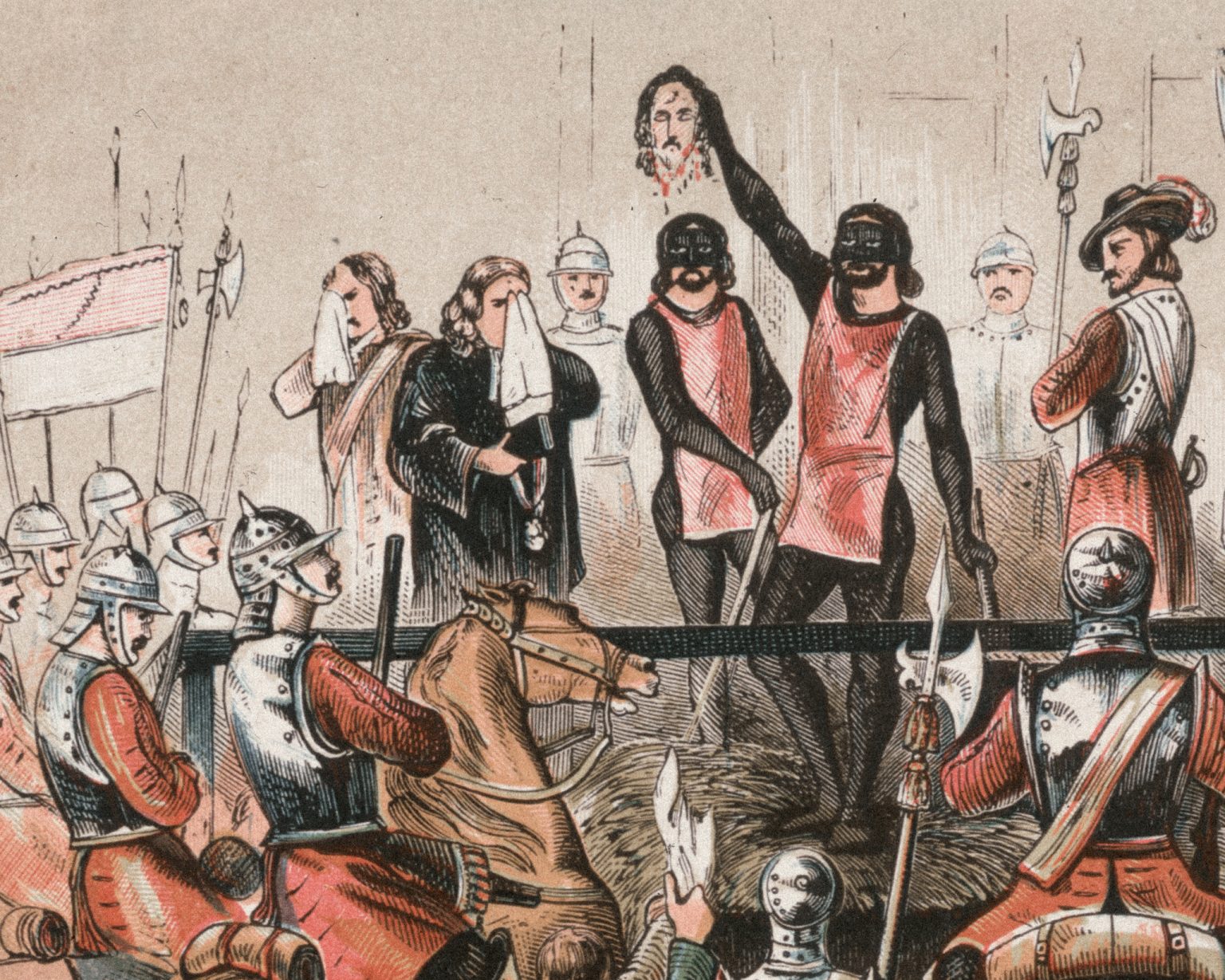
In the 17th and 18th centuries, modern European kings abandoned “medieval obscurantism” altogether and embraced modern Machiavellianism. King Charles I of England attempted to rule as an absolute monarch and began, slice by slice, to chip away at the rights and privileges gained in the Middle Ages. He ended up being beheaded.
The American historian Ralph Raico writes that Marxist philosophy and history are full of internal contradictions. But if Marxist historiography, so-called historical materialism, has any content at all, it is a technological interpretation of history. According to Marx, Engels and the theorists of the “golden age” of the Second International, historical progress takes place through the material base of society. By that they meant its technological base, the productive forces of society. These productive forces render obsolete the existing mode of production, meaning the property relations within society.
Because technology and the mode of production are subject to change, everything else must change with them. That means the entire legal, political and ideological superstructure of society must also be transformed. In 1847, Karl Marx wrote that the hand mill gave rise to society with the feudal lord, and the steam mill to society with the industrial capitalist.
Raico writes that the new understanding of European history destroys the basic claims of Marxist historiography. It holds that the colossal growth of technology in the Western world over the past millennium can be explained only by the institutional and moral conditions created in Europe over many centuries. New and more productive machines did not mysteriously and spontaneously fall from the sky, nor was the spectacular expansion of technical and scientific knowledge somehow “historically inevitable”.
As the Australian economic historian J. L. Anderson summarized, the scientific and technological standstills that followed the extraordinary achievements of the Song dynasty in China or the flourishing of early Islam show that scientific research and technology did not in themselves cause Europe’s dynamism. On the contrary, technology and science were themselves created by an interconnected set of political, legal, philosophical, religious and moral elements of society, which Marxism traditionally regarded as a “social superstructure”.
After comparing economic growth in Song China, Tokugawa Japan, the Netherlands and England, Anderson concluded that their common feature was that they emerged when government pressure on economic activity was relaxed. The French sociologist Jean Baechler wrote that whenever China has been politically divided, capitalism has flourished there.
Raico wrote that the Western world historically developed institutions and values that favored private property and the market, limited state arbitrariness and predatory behavior, and encouraged innovation and the belief that human beings are capable of improving their condition through their own actions in the marketplace.
In his book The European Miracle, Eric Jones cited Adam Smith’s famous quotation as a key explanation for the rise of Europe:
“Little else is requisite to carry a state to the highest degree of opulence from the lowest barbarism, but peace, easy taxes, and a tolerable administration of justice; all the rest being brought about by the natural course of things.”
The article draws on ideas and quotations from Ralph Raico’s The European Miracle, Lord Acton’s essay The History of Freedom in Christianity, Eric Jones’s The European Miracle, Tom Holland’s Dominion, Richard Pipes’s Russia under the Old Regime and Property and Freedom, Hernando de Soto’s The Mystery of Capital and other authors.
Hyde Park is a forum for free discussion. Published opinions do not necessarily reflect Statement’s editorial line.
The first two parts of the series, The Faith That Made Us Rich: Christianity and the European Miracle and How the Struggle Between Popes and Kings Shaped Civil Liberties, are linked above.