
The Italian economic historian Carlo M. Cipolla wrote that the Industrial Revolution was able to take place in 18th-century Europe because of the profound changes in thinking, social structure and value systems that accompanied the rise of European cities from the 11th to the 13th centuries.
The Italian-American economic historian Robert S. Lopez observed that, as trade and manufacturing gradually expanded in medieval Europe’s cities, people discovered that commerce strengthened freedom and offered a way out of feudal dependence. The most prosperous cities were those that adopted the most liberal policies. Others then tried to follow their example.
By the liberalism of medieval cities, which helped make Europe rich, we mean the tradition of Lord Acton and Adam Smith, not the version embraced by contemporary European elites.
Power Struggles
The American legal historian Harold J. Berman wrote that we need to focus our attention on a key development that began in the 11th century. At that time, Pope Gregory VII and his followers, through the Gregorian reforms, created a powerful, institutional, hierarchical and corporatist Church, independent of emperors, kings and feudal lords, and capable of frustrating the ambitions of temporal rulers. A power struggle between states and the Church began and lasted four centuries.
Lord Acton argues in his essay The History of Freedom in Christianity that Europe owed the emergence of civil liberties to the Catholic Church. In the view of the author of this article, those liberties led to capitalism, innovation and our standard of living. It was the Church that prevented any one power from dominating Europe.
The only force capable of resisting the feudal hierarchy, Lord Acton continued, was the ecclesiastical hierarchy. The conflict began, he said, when the workings of feudal power threatened the Church’s independence by subjecting prelates, high-ranking ecclesiastical dignitaries, to the same form of personal dependence on kings that characterized the Teutonic state. By that, Acton meant the Germanic feudal model of government that emerged after the fall of the Roman Empire.
“To that conflict of four hundred years we owe the rise of civil liberty. If the Church had continued to buttress the thrones of the king whom it anointed, or if the struggle had terminated speedily in an undivided victory, all Europe would have sunk down under a Byzantine or Muscovite despotism”, wrote the 19th-century English liberal Catholic, historian and journalist.
The aim of both rival parties, Lord Acton wrote, was absolute authority. Although liberty was not the goal they sought, it was the means by which secular and spiritual power mobilized nations to their aid. During the dispute, and for as long as it lasted, the cities of Italy and Germany obtained their municipalities and rights, France acquired its Estates-General, the assembly of estates that served as an advisory body to the king, and England its Parliament. The clash also prevented the return of the divine right of kings.
“A disposition existed to regard the crown as an estate descending under the law of real property in the family that possessed it. But the authority of religion, and especially of the papacy, was thrown on the side that denied the indefeasible title of kings.”
The Largest Landowner
Lord Acton does not mention my ancestral homeland, the Kingdom of Hungary. Yet the towns of what is now Slovakia also gained their urban privileges in this period. The English Parliament emerged between 1258 and 1265. The Hungarian Parliament was formed in 1298. The French Estates-General came into being only in 1302.
We were taught in history class that the granting of town rights in our country came about through a struggle between the king and the nobility, the great landowners. That is true. It is also true west of us. But who was the greatest landowner in Europe?
Around 1300, historians estimate that the Catholic Church owned 20%–30% of the land in Europe. In some countries, such as France, the figure was 10%–15%. In others, such as England, it was 25%–30%.
In Hungary, it was 10%–20%. The king of Hungary held far less in his own kingdom. Under feudalism, a system in which a man’s social status was based on land ownership, the Catholic Church was by far the largest landowner in Europe. No European king came close to it in that respect.
But land was not all the Church possessed. In addition to its own estates, it was entitled to tithes from the produce of the landed nobility and even from royal domains. That made it the richest institution in Europe at the time.
Nor was that all. Its priests and prelates could be tried only by their own courts, under the privilegium fori, the privilege of the court, and were subject only to canon law.
The king had no jurisdiction over them. Certainly, there were moments when kings lost their temper and their nerve. One example was St Thomas Becket, Archbishop of Canterbury and lord chancellor of the Kingdom of England. Another was St John of Nepomuk, canon of Prague and vicar general.
The pope had the status of a head of state and was regarded as God’s deputy on earth. Even kings believed in that God, although they were militarily stronger and could overpower and capture the pope by force. That happened more than once. All these pieces formed a mosaic that taught European states and rulers to respect an authority other than their own.
Who Paid Taxes to Whom
Medieval taxation is also revealing. Who was to tax whom? Was the Catholic Church to tax the king, or the king the Catholic Church? According to medieval canon law, including Gratian’s Decretum, the tithe was understood as God’s share of all the produce of the earth. In theory, rulers were therefore supposed to pay tithes to the Church from the yield of royal lands.
Charlemagne, for example, paid his tithes honestly. Later, monarchs developed the legal view that their duty to God had already been fulfilled by founding monasteries and donating whole estates to the Church. From their point of view, the crucial point was that such gifts were voluntary.
Kings considered themselves sovereigns. If they acknowledged an obligation to pay taxes to the Church, it would mean that they were subordinate to its authority. That happened to King John of England, known as John Lackland, who in 1213 recognized England as a fief of the Holy See and undertook to pay an annual tribute to the pope.
Kings, in turn, tried to tax the Church. One favored method was revenue from vacant offices, known as regalia. When a bishop or abbot died, the king often delayed the appointment of a successor. During the vacancy, all income from church lands and estates went directly to the royal treasury. Another method was to avoid the word tax and ask for “voluntary” donations, or benevolentia.
Contributions to the defense of the kingdom were another device. All nobles were obliged to raise and fund an army in the event of a military threat. In theory, the clergy were too. The matter was complicated, however, because the Church often had extensive financial obligations to individual kings and kingdoms. Most of the time, the parties somehow reached an agreement.
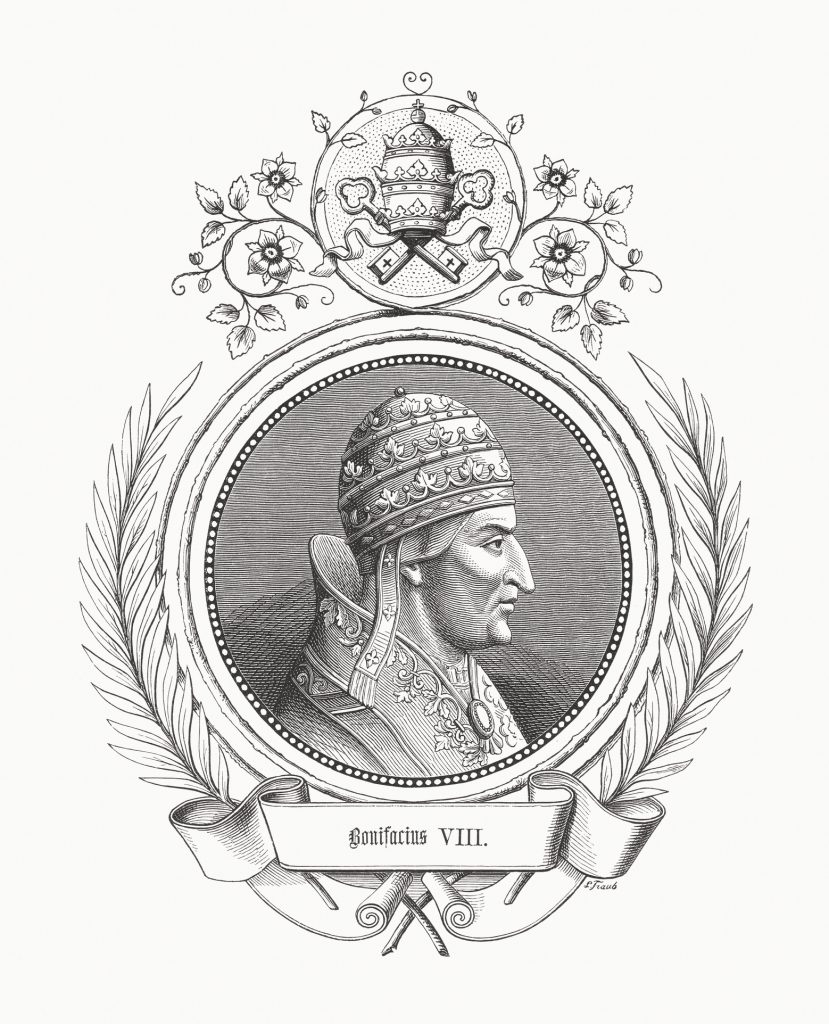
The French king Philip IV, known as Philip the Fair (1268–1314), tried to tax the clergy without the pope’s consent, arguing that the Church had to contribute to the protection of the kingdom in which its possessions lay. That provoked a bitter dispute with Pope Boniface VIII, including the famous papal bull Clericis laicos. In it, the pope threatened to excommunicate any ruler who attempted to tax the clergy without papal consent. In this case, however, Boniface lost. The defeat eventually contributed to the Avignon Papacy.
No Taxation Without Consent
Gradually, the principle spread to society as a whole. The British historian A. R. Myers wrote that after the introduction of parliaments, rulers accepted that, apart from their ordinary revenues, no taxes could be introduced without parliamentary consent. That was the case almost everywhere within Latin Christendom.
By using its power over taxation, parliament often influenced a ruler’s policies, especially by preventing military adventures. In this context, St Thomas Aquinas’s treatment of taxation as an exceptional and morally fraught act of rule is revealing.
The historian of economic thought Jacob Viner pointed to the medieval papal bull In Coena Domini, which was republished annually until the late 18th century. The bull threatened excommunication against any ruler who imposed new taxes or increased old ones, except as provided by law or with the pope’s consent.
Most people today assume that the principle of no taxation without representation is a modern one. They believe its authors were the enlightened founding fathers of the United States, who, because of taxes imposed on tea by the king of England without their consent, threw a tea party in Boston Harbor in December 1773.
That is exactly the interpretation ChatGPT offered me as well. As we can see, most people are deeply mistaken. Artificial intelligence is programmed in such a way that a person who does not know the right answer and asks a question is given the wrong answer as historical fact. Interestingly, in my experience, ChatGPT is always wrong in a left-wing, anti-Christian and anti-Catholic direction.
The English historian A. J. Carlyle, in the conclusion to his monumental study of medieval political thought, summarized the basic principles of medieval politics. All, including the king, are bound by law. A ruler without law is not a legitimate king, but a tyrant. Where there is no justice, there is no community. There is a contract between the ruler and his subjects by which both parties are bound.
The Magna Carta of Liberties
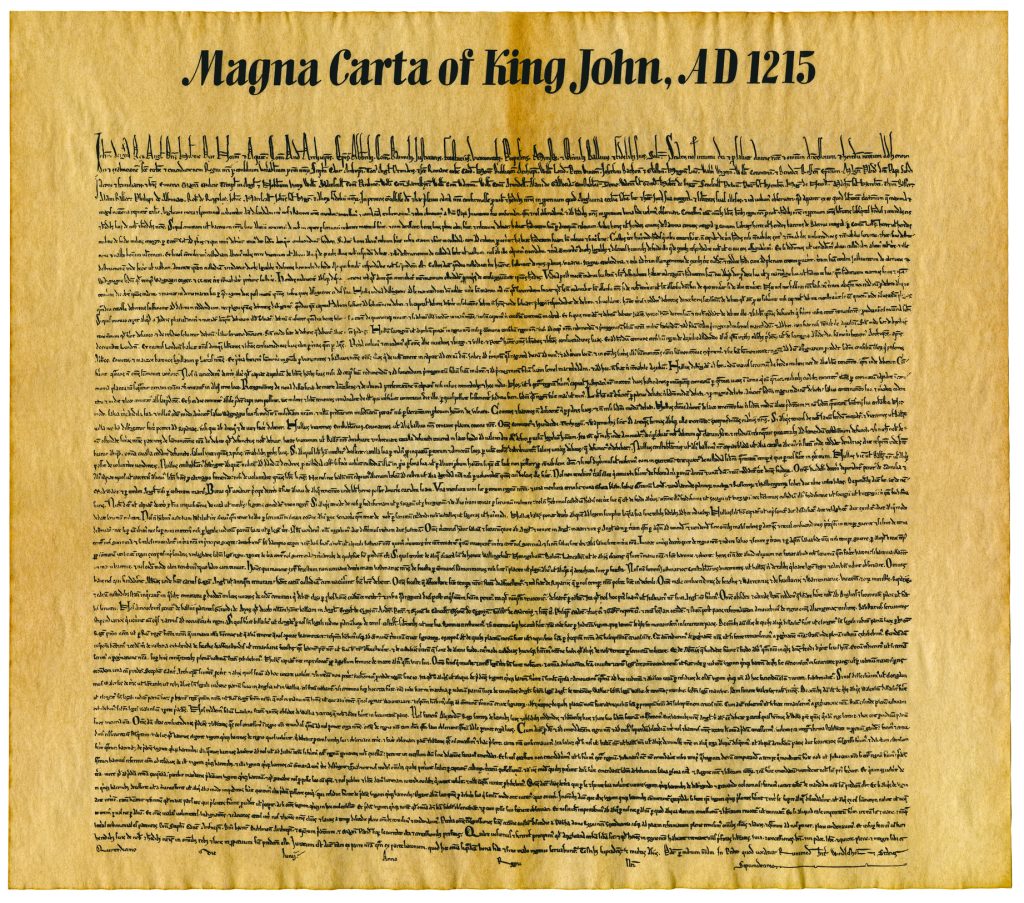
In 1215, King John of England, known as John Lackland, which must have been quite an epithet for a medieval king, confirmed Magna Carta Libertatum, the Magna Carta of Liberties, with his seal at Runnymede near London. The commander of the army of barons, the landowners who forced the king to sign the Magna Carta, was Baron Robert Fitzwalter. But the intellectual engine of the movement that articulated the landowners’ demands was Stephen Langton, Archbishop of Canterbury. He represented the largest landowner in the Kingdom of England: the Catholic Church.
Magna Carta Libertatum contains the principle of the rule of law. No one, not even the monarch, stands above the law. Articles 39 and 40 are considered forerunners of habeas corpus, the fundamental principle under which the state cannot arbitrarily imprison a person without a judicial decision and the possibility of defense, and of the right to a fair trial.
No free man was to be arrested, imprisoned or deprived of his property without the lawful judgment of his equals or according to the law of the land. The charter limited the king’s right to levy taxes arbitrarily without the consent of the council, the predecessor of parliament. It is almost certain that this document, now regarded as one of the cornerstones of democracy, the rule of law and the protection of human rights in Europe, was written by a medieval Catholic archbishop and his lawyers.
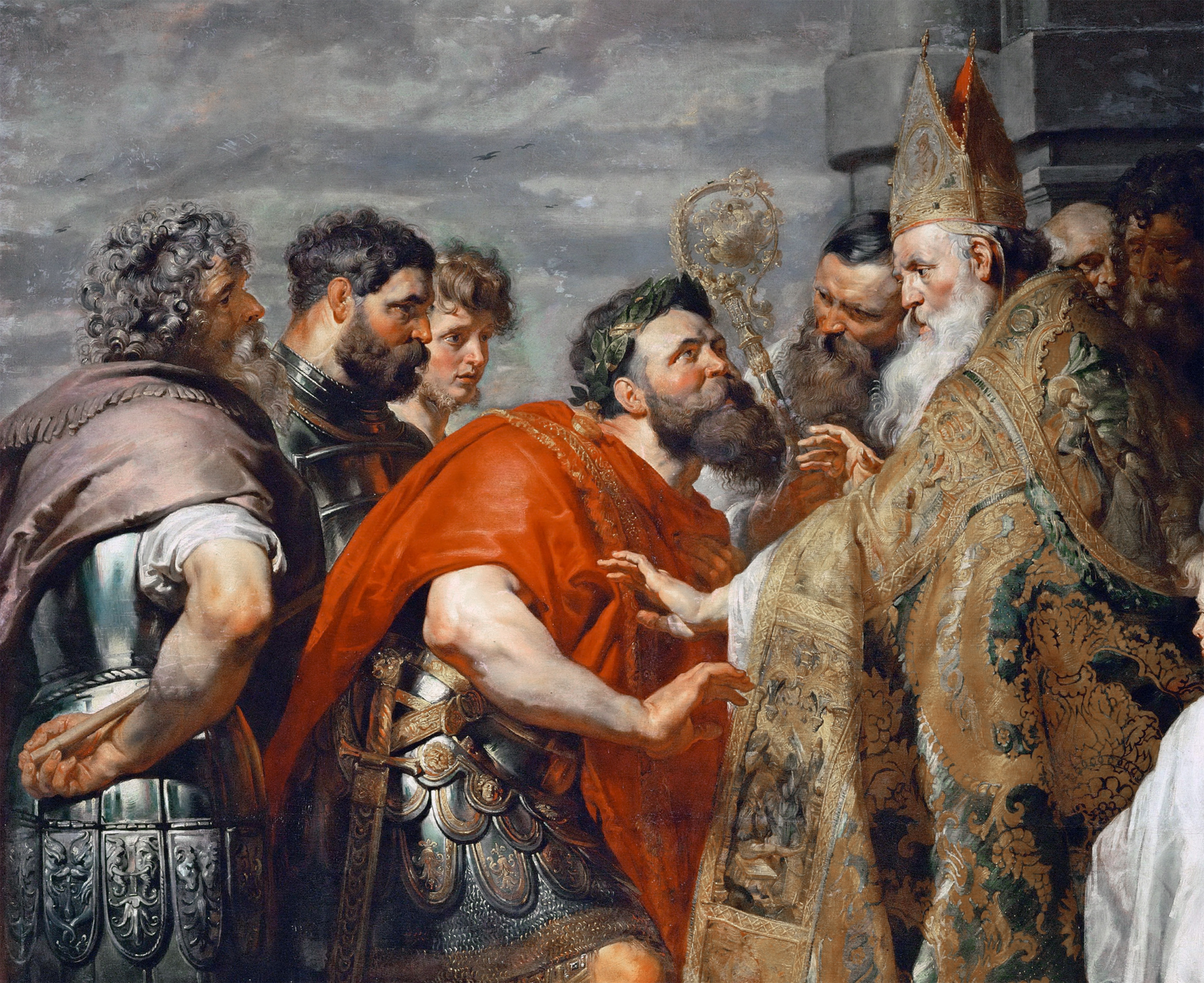
During four centuries of struggle between the Catholic Church and the feudal kings, both sides alternately won and lost. There was the humiliation of the emperor at Canossa, but also the captivity of the popes in Avignon. In our school history, the Investiture Controversy, the great power conflict between the popes and emperors of the Holy Roman Empire in the 11th and 12th centuries over who had the right to appoint bishops and abbots, was perhaps dealt with in three paragraphs.
The average secondary-school graduate knows nothing about the real significance of the medieval struggle between Church and state for the emergence of our liberties. We were taught that the Catholic Church was an obedient ally of the feudal and later bourgeois state. According to Karl Marx and Vladimir Ilyich Lenin, it supposedly served as the opium of the people in the supposedly Dark Ages. As we can see, the reality was quite different.
Celibacy Made the Church Rich
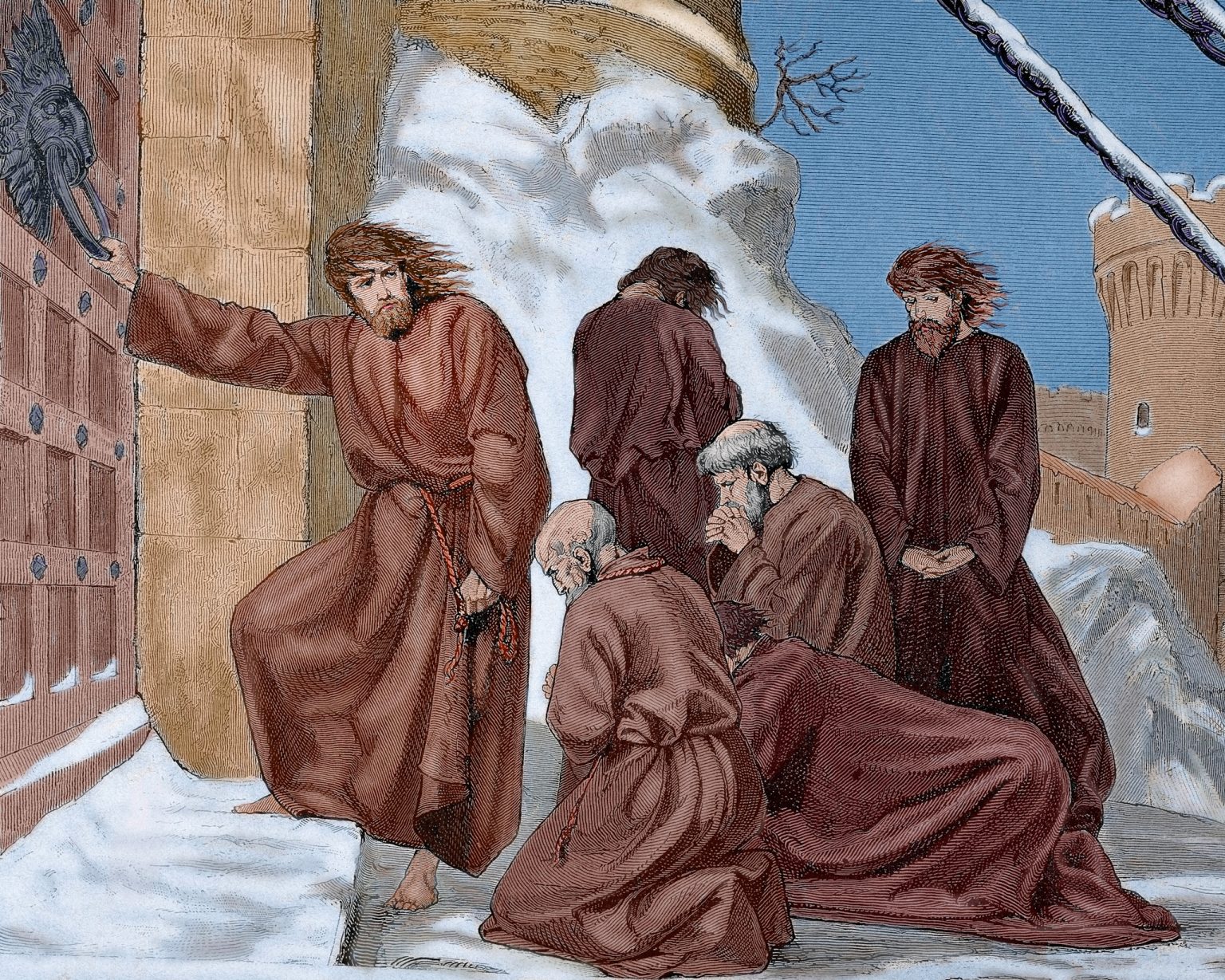
Priestly celibacy must also be mentioned. Pope Gregory VII was behind it. Through the Gregorian reforms, he created a powerful, hierarchical and corporatist Church. He was also the pope before whom Holy Roman Emperor Henry IV stood barefoot and in penitential garments in the snow for three days outside Canossa in 1077.
The economic consequence of celibacy was that parish property did not pass into the private ownership of a priest’s family, but remained with the Church. Gradually, that property only grew. Without priestly celibacy, the Catholic Church would not have become so powerful and wealthy. Nor would it have been able to act as a counterweight to the medieval states.
The four-century power struggle between the Catholic Church and the medieval states had an unintended consequence. As Nathan Rosenberg and L. E. Birdzell observed, a new social class arose, consisting of merchants, capitalists and manufacturers “with immunity from interference by the formidable social forces opposed to change, growth, and innovation”.
Capitalism in Europe came into being through political anarchy. The British economist John Hicks wrote: “The Mercantile Economy, in its First Phase, was an escape from political authority, except in so far as it made its own political authority. Then, in the Middle Phase, when it came formally back under the traditional political authority, that authority was not strong enough to control it.”
But capitalism, Europe’s greatest invention because we owe all other inventions to it, was not born in the continent’s great kingdoms. It was born in the small merchant republics of northern Italy. Small independent merchant republics, known in English as maritime republics, could exist in Europe because no universal empire dominated the continent. The Alps helped a great deal. The power and financial operations of the Catholic Church helped even more.
The article draws on ideas and quotations from Ralph Raico’s The European Miracle, Lord Acton’s essay The History of Freedom in Christianity, Eric Jones’s The European Miracle, Tom Holland’s Dominion, Richard Pipes’s Russia under the Old Regime and Property and Freedom, Hernando de Soto’s The Mystery of Capital and other authors.
Hyde Park is a forum for free discussion. Published opinions do not necessarily reflect Statement’s editorial line.
The argument will continue in a third part, to be published soon, titled Capitalism Was Born in Free Cities, Not in Factories. The first part of the series, The Faith That Made Us Rich: Christianity and the European Miracle, is linked above.