
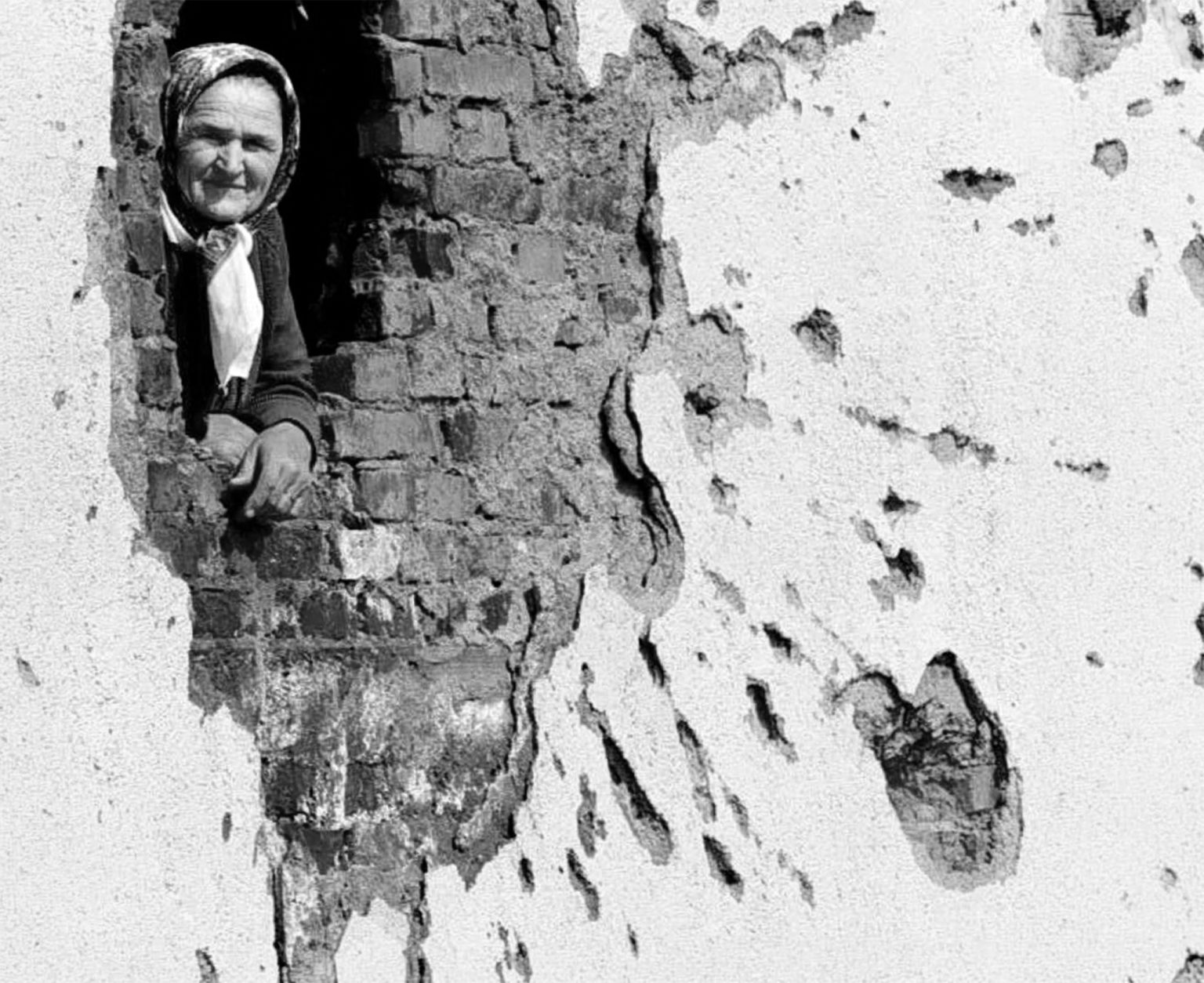
In February 2022, war broke out in Ukraine. A year and a half later, conflict erupted in Israel and the Gaza Strip. Alongside these widely reported wars, civil conflicts have continued in Libya, Ethiopia, Yemen and, more recently, Syria.
Shortly after the death of Pope Francis, Statement spoke to Marek Lisansky, a prominent Slovak diplomat who represented Slovakia at the Holy See and the Order of Malta for more than six years. Following the example of the late Bishop of Rome, the former ambassador described this series of conflicts as a “chain of wars” encircling the Sahara and the whole of Europe, and extending into the EU’s front yard: the Balkans.
Data from the Council on Foreign Relations’ Global Conflict Tracker shows that battlefields around the world have expanded over the past two decades. Long-standing conflicts in Israel and Palestine, Iraq, Iran, Kurdistan, Kashmir, the West Bank, Mexico and Colombia are also increasingly spilling over, with further repercussions from Venezuela, Russia and Ukraine.
The last war on the edge of that chain came to a de facto end at the beginning of the millennium. At its start stood the Socialist Federal Republic of Yugoslavia. By the end, in 1999, only Serbia and Montenegro, which became independent in 2006, were still understood as Yugoslavia.
The ethnic conflict in the former Yugoslavia was marked by a brutality that European nations had not seen since World War II, at least 50 years earlier. One of the main factors behind that brutality was religious division, whose roots lead back to where all roads once led.
Illyricum and the East-West Divide
From the reigns of Emperors Diocletian and Constantine I at the latest, Roman administration had been attempting to reorganize itself. The provinces were too small to be governed easily from above. Additional layers of state apparatus, and with them bureaucracy, therefore began to be added.
Several provinces formed a diocese, which was not identical to today’s ecclesiastical dioceses, although the latter drew inspiration from the Roman model. Several dioceses then formed a prefecture. According to one exceptionally well-preserved undated source, the Notitia Dignitatum, there were four: Gaul, which included Hispania and Britannia; Italy and Africa; Illyricum, including Pannonia and Dalmatia; and Oriens, or the East.
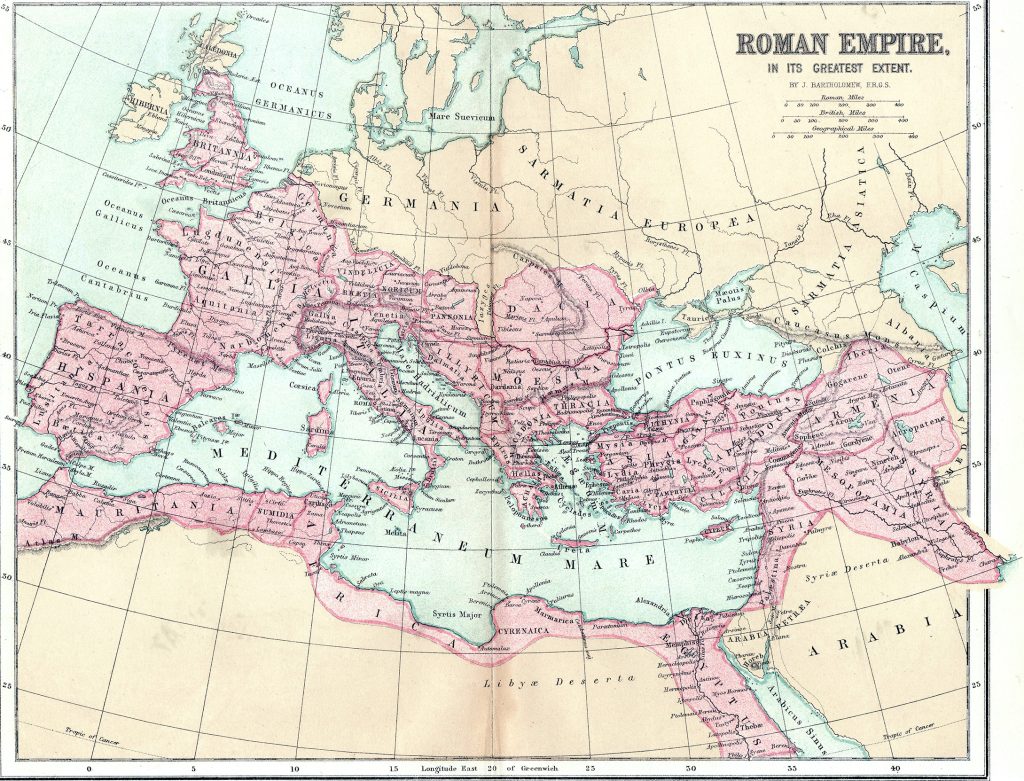
Before Constantine’s reign, three prefects were commonly appointed. After his death in 337, his sons divided the empire into quarters, with two ruling as greater emperors, or augusti, and the other two as lesser emperors, or caesares. On the basis of that arrangement, four prefects were appointed regularly from 395 onwards.
Illyricum was the only prefecture that repeatedly appeared and disappeared over the course of half a century. The last non-Christian emperor, Julian the Apostate, dissolved it in 361. His great-nephew Gratian restored it in 375. In 379, however, he downgraded it to a diocese, divided it in two and made the part known as Pannonia subject to the Western Roman Empire.
After the death of Theodosius I in 395, however, the western augusti also claimed Eastern Illyricum. Theodosius’ grandson Valentinian III, as western augustus, later refused to abandon the claim to the territory.
Despite the confirmation of Eastern Illyricum as an administrative part of the Eastern Roman Empire, its ecclesiastical organization fell under the See of St Peter. The bishops of the whole Western Balkans were thus nominally subordinate to the Roman pontiffs, whose vicars usually resided in Sirmium, now Sremska Mitrovica in Serbia, or Thessaloniki in modern Greece.
The intermingling of Latin and Greek Christianity created ambiguity, and historians cannot determine precisely when the prefecture separated from Rome. The earliest possible period appears to be before 692, the year of the so-called Quinisext Council, or Council in Trullo, which was not recognized by the Roman Church.
The council rejected and condemned practices of the Latin Church, especially the prohibition on married men entering the diaconate or priesthood, as well as the observance of fasting on the Saturdays of Lent.
The first half of the ninth century, and therefore the Photian schism, offers another possible period for considering the transition from Rome to Constantinople. Photius, the patriarch of Constantinople who sent Constantine and Methodius to the Slavs, refused to recognize Pope Nicholas I’s claim to ecclesiastical jurisdiction over Illyricum, Sicily and Calabria, and condemned the western dogma of Filioque.
The dispute remains important in Christology to this day. In the Nicene-Constantinopolitan Creed, the Catholic Church proclaims that the Holy Spirit proceeds from the Father and the Son, or ex Patre Filioque procedit. The Orthodox churches reject that formula and regard the wording as an addition contrary to the conclusions of the ecumenical councils.
The missionaries arrived in Great Moravia in 863, but left for Rome less than four years later. They brought with them the relics of the third pope, Clement, which they had discovered in Crimea. In return, Pope Hadrian II blessed their Church Slavonic translations of the Holy Scriptures and liturgical books.
From this process, preserved visually in a fresco in the Basilica of San Clemente in Rome, Photius’ schism does not appear to have endured. The later Archbishop Methodius, originally from Thessalonica, was appointed titular of the Archdiocese of Sirmium by Hadrian. The episode therefore reflected a shared connection between western and eastern clergy, even with liturgical differences such as the use of leavened or unleavened bread.
According to the historian Alexander Avenarius, however, St Methodius insisted on the conclusions of the Quinisext Council until the end of his ministry. As a result, he lost the support of the King of the Slavs, Svatopluk I. Svatopluk expelled his disciples, the Holy Seven, beyond the borders of Moravia, and they subsequently made their way to Bulgaria.
The rift between West and East continued to smolder. In 1054, another schism occurred. Cardinal Humbert of Silva Candida angrily excommunicated Patriarch Michael I Cerularius, who in turn excommunicated the cardinal and his entire delegation, though not Pope Leo IX. Some historians, however, argue that the real schism did not occur until 1204, when Constantinople was conquered during the Fourth Crusade.
The heavily intermixed populations of Eastern Illyricum, or the Western Balkans, have been drawing religious boundaries between themselves ever since, even though their languages and cultures are similar.
The Ottomans and the Fusion of Faith and Nation
After the expansion of the Ottoman Turks into the Balkans, religious and ethnic identities increasingly spilled into each other. A kind of ethnicization of religious groups, or conversely a religionization of nationalities, was later reflected in the organization of one of the world’s largest and most enduring empires.
The borders of Ottoman provinces, or eyalets, in the Middle East show that the Ottomans respected above all the religious division of the population. The Kurds in northern Mesopotamia had their own eyalet of Mosul, Sunnis in central Iraq had the province of Baghdad, and Shiites in the south had the eyalet of Basra.
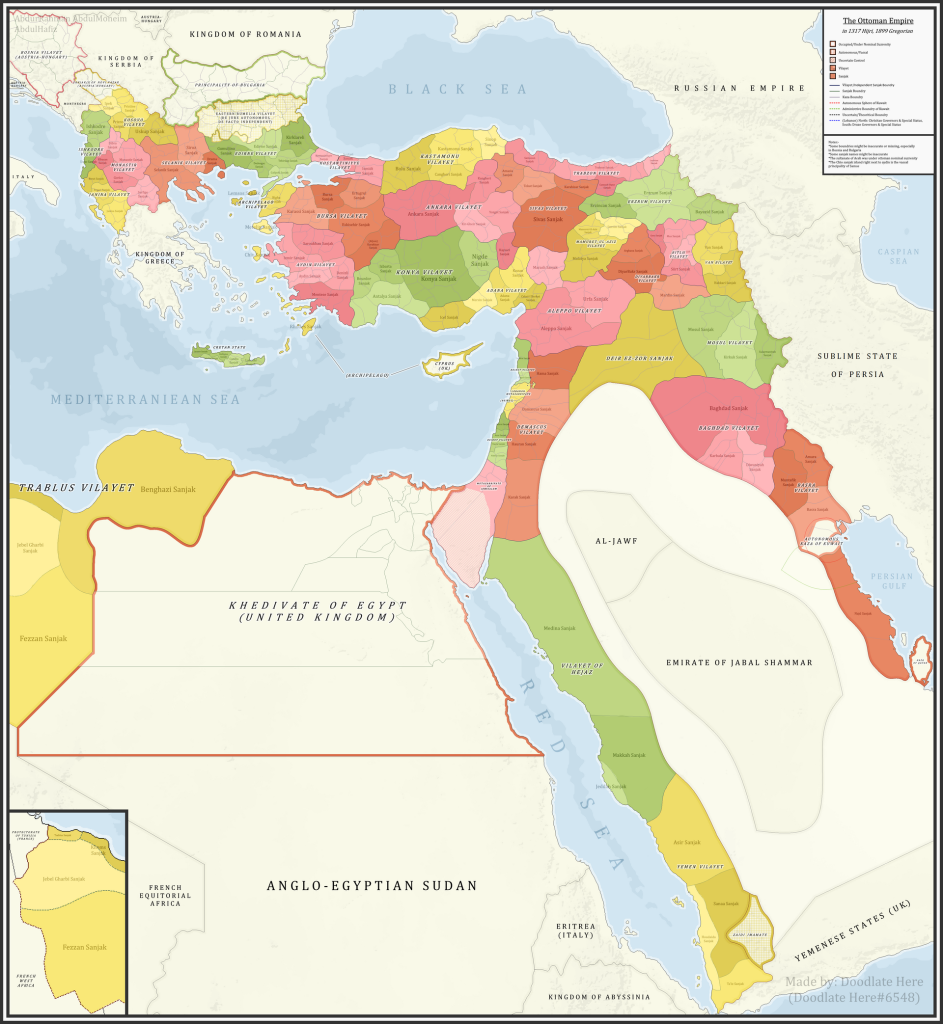
Individual administrative units therefore served the limited self-government of religious communities, not necessarily nations. Yet national distinctions also came into their own, and the Istanbul censuses classified the population not only by religion but also by mother tongue.
That division consolidated a striking phenomenon that remains present in Southeastern Europe today. National identities are associated to a much greater extent with shared religion. In simplified terms, Croat means Catholic, Bosniak means Muslim and Serb means Orthodox. This echoes the system known as millet, which literally means minority self-government.
The Ottoman sultan’s court approached Eastern Illyricum, the Balkans, with a certain animosity that became the basis of later frictions. In communication with representatives in Belgrade, Novi Pazar, Sarajevo and Kotor, it used a Yugoslav dialect known as Shtokavian.
Shtokavian is one of several South Slavic varieties, its basis being the word “sto”, meaning “what”. Alongside it were Chakavian, the “ca” form, Kajkavian, the “kaj” form, Torlakian, western and eastern Bulgarian, Slovenian and Burgenland Croatian, the Gradiscan dialect of eastern Austria.
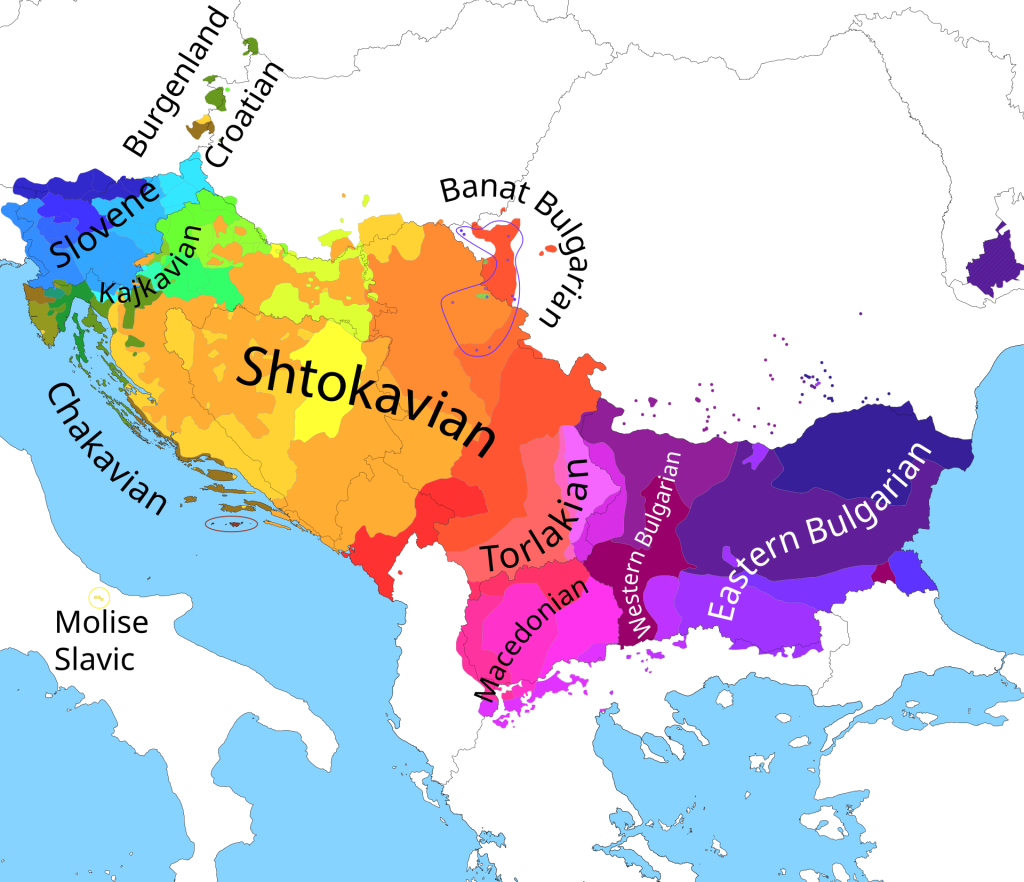
The use of Shtokavian, however, reinforced the impression of a broad Serbian linguistic space in the Balkans. Yet South Slavic speech was later divided into variants according to the pronunciation of the old “ie” sound. In simplified terms, this produced Ijekavian, Ikavian and Ekavian forms, as in the word for milk: “mlijeko”, “mliko” and “mleko”.
After World War I, minor linguistic differences did not appear to be a serious obstacle to the creation of the Kingdom of Serbs, Croats and Slovenes, later the Kingdom of Yugoslavia. The real contradictions emerged through religious differences, which formed the basis of closer ethnic identity.
Yugoslavia’s Fault Line
Pre-Ottoman history also played an undeniable role. Although most of Montenegro’s population is Orthodox, as much as 44% of the population has defined itself as Montenegrin since independence in 2006. This distinctiveness is rooted mainly in the existence of the principality of Duklja, or Dioclea in Latin, whose second king, Michael I Vojislavljevic, received from Rome the title King of the Slavs.
Other historical regions, such as Raska, Pomoravlje and Bosnia, also developed more or less independently, and their current identities therefore have different historical foundations. While Serbs regard Stefan Nemanja as their first ruler, the first king of the Bosniaks was Tvrtko I. A seemingly minor historical detail thus becomes a fundamental difference on which a nation bases its origins.
This is why the Pan-Slavist concept of Serbo-Croats was misunderstood and why its artificiality contributed to its short life, much as the constructed identity of Czechoslovaks did.
Paradoxically, on the eve of the war in Yugoslavia, Ratko Mladic, the commander of the Army of Republika Srpska and a war criminal, identified himself as Yugoslav. His argument was that he wanted to prevent a civil war that he expected precisely because of religious and ethnic differences.
The centrifugal tendencies finally became apparent in July 1991, when Slovenia declared independence after 10 days of war. In September of that year, Macedonia and Croatia also seceded from the Yugoslav federation. That, however, triggered a series of ethnic civil wars that lasted until 1995.
Citizens of Yugoslavia who defined themselves as Serbs lived not only in Serbia itself, but also in the landlocked part of Croatia and in a third of the territory of what later became Bosnia and Herzegovina. It was in Bosnia that tensions between Catholics, Orthodox Christians and Sunnis were most brutal.
While the massacres committed by Bosnian Serb forces in Sarajevo and Srebrenica are well known, Bosnian Croat troops were also implicated in atrocities. Testimonies from residents of the autonomous province of Vojvodina also point to ethnic cleansing by Croatian forces, again marked by a religious basis.
Inhabitants of Croatia’s eastern border region of Baranja who had been baptized “the other way round”, from right to left, as Greek Catholics or Orthodox Christians, often risked their lives. Many became victims of these purges.
Croatian forces also clashed on Bosnian territory with the mujahedin, as Muslim foreign fighters in the country were known. After the Washington Agreement of March 1994, however, they were united through the merger of Croatian Herzeg-Bosnia and the Republic of Bosnia and Herzegovina.
That entity, known as the Federation of Bosnia and Herzegovina, or under its older name as the Croat-Muslim Federation, still exists today as one of Bosnia’s two constituent entities. The other is Republika Srpska, which, despite the Dayton Agreement of 1995, was not incorporated into Bosnia proper and continues to act as a federal republic.
Bosnia’s Fragile Settlement
Only in 2006 was the Republika Srpska army fully integrated into the countrywide armed forces. A Bosnian Serb draft constitutional amendment introduced in March 2025 would restore it, a move that has caused considerable concern at home and abroad.
As early as late 2021, Bosnian Serb leader Milorad Dodik put forward a proposal for Serbs to withdraw from joint institutions. He has also called for a revision of the Dayton Peace Agreement. Such a move would open Pandora’s box, because the agreement guaranteed Bosnia’s internal borders, and with them the borders of Republika Srpska.
As an ally of Russian President Vladimir Putin and former Hungarian Prime Minister Viktor Orban, Dodik in 2023 was counting on a Donald Trump victory in the US, which he hoped could be used to declare independence.
Dodik had already planned to call a referendum on Serb independence in the summer of 2024. In February 2025, however, a federal court sentenced him to one year in prison for defying Christian Schmidt, the UN-backed high representative charged with overseeing the civilian implementation of the Dayton Peace Agreement. Dodik had refused to recognize Schmidt’s authority. He was also barred from holding public office for six years, but the separatists are apparently carrying on without him.
The Republika Srpska parliament, the Skupstina, retaliated by passing a law nullifying Schmidt’s decisions and banning federal police from entering Serb territory. Bosnia’s electoral commission therefore removed Dodik as president in August 2025. In October, the Skupstina appointed his supporter Ana Trisic Babic.
Dodik’s hopes of a more sympathetic Trump administration appear to have gained traction. While he has visited Moscow at least three times since his conviction, he has also sought backing from another Orban ally: Benjamin Netanyahu. In January 2026, the Israeli prime minister met Dodik and Republika Srpska President Ana Trisic Babic in Jerusalem, thanked them for their long-standing support for Israel and said the two sides were willing to deepen ties.
US Special Envoy for Global Partnerships Paolo Zampolli also met Republika Srpska Prime Minister Savo Minic in Banja Luka in February. According to the entity government, they discussed energy and infrastructure projects, and Zampolli said he would forward a project document to US administration agencies. The meeting added to the impression that Washington was opening direct channels to Republika Srpska, even as Banja Luka insisted it was acting within the Dayton framework.
The broader pattern has alarmed critics of Dodik. Balkan analyst Alex Young has argued that Republika Srpska is pursuing a parallel foreign policy, presenting itself as a sovereign actor and undermining Bosnia’s state-level authority. He also wrote that the lifting of US sanctions against Dodik and his circle had been interpreted in Banja Luka as a tacit endorsement of their anti-Dayton approach.
According to Radio Free Europe, Schmidt announced his resignation as high representative on 11 May. The move exposed deep divisions among international actors over Bosnia’s future, with the United States calling for a more limited mandate for the Office of the High Representative while Britain, France and the EU continued to support its role.
In addition to Russia, Serbia and Hungary, the United States is increasingly seen by critics as a player weakening the international safeguards around Bosnia’s postwar order, even as Washington formally maintains its support for Dayton and the country’s territorial integrity.
At the UN Security Council, US Deputy Ambassador Tammy Bruce said the Office of the High Representative “was never intended to be permanent”. She said the next high representative should begin transferring responsibilities to local leaders. Russia has also called for the office to be shut down.
It is therefore unclear to what extent initiatives such as the Friends of the Western Balkans platform can help bring Bosnia closer to the EU as a single state, or whether the long-troubled country will disintegrate before signing its first EU accession agreement.