
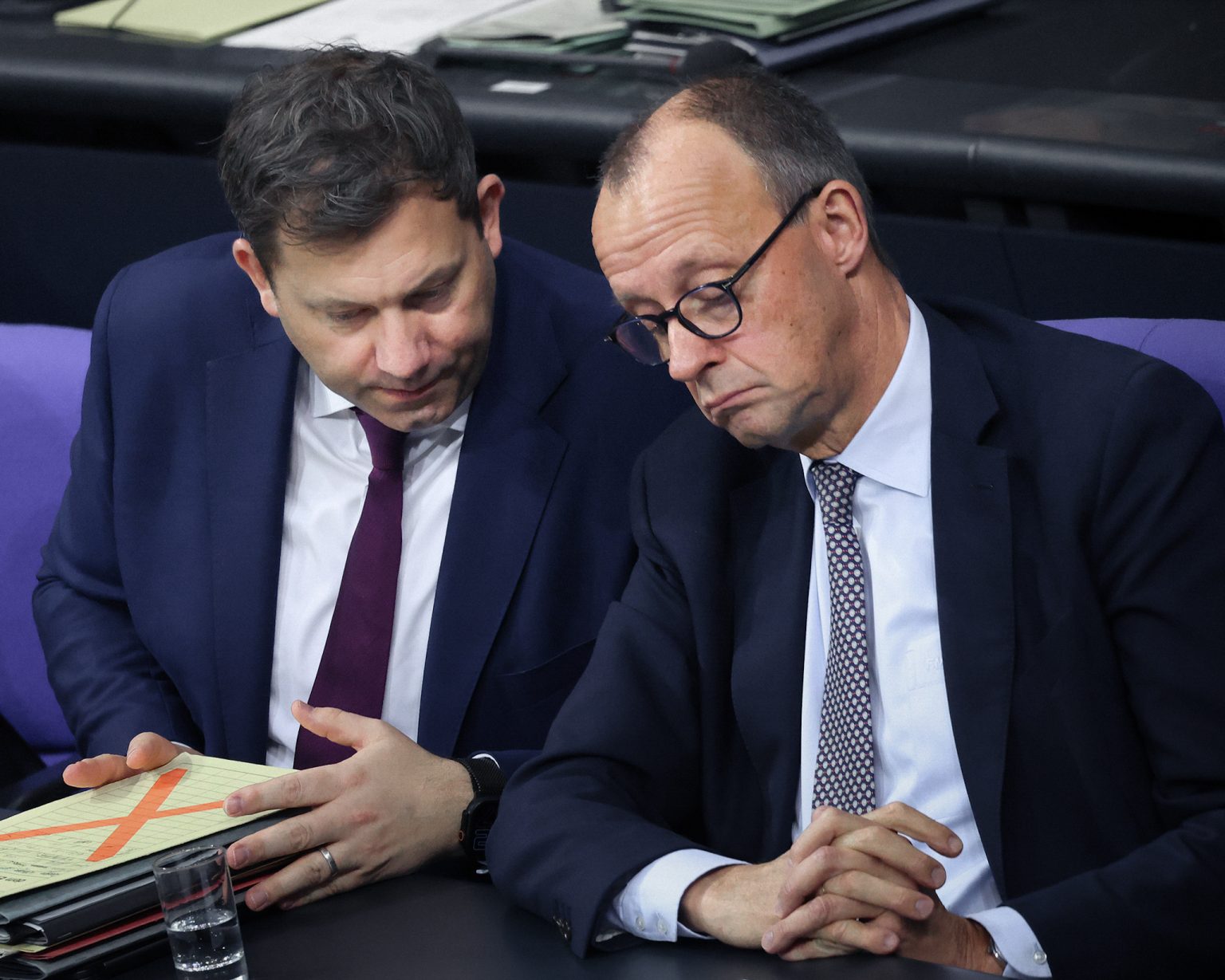
A profound change is taking place in Germany’s political landscape. The right-wing populist Alternative for Germany (AfD) has become by far the strongest party. In a standard voting-intention poll asking how people would vote if federal elections were held the following Sunday, it now leads on 29%, seven percentage points ahead of the traditional broad-based center-right Christian Democratic Union/Christian Social Union (CDU/CSU) alliance, which has fallen to just 22%.
The left-liberal Alliance 90/The Greens is currently the strongest party to the left of the political center, on 14%. It is ahead of the Social Democrats (SPD), traditionally Germany’s strongest left-wing party, which has fallen to just 12% despite being in government, and the socialist Left Party, which stands at 10%.
If the current trend continues, future left-right bloc elections in Germany will no longer be fought, as they traditionally were, between the Christian Democrats and the Social Democrats. Instead, the main poles will be the right-wing conservative AfD and the left-liberal Greens. For the CDU of serving Chancellor Friedrich Merz, the decisive question will therefore not only be how it defines its relationship with the stronger rival to its right, the AfD, but also how it positions itself towards the strongest force in the left-wing camp, the Greens.
Massive Loss of Trust in Party Competence
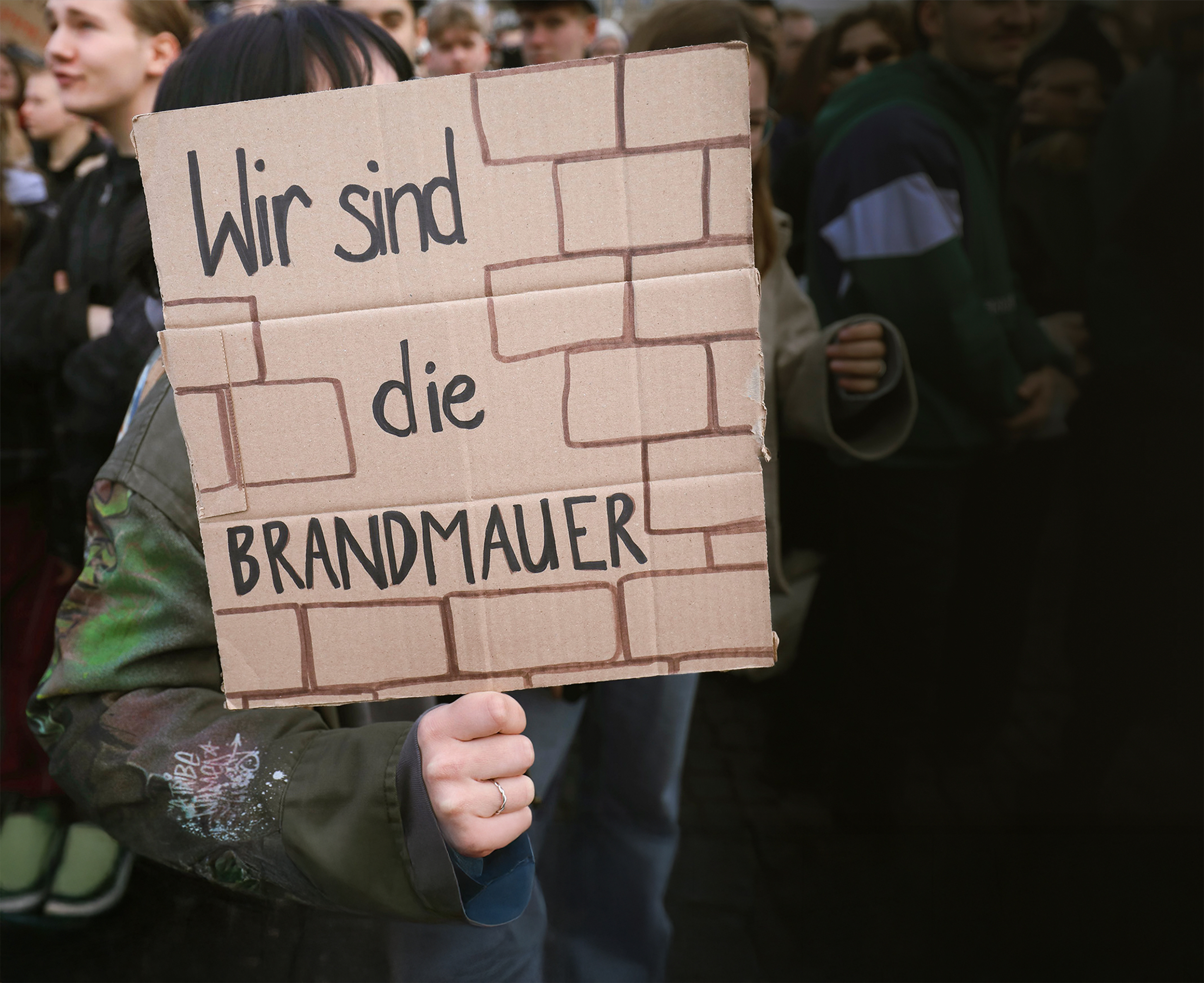
Apart from asking which party voters would choose if elections were held on Sunday, the INSA polling institute also asked which party Germans were most likely to trust, all things considered, to govern Germany competently. More than one in five respondents, 21%, could not name any party. A further 8% gave no answer or said they did not know how to respond.
Almost one in four respondents, 23%, named the AfD. One in seven, 14%, named the CDU. One in 11, 9%, chose the SPD, followed by 8% for Alliance 90/The Greens, 7% for the radical Left Party, 4% for Bavaria’s CSU and 2% each for the left-wing Alliance Sahra Wagenknecht (BSW), the liberal Free Democrats (FDP) or one of the many smaller parties. Trust in the parties’ ability to lead the country is therefore even lower than support for the parties themselves in a potential election. Put another way, not even all voters of a party believe that “their” party is capable of solving the country’s problems.
Fully 87% of AfD voters also regard the party they favor at the ballot box as competent to run the country. Among CDU/CSU voters, however, only 58% say the same of the CDU, with a further 16% naming the CSU. Almost three quarters of Union voters, 74% in total, therefore believe that the CDU/CSU alliance they intend to support also has the competence needed to govern Germany.
Among Green and Left Party voters, only 62% each trust their parties with such governing competence. The same applies to 59% of SPD voters, 57% of BSW voters and 46% of FDP voters. A party that cannot truly convince even its own voters will probably find it even harder to win over voters from other parties.
CDU Gives Up Leadership Options
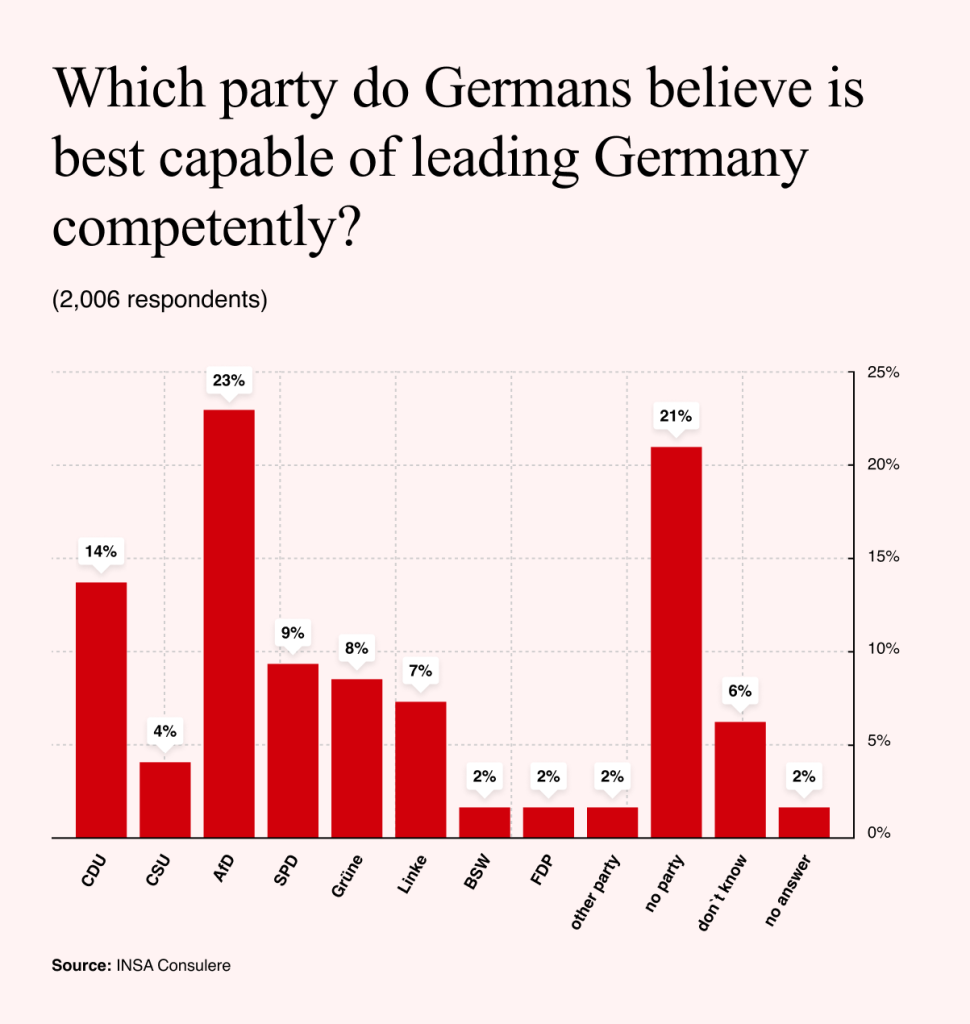
The real-world effects of the so-called firewall can currently be seen in the state of Baden-Württemberg. According to the election result, the Greens finished narrowly ahead of the CDU, although both parties won 56 seats in the state parliament. The CDU would have had the mathematical opportunity to form a comfortable parliamentary majority with the AfD, which won 35 seats, and to install Manuel Hagel as minister president.
Instead, the CDU is submitting to the Greens’ minimal lead, with Cem Ozdemir claiming leadership in the state, solely because no one wants to enter a coalition with the AfD. The Christian Democrats’ difficult position is obvious. Not only at state level, but by analogy also in the Bundestag, the party is giving up its claim to lead the political camp to the right of center in order to avoid making common cause with right-wing populists. In doing so, however, it is endangering its traditional role as the broad church of the social center-right.
Lost Attachment to the Old Major Parties
Seventy-seven years after the founding of the Federal Republic of Germany, the old major parties’ loss of their ability to bind voters has become more than clear. Those parties shaped the country for three quarters of a century. In a few months, in the state election in Saxony-Anhalt on 6 September, the AfD has a strong chance of winning a parliamentary majority and thereby producing the first AfD minister president of a German state.
According to current INSA polls, the AfD is on 42% in the state. It does not need much more to secure a majority of all seats in parliament, because all the other parties that are expected to clear the 5% threshold and enter parliament – the CDU, SPD and Left Party – together reach only 43%. Because the party landscape is heavily fragmented among numerous small parties, as much as 15% of the vote is expected to go to parties that fail to clear the 5% threshold.
In addition, the SPD, on just 6%, is itself in danger of missing out on entry into the state parliament. If that happens, the AfD’s parliamentary majority would be almost certain. Things could go even better for the AfD if it succeeds in converting part of its additional potential into actual votes. A further 6% of voters say they could also imagine voting for the AfD, although they currently have a different preference.
Saxony-Anhalt as a Stress Test
Incidentally, every second potential AfD voter would come from the camp of those who currently still intend to vote for the CDU. Yet even if the AfD were narrowly to miss a parliamentary majority, it is hard to imagine that an anti-AfD government made up of the CDU, SPD and the Left Party, the successor to the former East German state party, the Socialist Unity Party (SED), would really come about.
In that case, it would be more likely that one or more CDU lawmakers would support an AfD state government and perhaps defect to the other camp. A pure AfD state government would at least have another short-term advantage for the CDU. The party would not have to decide openly between cooperation with the AfD and cooperation with the Left Party. A CDU federal party congress has adopted incompatibility resolutions against cooperation with both parties. To remain involved in government in Saxony-Anhalt, the CDU would therefore have to repeal one of the two resolutions or simply ignore it.
In the long run, however, even that would probably not save the Christian Democrats. The catastrophic assessment of the federal government’s work, with around 70% of Germans dissatisfied with the chancellor and his cabinet, has long been reflected in the national political mood and in elections across the country. It is hard to imagine the governing coalition lasting until the next regular federal election in 2029.

Exit Scenarios
The parties supporting the government, the CDU, its Bavarian sister party the CSU and the SPD, will presumably not wait until they have lost all acceptance among voters. At the moment, numerous scenarios are being discussed in political Berlin over who might bring an end to this dramatically unpopular government. The SPD could leave the government, or CDU Chancellor Merz could throw the SPD out of it. In both cases, Chancellor Friedrich Merz could continue to govern with the CDU in a minority government.
A third option would be a constructive vote of no confidence. If successful, it would remove Merz from office and at the same time elect a new chancellor by a majority in the Bundestag. Yet whether such a new chancellor could find a majority in the current parliament in order to take office, and how such a majority would come about, remains open. It would require someone from within the CDU/CSU ranks to emerge and directly challenge Merz.
Fourth and finally, the current chancellor could call a vote of confidence. If he lost it, and no Bundestag majority for him could be formed, President Frank-Walter Steinmeier (SPD) could dissolve the Bundestag and trigger new elections. Since the AfD would probably be the big winner of such an election, that scenario is highly unlikely, because both the SPD and the CDU would stand only to lose. In a crisis, however, nothing can ultimately be ruled out. Not even the possibility that the black-red coalition will drag itself painfully on until 2029.
Whether Germany ends up committing political suicide out of fear of death, or simply carries on as before into an ordeal with no end in sight, everything currently seems possible.