
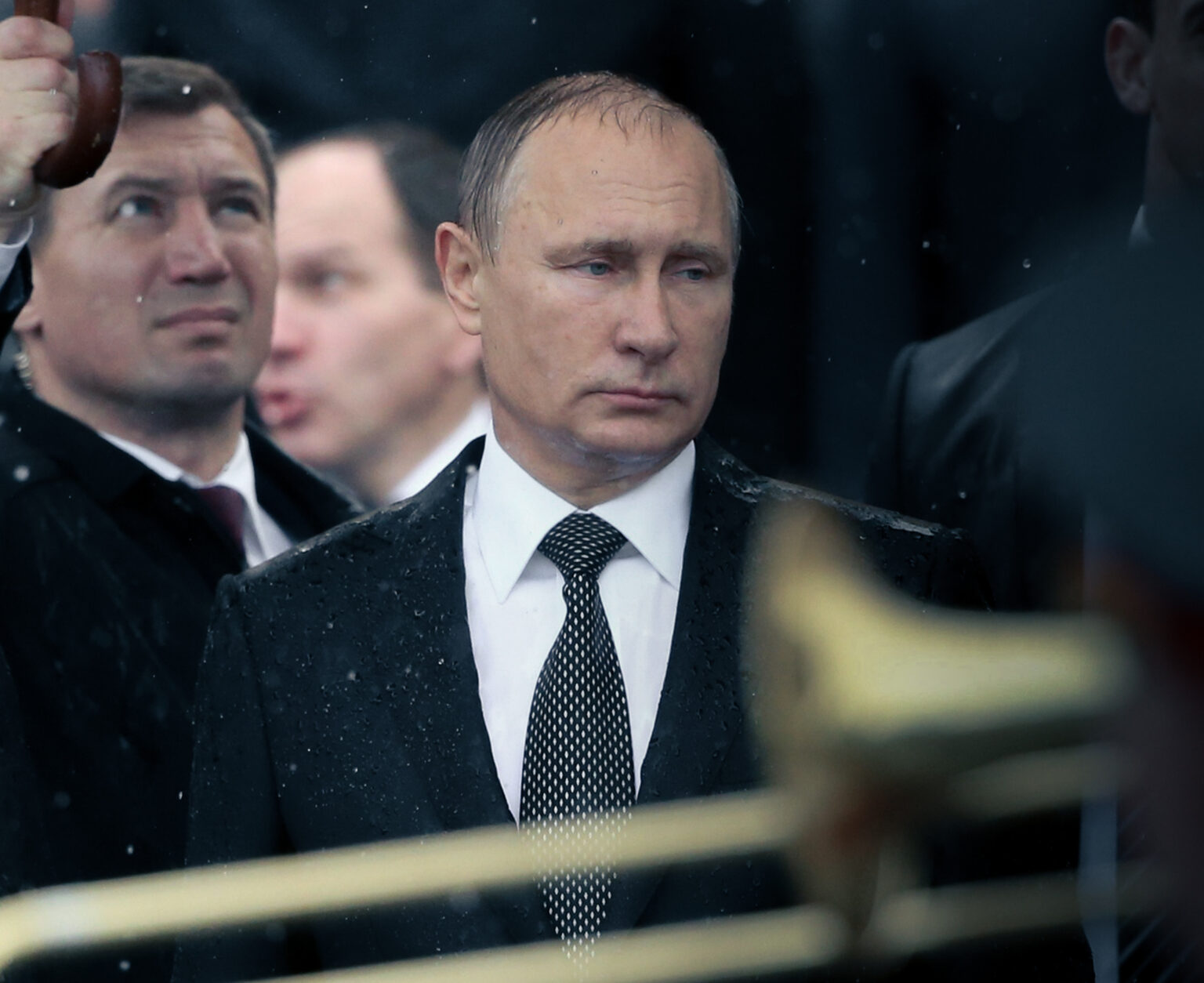
Chinese President Xi Jinping told Donald Trump on 18 May that Putin may yet “regret” his decision to launch the invasion of Ukraine. The following day, the Russian outlet Kontinent Sibir published an interview with a member of the State Duma, the lower house of Russia’s parliament.
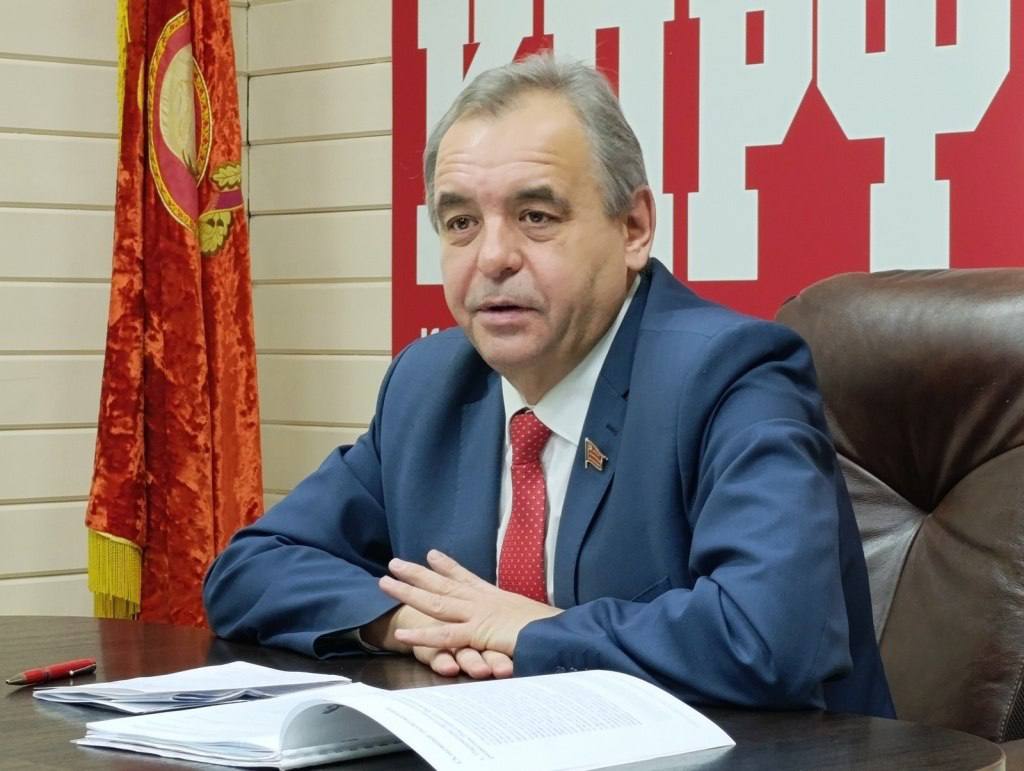
“It is quite obvious that the economy cannot withstand a long-term continuation of the SVO (Russian shorthand for the propaganda term ‘special military operation’, editor’s note). Officially, 40% of the federal budget goes to defense and security”, Renat Suleymanov of the Communist Party of the Russian Federation told the outlet.
A Shift in Tone
Suleymanov also said that ending the Russian-Ukrainian war as soon as possible was “simply inevitable”. He expressed hope that it would end in victory for Russia rather than an “intermediate result”.
In August 2022, Suleymanov said the only acceptable way to end the invasion was for Kyiv to capitulate. He assessed Russia’s partial mobilization in September that year by saying “we have no other alternative”, as in his view Russia would either win or capitulate and disintegrate.
The change in his tone may be linked to the Kremlin’s desire to prepare Russians for the end of the campaign against Ukraine, which has so far failed to bring Moscow major gains and has instead cost the country enormous human and material losses.
In early May, the Dossier Center, a Russian investigative center in exile, published a leaked presentation by Sergei Kiriyenko, the first deputy head of Putin’s presidential administration. The document, entitled After Victory, sets out how the end of the war should be explained to Russian citizens.
According to the Dossier Center, the document was presented in late winter. It says Ukrainian President Volodymyr Zelensky is not expected to be overthrown and that an “act of surrender” is also impossible.
The key, according to the presentation, will be to explain to the public that the Russian army never set out to “conquer Kyiv”. That contradicts the line taken by Russian state media before the invasion and shortly after it began. The “couch ultras”, meaning supporters of the campaign far from the front, will have to be convinced that “peace is victory”, according to the presentation.
The author recommends sending some veterans of the Russian-Ukrainian war to fight in the ranks of the African Corps and other forces abroad in order to reduce the problems caused by their return home. The main arguments to be presented to Russian citizens for ending the war include “continuation is too expensive”, “the economy is tired”, “resources are being spent” and “lives need to be saved”.
Ukrainians Will Not Lose
In that context, the remarks by Russian oligarch Konstantin Malofeyev were even more striking. A Kremlin insider and the founder of Tsargrad TV, Malofeyev uses the channel to spread state propaganda with Orthodox overtones.
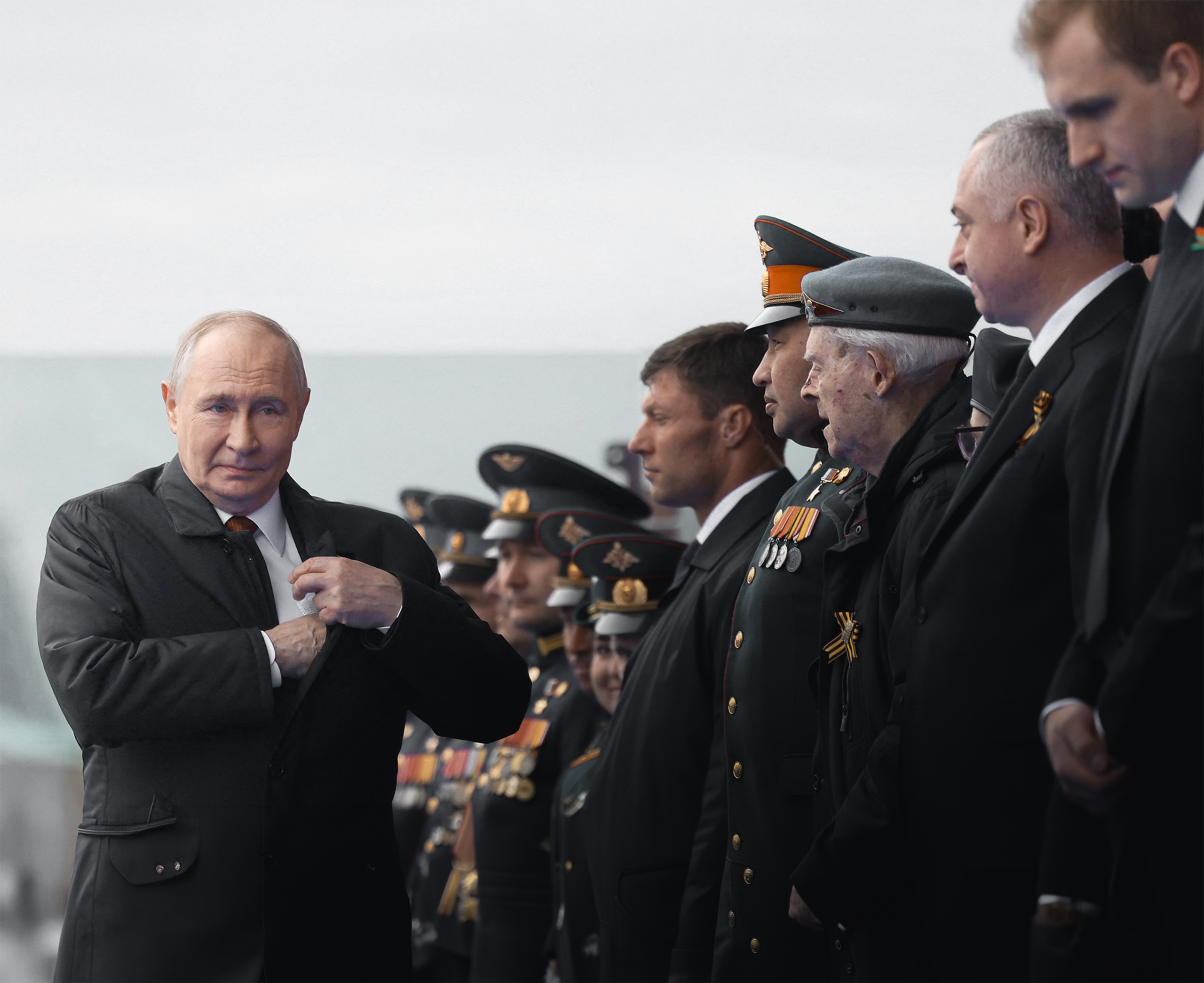
“Losing to Ukraine is no disgrace. After all, Ukrainians are basically Russians, the same as us. And Russians never lose. And they never give up”, Malofeyev declared. He was referring to a Kremlin narrative often used by Russian President Vladimir Putin.
Putin himself set out that view in his article On the Historical Unity of Russians and Ukrainians, which was published on 12 July 2021, roughly half a year before Russia’s invasion of Ukraine began on 24 February 2022.
Pressure Builds on the Kremlin
Under the 2026 state budget adopted by the Russian State Duma, military spending this year will amount to 12.93tn rubles (about $181bn). Together with security spending, the figure rises to 16.84tn rubles (about $236bn). That is 1.5 times more than total social spending, which amounts to 10.8tn rubles (about $151bn).
Signs of strain are also visible across Russia’s regions. Saratov Oblast offers one example. According to the regional leadership, the economy is in a disastrous state and the budget deficit in 2025 will exceed expectations fivefold.
Like the rest of Russia, the region is dying out because of a birth rate lower than in the 1990s. This is linked to an increase in the number of migrants in the region to more than 60,000 and to crime, mainly committed by people without regular income, migrants and people under the influence of addictive substances. Similar problems can be seen across the country.
A Turning Point on the Front
On 17 May, The Economist published an analysis of developments on the front in Ukraine. While Russian casualties continue to rise sharply, the occupying army’s advance is slowing, according to analysts.
Estimates put Russian military deaths at between 280,000 and 518,000, with total casualties, including the wounded, as high as 1.5 million. That represents about 3% of Russian men of mobilization age before the war began.
Analysts warn that Russia may now be preparing a major summer offensive after a failed spring campaign. At the same time, they acknowledge that the conflict may be approaching an important turning point. “This year Russia suffered small but permanent territorial losses for the first time since October 2023”, The Economist assessed.
Analysts at the Institute for the Study of War (ISW) also note that Russia is already feeling the impact of Ukraine’s continued attacks on oil infrastructure inside Russia. Like The Economist, ISW confirms that Russia is losing ground in Ukraine this year.
Is a Deal Imminent?
British journalist Ben Aris believes Putin needs a peace deal in the coming months because the clock is ticking for Trump and the Republicans in the US. According to Aris, the party may suffer a heavy defeat in the midterm elections on 3 November 2026, which would sharply limit Trump’s room for maneuver, including on any deal with Russia.
“For Putin, he has a shrinking window to do a deal with Trump and let’s face it he can do a brilliant deal with Trump because he wants to do business. Specifically that means a deal that includes lifting sanctions on Russia,” Aris wrote.
If Putin fails to secure sanctions relief under Trump, the measures could remain in place “for one or two generations”, he added.
By that logic, “we will have a peace deal in the next few months”. The obstacle, he wrote, is “making Zelensky accept”.
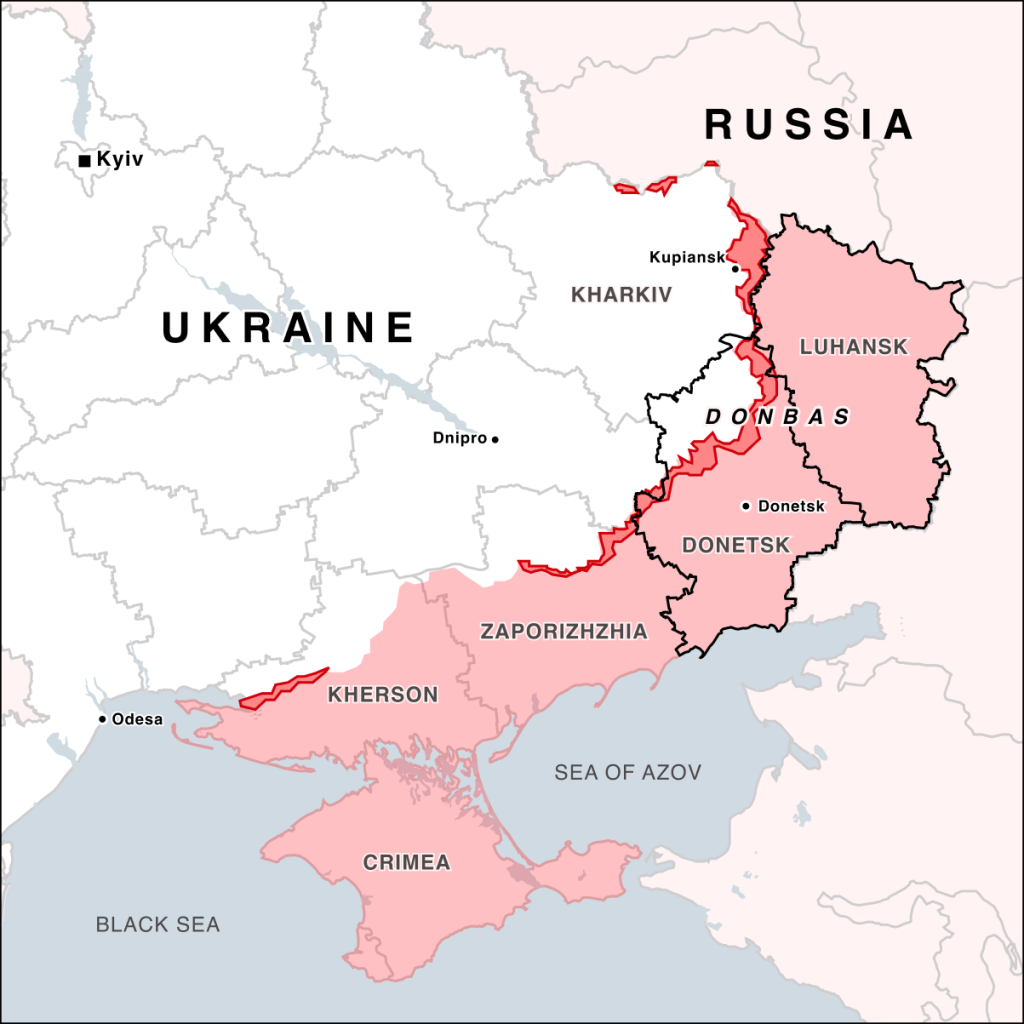
The Financial Times reported in mid-May that Russian generals had convinced Putin that the entire Donbas would be under the Kremlin’s control by autumn. Its seizure would give Moscow a strong hand at the negotiating table and allow it to demand territorial concessions from Kyiv in the Kherson and Zaporizhzhia regions.
Moscow has long made the start of peace negotiations conditional on the withdrawal of Ukrainian forces from the last remaining unoccupied part of Donbas, now in the Donetsk region. These are towns such as Kramatorsk and Sloviansk, whose surroundings have been fortified by the Ukrainians since 2014.
Critics of a possible Ukrainian withdrawal from Donbas describe the area, as the Russian side does, as the most heavily fortified part of the front. By surrendering it, the Ukrainians would make it easier for Russian forces to advance westward if Moscow decided to resume the campaign in a few months or years.