
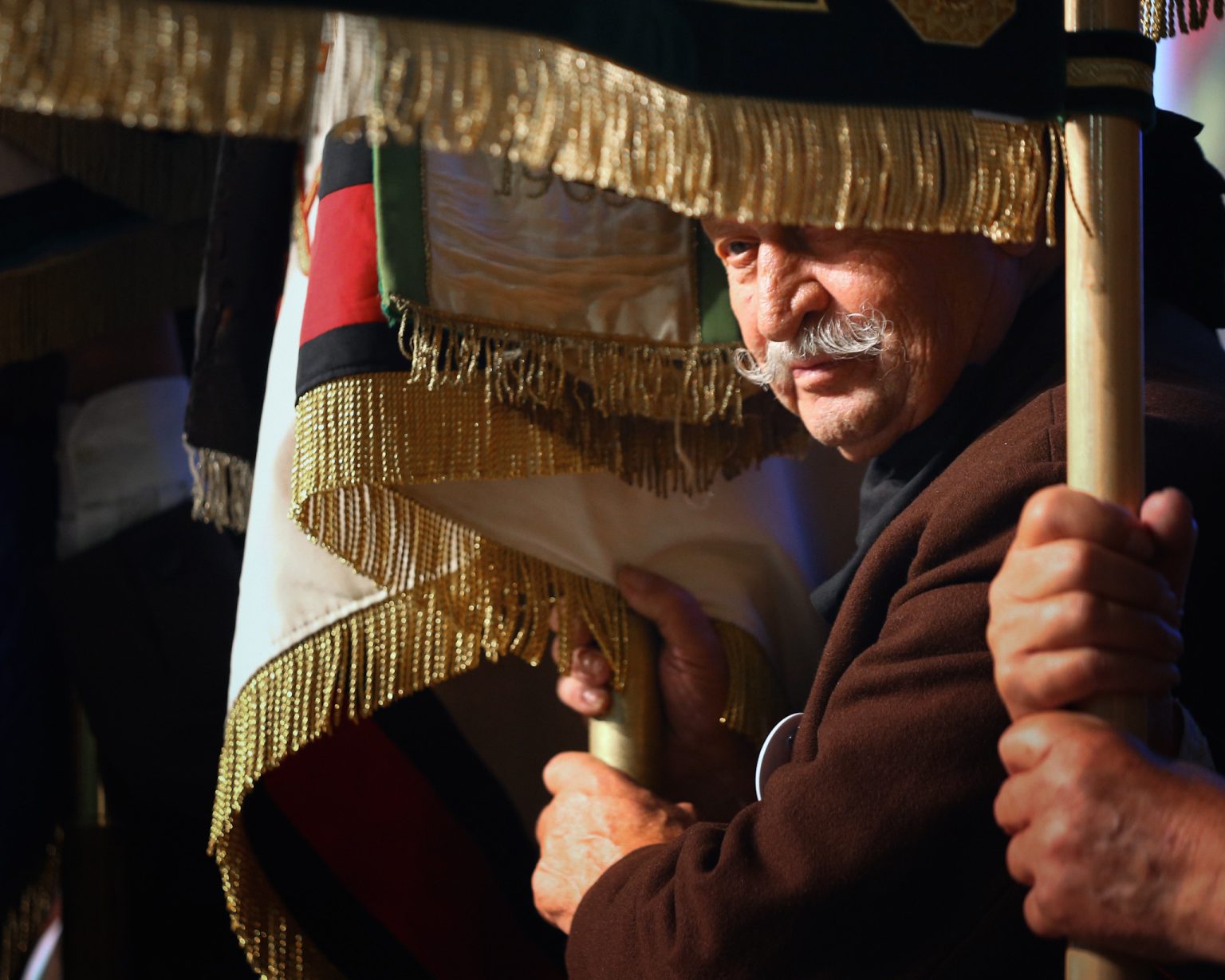
The Sudeten German Congress in Brno would not normally be a major event. The Sudeten German Landsmannschaft, an association representing Germans expelled from Czechoslovakia after World War II, is now more a memorial and folklore group than a real political force. The generation of the displaced is nearing the end of its life.
Anyone old enough to remember 1945 as a child is now very old. Those who were active on the Czech side in the post-war violence are almost certainly no longer alive. The direct actors are gone. What remains are rituals, costumes, speeches and Bernd Posselt as a professional keeper of the Sudeten German cause, a man who has made a lifelong political trade out of a marginal historical issue.
But the decision to hold the congress in Brno, the Moravian city known in German as Brünn, gives it a different meaning. It is not the great political return of the Sudeten German question, but rather a trial balloon: an attempt to see whether the issue can again be discussed on Czech territory, publicly, ceremonially and with the support of sections of the political and cultural elites.
The Politics Behind the Folklore
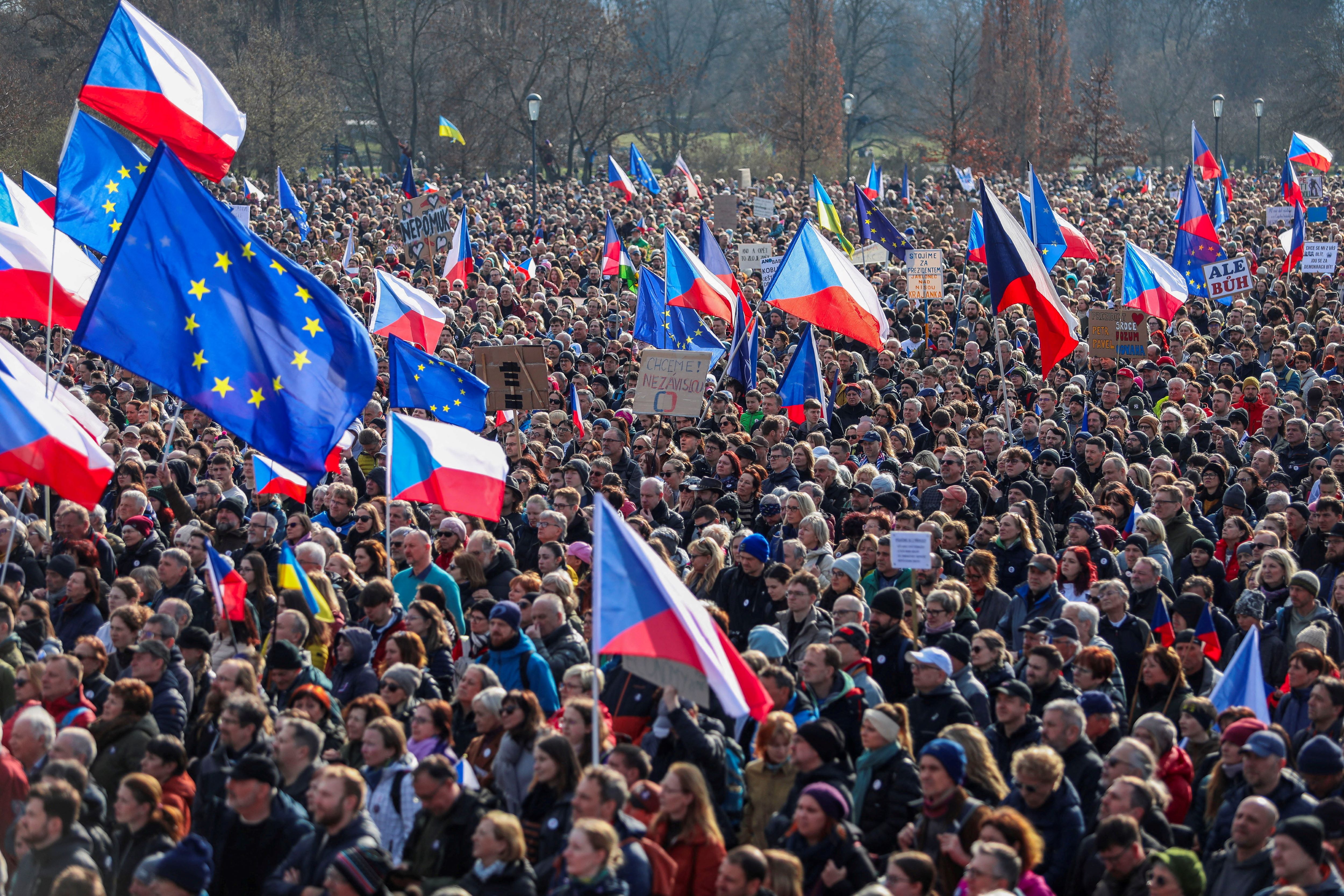
The dangerous duality of the whole event begins here. On the one hand, it can be described as a harmless family show, with folklore, costumes, music and speeches about reconciliation. On the other hand, that very harmlessness can be the most politically effective part of it. The issue is no longer hard demands, but the shifting of boundaries around what is acceptable. Folklore first. Then memory. Then the moral claim to a new interpretation of history.
Property claims are politically unrealistic. Nobody is seriously planning mass restitution for the Sudeten Germans. German revanchism is now more a domestic bogeyman than a foreign policy project.
Anyone who claims that the congress in Brno poses a fundamental threat to the Czech state is overestimating both the Landsmannschaft and contemporary Germany. But it would also be a mistake to draw the opposite conclusion and say that nothing is happening at all.
Something else is happening. It is not the return of the Sudeten Germans as a political force, but the return of the Sudeten German question as a usable symbol. And symbols are often more effective in politics than real forces.
A Reaction Bigger Than the Event
If a few hundred or a thousand people came to look at national costumes, listen to speeches and reminisce about a world that no longer exists, there would be no reason for national hysteria. But the reaction to the congress in Brno shows that the issue is not only folklore.
The Czech Chamber of Deputies passes a resolution, the president grants patronage, part of the opposition calls for dialogue, the government camp warns against revisionism, activists pour red paint on the statue of Edvard Benes, and social media treat the row over the congress as if the future shape of the republic were at stake.
The reaction is bigger than the event itself. That is why it deserves attention.
It is not that a force capable of changing Czech history is gathering in Brno. The issue is that such a force is being turned into a symbol. Some need the Landsmannschaft as proof that the old threat is returning. Others need it as proof that Czech society is finally mature enough for European reconciliation.
Both camps are turning a small association into a national question. And both sides are thereby admitting that the debate is not really about the Sudeten Germans, but about themselves.
In that sense, the red paint on the Benes statue is only an example, not the main story. The issue is not Benes himself, the former Czechoslovak president closely associated with the post-war decrees under which ethnic Germans were expelled, but the way his image is being used.
It is no longer enough to say that Benes was a complex politician whose decisions had tragic consequences. His opponents now present him simply as a “Czech Nazi”. That is how the new politics of memory works. It does not try to understand the past in all its ambiguity. It divides historical figures into heroes and criminals, and then asks everyone to choose a side.
History as Ammunition
Here the broader issue becomes clear. The Sudeten German question is not returning because the Landsmannschaft has the power to change anything. It is returning because Europe is entering a period of rearmament, hostile blocs and enforced loyalties.
The public sphere is increasingly being shaped by the language of security, threats, resilience, internal enemies and historical righteousness. Old labels fit such a climate: traitor, patriot, collaborator, victim, perpetrator, revisionist.
The past is not recalled in order to understand it better. It is recalled in order to mobilize the present. History is turned into ammunition.
This is what could be called the Ukrainization of society. That does not mean the Czech situation is the same as Ukraine’s. It describes a mechanism familiar from the dispute over Stepan Bandera. A historical figure ceases to be an object of scrutiny and becomes a flag: a hero to some, a criminal to others. Less and less space remains in between.
The question is no longer what exactly happened, when it happened and what degree of guilt was involved. The question is whose side you are on.
Something similar is now happening in a smaller Czech form with Benes, the expulsion of the Sudeten Germans and the post-war settlement. Supporters of reconciliation are seen by some as Europeans, conciliators and men of dialogue. To others, they are naive revisionists or people with no sense of national memory. Opponents of the congress are seen by some as patriots and defenders of the post-war order. To others, they are nationalists and prisoners of old grievances.
History is not being interpreted here. History is being used.
Why Now?
And that is more dangerous than the congress itself. Once historical questions turn into a test of civic loyalty, the public begins to adapt to the logic of a camp mentality: choose, classify, do not complicate, do not question. Such a condition does not arise all at once. It emerges gradually, through the habit of treating every issue as a choice between the right side and the wrong side.
The Sudeten German Congress in Brno is therefore remarkable not as a threat, but as a warning. It shows how easily a politically exhausted topic can be filled again with public emotion. It shows how easily dead disputes can be transformed into living instruments of division.
It also shows that some elites are interested in putting such questions back into circulation, while another part of the political spectrum is happy to use them for the opposite purpose.
The Sudeten German Landsmannschaft does not threaten the Czech Republic. It is too old, too weak and too marginal for that. What is much more interesting is who needs it to look important. And even more interesting is why, at a time of European rearmament and new rhetoric of mobilization, old disputes that long ago lost real power are being revived.
The real problem, then, is not that the Sudeten German Landsmannschaft is meeting in Brno. The problem is that a small gathering around an old and politically exhausted dispute can now trigger such a large reaction. That means society is once again willing to let old conflicts shape its politics. And perhaps that is precisely the point.
At a time when the public is learning to accept the language of threats, loyalties and enemies, old history is more useful than ever.
Not as memory, but as ammunition.