
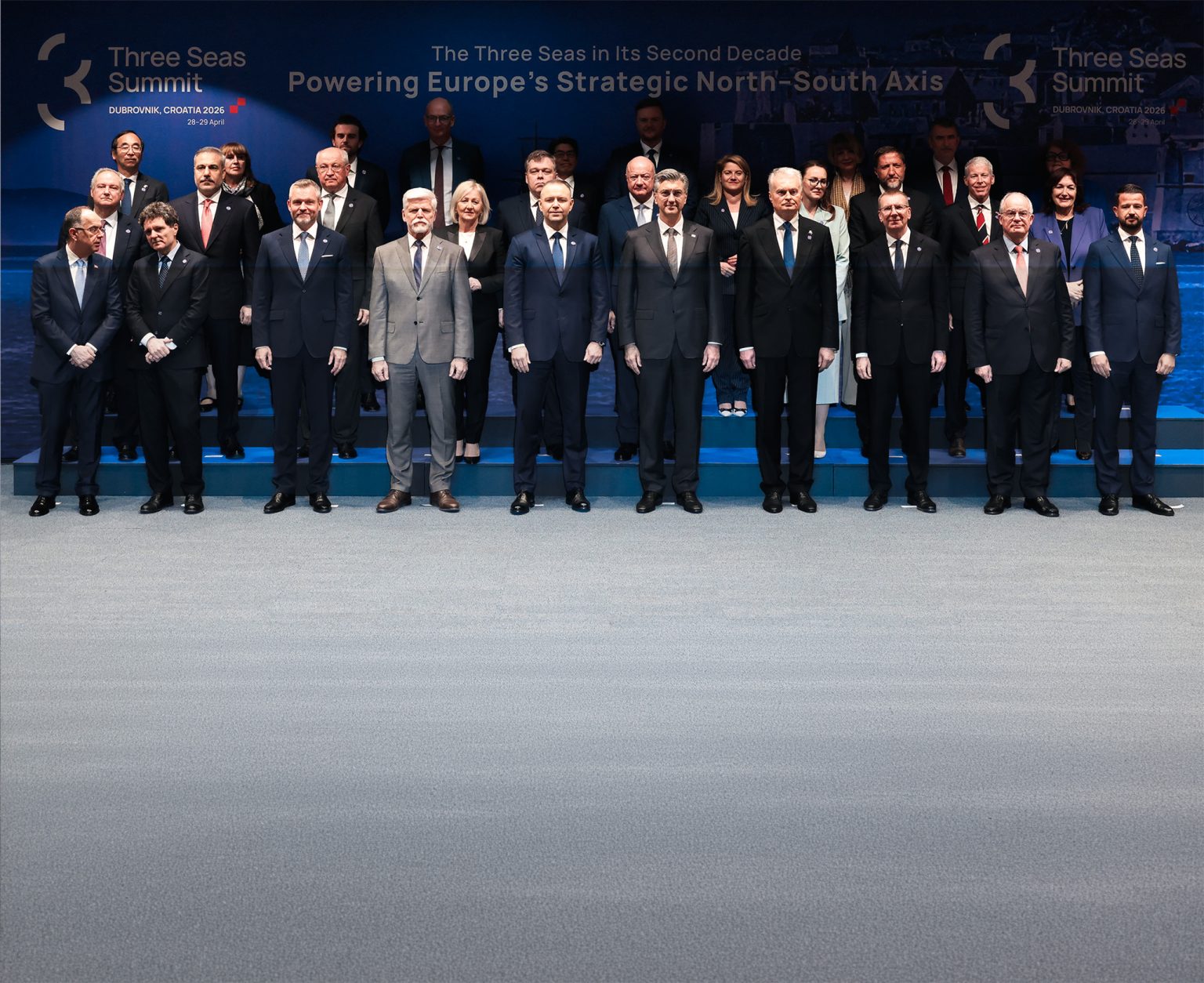
As the world shifts, Central Europe is back on the agenda. At the Three Seas Initiative summit in Dubrovnik on 28–29 April, leaders from the region between the Baltic, Black and Adriatic Seas agreed to deepen regional cooperation.
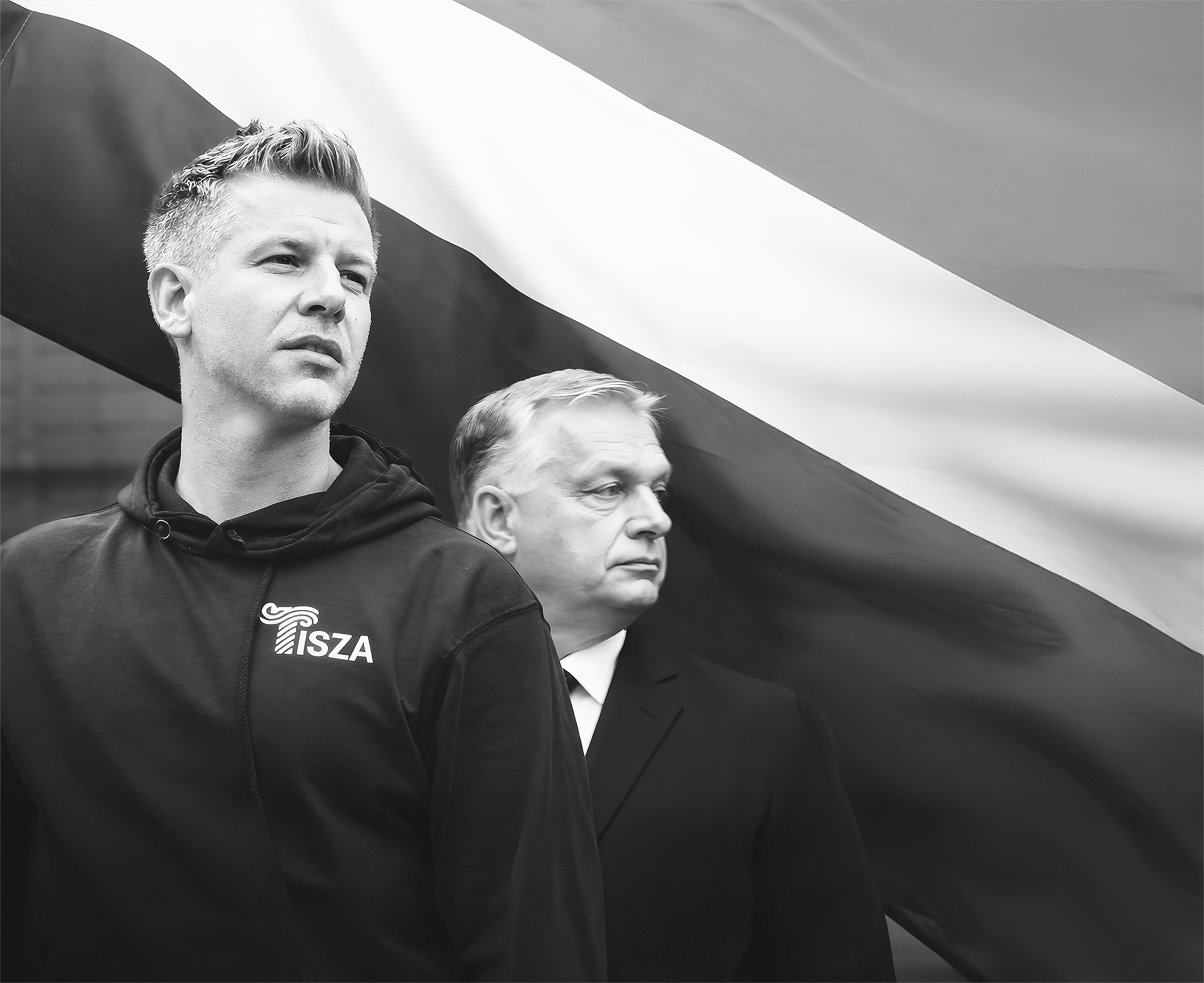
Hungary’s new prime minister is expected to travel to Warsaw in the week of 18 May on his first foreign trip as head of government. A visit to Vienna is also planned as he seeks to revive the Visegrad format between Poland, Hungary, the Czech Republic and Slovakia, and link it with the Austrian-Czech-Slovak framework.
But none of these arrangements matches the multipolarity now taking shape. Visegrad and Austerlitz are too small and unbalanced, while the Three Seas Initiative is too ideological. It would be better to start with the “Double Sea” between the Black Sea and the Adriatic Sea, with the Danube as its geographical axis.
Historical Variants
Plans for Central European cooperation emerged after the collapse of the Central European Habsburg Empire in 1918. Polish leader Jozef Pilsudski sought an Intermarium, a kind of expanded version of the historic Polish-Lithuanian Commonwealth. It was to include states from Finland to Yugoslavia, including Ukraine and Belarus.
Pilsudski’s successors then attempted at least a minimalist version comprising Poland, Romania and Hungary. Czechoslovak Prime Minister Milan Hodza also considered a Greater Central Europe. Its core was to be a union of the Danube states of Czechoslovakia, Austria, Hungary, Yugoslavia, Romania and Bulgaria, which would also be open to the Baltic area and the Mediterranean.
In the end, only Benes’s anti-Habsburg Little Entente of Czechoslovakia, Romania and Yugoslavia came into being. It served a short-term purpose, but solid Central European cooperation could hardly grow out of an anti-Hungarian alliance that excluded Austria.
V4 Worked Well on Migration
Other Central European plans emerged after 1989, but they were overtaken by the race among Central European countries to join NATO and the EU as quickly as possible. What remained was the Visegrad Group (V4), which, after years of dormancy, briefly worked well in resisting mass migration in 2015 and 2016, only to be suspended and put back to sleep by the war in Ukraine.
Even if Peter Magyar manages to revive it, as he promises, V4 does not offer an answer to the challenges we face. With fewer than 70 million people, it is too small on the global stage and, because of the disparity between Poland and the other members, too unbalanced.
A decade ago, there was also the Slavkov format (S3). Although it does not suffer from the Visegrad imbalance and brings Austria into Central Europe, it is still somewhat smaller and politically weaker than Visegrad.
The Three Seas and US Influence
The Three Seas Initiative has geopolitical weight, encompassing a continuous strip of land from Estonia to Greece with more than 120 million inhabitants.
It was created a decade ago through a Polish-Croatian initiative with the stated aim of building energy and transport links across the region. The stumbling block is its geopolitical orientation: initially exclusively Atlantic, now Atlantic-Brussels. The project excludes Serbia and has been accompanied from the start by influential American think tanks such as the Atlantic Council and the Heritage Foundation.
They see the Three Seas area as a space of American influence between Russia and Germany which, under Polish administration, would, for example, buy American gas, counter Russian influence and remind Western Europeans of American priorities.
The Dubrovnik Declaration, endorsed by the leaders of the member states at the end of April, captures this orientation well.
It pledges unwavering support for Ukraine and its territorial integrity, while condemning Russia’s “unprovoked, unjustified and illegal” aggression. It welcomes American engagement in the region, which it sees as reflected, among other things, in the American invitation for Poland to attend this year’s G20 summit in Florida.
The declaration regards the European Commission, selected NATO countries and Japan as other strategic partners. It supports EU enlargement to include Ukraine, Moldova and NATO members Albania and Montenegro.
It is not surprising that Hungary, which at the time of the summit had held elections but had not yet seen the Magyar government take office, abstained from approving the declaration. The direction of the Three Seas Initiative has so far enclosed Central Europe within the boundaries of the political West. It uses extremely strong language in support of Brussels’s rejection of Russia, and its main non-European partners are to be only the US and its vassals.
The existence of the BRICS countries and the global South went unnoticed in Dubrovnik. The imperial grace bestowed on Poland through the US invitation to Florida is apparently meant to ignite enthusiasm from the cold Baltic.
Without a Dominant State
Such ideas are misguided. They reflect either the spirit of the 1990s, when Central Europeans imagined themselves as participating in global governance as an equal part of the West, as in Havel’s human rights policy or Poland’s occupation zone in Iraq, or the spirit of an era in which they recognized that the condition for belonging to the West was the renunciation of their own identity.
By the second half of the 2020s, it should have become clear that the Cold War West is disintegrating and that its European part, the part closest to us, is heading not toward becoming a separate pole in the emerging multipolar order, but toward irrelevance. The United States will certainly be one of the poles, but its goals will often be alien to Central Europe.
Under these conditions, only a Central Europe open to partners not only from the West but also from the East and the South makes sense. At the same time, it must be large enough to be noticed on other continents. It cannot be a region cemented by opposition to Russia, strategically dependent on the US and subordinated to Brussels in regulatory and economic terms.
Could the Three Seas Initiative free itself from these snares? It cannot be ruled out, but nor can it be relied upon.
It might make more sense to start without the Baltic part, and therefore without Poland, in the Danube area between the Black Sea and the Adriatic Sea. The essential advantage of the “Double Sea” is that no single state dominates it, and any cooperation must therefore be based on equal agreement among several states of comparable size. Moreover, these are countries that take a rather pragmatic approach to foreign policy, are open to cooperation with all sides and try to correct the ideological fads imposed by Brussels or Washington.
And the Baltic neighbors? Those that get a chance to turn back from geopolitical dead ends will be welcome in Central Europe. The others may no longer have the opportunity to make up their own minds.