How a Split on the Right Could Open a Path to Downing Street
Divisions on Britain’s populist right could hand Andy Burnham victory in Makerfield and open his path to replacing Keir Starmer.
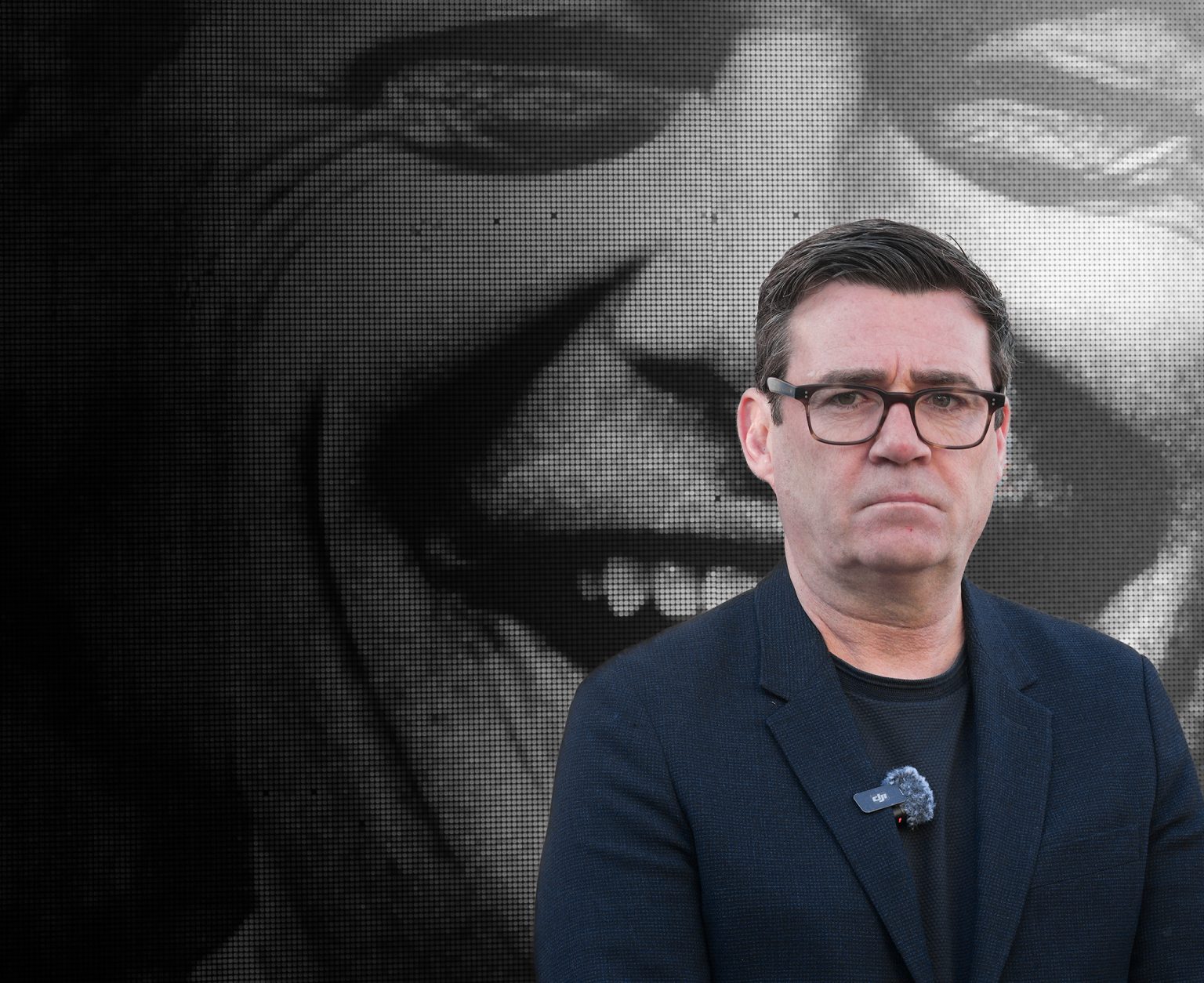
Manchester Mayor Andy Burnham poses in front of an anti-Reform UK poster featuring party leader Nigel Farage. Photo: Christopher Furlong/Getty Images
|
Andy Burnham’s attempt to return to Westminster through the Makerfield by-election was already shaping up to be one of the most important political contests in Britain. Now, an unexpected development on the populist right may have transformed the race entirely.
The Greater Manchester mayor is standing as Labour’s candidate in Makerfield, a seat the party once regarded as safe but which has become highly vulnerable due to Reform UK’s surge in northern England. Burnham’s victory is far from guaranteed. Yet a growing split between Reform UK and Restore UK may ultimately save him.
If that happens, the consequences could extend far beyond one parliamentary seat. A Burnham victory would put him in a position to replace Prime Minister Keir Starmer.
The irony is that Burnham’s route back into national politics may depend more on divisions among his political opponents than on his own qualities.
Makerfield has become a symbol of Britain’s changing political landscape. Labour held the seat comfortably for decades, but Reform UK has made major gains across the area. Reform recently swept local elections in the constituency, winning almost every council ward and establishing itself as Labour’s main challenger.
Nigel Farage’s party believed the by-election represented a major opportunity. Reform candidate Robert Kenyon has positioned himself as a working-class outsider against Burnham, who critics portray as an establishment figure returning to Westminster with leadership ambitions. Kenyon contested the seat at the last election for Reform, coming in a comfortable second.
For Labour, the contest carries serious risks. A defeat for Burnham would not only deny him a return to Westminster politics but also put the future leadership of Labour into doubt. Without Burnham, his main rival, Wes Streeting, would be emboldened, and more challengers would be likely to enter the contest. Instead of a coronation, there would be a chaotic civil war within the party.
Restore UK Enters the Race
However, Reform’s momentum is now threatened by an internal split on the right.
Restore UK was formed after Rupert Lowe, the MP for Great Yarmouth, broke with Reform UK following a bitter dispute with Farage. Lowe has since attempted to build an alternative movement on the nationalist right, arguing that Reform has become too centralized around Farage’s leadership and insufficiently radical on issues such as migration.
The party has already demonstrated unexpected strength. In local elections in Great Yarmouth, Restore UK won every seat it contested, giving Lowe momentum as he attempts to establish the movement nationally.
The new party is now standing a candidate in Makerfield. Polling suggests Restore UK could secure between 7% and 10% of the vote. That would not be enough to win the seat outright, but in a closely fought by-election, it may be enough to prevent Reform from overtaking Labour.
One recent poll showed Labour narrowly ahead of Reform, with Restore UK drawing support primarily from right-wing voters who might otherwise back Farage’s party. In electoral terms, that changes the entire contest.
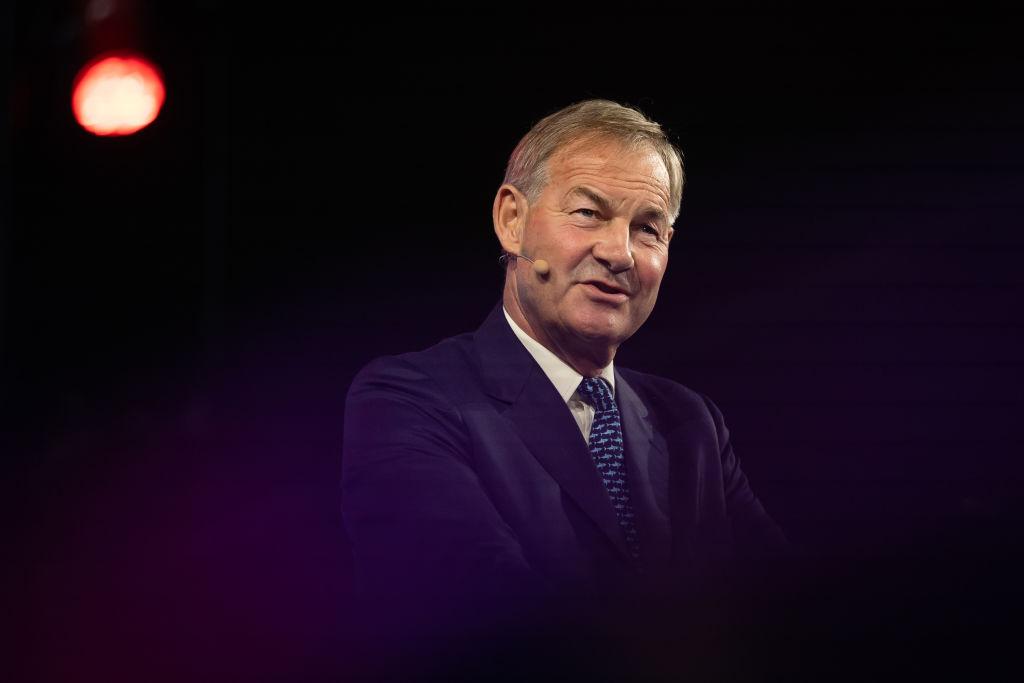
Restore UK, the party of Rupert Lowe, might split the right-wing vote and give Burnham a path to Downing Street. Photo: Tejas Sandhu/SOPA Images/LightRocket via Getty Images
Why the Vote Split Matters
Britain’s first-past-the-post electoral system heavily punishes divided political movements. If two parties compete for the same voters, both can lose even when their combined support exceeds that of their opponents. That appears to be exactly what is happening in Makerfield.
Farage’s strategy has relied on consolidating anti-establishment and anti-immigration voters behind a single party. Reform UK’s rise has been built partly on persuading former Conservative voters that backing smaller right-wing parties is no longer a wasted vote.
Restore UK threatens that calculation.
Even a relatively small shift in support could allow Labour to retain the seat despite a broader decline in its traditional working-class base. For Burnham personally, that could prove decisive. The situation also highlights how dramatically British politics has changed in recent years.
The Conservatives are barely part of the conversation in Makerfield. Once dominant across large parts of England, the party now risks irrelevance in some northern constituencies as voters increasingly realign between Labour and populist right-wing alternatives.
The fact that the discussion of vote-splitting now revolves around Reform UK and Restore UK rather than the Conservatives illustrates the scale of the transformation.
For many voters on the right, the Conservative Party is increasingly viewed as exhausted and ineffective. That political vacuum has allowed both Reform and Restore UK to grow rapidly. Yet the existence of two competing parties on the right may ultimately benefit Labour more than either movement expects.
A win in the Makerfield by-election could give Andy Burnham the chance to challenge Keir Starmer. Photo: Ryan Jenkinson/Getty Images
Burnham’s Opportunity
Burnham’s candidacy carries unusually high stakes for Labour itself. He is widely viewed as a potential successor to Starmer. Burnham has attempted to present himself as a more left-wing, economically interventionist figure than the current prime minister, while still maintaining credibility with Brexit-supporting working-class voters.
Within Labour, many believe Burnham can reconnect with Labour voters drifting toward Reform UK. He has been popular as the Mayor of Manchester and has overseen a range of projects there, like the Bee Network of trams and buses. His supporters argue that he better understands the frustrations of post-industrial towns in northern England that increasingly feel disconnected from Westminster politics.
That partly explains why the Makerfield by-election has acquired national significance. It is widely seen as an audition for Labour’s next leader. If Burnham wins convincingly, the pressure on Starmer could intensify rapidly, particularly if Labour continues struggling in national polling.
The rise of Restore UK also presents a broader strategic threat to Farage. Reform UK’s electoral model depends on consolidating the right-wing protest vote. Any fragmentation risks preventing the party from converting strong polling into parliamentary seats. They had hoped that Restore's success was limited to Great Yarmouth, where Rupert Lowe is popular, especially for donating his MP salary to charity. That hope now appears to be misjudged.
Restore UK has also attracted support from influential figures outside Westminster. Elon Musk has amplified the party’s messaging on social media, fueling speculation about future financial and media backing. Tommy Robinson also appeared sympathetic toward Restore UK during the recent Unite the Kingdom rally in London, further underlining the party’s attempt to position itself as a harder-edged alternative to Reform.
The Possibility of a Hung Parliament
A divided right could allow Labour to retain dozens of marginal constituencies it might otherwise lose. Under Britain’s electoral system, relatively small vote splits can produce dramatic parliamentary outcomes.
If similar contests emerge across the country at the next general election, Britain could easily end up with a hung parliament in which no party commands a clear majority. In that scenario, Makerfield may later be viewed as an early sign of a wider political realignment.
For now, however, the immediate battle remains local. Burnham still faces a difficult race in a constituency where Labour’s dominance has weakened sharply. But thanks to divisions among his opponents, he may now have a clearer path back to Westminster than many expected only months ago.
And if Burnham returns to Parliament, Keir Starmer is unlikely to remain Prime Minister for long.
Welcome to the comments section of the Štandard daily. Please take note of our guidelines, comments are moderated by us. You can contact the moderators at support@statement.com.
Participate in the discussion
Comments are available to subscribers only. If you'd like to join the discussion, choose a subscription starting at €6.72 per month.
All comments 0
Register
Comments are available to registered users only. If you'd like to join the discussion, register here.