Earlier in the year, Starmer used Labour’s National Executive Committee (NEC) to prevent Burnham from standing in the Gorton and Denton by-election. After the May elections, however, the same NEC swiftly approved Burnham’s candidacy for the Makerfield by-election, a sign that Starmer’s authority is evaporating.
Nobody else even bothered to contest the seat. Why would they, when everyone understands that Makerfield is intended as Burnham’s springboard back into Parliament and, ultimately, toward a leadership challenge?
Josh Simons, the sitting MP for Makerfield and former director of Labour Together, the group that helped propel Starmer to power in 2024, resigned deliberately to create the vacancy. Even old allies have turned against him.
Yet Starmer still has one card left to play.
From Human Rights Crusader to Hollow Premier
Starmer’s fall from grace traces a long arc. He entered public life as a successful, crusading human rights lawyer, part of a fresh generation of legal figures challenging authority in the 1990s. He worked on the famous McLibel case and traveled the world pursuing symbolic legal battles against capital punishment.
Rumors even swirled that his early career had inspired aspects of Mark Darcy in Bridget Jones’s Diary, although author Helen Fielding later clarified that she had never met him and noted only a superficial resemblance.
He traded his status as a rebel for that of an establishment insider when he became Director of Public Prosecutions (DPP) from 2008 to 2013. Several high-profile cases defined his tenure, including overseeing the retrial and conviction of Stephen Lawrence’s murderers, prosecuting MPs involved in the expenses scandal and handling terrorism cases. Starmer developed a reputation for methodical, institutionally grounded justice.
Elected to Parliament for Labour in 2015, he quickly joined the shadow cabinet. Jeremy Corbyn’s downfall opened the door to the leadership. Starmer won the 2020 contest by promising continuity with Corbyn’s economic radicalism while securing crucial backing from the Labour right.
Organizations such as Labour Together provided intellectual and organizational support, although it later emerged that the group had failed to declare donations and had hired private investigators to monitor journalists examining its activities. Morgan McSweeney, the head of Labour Together, would later follow Starmer into Downing Street as chief of staff.
Starmer swiftly turned on the Corbynistas, purging or marginalizing many of them and deepening divisions within the party. Electoral success meant few objected. Attempts to recapture the energy of early Corbynism, including the launch of Your Party as a challenger movement, collapsed as the far left descended into infighting over donations, leadership and which Trotskyist entryist groups should be excluded. Starmer’s moment appeared to have arrived.
Facing an exhausted Conservative Party, Starmer secured a landslide victory in 2024. After only nine years in politics, he had become prime minister. His opponents were divided and, with a commanding majority, he appeared free to implement his vision for the country.
That vision never arrived.
Starmer’s Government Begins to Fall Apart
As a lawyer and public servant, Starmer had excelled within strong institutional frameworks. In government, however, he deferred heavily to bureaucracy and established institutions, viewing his role as managing processes rather than imposing a bold political strategy or narrative. The result was a technocratic style of government that often clashed with public sentiment.
The decision to strip winter fuel payments from pensioners led opponents to label him “Keir Starmer, granny harmer”. Plans to impose inheritance tax on farmers, a move critics warned could devastate small family farms, sparked protests in London, with tractors blocking the streets around Westminster.
During the Southport riots, Starmer was booed at public appearances, while the imprisonment of individuals over social media posts inflicted lasting damage on his reputation. His approval ratings never recovered, steadily declining to their current nadir.
Baffled by the backlash, Starmer retreated further into himself. Sources described a prime minister unwilling to cultivate personal relationships with MPs, rarely wining and dining colleagues and therefore struggling to secure loyalty when he needed it most. He guarded his weekends closely, preferring to watch his beloved Arsenal rather than work. Further leaks claimed that he never sent emails between Friday evening and 9 a.m. on Monday mornings.
At the same time, questions emerged about his personal finances. Lord Waheed Alli, a major donor, provided suits, spectacles and accommodation worth tens of thousands of pounds. The revelations, which surfaced in 2024, fueled the so-called “freebies” scandal and accusations of cronyism, although Starmer defended the arrangements as necessary to protect his family’s privacy during the election campaign.
He was not alone. Other senior Labour figures accepted thousands of pounds in donations for clothing and hospitality, including expensive tickets to Taylor Swift concerts.
Worse was still to come. In late 2024, shortly after entering Downing Street, Starmer appointed Peter Mandelson, the veteran New Labour fixer, as Britain’s ambassador to the United States. Although widely regarded as a capable operator, the former cabinet minister quickly became engulfed in a major scandal. Long known for his close friendship with the late convicted sex offender Jeffrey Epstein, Mandelson had reportedly failed initial security vetting because of reputational concerns and lingering associations with Epstein.
Despite these warnings, which Starmer later claimed had been withheld from him by Foreign Office officials, Mandelson was cleared and sent to Washington. He was dismissed in September 2025 after the release of fresh Epstein documents revealed deeper ties, including emails suggesting Mandelson had passed sensitive government information to Epstein years earlier.
The fallout was relentless. The Metropolitan Police opened an investigation into alleged misconduct in public office and critics accused Starmer of misleading Parliament.
Damaged by these associations and lacking any clear governing vision, Starmer might still have survived politically. Yet his failure to cultivate support among Labour MPs proved fatal. An attempt at welfare reform, which merely sought to slow the growth of spending rather than reduce it outright, collapsed after a rebellion from his own backbenchers.
Financial legislation is always the decisive test of a government’s authority, and after this defeat, Labour MPs realized that they could compel Starmer to bend to their demands rather than the other way around.
The Trap Awaiting Starmer’s Successor
Labour’s landslide victory proved to be a mirage. Although the scale of the win was unprecedented, the party secured fewer votes than Jeremy Corbyn received in Labour’s historic 2019 defeat. There was no great wave of enthusiasm for Starmer. Instead, many right-wing voters, disillusioned by Conservative failures, simply stayed home.
Reform UK changed that equation. The party offered disaffected conservative voters an alternative untainted by 14 years of broken promises and political exhaustion. Reform emerged as the clear winner of the local elections, taking votes not only from the Conservatives but also from Labour’s traditional base.
That reality doomed Starmer. Yet whoever succeeds him will inherit a dire political and economic legacy. Labour has always been a party of redistribution, but Britain’s struggling economy offers little left to redistribute. Higher taxes have already been poured into public sector pay settlements with few visible improvements in return. Growth targets faltered amid heavy regulation, while housebuilding fell to its lowest level in more than a decade. Lowering energy prices remains impossible as long as Labour stays committed to Net Zero policies.
Immigration could provide a temporary boost by increasing headline GDP, even if GDP per capita declines, but such a strategy is so unpopular that it would amount to political suicide. Labour MPs have little appetite for spending cuts, particularly when polling suggests many of them are likely to lose their seats at the next election. There is therefore no obvious route to free up additional money.
The only remaining option would be to rejoin the European Union in the hope of reviving economic growth. Yet the European Union of 2026 is not the European Union of 2016. Many of its largest member states are grappling with economic stagnation of their own.
Rejoining would require Britain to abandon every international trade agreement signed since Brexit in the hope that slightly lower barriers with Europe could compensate. It would also mean overturning the largest democratic mandate in British history without holding another referendum.
Nor is there any indication that Brussels would welcome Britain back on favorable terms. The country would likely secure a worse arrangement than the one it previously enjoyed. For any successor, the issue represents a poisoned chalice.
Starmer understands this and knows that his decisions in the coming weeks could shape what follows. By refusing to set a firm departure timetable, he can manipulate the political calendar around the crucial Makerfield by-election on 18 June.
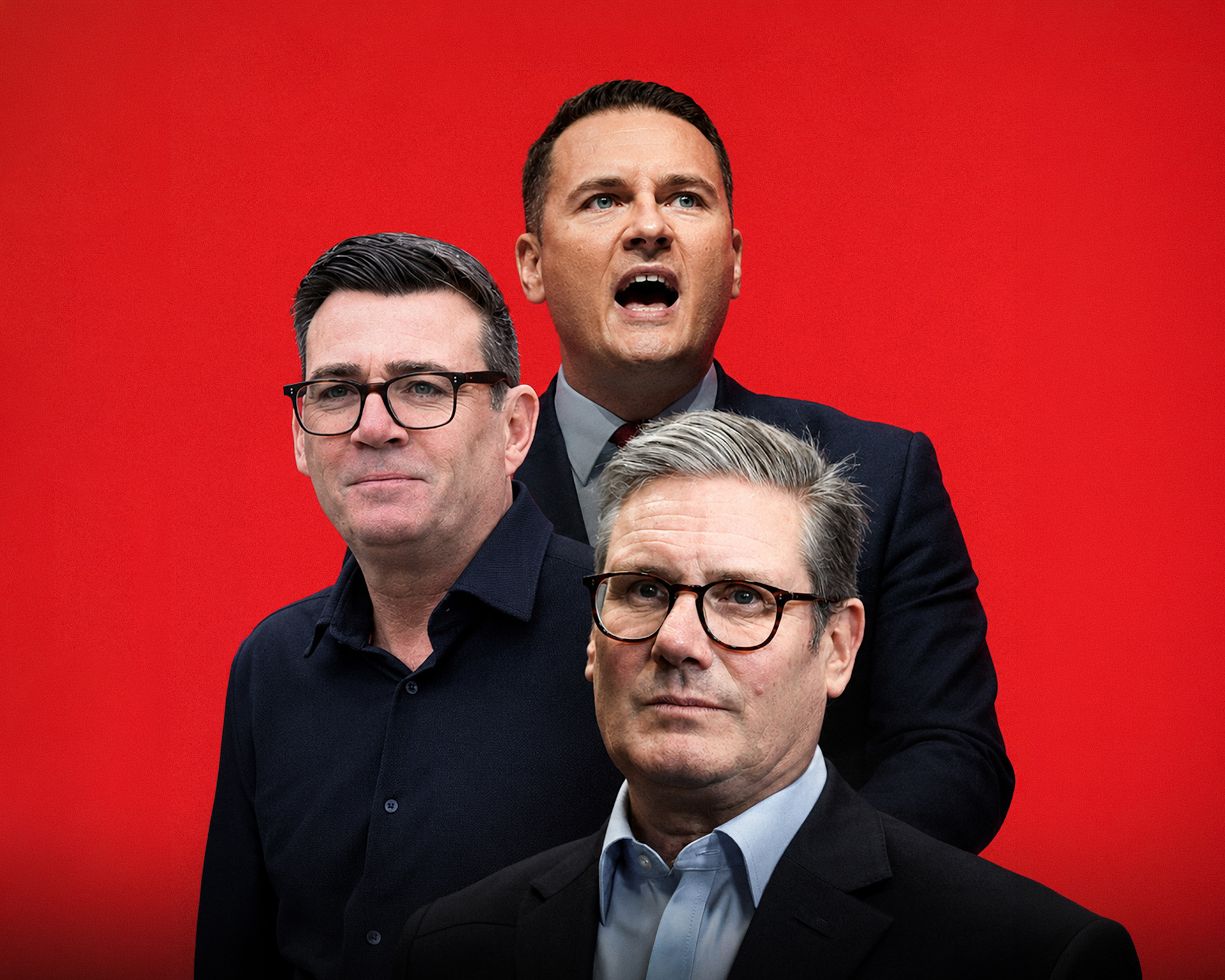
Resigning before the contest would deny Andy Burnham the opportunity to return to Parliament, potentially excluding him from an immediate leadership race or forcing him into a rushed campaign that would favor Wes Streeting’s more organized support among MPs. Remaining in office until after a Burnham victory, however, would allow the Greater Manchester mayor time to consolidate support and tilt the balance in his favor against the more centrist Streeting.
Starmer is reportedly hoping for a coronation process that avoids a damaging internal battle. Yet events may no longer be fully under his control. Reform UK is polling strongly in Makerfield despite starting as the challenger.
A Burnham defeat would derail any attempt at a smooth transition. In that scenario, other Labour figures could enter the race, with names already circulating including Angela Rayner, Ed Miliband and former soldier Al Carns. If that happens, predicting the outcome would become almost impossible.
There is even the possibility that Starmer could choose to remain in office and contest the leadership himself. Polling suggests Streeting would probably lose against him, raising the extraordinary prospect of a politically crippled Starmer continuing as prime minister despite his authority having collapsed.
Thus, even as his departure appears inevitable, Starmer retains the ability to influence both its timing and its consequences. He may still prolong his tenure modestly or tilt the balance toward one successor over another. In the shadows of Chequers, the lawyer-turned-prime-minister weighs his final maneuvers.
His premiership may end in disappointment, but its coda could still shape Labour’s next chapter.