
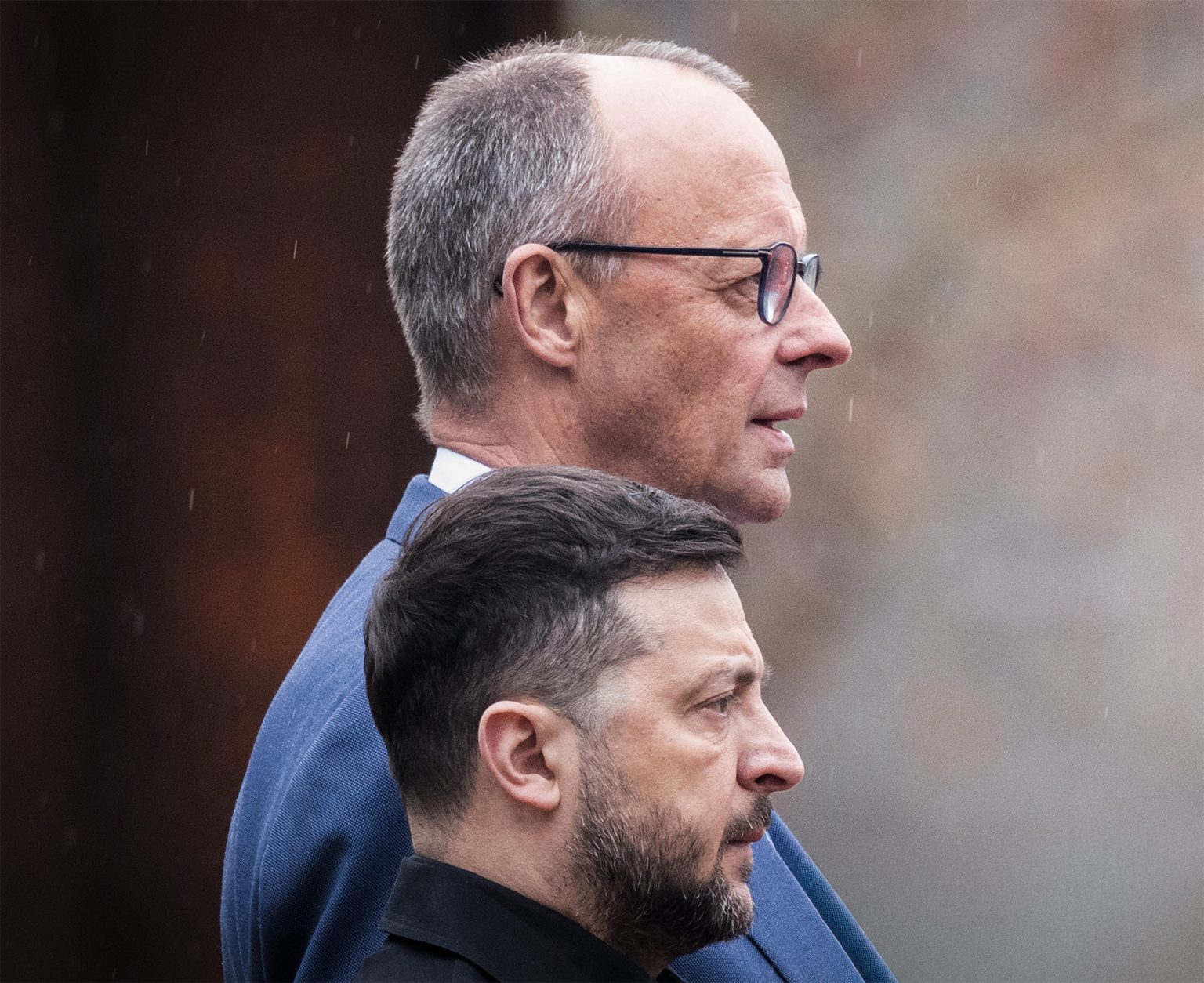
Europe’s leaders find themselves in an awkward position because they have lost their way on Ukraine. After more than four years of war, all the illusions on which they built their plans have collapsed, leaving them without a strategy. Yet they remain trapped in their own beliefs and superstitions.
At the same time, Friedrich Merz’s proposal for Ukraine to become an associate member of the EU is, in Volodymyr Zelensky’s view, unfair because it would not give Kyiv real voting rights. Naturally, Zelensky wants more than symbolic inclusion. Yet that is precisely the problem: Europe appears willing to offer Kyiv little more than appearances and illusions. His country would be neither fully inside the EU nor fully outside it. It would become a puppet with limited room for maneuver.
A Familiar Trap
Brussels tried a similar tactic of limited membership before the war, and it did not end well. Ukraine was supposed to open its market to Europe, but without Europe fully opening its own market to Ukraine. That created a problem for Russia, which had concluded free trade agreements with Ukraine within the Commonwealth of Independent States (CIS). As a result, Europe could have flooded the Russian market with cheaper goods without Moscow having reciprocal leverage.
It is worth recalling that the political part of the EU-Ukraine Association Agreement was signed in March 2014. The Deep and Comprehensive Free Trade Area (DCFTA) was launched in early 2016.
At the time, Russian President Vladimir Putin put pressure on then President Viktor Yanukovych, who had to start maneuvering. That eventually led to the Maidan, a point of no return and, from today’s perspective, a key root of the unraveling of Ukraine’s future. Its prospects were shattered by brutal Russian aggression, but those events were not inevitable.
Today, we are seeing similar attempts by European leaders who are unwilling, and apparently unable, to see the consequences of their actions.
Merz’s Ideas
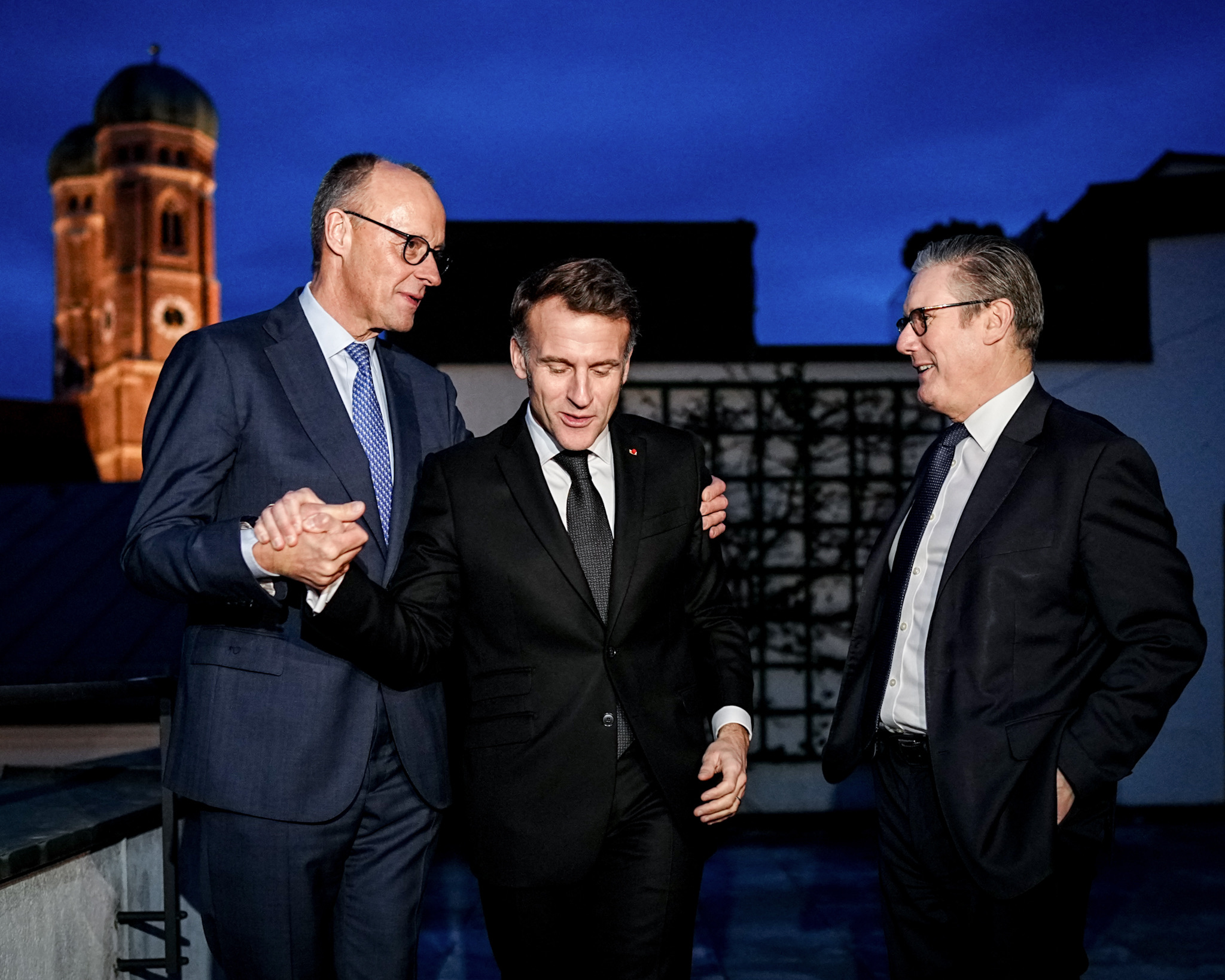
The proposal, first put forward by the German chancellor in April and further fleshed out this week, would allow the Ukrainian president to attend EU leaders’ summits, but without voting rights. Merz presented it as an intermediate step on Ukraine’s path to full EU membership, which he said could help reach an agreement to end Russia’s war against Ukraine.
In reality, it would do exactly the opposite. The security guarantees that would form part of associate membership would pull Europe into the war at a time when its leaders have no idea what the next step in this losing conflict should be.
To keep Ukraine willing to sacrifice itself “for Europe”, Merz wants to offer Kyiv an illusion it does not need, while also raising the stakes with Russia. Ostensibly, the aim is to achieve peace more quickly. If that already looks like unseemly escapism, it is enough to remember the not-so-distant days when Europe’s loudest armchair generals called for Russia to be crushed, longed for the breakup of the Russian Federation and ignored the risks of nuclear conflict.
This time, however, it is no longer just the media and the trolls. It is the German chancellor, whose approach may drag Europe deeper into a war that Ukraine and its sponsors are losing.
How to Keep the Illusion Alive
The ideas about associate membership come after Viktor Orban’s defeat in Hungary. Zelensky expected the fall of Orban, who had steadfastly rejected Ukrainian membership, to open a fast-track route into the EU.
The catch is that Orban was never the real obstacle to Kyiv’s membership. After all, you cannot block something that the whole of Europe effectively rejects. Orban merely named what others were not willing to say. For Brussels circles, he played the role of a useful scapegoat, someone to blame while the self-styled statesmen enthused about Ukraine’s “inevitable European future”, which, unfortunately for Kyiv, is impossible to realize.
While Orban was there, European hypocrisy ran smoothly. After his defeat, that became harder, and the curtain had to be lifted, at least in part.
Merz was the one who lifted it. The latest deception over Ukraine is that Kyiv would have a representative at the highest level in the European Commission, as well as non-voting members of the European Parliament. At the same time, Ukraine would be covered by the EU’s mutual assistance clause and could draw funds from certain parts of the EU budget.
Europe would therefore support Ukraine with de facto security guarantees under Article 42(7), at a time when the key Western player in Washington, on which Europe remains militarily dependent, is seeking a new security strategy toward Russia.
Europe wants to have it both ways, while Ukraine is expected to pretend that it still believes the fairy tales about its “inevitable European future”. Since Ukrainian membership is seen in Europe as a millstone that would drag the European Union under, Kyiv must be offered an illusion instead.
Yet the arrangement is loaded with dynamite. Given the security guarantees for the new “quasi-member”, it would mean a greater escalation of the conflict with Russia and narrow the victorious aggressor’s exit routes.
At the same time, Friedrich Merz has not explained how the step would lead to a quicker end to the war in Ukraine. After all, the threat of bared teeth works only with beasts that have teeth. It does not work with toothless protégés still trying to understand the new approach of their American master and wartime protector, who is apparently looking for a way to reach an agreement with Russia, albeit without long-term success so far.
Putin’s Conditions for Peace
Yet such proposals come at a time when wider geopolitical circumstances might favor a peace deal, or at least meaningful momentum toward one. Russia is currently struggling at the front, there are signs of waning resolve in broader domestic circles, and Europe has rekindled its hopes that Ukraine might seize the initiative. We know how short-lived and futile such illusions tend to be.
More importantly, however, the situation may also suit Russia’s efforts to end the war. According to Bloomberg, Putin may be interested in ending the war by the end of the year, but only on terms he could present as a victory. Those are conditions Europe would have to recognize.
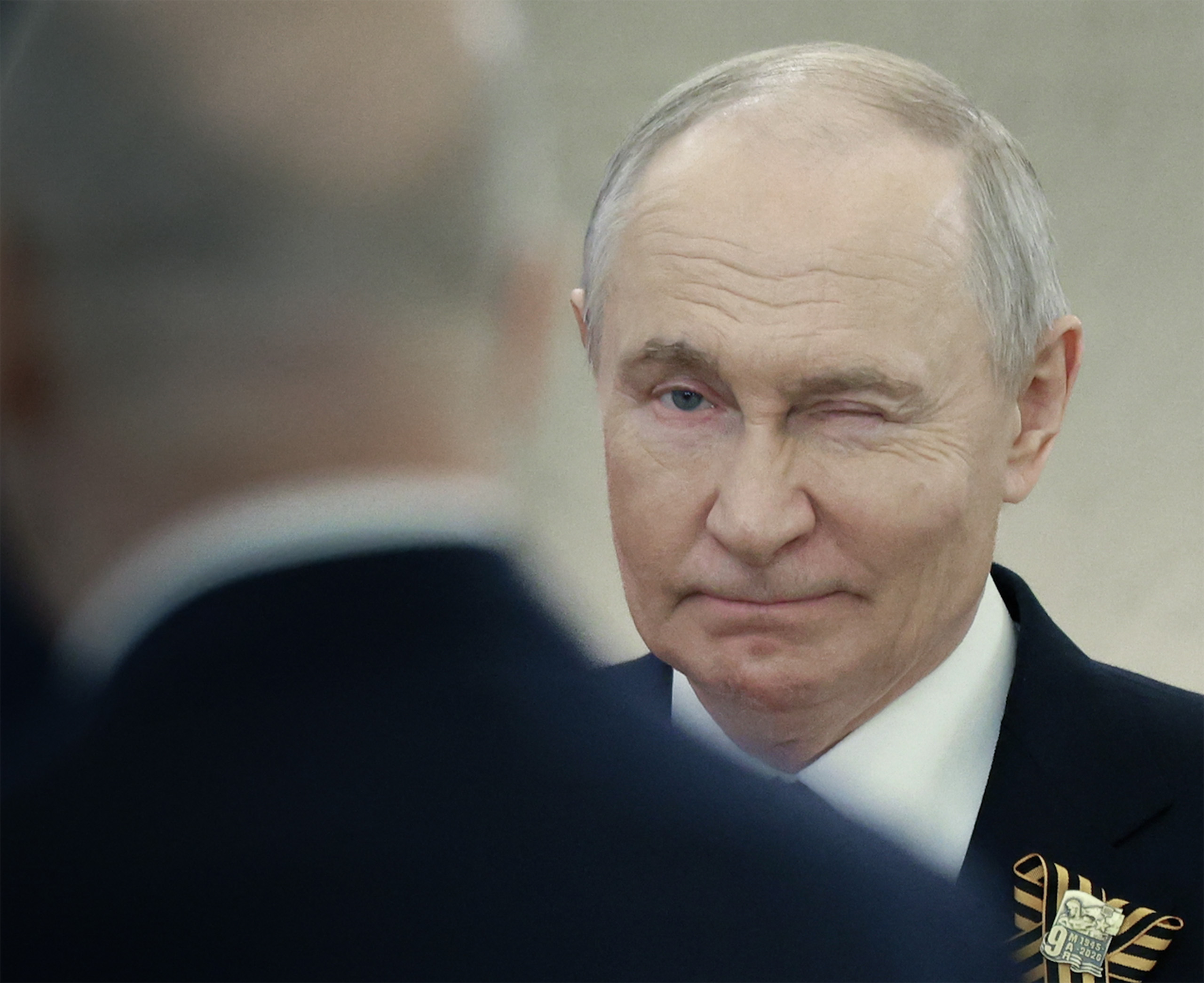
Putin would want to sell peace to his own citizens as a strategic achievement, which should not be all that difficult with a little sense of reality. Without that, peace will not be possible. Naturally, Moscow will insist on recognition of its control over Donbas and on security arrangements along the Russia-Ukraine-Europe-US line, creating a new security architecture in which Russia’s interests are respected. In particular, that means the interests whose disregard helped lead to the war, namely NATO’s attempt to turn Ukraine into a battering ram against Russia.
Recognition of Russia’s territorial gains would then become a matter of reality. The position of the divisive Donald Trump will be crucial. For two contradictory reasons, the US president could help push the two decisive powers toward a swift end to the war in Ukraine.
In the foolish war in Iran, the US is depleting its strategic air defense stockpile, leaving too little for Ukraine’s needs.
At the same time, Republicans in America are expected to suffer losses in the midterm elections. That would weaken Donald Trump’s power in Congress, leaving him without the political strength to strike a possible deal with Vladimir Putin. The only hopeful version of such a deal would inevitably have to include the lifting of sanctions.
Putin may therefore have good reason to seek peace sooner rather than later.