The Henry Nowak Case and Britain’s One-Way Policing Problem
When a police force's mistakes always appear to err in the same direction, questions begin to arise about whether they are really mistakes at all.
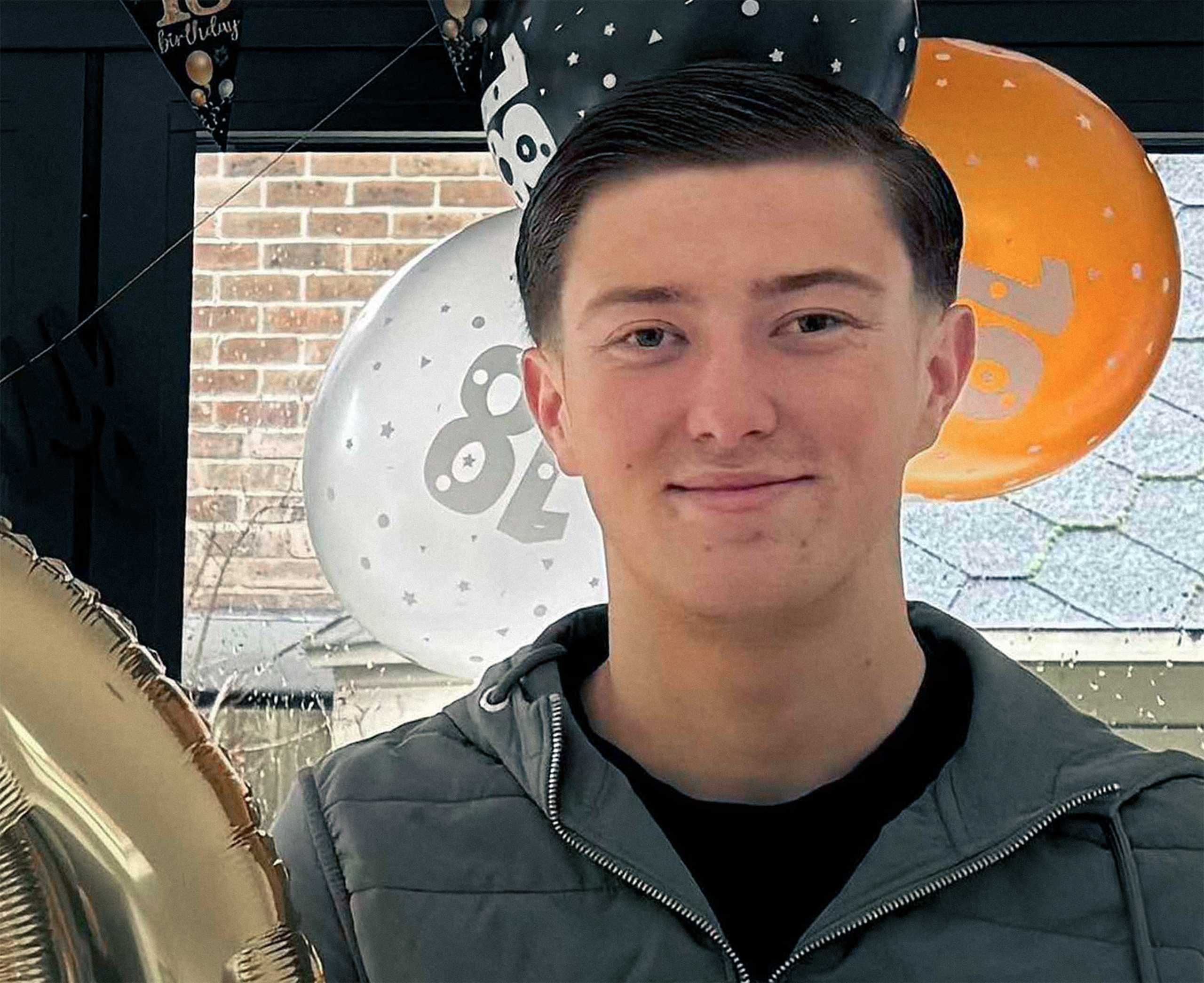
“Enough of anti-white prejudice”, Nigel Farage said this morning, after the release of horrifying video footage of the last minutes of Henry Nowak. The recording shows police officers restraining the 18-year-old with handcuffs on suspicion of a racist incident, even as he was bleeding to death.
Since the footage was released on Tuesday morning, the case has inflamed Britain. Nowak was walking in the street when he encountered his killer, a Sikh man named Vickrum Digwa. In his sentencing remarks, which interested readers should read in full, Judge William Mousley described what happened. A chance meeting between Nowak and Digwa escalated into violence after a minor verbal altercation. Digwa then unsheathed his ceremonial Sikh blade and inflicted a fatal wound 10 cm deep in Nowak’s chest. Medical evidence suggested that even with immediate treatment, Nowak could not have survived.
The killing itself is not unusual. Nowak’s death was one of more than 170 fatal stabbings in the UK in 2025. Knife crime remains both a perennial political problem and a recurring point of contention. What made the crime so traumatic for Nowak’s family, and what is likely to make it politically explosive, was the intervention of the British police. That intervention has now been recorded in a video that may remain infamous for years. The footage is below. It is distressing.
The video shows Nowak lying prone on the ground while his killer complains that the 18-year-old had racially abused him and knocked his turban from his head. The police appear focused on the allegation of racial abuse. They begin to manhandle Nowak, forcing him to sit up from his position on the ground. A clearly weakened Nowak says: "I’ve been stabbed." An unnamed police officer responds, without carrying out any medical check: "I don’t think you have, mate."
As Nowak’s father said: "The police were told both by our son himself and by a member of the public who called 999 that they heard someone shout that they had been stabbed. But the police did not believe them. Henry was then pulled across the gravel, his hands forced behind his back, and he was placed in handcuffs. Instead of being treated as a dying victim, police formally arrested Henry for assault and read him his rights."
Policing Controversies Drive Political Anger
The British police are no strangers to allegations of political policing. In recent years, such controversies have largely focused on free speech. In 2023, Yorkshire Police faced a major public outcry after a policewoman was recorded entering the home of a severely autistic teenage girl to arrest her. The girl had allegedly said the officer "looked like her lesbian nana".
Lucy Connolly, the wife of a Conservative Party councillor, was sentenced to 31 months in prison for an angry tweet sent after the Southport stabbings. In 2024, Daily Telegraph columnist Allison Pearson was arrested over a 2023 tweet criticizing British police for posing for photographs with anti-Israeli protesters. She was arrested on suspicion of an offence under the Public Order Act. Last year, the Irish writer Graham Linehan, well known for his gender-critical activism, was arrested at Heathrow Airport on suspicion of hate speech. In all but the Connolly case, UK police later issued apologies.
This atmosphere of apparently politically motivated policing has done much to poison relations between UK police forces and a section of the public that has become alienated from the country’s political consensus. That alienation is largely focused on immigration, but it is also tied to crime, free speech and economic wellbeing. It has helped fuel the extraordinary rise of Reform UK in a country that has been governed by either the Conservatives or Labour for more than a century.
An Intersection of Rage
Into this maelstrom of public discontent over British policing comes the Nowak case. It is likely to become political fuel for Farage. Nowak was white. His killer was Sikh and of migrant heritage. There is compelling evidence suggesting that police prioritized a claim of racism over an emergency call from a member of the public reporting a stabbing. There is traumatic video footage. There is also the dignified and heartbreaking statement from Nowak’s father.
The UK home secretary, Shabana Mahmood, is herself of migrant heritage. In many ways, she has been less than the archetypal female politician of the left. She has surprised some observers in office by positioning herself as one of the rightmost members of the Labour cabinet. She has often spoken harshly about the need to restrict migration and crack down on crime. She has also criticized British police for "policing perfectly legal tweets".
Yet the tone of British policing does not seem to be set from the top down so much as from the bottom up. Suella Braverman, the former home secretary and former Conservative who has since defected to Reform UK, has argued that much of the problem lies in the influence of NGOs and continuing professional development (CPD) training received by British police. She has highlighted, for example, ongoing partnerships between many British police forces and NGOs focused on anti-racism training. These partnerships helped produce the National Police Chiefs’ Council anti-racism plan, which includes the goal of "improving policing for black people". Meanwhile, a public row has continued for some time over the fact that the controversial LGBT charity Stonewall is listed as a provider of CPD for British police officers.
The questions in this case will, as ever, concern the "why". Why did a police officer immediately dismiss Nowak’s statement that he had been stabbed? Why did the officer seem, by contrast, so focused on the allegation, disputed by the sentencing judge, that Nowak had said something racist? What was the thought process in that officer’s mind? What had influenced him to think in that way? More broadly, why do so many policing errors in Britain appear to err in the same direction?
It is this latter question that may be the most relevant. Policing bodies are human organizations made up of fallible people who will make mistakes from time to time. But when those mistakes appear to run in the same direction, and when they consistently seem to disadvantage the same group of people, it is not surprising that those people may conclude that they are not mistakes at all.
For Henry Nowak’s family, the pain of his death has been compounded by the knowledge that in his final moments he was treated as a criminal, while the criminal who killed him was treated as a victim. Would this have happened had Nowak’s race and his killer’s race been reversed? Nigel Farage does not think so. That, perhaps, helps explain why Reform UK has become such a powerful political force in so short a time.
Welcome to the comments section of the Štandard daily. Please take note of our guidelines, comments are moderated by us. You can contact the moderators at support@statement.com.
Participate in the discussion
Comments are available to subscribers only. If you'd like to join the discussion, choose a subscription starting at €6.72 per month.
All comments 0
Register
Comments are available to registered users only. If you'd like to join the discussion, register here.