
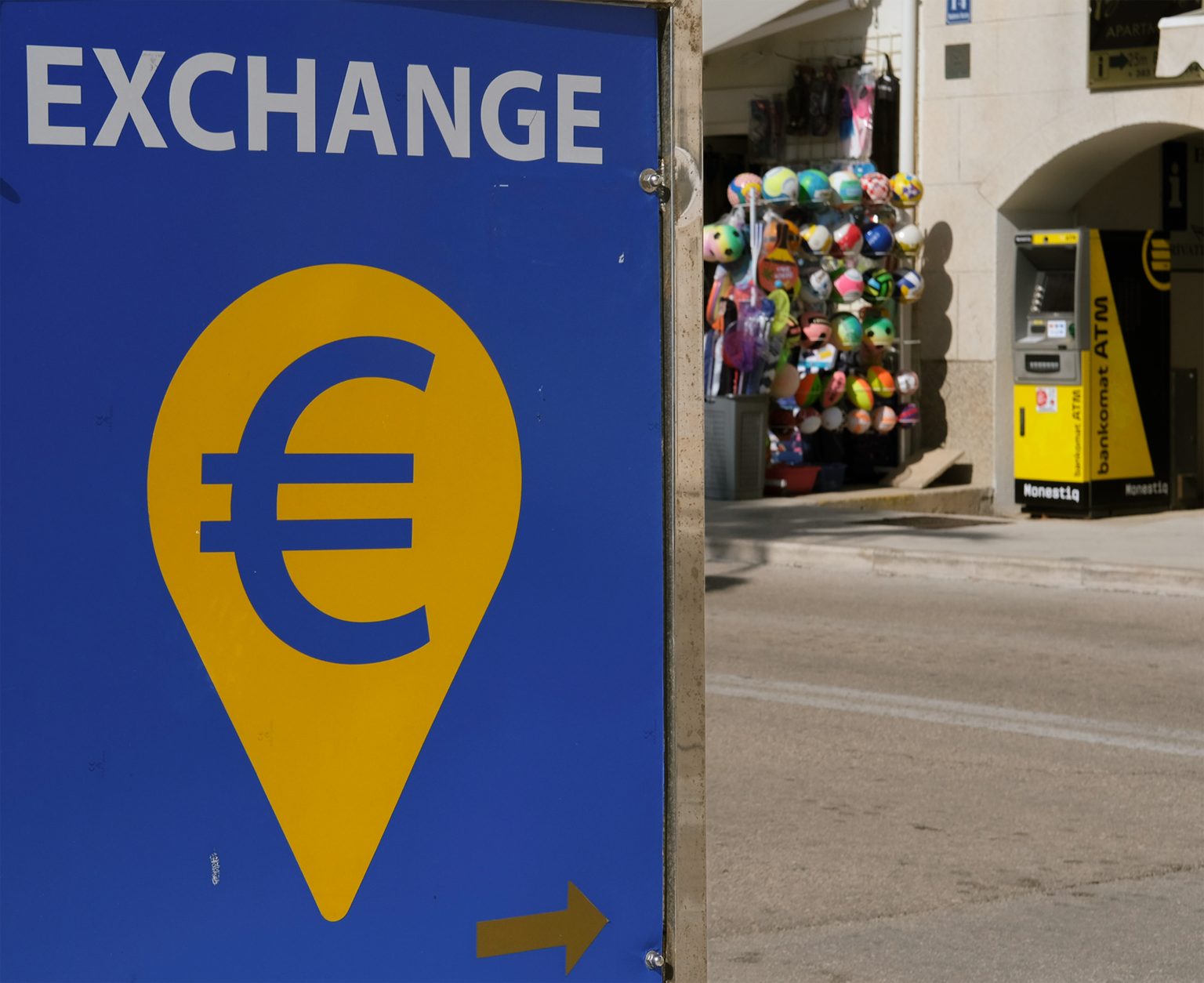
Previous generations went to a currency exchange before traveling abroad and converted whatever change they had left when they returned. Today’s travelers face a different challenge: hidden fees, unfavorable exchange rates and technologically sophisticated payment terminals and ATMs.
In the digital age, the issue is no longer just where to change money, but above all how to pay so that holidays do not become unnecessarily expensive.
Travelers abroad can now choose from a range of payment options, including cash, credit cards, multi-currency accounts and mobile apps such as Revolut and Wise. Each has its advantages, but also its risks. The key to financial efficiency is to minimize the number of intermediaries taking a cut from each transaction. The fewer there are, the better the exchange rate and the lower the fees.

Cards Are Efficient, but Only if Used Correctly
Cashless payments tend to be the most efficient in practice, provided they are used correctly. The most common mistake occurs when a payment terminal or ATM offers to settle the transaction in euros. This is known as dynamic currency conversion (DCC). With DCC, the terminal operator sets the exchange rate, not your bank or card network. The resulting rate is often 5%–10% worse. From an efficiency point of view, DCC is not a service but an expensive mistake. The best option is always to pay in the local currency.
Fintech services such as Revolut or Wise offer multi-currency accounts that allow users to hold money in different currencies and exchange it in advance, often at the interbank rate. Payments are then made directly in that currency, without further conversion, additional fees or stress over fluctuating exchange rates.
Another advantage is the ability to track exchange rates in real time and exchange funds when the rate is favorable. Compared with traditional banks, the difference can amount to several percent. In terms of cost-effectiveness, such services are coming close to the ideal payment method.

Why Cash Still Matters
Despite digitalization, cash still has its place. Markets, cafes, local transport and small traders often offer no other option. Here, too, preparation is key. It is best to exchange money in your home country in advance, ideally at a trusted exchange office.
Monitoring the exchange rate a few weeks ahead of departure usually pays off. Airport exchange offices, hotel reception desks and kiosks in tourist areas, by contrast, tend to offer very unfavorable terms.
ATM withdrawals can be fast, but they are often not fully transparent. The customer’s home bank may charge a fee, but so may the ATM operator, even when the withdrawal is described as free. Banks take different approaches to withdrawals abroad. Some offer a solid exchange rate but charge a fee for each withdrawal. Others do not charge for withdrawals but compensate for that with a worse exchange rate.
One final point is perhaps more behavioral than financial. People tend to spend less when they pay with cash. The feeling of real money in the hand makes spending feel more tangible. A few local-currency banknotes in the wallet can therefore serve as a financial brake, as well as fulfilling a practical purpose, and help prevent unnecessary impulse purchases.
Originally published on lukaskovanda.cz.