

On Sunday, Armenians are voting not only on a government, but on the direction of a state still trying to loosen Moscow’s grip without provoking it. In recent weeks, the warnings from Russia have grown louder.
Polls show that Civil Contract, the party led by Prime Minister Nikol Pashinyan, is ahead with around 30% support. Its main challenger is Russian-Armenian billionaire Samvel Karapetyan, whose Strong Armenia party can expect between 6% and 11% of the vote. While Pashinyan is trying to bring the country closer to Brussels, Karapetyan favors maintaining close ties with Moscow.
Former President Robert Kocharyan, leader of the Armenia Alliance, takes a similar position. Pashinyan rightly boasts that since coming to power in 2018, he has doubled GDP per capita, opened hundreds of kindergartens and built thousands of kilometers of roads. However, support of around 30% shows that not everyone values only these indicators.

Peace or War?
Relations between Yerevan and Moscow deteriorated in September 2023, when Russian peacekeepers failed to intervene in Azerbaijan’s blitzkrieg offensive against ethnic Armenians in Nagorno-Karabakh. Baku gained control of the Armenian enclave after the attack, prompting a mass exodus of around 100,000 Armenians. As a result, Armenia suspended its membership of the Russian-led Collective Security Treaty Organization (CSTO) in February 2024.
During the offensive, which claimed about 400 lives, Azerbaijan, with Turkish support, deployed heavy artillery, rocket launchers and drones against the Armenians. The conflict in the mountainous region has smoldered since the late 1980s, with several periods of open warfare.
Nagorno-Karabakh had enjoyed de facto independence for three decades until Baku gained full control of the territory in 2023. In August 2025, at the initiative of US President Donald Trump, a peace framework was brokered between Prime Minister Pashinyan and Azerbaijani President Ilham Aliyev, confirming Baku’s dominance over Nagorno-Karabakh.
The peace agreement has still not been signed. According to Azerbaijan, the obstacle is the preamble to the Armenian constitution, which refers to Armenia’s 1990 Declaration of Independence. The declaration, in turn, refers to a 1989 resolution on the “unification of the Armenian SSR and Nagorno-Karabakh”.
Azerbaijan claims that without changing the constitution, Armenia indirectly retains territorial claims to Karabakh. Pashinyan has therefore promised to amend the constitution through a referendum in order to reach a peace agreement.
If Pashinyan does not secure a two-thirds majority in parliament, the promised referendum will be difficult to deliver, and Yerevan’s peace efforts could founder. His opponents say he is getting too close to Baku.

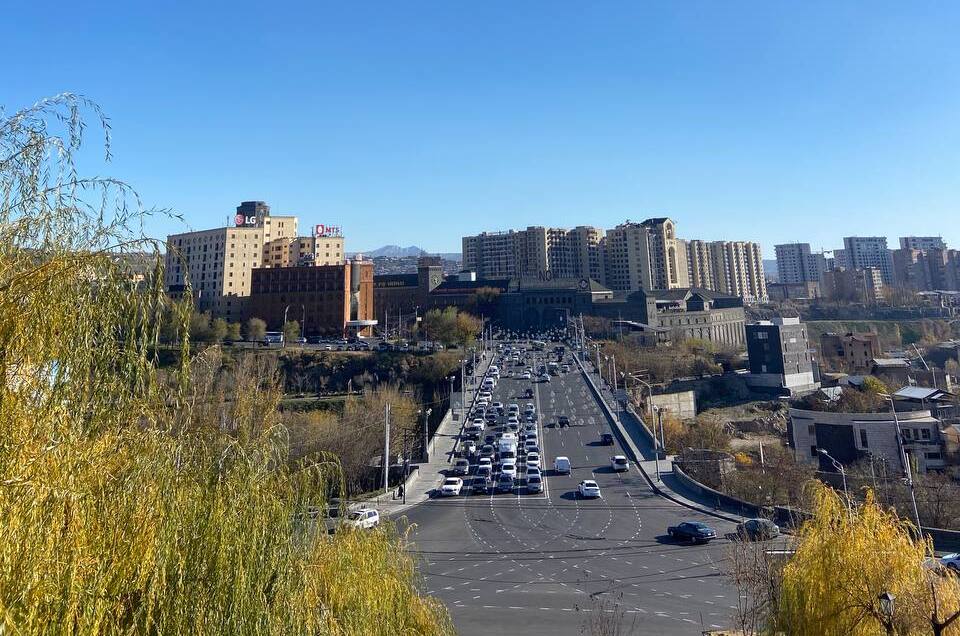
Between Europe and Asia
About 98% of the country’s three million people are Armenians. The 100,000 Armenians expelled from Nagorno-Karabakh can also vote if they have processed their Armenian citizenship papers in time, and it is safe to assume that they will not vote for Pashinyan.
Reuters reported in late May, citing Western intelligence and government officials and documents seen by the agency, that Russia had considered transporting up to 100,000 Armenians living in Russia to Armenia to vote against Pashinyan. Under Armenian law, voting from abroad is not possible. However, it is unclear whether the Kremlin will ultimately resort to such a logistically and financially difficult step.
The elections are crucial for Russia. In February 2024, Pashinyan said his country could no longer rely on Russia as its main defense partner. Yerevan, he said, should consider closer security relations with other states, including the US, France, India and Georgia.
The prime minister’s words were turned into action in August 2025, when members of Armenian peacekeeping brigades held a joint eight-day military exercise with the US Army Europe and Africa and the Kansas National Guard.
During a tense pre-election debate on 4 June 2026, Karapetyan challenged Pashinyan over Armenia’s effective suspension of its participation in the CSTO, asking who would guarantee peace with Azerbaijan if Yerevan formally left the Russian-led security bloc.
“Well, we will leave the CSTO. Are you trying to scare us? Neither you nor your uncle will decide. We will decide, and we will leave. Armenia is the guarantor: the state, the army”, Pashinyan replied.
He was apparently referring to Russian President Vladimir Putin when he spoke of “your uncle”.
Pashinyan’s European turn had already been given legal form in April 2025, when Armenian President Vahagn Khachaturian signed a law approved by parliament on the start of the country’s EU accession process. The Kremlin said at the time that it considered the law the informal beginning of Armenia’s departure from the Moscow-led Eurasian Economic Union (EAEU).
Russian Foreign Minister Sergei Lavrov and Kremlin spokesman Dmitry Peskov were clear: Armenia cannot join the EU while it remains a member of the EAEU. Pashinyan clarified after the law was passed that legislation alone was not enough to join the EU. The decision, he said, “can only be taken by way of a referendum”. No such vote has yet taken place in Armenia.
Until such a referendum is held, Armenia’s relationship with the EU will remain one of deepening partnership rather than accession. The Comprehensive and Enhanced Partnership Agreement has been in force since 2021. On 30 June 2025, EU foreign policy chief Kaja Kallas and Armenian Foreign Minister Ararat Mirzoyan announced a new Partnership Agenda aimed at deepening cooperation on democratic reform, resilience, security and defense, economic cooperation and connectivity.
The Ukrainian Scenario
In 2023, Armenia became a member of the International Criminal Court (ICC), which has issued an arrest warrant for Putin.
In early May 2026, Ukrainian President Volodymyr Zelensky visited Yerevan and, according to the Kremlin, made anti-Russian statements there.
On 4 May, Armenia hosted the European Political Community summit in Yerevan, followed by the first Armenia-EU summit on 4–5 May. Yerevan is providing humanitarian aid to Ukraine, and on 7 May Pashinyan reiterated that he is not Moscow’s ally in the war.
Three days later, Putin said Armenia should hold a referendum and argued that the war in Ukraine had begun with Kyiv’s efforts to join the EU. Moscow subsequently banned imports of several Armenian products into Russia within days under various pretexts. According to Insider, the move may be part of a wider campaign to influence the country’s direction.
In late May, Belarusian President Alexander Lukashenko followed Putin’s lead and warned Armenians not to repeat Ukraine’s fate.
“Armenians need to be cautious so as not to repeat what happened in Ukraine, God forbid. Everything started exactly the same way there. You remember that. Armenians, who have just come out of one war, must not fall into a difficult situation because of this. Do not rush. Think carefully, be wise”, Lukashenko said.
Kyrylo Budanov, head of Ukraine’s presidential office and former chief of the Main Intelligence Directorate, said it was “absolutely realistic” that Russia could act against Armenia according to a pattern similar to the one it used against Ukraine.
On 3 June, the press department of Russia’s Foreign Intelligence Service (SVR) claimed that the EU had already launched attacks on leaders of the Russian Orthodox Church (ROC) and was now “inventing compromising information” about other church leaders in order to launch “large-scale persecution” and the “aggressive expulsion” of the ROC from Armenia. Yet not even 0.5% of Armenia’s population belongs to the ROC.
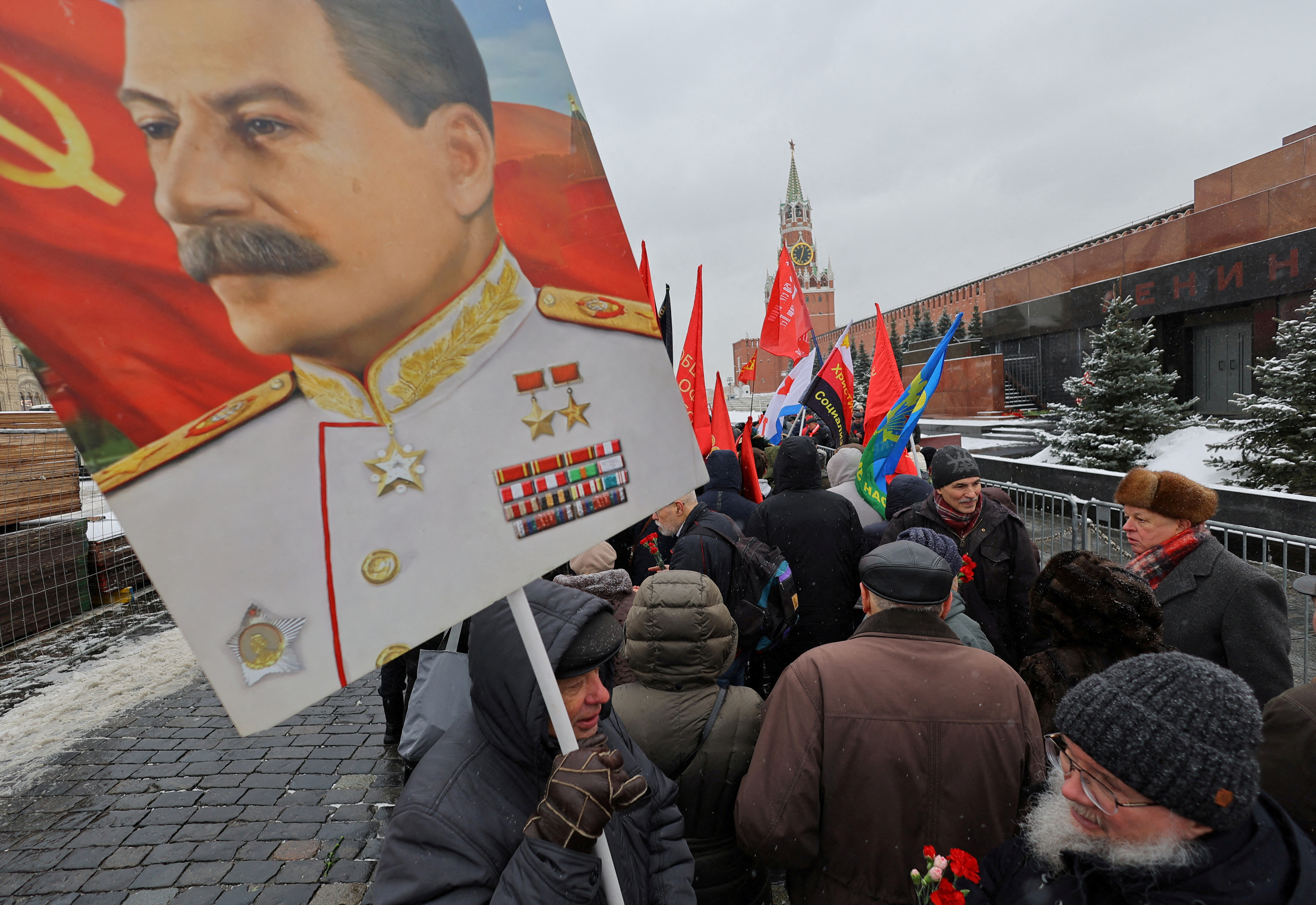
The SVR also warned in September 2025 of a NATO attack on Moldova and in April 2026 of an alliance attack on Kaliningrad. Although the SVR’s predictions have not come true, the rhetoric is a warning signal for Armenia, against which Russian pressure has long been intensifying.
Elections across Russia’s former sphere of influence have repeatedly drawn international attention in recent years. Votes in Romania, Moldova and Hungary have all put their countries in the spotlight. This weekend, Armenia’s election will join them, with much at stake for Armenians, Russia and the West.
Around 100 observers from more than 30 countries will represent the Parliamentary Assembly of the Organization for Security and Co-operation in Europe (OSCE), alongside about 120 observers from the Commonwealth of Independent States (CIS). A total of 17 parties and two blocs are contesting the vote. The threshold for a party to enter parliament is 4%.