African Treaty Resists Abortion and LGBTQ Rights Push
A pan-African draft charter on family and religious values warns that foreign ideologies are being imposed through international aid and legal agreements.
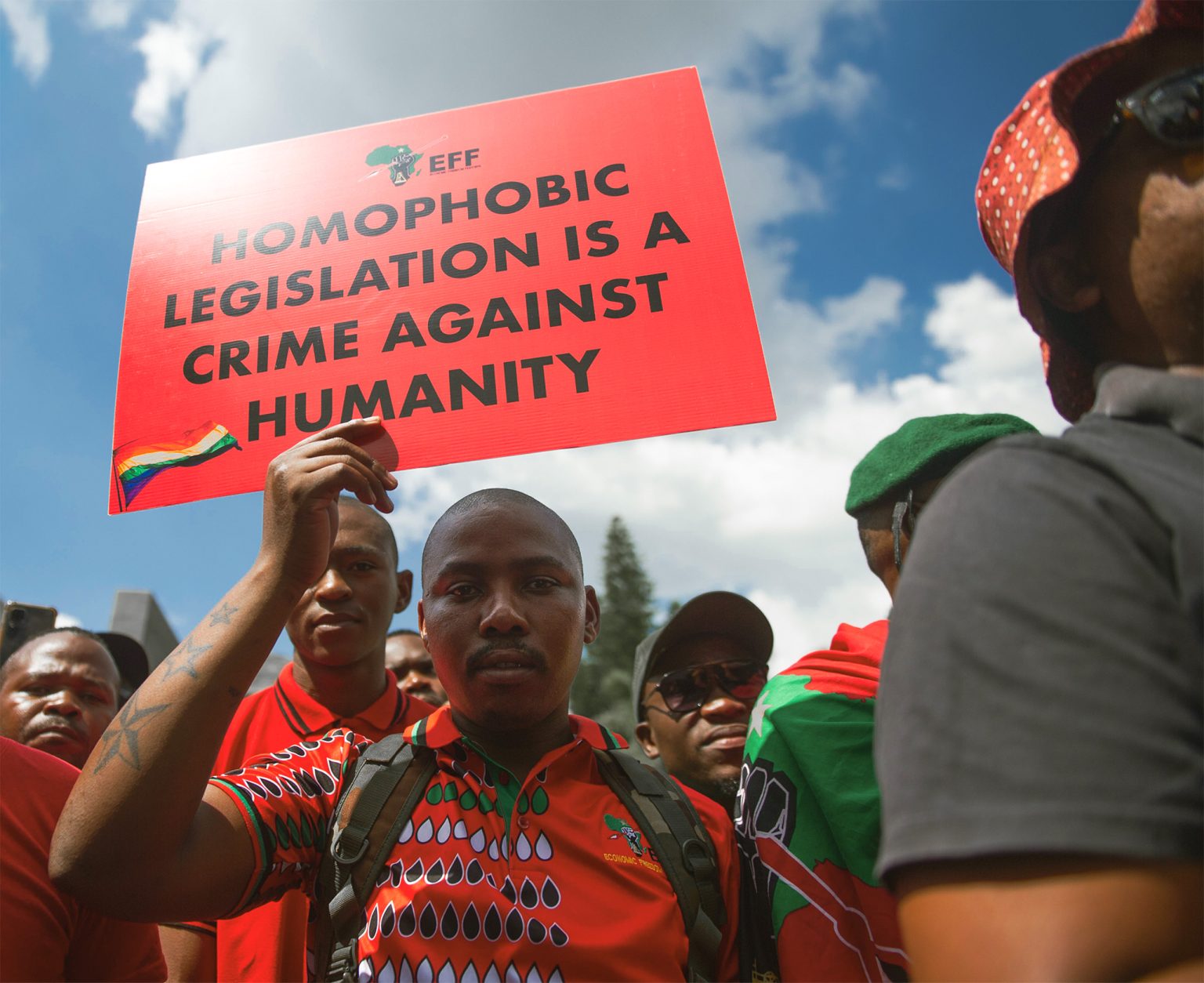
The draft charter has become a flashpoint in Africa’s wider dispute over sovereignty, family policy and imported rights frameworks. Photo: Alet Pretorius/Gallo Images via Getty Images
|
A treaty aimed at protecting African family, cultural and religious values has warned that foreign ideologies such as sexual and reproductive health and rights pose an existential threat to the family in Africa.
The Charter on the Protection of Family, Sovereignty, and Religious and Cultural Values, which defends the sovereign right of African nations to resist “neo-colonialism” from foreign actors, moved a step closer to becoming policy after representatives from more than 20 African governments met in Ghana last week.
However, the family values document has received pushback from LGBTQ advocates, pro-abortion groups and legal experts, who argue it is regressive and dangerous.
The charter was drawn up in a series of conferences held in Uganda between 2023 and 2025 and aims to be an Africa-wide legal framework.
Its proponents are aiming to get it on the agenda for the next African Union (AU) meeting in February 2027. The AU comprises 55 member states from across the continent and aims to promote Africa’s growth and economic development.
Foreign Ideologies
The charter pushes back against what it calls “foreign ideologies” and policy agendas, which it says are “imposed” through international aid, trade and legal instruments and threaten African family values and cultural norms.
The charter’s preamble expresses concern that international and regional human rights treaties are being “redefined” by United Nations (UN) mechanisms and foreign donor entities in ways that “undermine” the family and the rights of parents to “guide their children’s upbringing and education”.
It expresses alarm at the “infiltration” of “ideologically loaded” concepts such as sexual and reproductive health and rights (SRHR), which the charter says are used to promote abortion on demand, radical gender ideology and sexuality education that sexualizes children. It describes the “SRHR agenda” as an “existential threat” to the African family.
The document also warns of the “undue influence” of outside funding entities, which it says has led to the adoption of resolutions and agreements that conflict with “fundamental African religious and cultural values”.
The charter, which was drawn up with the input of 28 African governments, argues that protecting the integrity of the family and the rights of parents are fundamental to the growth and development of the nation, socially and economically. It also calls for governments to exercise “full sovereignty” over the provision of healthcare, education and the use of a nation’s natural resources in line with African culture and values.
Following the promotion of the charter at last week’s inter-parliamentary conference on family values and sovereignty, some legal experts and advocacy groups have strongly criticized the draft.
Gilbert Mitullah, a lawyer and member of the Queer African Network (QAN), claimed the treaty is “a license to oppose, regress on or refuse to implement” reproductive and LGBTQ rights.
Meanwhile, a pan-African feminist initiative, the Initiative for Strategic Litigation in Africa (ISLA), stated that by prioritizing the family over the individual, the charter “risks legitimizing the subordination” of women, children and adolescents to “collective family interests”.
It goes on to say the charter insulates private family relations from state accountability.
The draft has already been rejected by the South African delegation, with its leader Zandile Majozi saying the charter “fiddles with” human rights as enshrined in the UN’s Universal Declaration of Human Rights.
However, the draft has also been defended by pro-family advocates, including Christian Council International (CCI). A CCI spokesperson rejected claims that it departs from international and African human rights law, arguing instead that it builds on existing African principles protecting family, culture and sovereignty.
According to CCI, the charter is consistent with the African Charter on Human and Peoples’ Rights and responds to concerns that contemporary interpretations of rights are shaped by external frameworks rather than internal consensus.
Overall, CCI says the document calls for “greater African participation” in the development of “human rights norms” and raises “legitimate concerns” about the evolution of rights.
Contentious Debate
In the political sphere, the charter comes at a time when political debates and legal decisions around contentious issues like abortion, gender and sexuality are becoming increasingly common in African countries.
A small number of nations have pushed for laws that criminalize LGBTQ acts and identity, including Uganda and Ghana, while only one African nation allows same-sex marriage. However, access to abortion has expanded significantly on the continent over the past 30 years, while recent court cases – such as in Malawi in 2025 – have pressured governments to introduce or expand access to abortion.
In South Africa, which is one of the few African countries where abortion and same-sex marriage are legal, the question of assisted suicide or dying has been repeatedly raised over the past decade. However, the practice remains illegal after a 2016 Supreme Court of Appeal ruling overturned an earlier High Court decision in favor of euthanasia.
Such debates are unfolding against an international backdrop of growing resistance to liberalizing trends around abortion, gender identity, sexuality and related policies, reflected in the election of Donald Trump as US president and the growing popularity of right-wing parties in Europe.
In particular, criticism of the UN’s and EU’s defense of abortion, contraception and LGBTQ rights has become increasingly prominent in Western countries.
If the charter were approved by the African Union, it would mark a significant development in the global debate, signaling that Africa does not intend to remain a passive participant in a rights conversation largely driven by Western countries.
Welcome to the comments section of the Štandard daily. Please take note of our guidelines, comments are moderated by us. You can contact the moderators at support@statement.com.
Participate in the discussion
Comments are available to subscribers only. If you'd like to join the discussion, choose a subscription starting at €6.72 per month.
All comments 0
Register
Comments are available to registered users only. If you'd like to join the discussion, register here.