
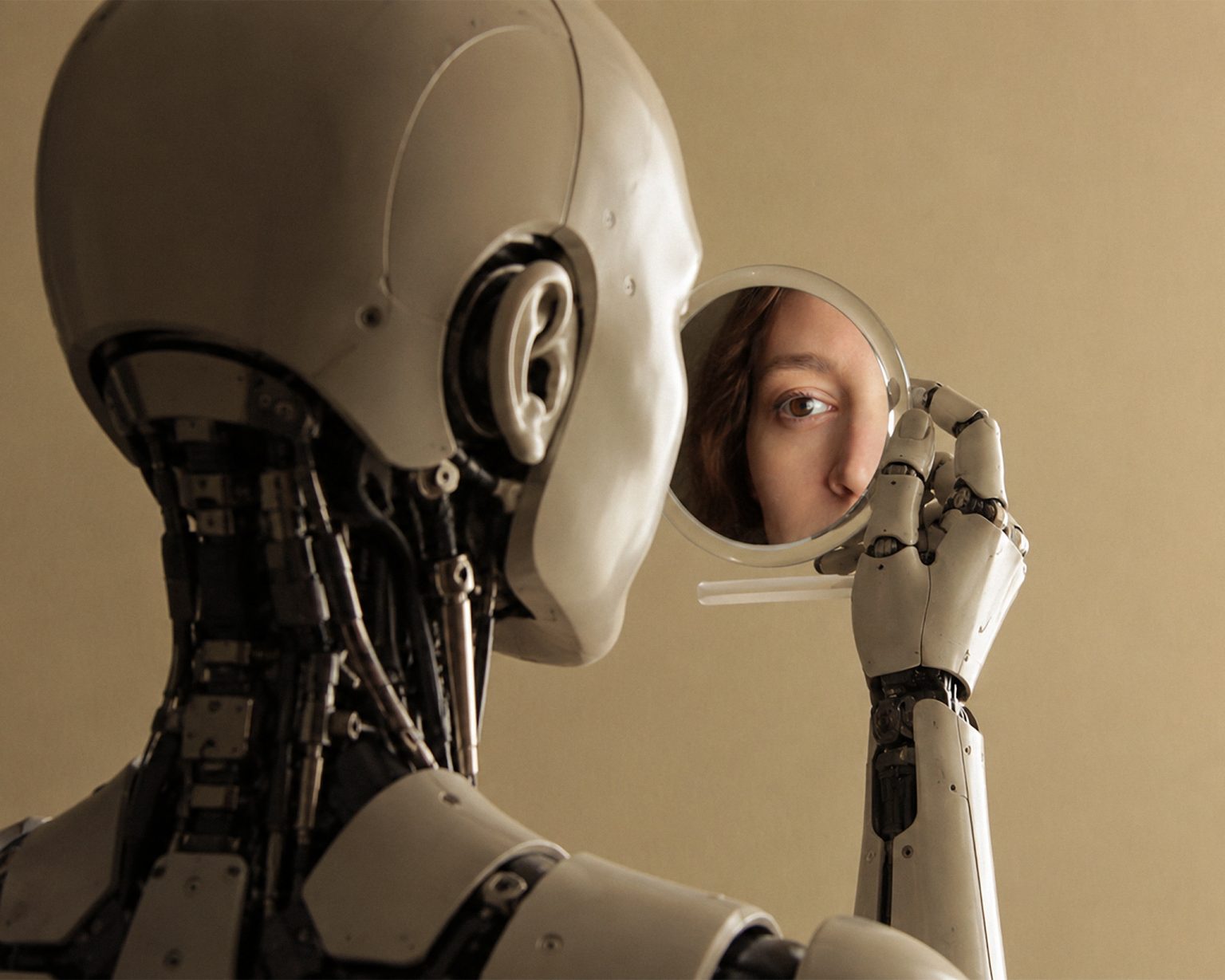
A French AI researcher announces on X that she is leaving Mistral for Anthropic in San Francisco to devote herself fully to artificial intelligence.
The reason is not primarily money, although she admits she will be paid far more in the United States. Rather, she describes France as a country weighed down by high taxes, bureaucracy and a dysfunctional system sustained largely by ideology.
She recounts a conversation with officials at the Ministry of Finance. France, she says they told her, could never become a leader in artificial intelligence because data centers have too large a carbon footprint. Other countries would build them, absorb the environmental costs and develop the models, while France would at least keep its conscience clean.
It was the perfect story for our time: talent fleeing Europe, bureaucracy stifling innovation and a continent determined to regulate the future rather than build it.

How the Story Fell Apart
The post contained everything needed for a viral political argument. A gifted researcher leaves Europe for America. A government confuses industrial strategy with environmental posturing. A rising technology collides with a declining bureaucracy.
Most importantly, it offered something every political narrative needs: a human face.
The profile looked convincing. There was a photograph, professional credentials and a blue check. The details seemed plausible. Mistral is a real French AI company. “Bercy”, referred to in the story, is indeed shorthand for the French Ministry of Finance.
The post spread rapidly across Europe. In France, many people in the technology sector praised it. The text was elegantly written, confident and infused with exactly the right amount of civilizational pessimism.
Even Laurent Wauquiez, a former minister and potential presidential candidate, shared it as powerful evidence that France was driving away talent through bad policymaking.

There was only one problem.
The researcher did not appear to exist.
Anatomy of a Fraud
As scrutiny increased, inconsistencies emerged. The account had been created only recently. No professional history could be found on LinkedIn or elsewhere. The name closely resembled that of a real academic, but the biography did not match.
Eventually the account disappeared.
The simplest explanation is that someone created a fictional persona to see how many people would believe a story that perfectly matched their assumptions. Another possibility is more mundane: AI-assisted content designed for virality and monetization.
Such schemes are increasingly common. Accounts often generate emotional, highly shareable content because attention can be converted into advertising revenue. Artificial intelligence has not only industrialized productivity; it has also industrialized the production of information clutter.
Yet this case matters for a deeper reason.
It offers a glimpse of what misinformation may increasingly look like in the AI era. It will not necessarily be crude, absurd or easy to debunk. It will be sophisticated, plausible and psychologically irresistible.
Most importantly, it will not challenge our beliefs. It will confirm them.

Beyond Traditional Disinformation
This is also why many older approaches to combating misinformation are becoming less effective.
For years, the debate focused on identifying foreign influence operations: Russian propaganda, Chinese information campaigns, troll farms and coordinated networks. The assumption was that if the source could be identified, the problem could be contained.
But origin has never been the same thing as truth or falsehood.
Propaganda can describe real problems while presenting them in a misleading framework. That is why censorship and blanket bans often fail. Banned information easily acquires the appeal of forbidden knowledge.
An even greater danger emerges when every uncomfortable interpretation of reality is dismissed as misinformation. Once that happens, we stop asking why people find certain narratives convincing in the first place.
Understanding how others see the world is not the same as agreeing with them. It is often a prerequisite for solving political conflicts.

The Trap of Confirmation Bias
The alleged French researcher became a viral sensation not because her story was absurd, but because it felt true.
France does struggle with bureaucracy. Europe often discusses innovation in the language of regulation. American technology firms do attract enormous amounts of talent and capital.
Every element of the story was plausible enough that many people stopped asking whether it had actually happened.
That is why the most dangerous misinformation in the age of artificial intelligence will rarely look like blatant nonsense. It will look exactly like the story we already wanted to believe.