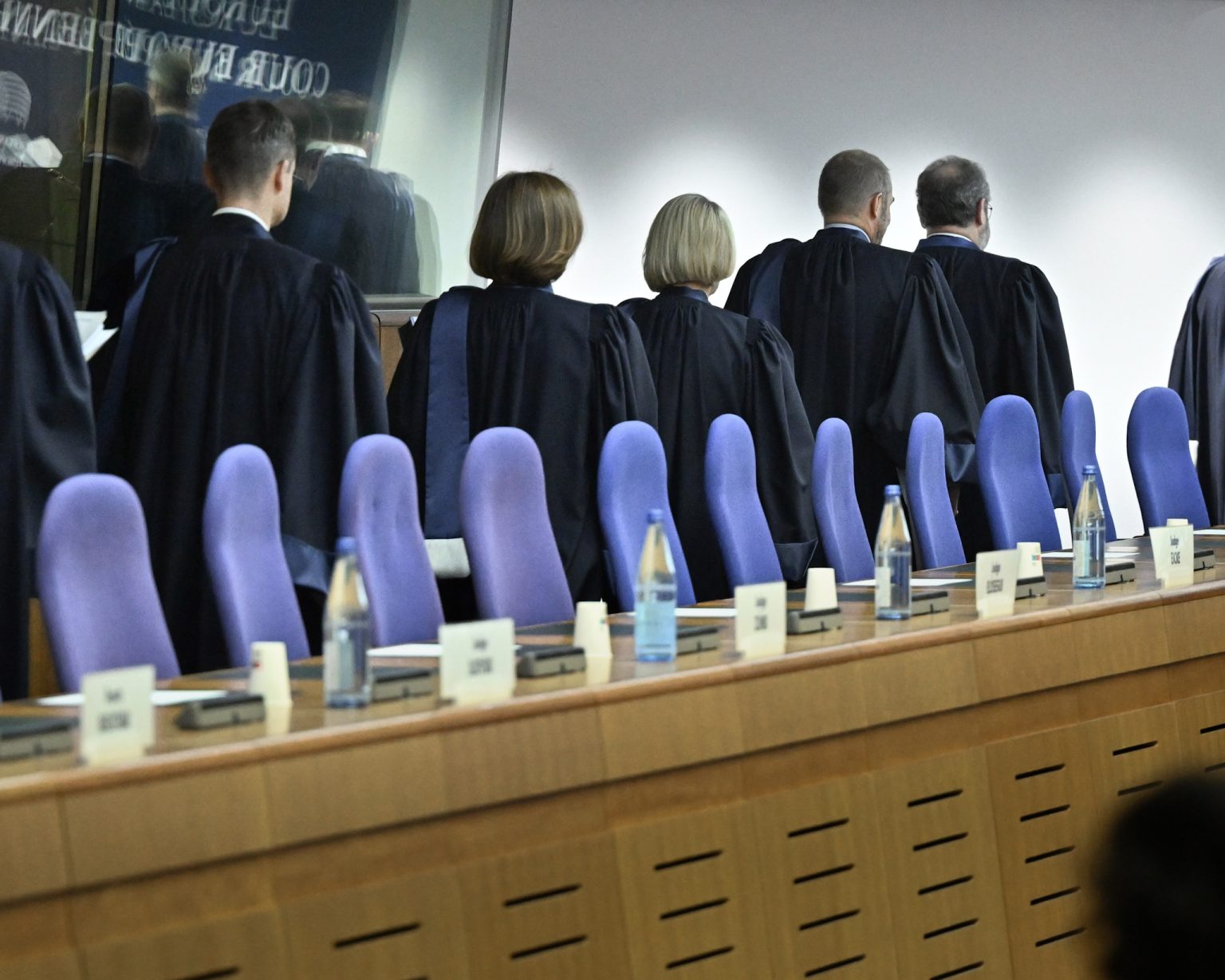
The recent ruling by the Court of Justice of the European Union (CJEU) requiring member states to recognize same-sex marriages contracted elsewhere in the EU has reignited questions about judicial impartiality and democratic legitimacy.
As previously reported by Statement, several judges involved in the decision had public links to progressive political causes. Two members of the Grand Chamber – François Biltgen and Eugene Regan – had previously served as politicians associated with efforts to expand legal recognition of same-sex relationships.
Whether those connections influenced the outcome cannot be proven. However, the case has drawn attention to a broader question: how independent and politically neutral are Europe’s highest courts, and what safeguards exist to ensure public confidence in their impartiality?
Academic studies, legal analyses and reports by advocacy organizations suggest that concerns about judicial ideology, NGO influence and opaque appointment procedures extend far beyond a single ruling.

Ties Between European Judges and NGOs
One of the most extensive examinations of this issue was conducted by the European Centre for Law and Justice (ECLJ), which analyzed the relationship between judges of the European Court of Human Rights (ECtHR) and non-governmental organizations appearing before the court.
The ECLJ is a Christian legal advocacy organization that litigates before European and international institutions, including the ECtHR and the United Nations.
Its report argues that between 2009 and 2019, numerous ECtHR judges had previous ties to organizations such as the Open Society Foundations, Amnesty International, Human Rights Watch, the International Commission of Jurists, the Helsinki Committees, the AIRE Centre and Interights.
According to the publication, 22 of the 100 permanent judges serving during that period had professional or organizational links to one or more of these groups.
The report identifies 88 cases in which judges participated in proceedings involving organizations with which they had previously been affiliated, either as applicants, representatives or third-party interveners. The authors argue that such situations raise concerns about objective impartiality or, at minimum, the appearance of impartiality.

The Pinochet Precedent
The report cites the well-known Pinochet case as an example of how such concerns can affect judicial proceedings.
In the United Kingdom’s House of Lords, one of the judges involved in the decision concerning Augusto Pinochet’s extradition was an unpaid director of Amnesty International, which had intervened in support of extradition. His wife had also worked for Amnesty for two decades.
When those connections became public, the House of Lords set aside its original ruling and ordered a new hearing.
Questions About Judicial Appointments
Concerns about judicial independence are not limited to NGO connections.
A substantial body of academic literature has examined the political composition of European courts, the transparency of judicial appointments and the influence of ideological preferences on decision-making.
Professor Sally J. Kenney has argued that despite the extraordinary importance of the CJEU, surprisingly little attention has been paid to who its judges are and how they are selected.
Because judges are nominated by member states through their own national procedures, the process often receives little public scrutiny. Although candidates are formally assessed for competence and independence, the broader appointment system remains largely opaque to ordinary citizens.
Researchers at the University of Leeds have similarly criticized the selection process, arguing that limited transparency and close links to national governments may undermine public confidence in judicial independence.
Does Ideology Influence Judicial Decisions?
Several academic studies suggest that judicial ideology can influence legal outcomes.
An empirical study examined whether judges’ decisions at the CJEU correspond to the political preferences of the governments that appointed them. According to the study, evidence exists that ideological tendencies can be reflected in judicial decision-making.
Another study focused on judges of the EU General Court in competition-law disputes. Researchers asked 46 competition-law experts to assess the ideological leanings of 51 judges across hundreds of cases.
The findings suggested a noticeable difference between judges categorized as “pro-business” and those regarded as “pro-regulation”. Chambers with more pro-regulation judges tended to rule more frequently in favor of the European Commission, while chambers with more pro-business judges were generally more favorable toward private companies.
The study concluded that judicial ideology can have a measurable effect on case outcomes.

How Courts Build Legitimacy
A growing body of scholarship also examines how courts strengthen their institutional legitimacy.
One review of more than 20,000 CJEU judgments concluded that the court is not politically uniform and that greater ideological diversity among judges tends to make decision-making more complex and time-consuming.
A separate study argued that the court increasingly presents itself as a protector of individuals and minority groups, helping to reinforce its public legitimacy.
According to the authors, the CJEU does not merely resolve legal disputes. It also builds institutional authority by emphasizing cases involving weaker parties in conflicts with states or powerful actors.
The study argues that this pattern is particularly visible in cases involving minority rights and individual protections.

Strategic Litigation and Political Change
Another recurring theme in the academic literature is the growing use of strategic litigation.
Researchers describe how activists, advocacy organizations, academics and NGOs increasingly bring cases before European courts not only to win individual disputes, but also to advance broader political, social or legal objectives.
A study from the University of Amsterdam similarly notes that the CJEU has become increasingly involved in politically sensitive questions, including migration.
Many of these cases originate in carefully planned legal campaigns designed to establish precedents capable of reshaping public policy across Europe.
Strategic litigation is no longer a controversial allegation but a well-established concept in legal scholarship.
Organizations advocating for LGBT rights openly monitor pending cases and court decisions in order to identify opportunities for expanding legal protections through judicial rulings. Similar strategies exist in areas such as migration, asylum policy, environmental regulation and digital rights.

Beyond a Single Judgment
Taken together, the academic literature does not support the view that Europe’s highest courts operate in a politically neutral vacuum.
Studies have identified ideological differences among judges, concerns about appointment procedures, links between some judges and advocacy organizations and the growing use of strategic litigation by activist groups seeking broader political change through judicial decisions.
None of this proves that any particular ruling was wrongly decided. It does, however, challenge the assumption that judicial decision-making is entirely detached from politics, values and institutional incentives.
The debate triggered by the CJEU’s same-sex marriage ruling therefore extends beyond a single case. It raises broader questions about transparency, accountability and public confidence in courts whose decisions increasingly shape social and political life across Europe.