
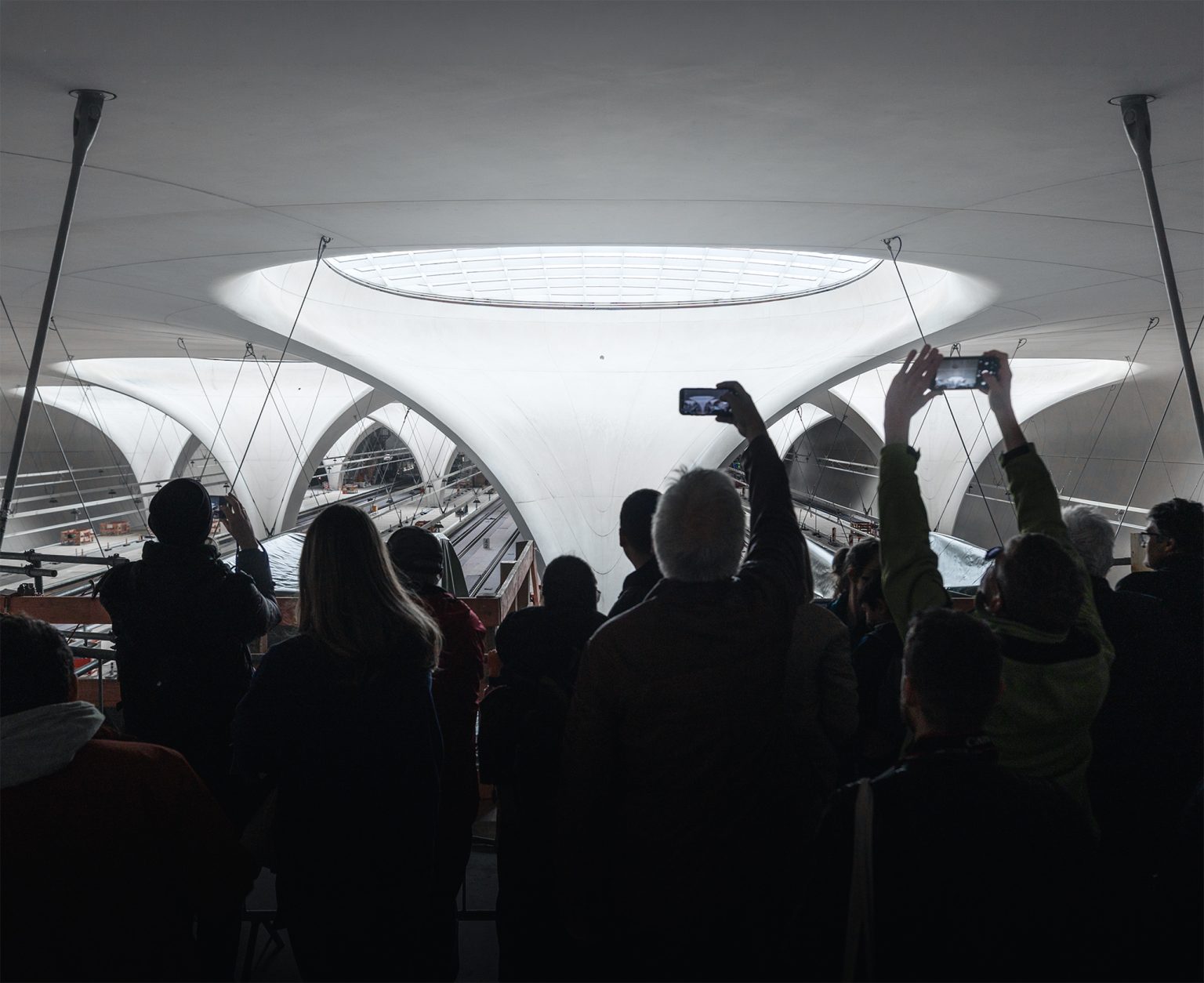
Stuttgart, the capital of Baden-Württemberg in southern Germany, is building a new railway station. Its completion has now been delayed again. The project, known in Germany as Stuttgart 21, is unwittingly turning into Stuttgart 31: after an original 2019 target and later hopes of opening in 2021, the launch has now been pushed back to 2031 or 2032.
A modern underground station is being built to move rail traffic in central Stuttgart below ground. Once it is completed and the old tracks and station complex have been demolished, an entirely new urban district is to be created on the space freed up above ground.
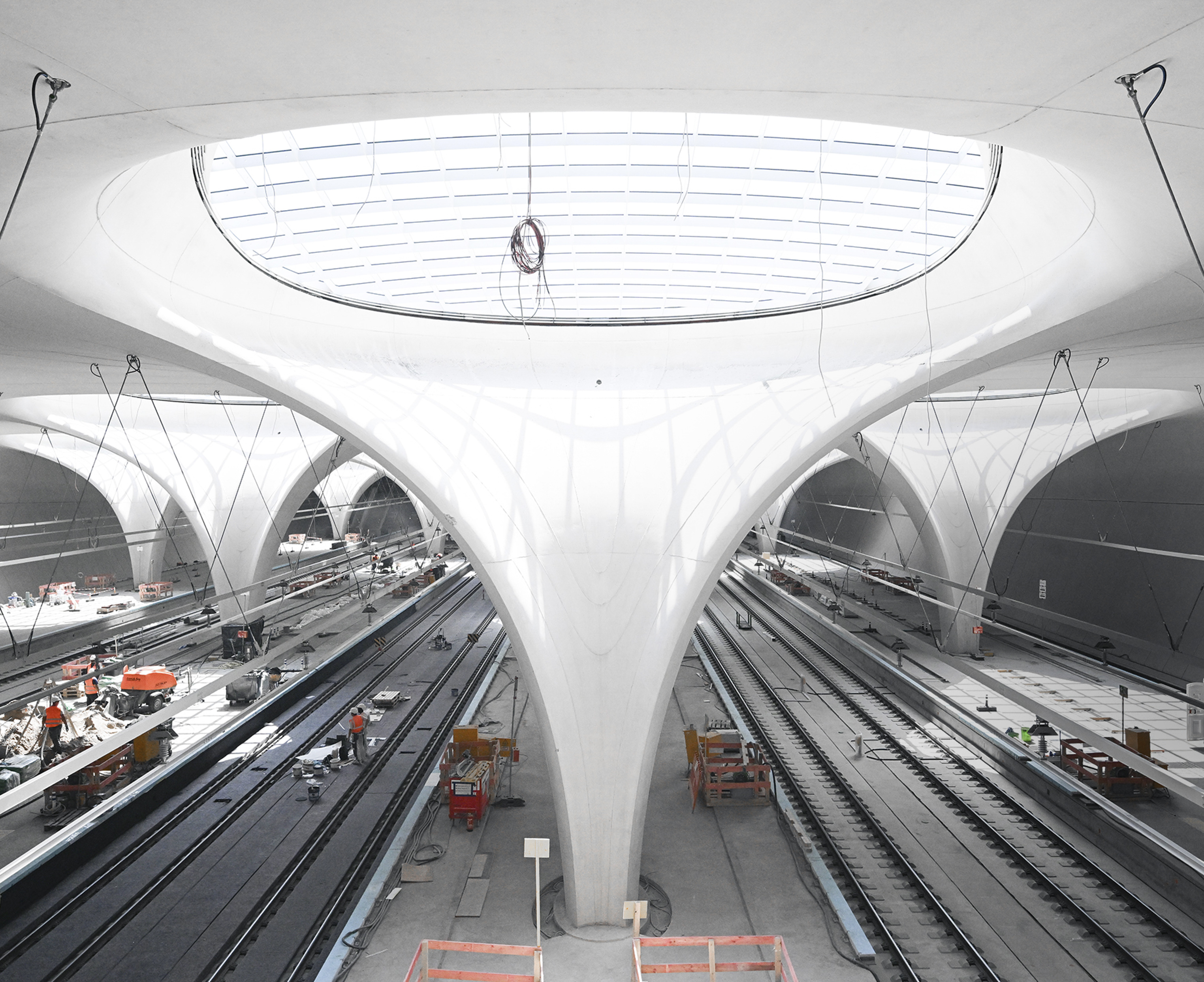
It is already questionable whether the planned capacity will be enough to handle rail traffic at one of Germany’s key transport hubs. The old above-ground station has 16 tracks; the new one will have only eight. The reduction is justified on the grounds that the current terminus, which trains have to enter and leave, needed far more track capacity than the planned through station, where they can arrive, stop and depart again more quickly.
A modern digital control system is supposed to make operations more efficient, allowing the station to manage with fewer tracks. Yet digitalization has now become the project’s trap. The latest delay has two main causes: around 1,000 km of cables were laid incorrectly in and around the station, while the planned digitalization of rail traffic around the new hub has created further problems.
Digital Ambition Meets Freight Reality
In the future, train drivers will no longer rely on traditional light signals along the route. Instead, trains will receive movement authority and speed instructions electronically. Interlockings will calculate and secure the routes, while the European Train Control System (ETCS) monitors whether each train remains within its permitted section and transmits driving and braking information by radio. In theory, that allows more trains to run at shorter intervals and should reduce delays.
Rail traffic across the entire new Stuttgart hub is also to be controlled through digital interlockings and the latest ETCS Level 2 technology. Stuttgart is a pilot project for the system. For the first time, a major German rail hub of this scale is being fully equipped with the technology. Yet planners noticed too late that many freight trains operating on the edges of the station area are not fitted with ETCS. A dual system of light signals and digital control now has to be added retroactively. That costs time and a great deal of money.
Germany Gets Tangled in Its Own Cables
Digitalization is also why 1,000 km of cable were laid incorrectly. The work was evidently carried out, in the truest sense of the word, without a plan. Installation began before the final design for digital rail control had been completed. Under time pressure, Deutsche Bahn wanted to bring Stuttgart 21 into service more quickly. Cables and ducts were put in place that later no longer matched the final technical plan.
According to an investigation by broadcaster SWR, most of the more than 1,000 km now have to be replaced. The result is further delay and higher costs.
Other major construction projects in Germany have repeatedly suffered the same fate. Faulty planning, building mishaps, missed deadlines and the resulting cost explosions have now become the norm on German megaprojects.
Berlin’s airport, for example, did not enter service in 2011, as planned, but only in 2020 after 14 years of construction. Dresden’s Carola Bridge, which collapsed on 11 September 2024, will not be rebuilt quickly either. It is not expected to be usable again until March 2031. Even that depends on there being no further delays.
Berlin’s airport was originally priced at €1.9bn ($2.2bn). In the end, the project cost €6.5bn ($7.5bn), more than three times the original estimate. Stuttgart is worse still: the station was originally supposed to cost €4.1bn ($4.7bn). The latest confirmed estimate stands at €11.3bn ($13bn), while further increases of €2bn–€3bn ($2.3bn–$3.5bn) are now being discussed.
Germany’s Megaprojects Become Disaster Zones
Germany is therefore watching yet another major construction site turn into a disaster, both in time and money. Alongside Berlin’s airport and Stuttgart 21, a whole series of prestige projects now follows the same pattern.
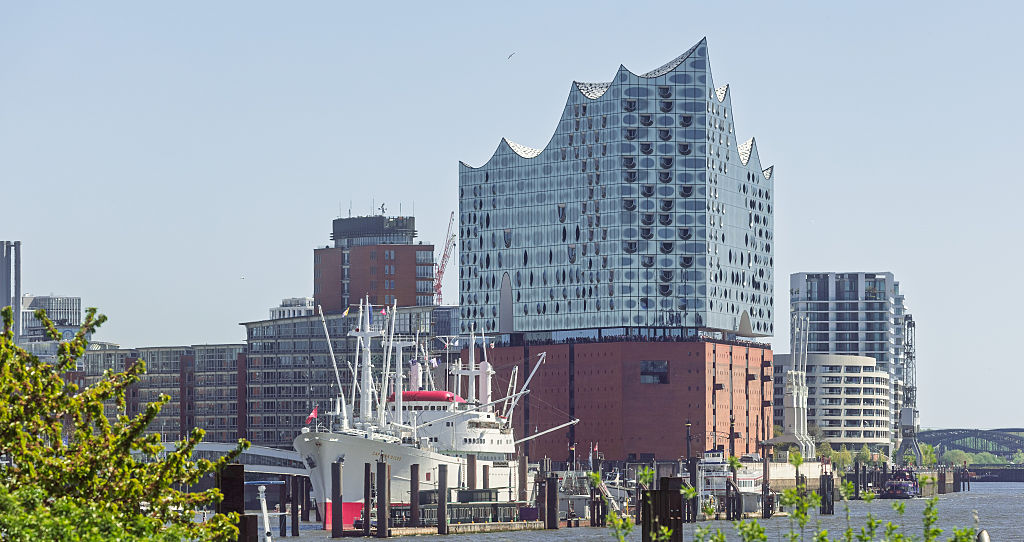
Hamburg’s Elbphilharmonie concert hall opened seven years late and cost 11 times more than originally planned.
The Munich S-Bahn second trunk route follows the same script: it is due to open between 2035 and 2037 and is already set to swallow three times its initial budget.
The renovation of Cologne Opera and Cologne’s municipal theaters has taken an astonishing 14 years and sent costs to three times the original estimate.
The examples show that blown timetables and exploding costs are the new normal on Made in Germany megaprojects.