The episode exposes a broader failing of Germany’s political and media caste: nothing is harder for it than correcting itself. That remains true even when almost everyone understands that the country is heading in the wrong direction.
The German Sonderweg
For decades, the theory of American exceptionalism has had a counterpart in historical scholarship: the German Sonderweg, or special path. The term originally referred to the nation’s failure to become anchored in the West before 1945. Yet although Germany has outwardly arrived in the rational West, it still differs from other modern states and has recently begun to do so more markedly again. It clings on principle to a course once chosen, even when the rest of the world is moving in the opposite direction.
The tendency reflects a German character trait that can be a force for good but has often proved destructive: “remaining true to oneself”, “holding out” and “remaining consistent” are still regarded by many as virtues in their own right, regardless of substance or purpose. To people with this outlook, changing course sounds suspiciously like capitulation.
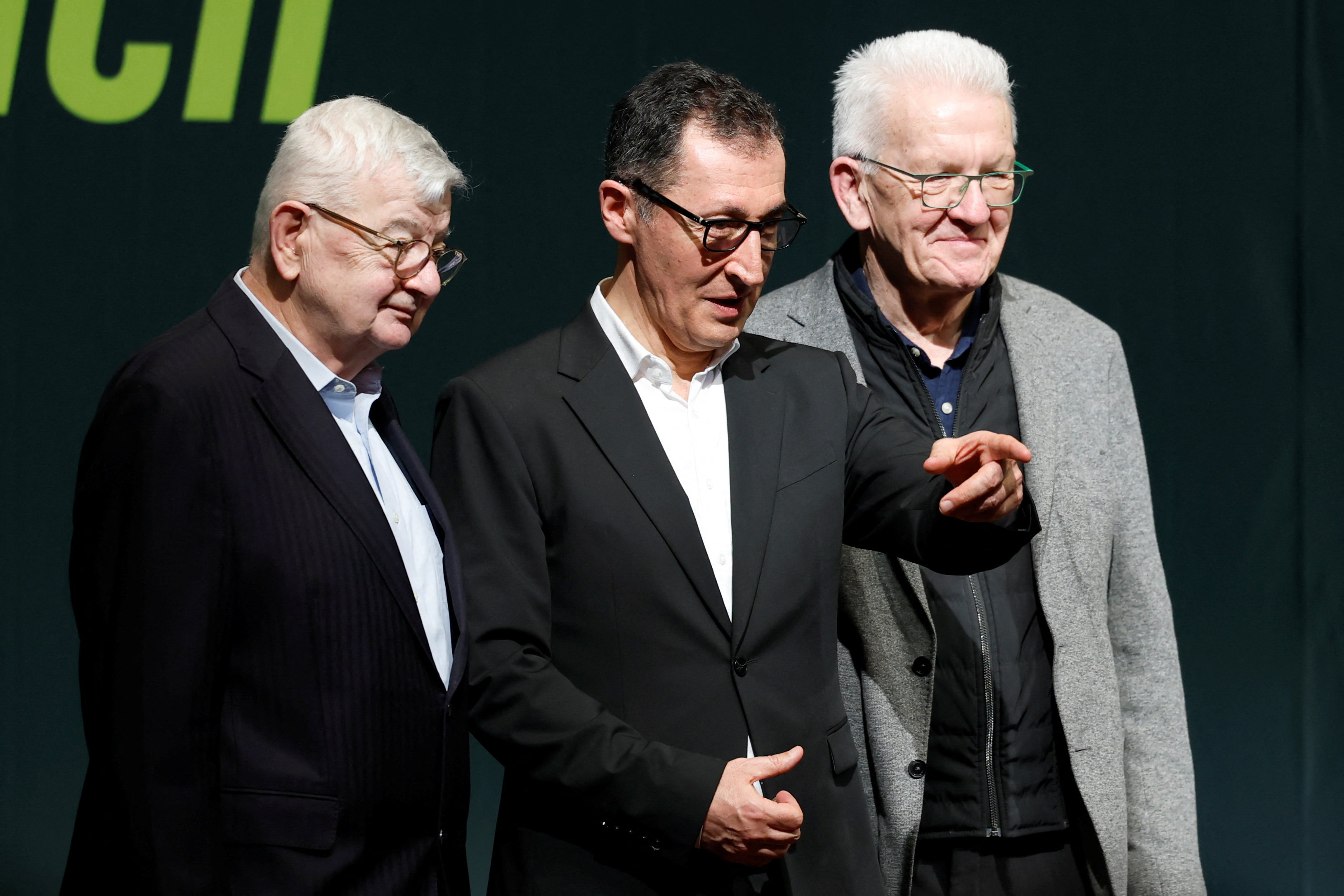
German elites have, of course, embraced more than once the myth that “holding out” will ultimately be rewarded, provided one remains steadfast for long enough. Winfried Kretschmann, the Green politician who won the Baden-Württemberg election in 2011 and went on to win several more, recently addressed the energy transition as he prepared to leave politics. It was certainly going through a difficult phase, he conceded, and electricity prices were high, but Germany had embarked on an ambitious path. He was sure “that in the end we will leave the others far behind”.
The Greens like to display a pronounced skepticism toward the very idea of the German nation. In reality, however, they could adopt Richard Wagner’s famous dictum as their official party motto: “To be German means to do a thing for its own sake.”
No one embodies the determination to cling at literally any cost to a dogma rooted not in fact but in morality more fully than the party and the journalists aligned with it. Together, they effectively form a single power complex.
Green politician Katrin Göring-Eckardt, whom some media commentators have seriously touted as Germany’s next president, was allowed to claim unchallenged on public television that electricity from nuclear power plants would “clog up the grids”. ZDF claimed that nuclear power in France would soon become horrendously expensive, at 70 cents per kilowatt-hour. The correct figure was 7 cents. When confronted with the misinformation, the broadcaster insisted that it had simply made a calculation error. Naturally, there had been no propagandistic intent whatsoever.
The Economics of Giving Electricity Away
More recently, Der Spiegel delighted its readers with the triumphant news that Germany had once again exported more electricity than it imported in the first quarter of 2026. Formally, that is true. Yet Germany’s export success rests in part on vast quantities of surplus wind and solar power being sent abroad because they are not needed at home and cannot be stored. On 1 May, wholesale prices fell to minus €499.99 per megawatt-hour, meaning buyers were effectively paid to take the surplus and help keep the grid stable.
Before doing so, they must still pay the producers of the discarded electricity high, state-mandated prices. The resulting costs, including the payments required to persuade someone to take the power, are then reimbursed from public funds. Between January and mid-May 2026 alone, this giveaway cost citizens €250m. Such is Germany’s energy transition: dependent on the weather and deprived of reliable nuclear power.
There are also the additional costs of regional measures “for the climate”. A whole series of German cities have declared a “climate emergency”, with the southern German city of Constance among the first to do so in 2019. The municipality spends €8m a year on a program that achieves almost nothing for Constance, let alone for Germany or the world.
Between 2019 and 2022, the city’s carbon dioxide emissions fell by just 42,000 tonnes. The original target was 109,000 tonnes. By 2035, the picturesque town intends to proclaim itself “climate-neutral”. The goal is illusory. Even if it were achieved, Constance does not have a climate of its own, nor does Hamburg, which has set itself the same objective.
Yet the activism continues, as expensive as it is pointless. “It runs and runs and runs” was once the advertising slogan for the famous Beetle of West Germany’s economic miracle. The car helped build the prosperity of the Federal Republic. The energy transition is now sending the country into reverse.
A Minority Keeps the Dogma Alive
CDU politicians have begun to admit that in 2011 they allowed Merkel, the Greens and the media to whip them into an anti-nuclear hysteria. A few have even acknowledged the mistake publicly, as the example above shows. Most, however, remain silent out of embarrassment. Under such conditions, a minority armed with moralizing calls to “hold out” can still force what remains of an industrial nation to continue down the wrong path.
Belgium abandoned its planned nuclear phase-out. Poland, which has never had nuclear power, is preparing to introduce it. Several years ago, a majority of Swiss voters decided against building any new nuclear reactors. That decision was reversed last week.
Germany is not merely continuing along its chosen path. It would also like other countries to be healed by the German spirit. Karl Lauterbach, an SPD member of the Bundestag, recently advised France to abandon nuclear power. In reality, Germany’s neighbor west of the Rhine is expanding its nuclear capacity, not least so that it can supply Germany with electricity whenever power becomes scarce there in winter.
Germany remains exceptional. Nowhere else does the rationality of engineers and inventors coexist so closely with an irrationality that outside observers can barely comprehend.
The Teutonic creed of “holding out” has, as is well known, ended in collapse once before. Germans today can only hope that the consequences will not be quite so severe this time, and that the neighboring countries they once lectured with such arrogance will then help them out of the mess.