Germany’s Schools Are Becoming Disorder Zones – and Here Is Why
A new survey shows teachers struggling with poor behavior, aggression and fear of saying the wrong thing. Behind much of the problem lie two forces: the long shadow of Covid and the strain of migration.
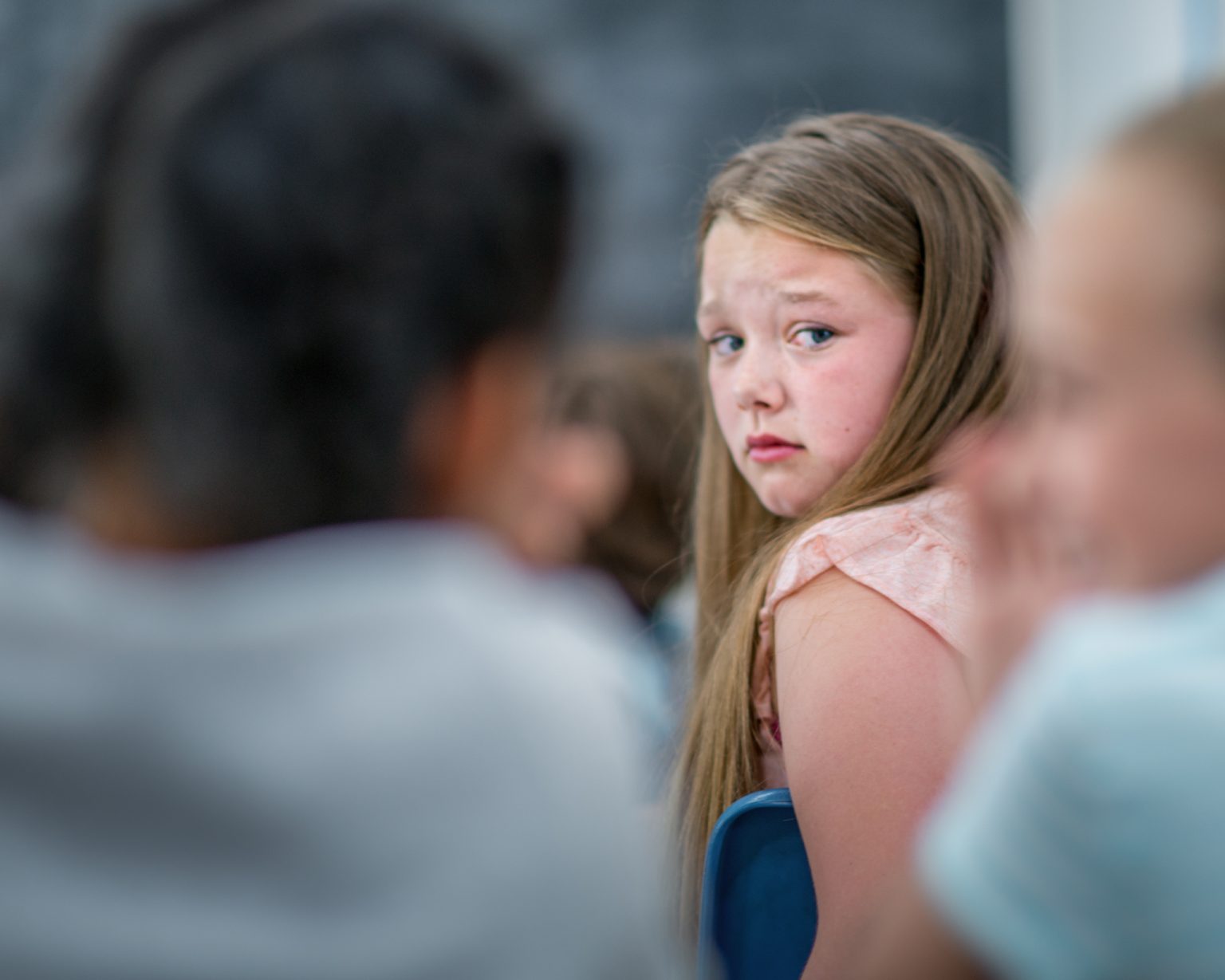
Teachers in Germany say aggression, mental strain and disruption are making classrooms harder to hold together. Photo: FatCamera/Getty Images
|
The tone in German classrooms is becoming rougher. Teachers are no longer reporting only tired pupils or a lack of concentration. They are dealing with social behavior, aggression and a learning atmosphere that is increasingly difficult to sustain.
The Robert Bosch Foundation’s new School Barometer lays bare the problem. Forty-six percent of the teachers surveyed named dealing with pupil behavior as the biggest challenge in their working lives. Two years ago, the figure was 35%. Social behavior, lack of motivation, mental health problems and aggression are proving especially burdensome.
The figures fit into a broader picture. Violence in German schools has risen sharply. According to assessments of police statistics, 28,760 violent offenses were recorded at schools across Germany in 2024. In 2022, the figure was 20,979. That represents an increase of 37.1%.
School has therefore long since ceased to be only a place of learning. Increasingly, it is a place where teachers must first impose discipline before lessons can begin.
Two developments explain part of the change: Covid and migration. Both have left different marks. Both have hit a school system that was already overstretched.
For many pupils, the pandemic was not a brief state of emergency. School closures, remote learning and social isolation destroyed routines. Children lost learning time, fixed daily structures and social practice. Those who spent months at home during a crucial phase of development did not simply return unchanged.
The consequences are still visible today. In 2026, the Robert Bosch Foundation’s School Barometer found that one in four children was either showing signs of mental health problems or was in a borderline state of distress. Mental strain has therefore risen again for the first time since the pandemic. The COPSY study by the University Medical Center Hamburg-Eppendorf had already shown that the mental health of many children and adolescents remained worse after Covid than before the pandemic.
In the classroom, that becomes a practical problem. Pupils under mental strain are not automatically aggressive. But many show less self-control, lower frustration tolerance and greater restlessness. Those are precisely the issues teachers now identify as their main burden.
According to the School Barometer, 82% of teachers say they are willing to undergo further training to promote cross-curricular skills. That means empathy, cooperation, self-regulation and critical thinking. The fact that such basic skills are now at the center of attention says much about the state of schools.
Many teachers now face children who appear noticeably less resilient. They have to correct behavior, defuse conflicts and absorb emotional strain. Their training can leave them ill-equipped for demands on that scale, while their schools lack the staff needed to support them.
The second factor is migration. Here, too, the point is not simple blame, but the reality inside the classroom. High levels of immigration change schools immediately. Language skills, attainment levels, cultural background and family circumstances vary more widely. Teachers are expected to compensate for that in ordinary lessons.
The School Barometer names such heterogeneity as the second-biggest challenge. Thirty-four percent of teachers see it as a central burden. Helmut Klemm, a head teacher in Erlangen, describes the situation this way: “Today, one teacher has 25 individuals with very different starting points sitting in front of them. The school system has so far responded inadequately to that.”
The Federal Agency for Civic Education makes the same point in sober terms: migration increases diversity in the classroom, and the school system is not prepared for it. That creates major challenges for teachers and newly arrived pupils.
Those challenges do not remain abstract. Pupils who barely speak German understand lessons less well. Those from a different school system have different learning habits. Children from conflict zones may carry burdens of their own. In classes where many such factors come together, the effort required to maintain order and build relationships increases.
There is also the wider security context. The Federal Criminal Police Office reported a 7.5% increase in violent crime by non-German suspects in 2024. In relation to violent offenses by refugees, the Federal Agency for Civic Education cites weak social ties, precarious living conditions, previous experiences of violence and traditional notions of masculinity, among other factors.
That does not mean migration alone explains school violence. But it does mean that schools are being confronted with the same social tensions that are visible outside the classroom. Anyone who leaves that out of the education debate describes only half the situation.
The new study shows how much schools now place on teachers’ shoulders. They are expected to make up for learning deficits, recognize mental health problems, bridge language gaps and defuse conflicts, while still teaching their classes.
The strain is clear. Twenty-eight percent of teachers would change profession if they had the opportunity. A quarter feel emotionally exhausted several times a week, and 12% feel that way every day. Although eight out of 10 teachers say they are generally satisfied with their profession, the level of exhaustion remains a warning sign.
Inclusion is also viewed critically. Fifty-two percent of teachers do not believe inclusive schooling is beneficial for all pupils. Many rate existing support services as no better than satisfactory. That is not a small detail. It shows that political promises and everyday school reality have drifted apart.
The demand for more multidisciplinary teams is therefore no coincidence. Schools need social workers, psychologists and additional educational specialists. But many teachers feel left alone with problems that go far beyond teaching.
Fear of Saying the Wrong Thing
A new political uncertainty adds to the burden. For the first time, the School Barometer also asked teachers how they deal with political opinions in the classroom. Eighteen percent feel unsure about what they are allowed to do because of an assumed ban on expressing political opinions. Twenty-seven percent believe teachers are generally not allowed to express their own views on political questions. Twenty-three percent think they have to recognize all pupils’ opinions as equally valid in order to remain neutral.
Katharina Thoren of the Robert Bosch Foundation sees this as a misinterpretation of the Beutelsbach Consensus. The consensus prohibits teachers from overwhelming pupils politically. But it does not require them to remain silent.
Thoren said: “They are allowed and expected to take a position, provided that different constitutional viewpoints can be discussed.” The task of teachers, she said, is not to be neutral, but to show conviction on the basis of the Basic Law.
In practice, that is more complicated. Teachers encounter reporting portals, disciplinary complaints and a political atmosphere in which remarks can quickly be carried out of the classroom. Those already struggling with aggressive pupils, overwhelmed parents and difficult classes become more cautious on political subjects.
The School Barometer therefore shows two crises at once. In classrooms, the atmosphere is becoming rougher. In the minds of many teachers, their room for maneuver is narrowing.
German schools are now expected to repair much of what has been damaged outside school. Covid deprived children of structure. Migration has made classes more heterogeneous. Add to that social media, family problems and a school system that too often promises more on paper than it can deliver in daily life.
Teachers are now describing the consequences. Behavior is their biggest problem. Heterogeneity comes next. Aggression, mental strain and political uncertainty have become part of everyday school life.
Artificial intelligence has been added to the list. A quarter of teachers already use AI daily or several times a week. More than half want further training in how to use it responsibly and in a legally secure manner. Schools must now handle that too.
Above all, however, teaching needs order again. Without it, no reform programs, no new guiding principles and no pedagogical buzzwords will help. If teachers first have to calm conflicts, less time remains for education. That is the point at which the School Barometer becomes politically uncomfortable.
Placeholder For Topreaded Placeholder For Topreaded
Placeholder
Placeholder
Placeholder For Topreaded Placeholder For Topreaded
Placeholder
Placeholder
Placeholder For Topreaded Placeholder For Topreaded
Placeholder
Placeholder
Placeholder For Topreaded Placeholder For Topreaded
Placeholder
Placeholder
Placeholder For Topreaded Placeholder For Topreaded
Here is placeholder for Article excerpt Here is placeholder for Article excerpt Here is placeholder for Article excerpt Here is placeholder for Article excerpt
Here is placeholder for Article excerpt Here is placeholder for Article excerpt Here is placeholder for Article excerpt Here is placeholder for Article excerpt
Here is placeholder for Article excerpt Here is placeholder for Article excerpt Here is placeholder for Article excerpt Here is placeholder for Article excerpt
Welcome to the comments section of the Štandard daily. Please take note of our guidelines, comments are moderated by us. You can contact the moderators at [email protected].
Participate in the discussion
Comments are available to subscribers only. If you'd like to join the discussion, choose a subscription starting at €6.72 per month.
All comments 0
Register
Comments are available to registered users only. If you'd like to join the discussion, register here.