Matthias Döpfner at ARC: Zero Tolerance for Intolerance
German media executive Matthias Döpfner set out his view of Europe’s journalistic crisis at ARC in London. His answer: more freedom, market-based journalism and greater honesty about the values that guide newsrooms.
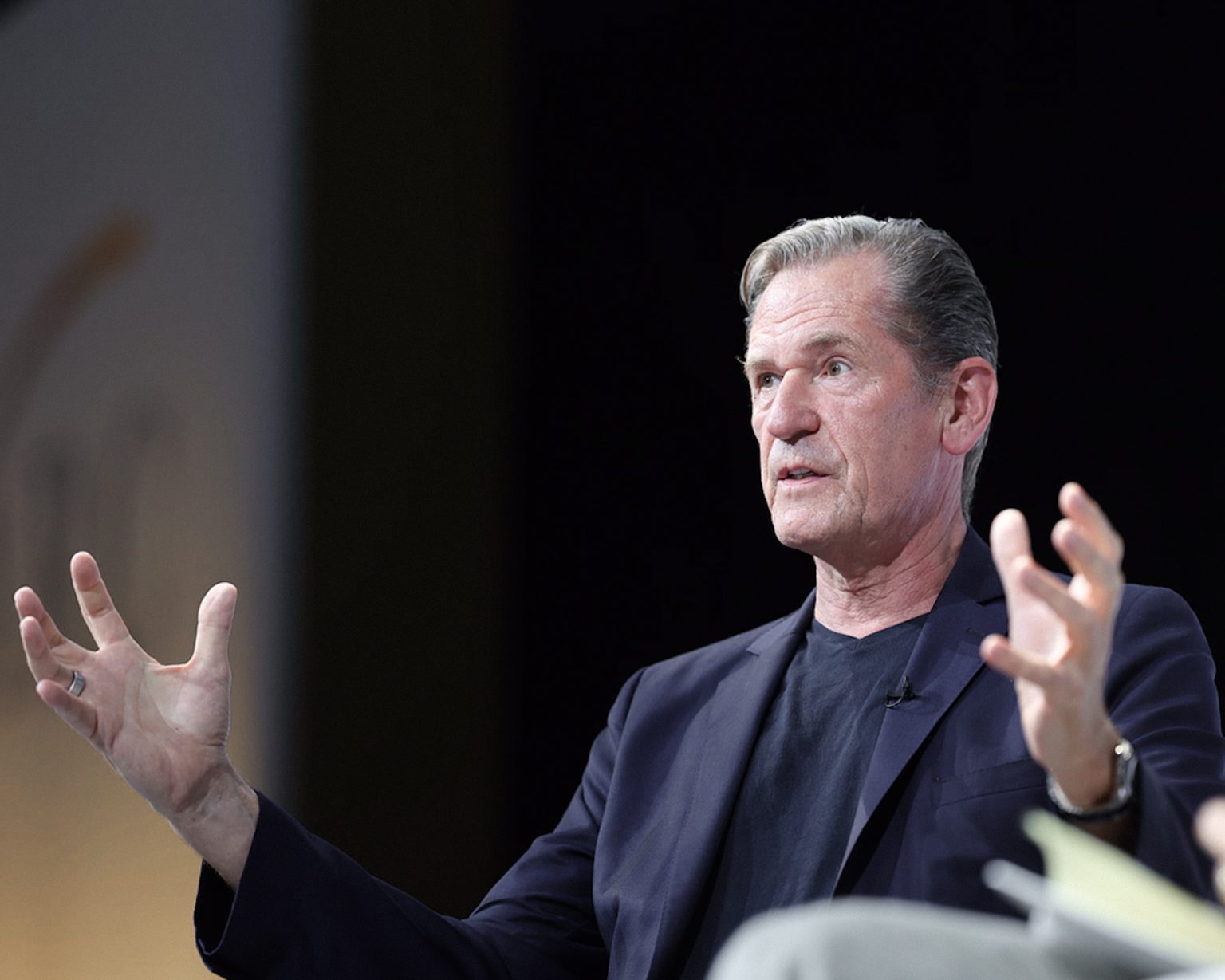
Matthias Döpfner speaks at the 2026 ARC conference in London. Photo: The Alliance for Responsible Citizenship
|
Matthias Döpfner’s appearance at the Alliance for Responsible Citizenship (ARC) conference in London was a first. The chief executive of Axel Springer SE, whose media holdings include Bild, Die Welt, Business Insider and Politico, is regarded as one of Europe’s most influential media executives and as an advocate of a values-based, economically independent press.
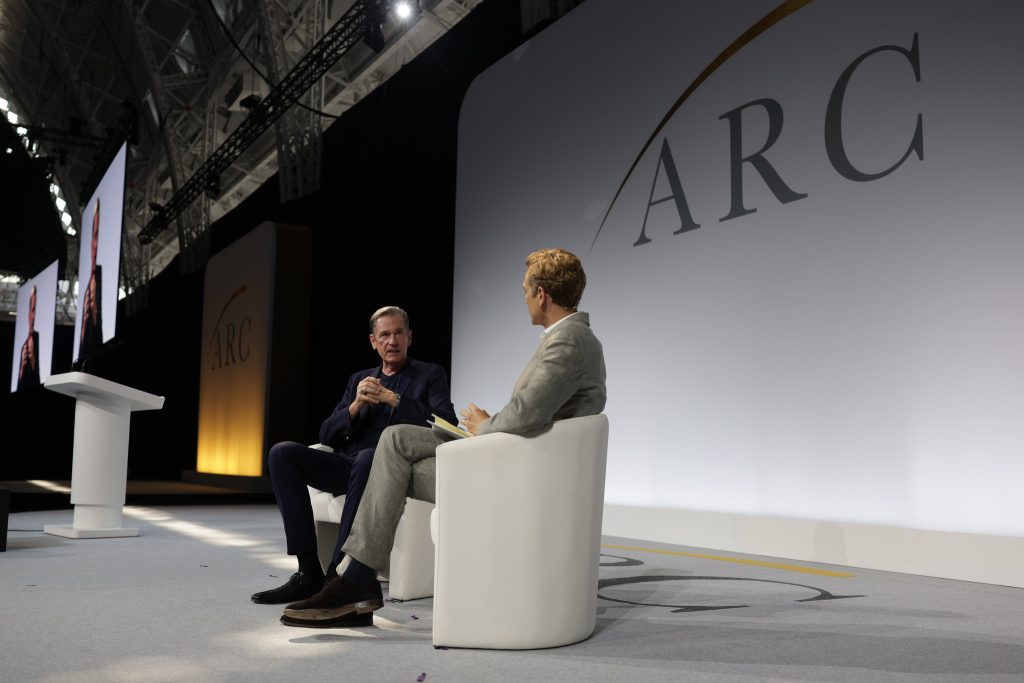
In conversation with Freddie Sayers, the British journalist, co-founder and editor-in-chief of the online magazine UnHerd, Döpfner gave one of the conference’s most intellectually substantial sessions. Under the theme of “Free Enterprise and Good Governance”, the focus quickly turned to the condition of journalism itself.
How, Döpfner asked, can a free society endure if its information order, shared facts and cultural self-understanding erode? He rejects the idea that journalism can ever be entirely neutral. “There is no neutral journalism, it doesn't exist, it's made by human beings.” For Döpfner, the claim to complete neutrality is itself dishonest.
As evidence, he cited Axel Springer’s core principles. They include freedom and the rule of law, Israel’s right to exist, the transatlantic alliance, the market economy and, ultimately, the rejection of extremism and discrimination.
Media outlets, the executive argued, should disclose their basic values rather than pretend to be neutral. In doing so, the head of one of Germany’s largest media houses offered a notable alternative to the country’s traditional journalistic culture, which has long treated neutrality as an overriding ideal. Döpfner prefers transparency about a publication’s normative foundations.
Much of Germany’s media sector is in crisis. That crisis, the Springer chief emphasized, is not caused by the internet, social media, AI or digital platforms. His diagnosis is clear: “The media crisis and the journalistic crisis is an intellectual crisis.”
In his view, many outlets have lost trust because they have mixed activism with journalism, become predictably partisan and sought to lecture their readers rather than inform them. Although Döpfner did not name Germany’s public broadcasters, every German listener could immediately make the connection.
Döpfner sees the loss of trust in the media as self-inflicted. In that respect, his analysis resembles the arguments made by Michael Shellenberger, Bari Weiss and Freddie Sayers. The problem, in this view, is less disinformation than the loss of credibility among established institutions.
Matthias Döpfner and Freddie Sayers on stage at the 2026 ARC conference in London. Photo: The Alliance for Responsible Citizenship
The Case for Profit
Döpfner also defended the market economy in his own industry. He argued forcefully for commercially run journalism. If media outlets became dependent on the state, foundations or philanthropists, they would lose their independence. “Profit first, and proudly so”, he said.
That sets him apart from many European media executives. For Döpfner, commercial success is not a threat to journalistic quality, but its precondition. Only profitable media organizations can remain independent in the long term, he concluded.
Turning to the US, Döpfner noted that much of the media landscape leans left, while right-wing outlets are often positioned very far to the right. That, he argued, leaves room for a moderate conservative voice.
Axel Springer acquired the Telegraph Media Group in March 2026 for $766m. Döpfner sees genuine growth potential for the Telegraph in the US, where the brand could fill that space.
The Telegraph Media Group includes The Daily Telegraph, The Sunday Telegraph and telegraph.co.uk. It is one of Britain’s most influential conservative media brands. Axel Springer plans to turn it into a leading center-right outlet for the English-speaking world, including through expansion into the US market.
For Döpfner, the political positioning of a media outlet is not a problem, but a market opportunity.
One of the most emotional parts of the conversation concerned antisemitism. Döpfner was very clear when he described it as “the biggest disgrace of our times”. What particularly shook him, he emphasized, was that after 7 October 2023 no global solidarity movement with the victims emerged. Instead, many places saw a resurgence of antisemitic sentiment.
Above all, he made the case for defending an open society against antisemitism and extremism.
For Döpfner, the West stands at a turning point. Alongside the real dangers posed by authoritarian states, Islamism, geopolitical challenges and the erosion of cultural confidence in Western democracies, there is also a historic opportunity. The current crises could serve as a wake-up call.
A free society needs, as he concluded the conversation, “zero tolerance for intolerance”. The answer to the crisis of the West, in Döpfner’s view, is not less freedom and less open debate, but credible journalism, economically independent media and a self-confident defense of liberal fundamental values.
Here is placeholder for Article excerpt Here is placeholder for Article excerpt Here is placeholder for Article excerpt Here is placeholder for Article excerpt
Here is placeholder for Article excerpt Here is placeholder for Article excerpt Here is placeholder for Article excerpt Here is placeholder for Article excerpt
Here is placeholder for Article excerpt Here is placeholder for Article excerpt Here is placeholder for Article excerpt Here is placeholder for Article excerpt
Welcome to the comments section of the Štandard daily. Please take note of our guidelines, comments are moderated by us. You can contact the moderators at [email protected].
Participate in the discussion
Comments are available to subscribers only. If you'd like to join the discussion, choose a subscription starting at €6.72 per month.
All comments 0
Register
Comments are available to registered users only. If you'd like to join the discussion, register here.