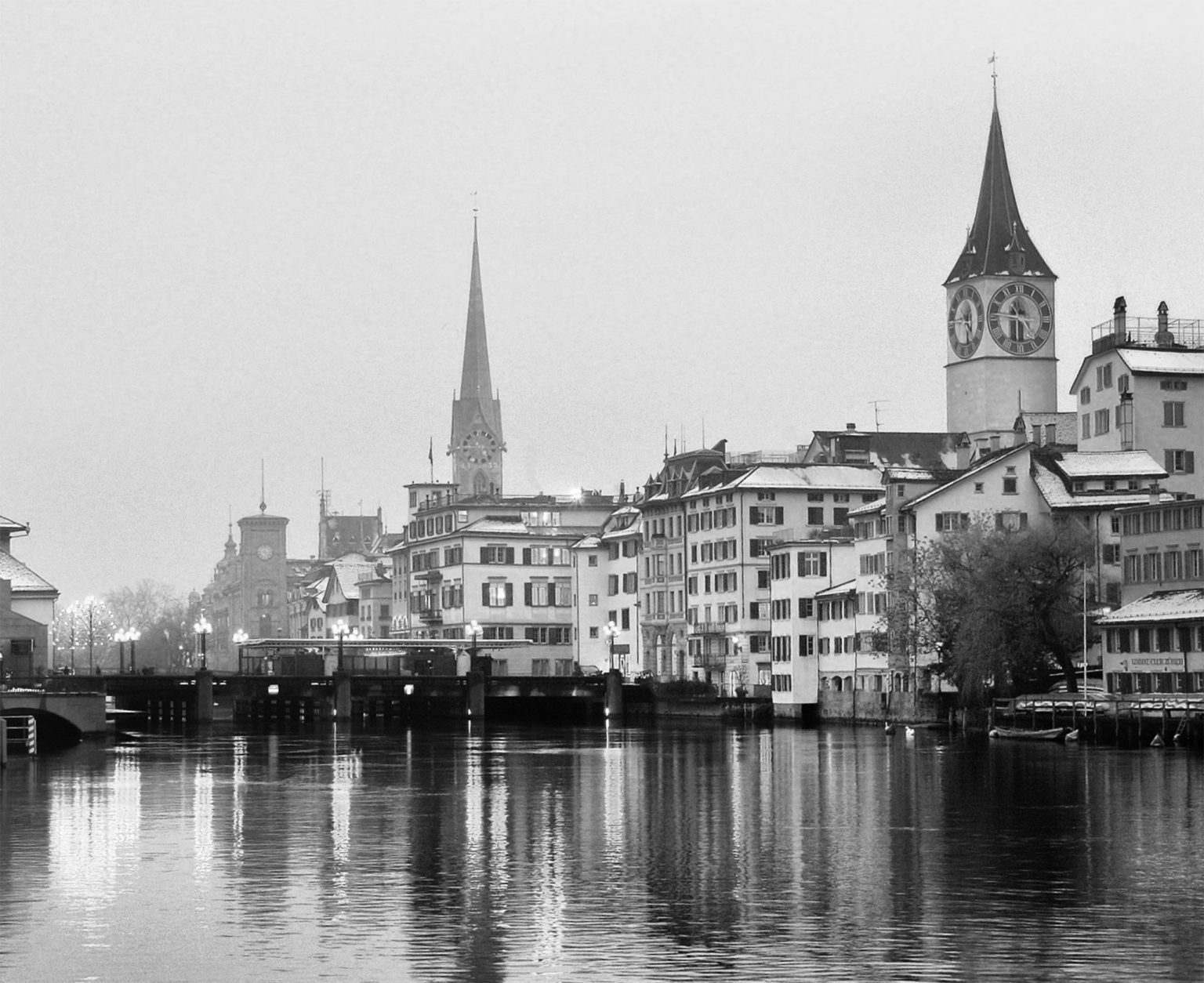
By global standards, Europe offers an exceptionally high quality of life. Only a handful of wealthy countries, including Australia, Japan and Canada, consistently compete with Europe's best-performing cities.
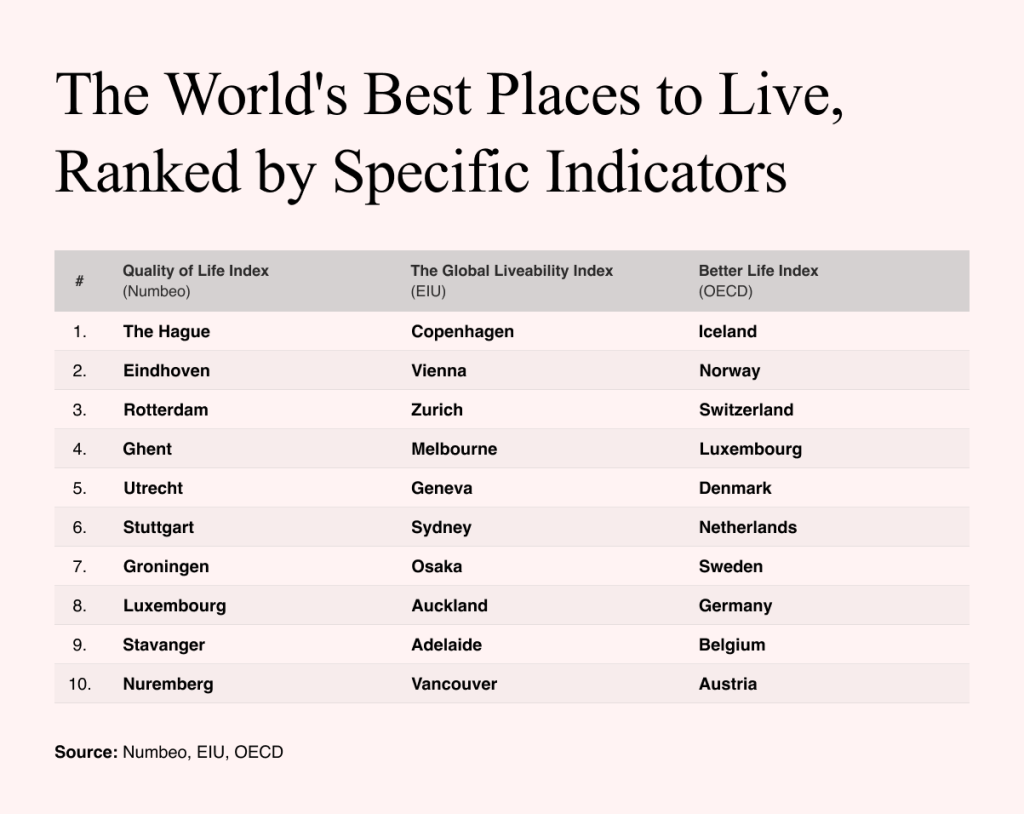
Numerous international rankings attempt to measure urban quality of life. Although their methodologies differ, the same names regularly appear near the top. Depending on the index, cities such as Copenhagen, Vienna, Zurich, The Hague and Eindhoven rank among the world's most desirable places to live.
The differences largely reflect methodology. Some rankings place greater emphasis on public safety and infrastructure, while others focus more heavily on affordability and living standards.
For example, the Economist Intelligence Unit (EIU) gives significant weight to stability, healthcare, education, culture, the environment and infrastructure.
The OECD's Better Life Index takes a broader approach, comparing countries rather than individual cities. It incorporates factors such as work-life balance, income, wealth, housing and residents' own assessments of their quality of life.
Numbeo's Quality of Life Index adopts a more consumer-focused perspective, combining safety, healthcare and environmental quality with purchasing power, living costs and housing affordability.
The World's Best Cities Are Often the Most Expensive
Housing affordability remains one of the most important components of quality of life. After all, even the most attractive city becomes difficult to enjoy if few people can afford to live there.
Across Europe, there is a clear relationship between quality of life and housing costs. Many cities that consistently rank near the top of international surveys are also among the continent's most expensive residential property markets.
According to Deloitte's 2024 study of European housing markets, new-build apartments cost more than €8,000 ($9,300) per sq m in cities including Paris, Munich, Luxembourg, Amsterdam and London. A typical 70 sq m apartment would therefore cost well over €500,000 ($580,000). The survey does not include Switzerland, Norway or Iceland, where cities such as Zurich, Geneva, Oslo and Reykjavík are also among Europe's most expensive housing markets.
Rental costs follow a similar pattern. London and Geneva remain among Europe's most expensive rental markets, while Dublin and Stockholm also rank near the top for monthly rents on two-bedroom apartments.
High Prices Do Not Always Mean Low Affordability
There is, however, an important distinction.
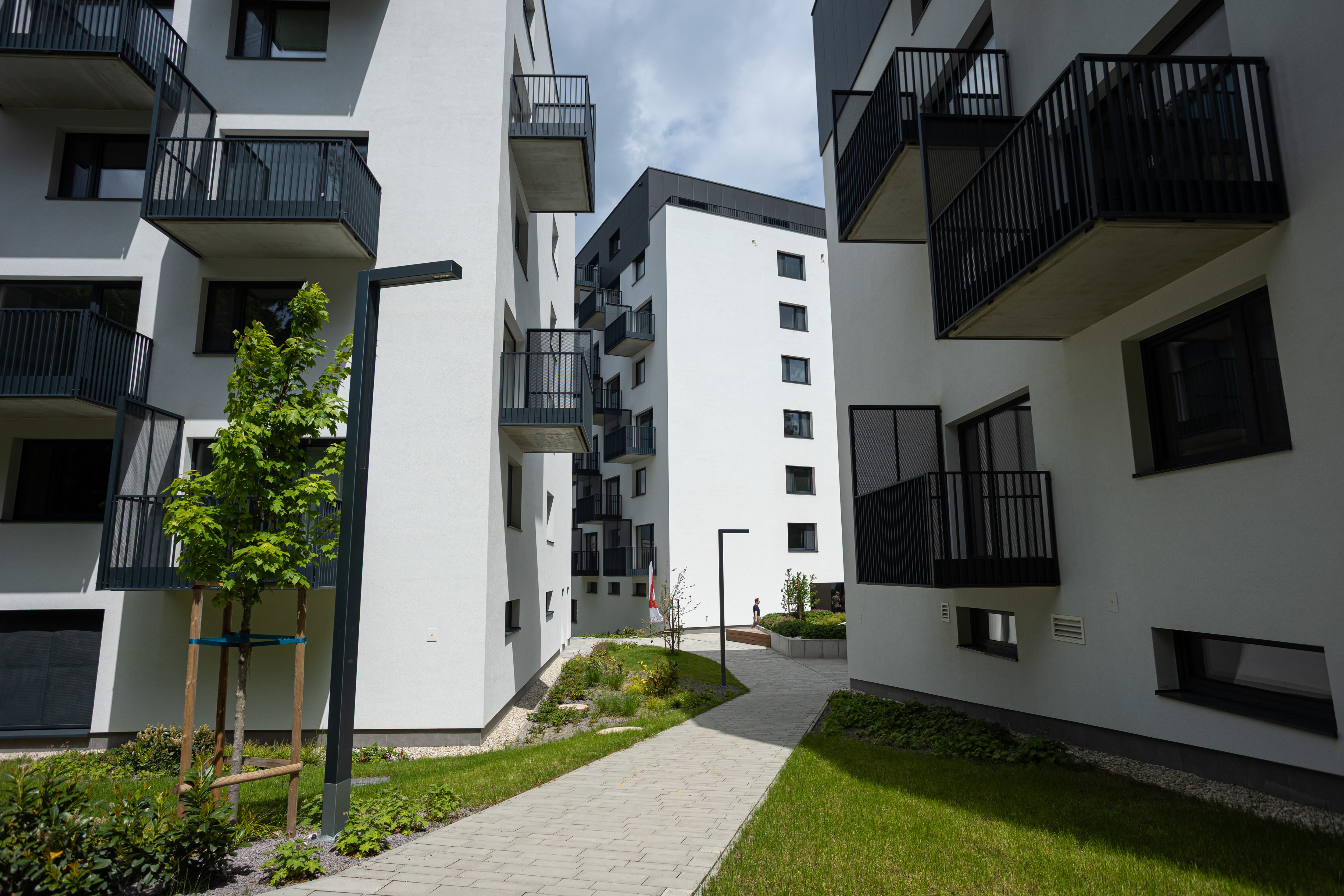
Housing may be expensive in absolute terms while remaining relatively affordable if local incomes are also high. For that reason, economists generally compare housing costs with local wages rather than looking only at property prices.
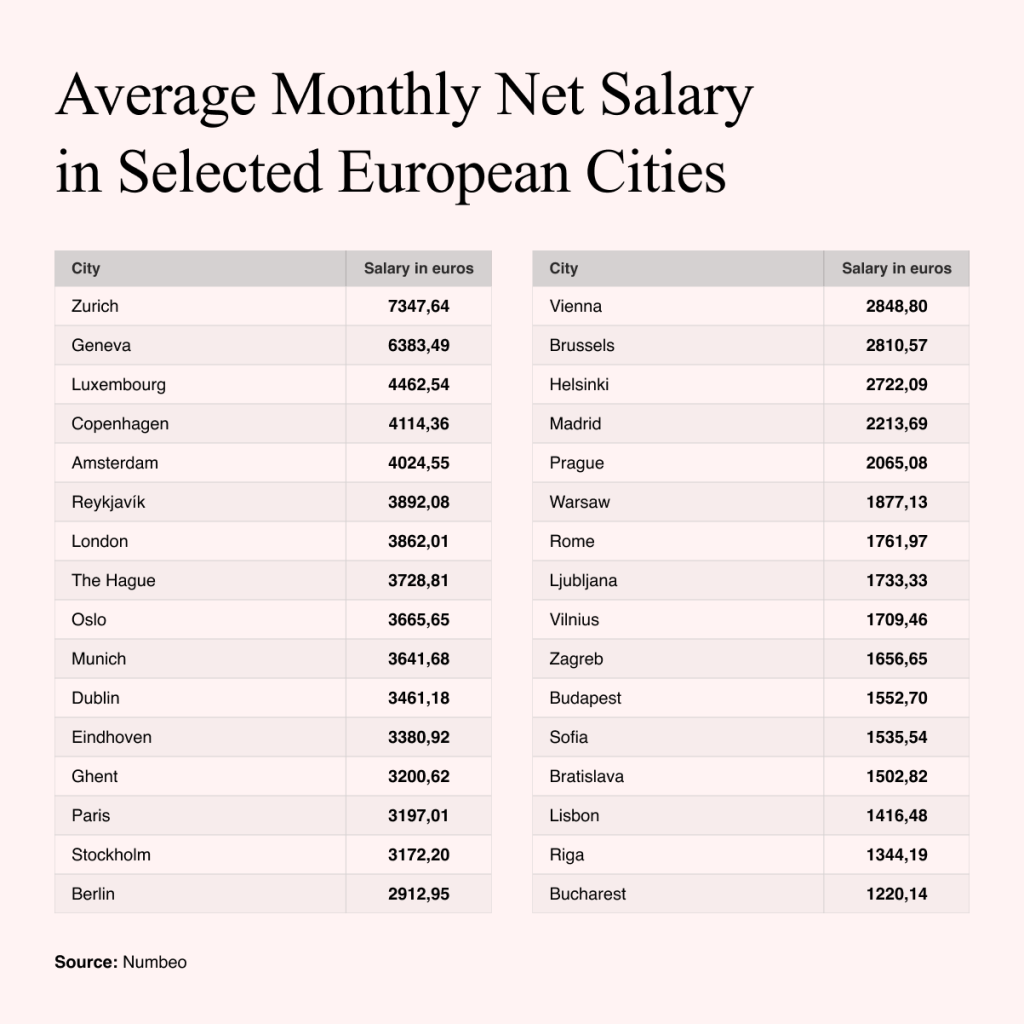
Several Dutch and Belgian cities, including The Hague, Eindhoven, Rotterdam and Ghent, perform well on both purchasing power and housing affordability relative to income. Zurich, Geneva and Copenhagen also rank highly because higher salaries offset much of the cost of living.
By contrast, some of Europe's least affordable housing markets are not necessarily its richest.
According to Numbeo, cities including Split, Lisbon, Milan, Tirana and Belgrade combine relatively high housing costs with comparatively modest wages. Similar affordability challenges exist in Athens, Porto, Bratislava and Thessaloniki. Russian and Ukrainian cities also score poorly, although those figures should be interpreted cautiously given the economic disruption caused by the war.
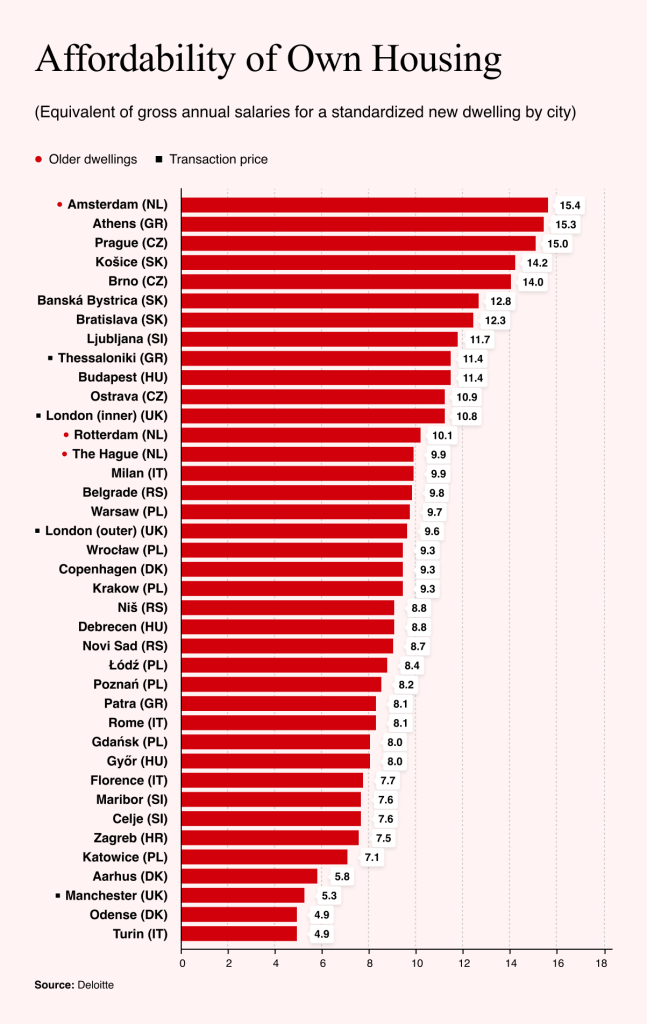
Deloitte reaches similar conclusions when comparing property prices with household incomes. According to its survey, buyers in Amsterdam, Athens and Prague must save the equivalent of roughly 15 years of gross salary to purchase a standard two-bedroom apartment. Several Central European cities, including Bratislava, Kosice, Banska Bystrica and Brno, also rank among Europe's least affordable housing markets by this measure.
Rankings Tell Only Part of the Story
Although international rankings provide useful comparisons, they cannot determine where individuals will enjoy the highest quality of life.
The best city depends largely on who is choosing it.
Young professionals may prioritize career opportunities and higher salaries. Families often place greater value on schools, healthcare and childcare. Remote workers may be willing to sacrifice proximity to major business centers in exchange for lower living costs and better housing.
Geography also matters.
Cities such as Bratislava and Szczecin benefit from their proximity to larger economic hubs including Vienna and Berlin. For people who can work remotely or commute only occasionally, living in Central or Eastern Europe while earning a Western European salary can significantly improve purchasing power and overall living standards.
Ultimately, quality of life is shaped not only by public safety, healthcare and infrastructure, but also by whether people can realistically afford to build their lives there. Housing remains one of the clearest examples of how headline rankings and everyday experience do not always tell the same story.