
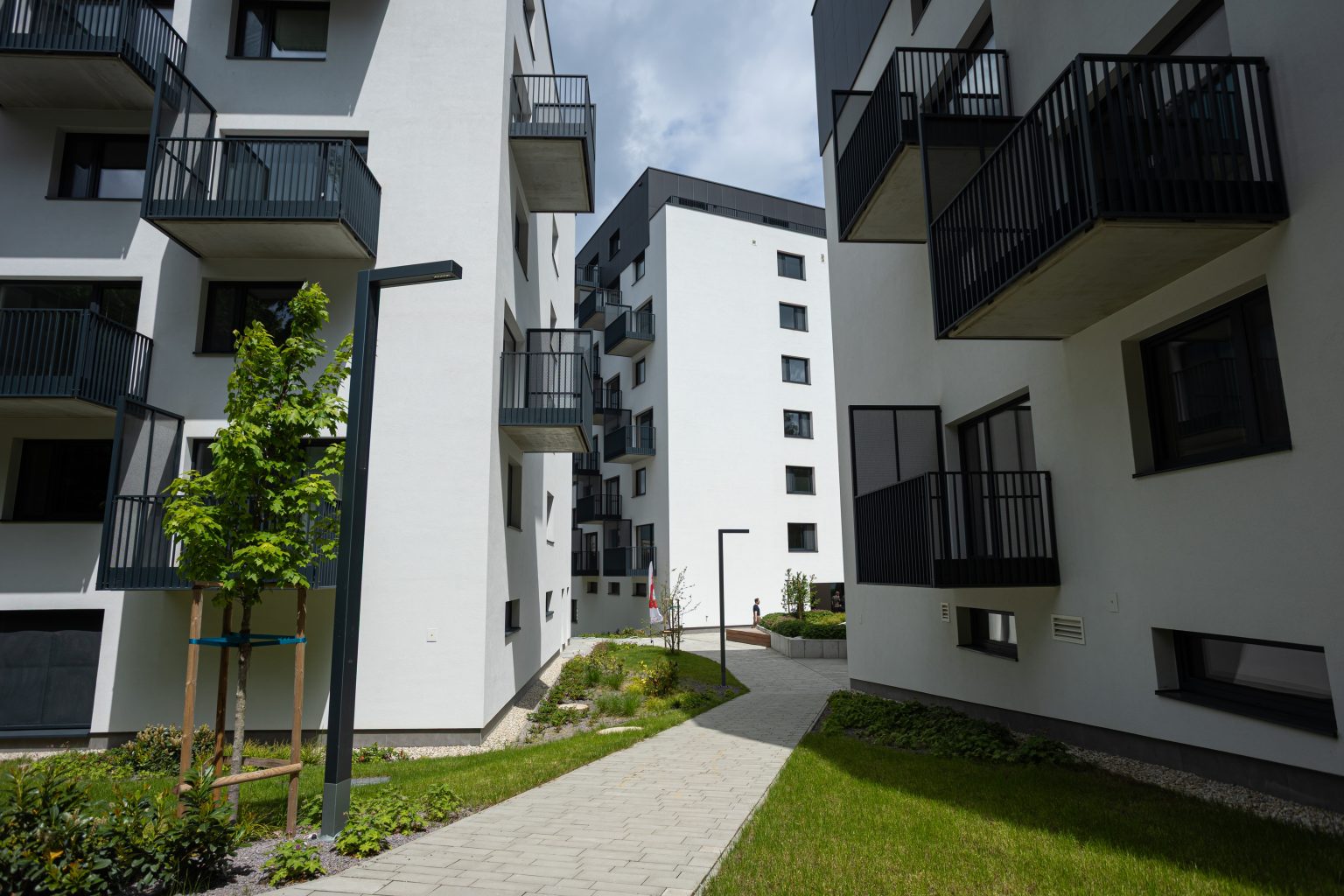
Access to housing has never been easy. Even in periods that parts of society now recall with nostalgia, apartments were not handed out without effort, waiting, connections, sacrifice or debt.
The difference is that housing is no longer just a private problem for individual families. The crisis is coming to a head, and that is most clearly visible in the political prominence it has gained.
Ten or 15 years ago, housing was an important issue, but it had not yet become such a contest of political prescriptions. Today, parties are racing to promise faster construction, simpler building procedures, tougher rules for developers or help for young families. Housing has become one of the central promises of election manifestos and one of the clearest signs that politics promises more than it can deliver.
This is not the failure of one government or one party. Housing prices have risen under different governments and in different countries. They cannot simply be blamed on the right, the left, liberals or populists.
In 2017, French President Emmanuel Macron promised to build 80,000 apartments for young people. Even in a system where the president has more power than most European prime ministers, the promise failed to materialize.
Politicians like to point to the visible obstacles: slow building procedures, complex standards and a shortage of land. All are real problems. But they mainly explain why apartments take so long to build. They do not explain why people have started paying such high multiples of their income for them.
Housing supply is one part of the story. The other lies in financing: interest rates and the length of mortgage repayments. That is where housing affordability has quietly given way to debt affordability.

Software Cannot Make a Slow State Fast
That is why construction is such a convenient political culprit. It is real, visible and easy for everyone to understand. It is not hard to picture a slow office, a lost file, a stamp, a missed deadline, an appeal or a broken portal. Yet the Czech experience with digitalizing building permits has shown the limits of the idea that a sluggish state can simply be moved online and made efficient.
The Czech Pirate Party handed the task to its then chairman Ivan Bartos, a politician who was supposed to embody digital competence. The project was meant to show that the state could be run in a more modern, faster and less bureaucratic way.
The result was the opposite. After the launch, the system was plagued by technical and operational problems, authorities complained that it did not work properly, and Bartos eventually lost his ministry. It was not just the failure of one piece of software. It was a clash between a political promise and an apparatus that is more complex than reformers admit.
Digitizing construction is not just a matter of replacing paper with a screen. It means turning an entire world of standards, exemptions, expert opinions, authorities, deadlines and appeals into software. If the system itself is overregulated, putting it online will not make it simple. It will merely create a digital version of the same maze.
The Labyrinth Politicians Help Expand
Here we return to the deeper issue. Politicians like to talk about simplifying rules, but they are themselves part of a system that keeps multiplying them. The modern state and European institutions live off the production of standards, strategies, directives and control mechanisms. In politics, activity is difficult to measure by results, but easy to measure by the number of new rules.
That is why promises of modest simplification in construction are suspect from the start. Those who do not want to touch the logic of the system itself may adjust forms, deadlines and portals, but they are unlikely to remove the cause. Real simplification would require a small revolution: deciding which standards, opinions and procedures should disappear.
In construction, this logic is multiplied. One standard protects the climate, another neighbors, another the landscape, another monuments, another safety and another energy efficiency. Each can be defended on its own.
Together, however, they create a system in which the right to build a home becomes a test of patience, capital and legal resilience. That is also why the system is so difficult to change. Every rule has its defender, every procedure its institution, and every stamp belongs to someone who would lose a measure of power if it were abolished.
Politicians then promise to reduce the bureaucracy they themselves help to feed. As long as they do not also propose radical cuts to rules and responsibilities, this is not reform. It is the maintenance of a labyrinth.
Yet this explains only half the problem. An overregulated state can hold back construction. On its own, however, it does not account for the enormous gap that has opened between apartment prices and incomes. The other half of the story is about money, mortgages and the gradual confusion of housing affordability with debt affordability.
The Mortgage Became the Market
Until around the turn of the millennium, house prices in the developed world moved more closely in line with household incomes. Housing was expensive, but prices were still largely tied to what people earned.
Then financing conditions changed. Money became cheaper, and banks began lending more and for longer. The mortgage shifted from a tool that helped people buy a home into a mechanism for supporting ever higher prices.
The housing market was no longer restrained mainly by real wage growth, but increasingly shaped by the terms of the loan. When repayments stretch over 30 years, buyers do not have to be significantly richer in order to offer more. It is enough for banks to let them carry more debt for longer.
The result is not more affordable housing, but more expensive housing spread over longer repayment periods.
This has also changed the nature of housing. It has ceased to be only a basic need and has become a financial asset. Its price no longer depends only on location, size or the incomes of people in a given city. It also depends on monetary policy, interest rates, banks’ willingness to lend and the length of mortgage repayments.
The home has begun to behave less like something to live in and more like an investment whose value rises with the amount of debt society can bear.
When Expensive Homes Become a Political Problem
It is here that the housing crisis touches on a broader problem in the West. Expensive real estate is not just a failure of the system. It is also one of its stabilizers. At a time when living standards have stopped rising as quickly, higher house prices have created a substitute source of wealth. Without the increase in property values, the stagnation of living standards in developed countries would have been far more visible.
That is why politicians are so cautious when talking about the housing crisis. On the one hand, they have to promise affordable housing for the young. On the other, they know that falling house prices would wipe out paper wealth for a large share of their voters. Expensive homes are a problem for those trying to buy. For those who already own, they are often the last proof that the system still gives them something of value.
This is clearest among older generations. Home ownership often cushions weak pension systems. Many pensioners would struggle to pay market rents, utilities and normal living costs from a single pension. Living in their own home is therefore not just a personal advantage. It is an informal pillar of the welfare state.
That is why the housing crisis is so difficult to solve. The problem is not only that homes are too expensive. It is that too many people and too many institutions have grown used to high prices as a substitute for prosperity.