Denmark’s Social Democrats Move to Ban the Islamic Call to Prayer
A Social Democratic minister wants to ban the Islamic call to prayer from public space in Denmark. The case shows why the country’s left stands apart from most of Europe’s center-left parties.
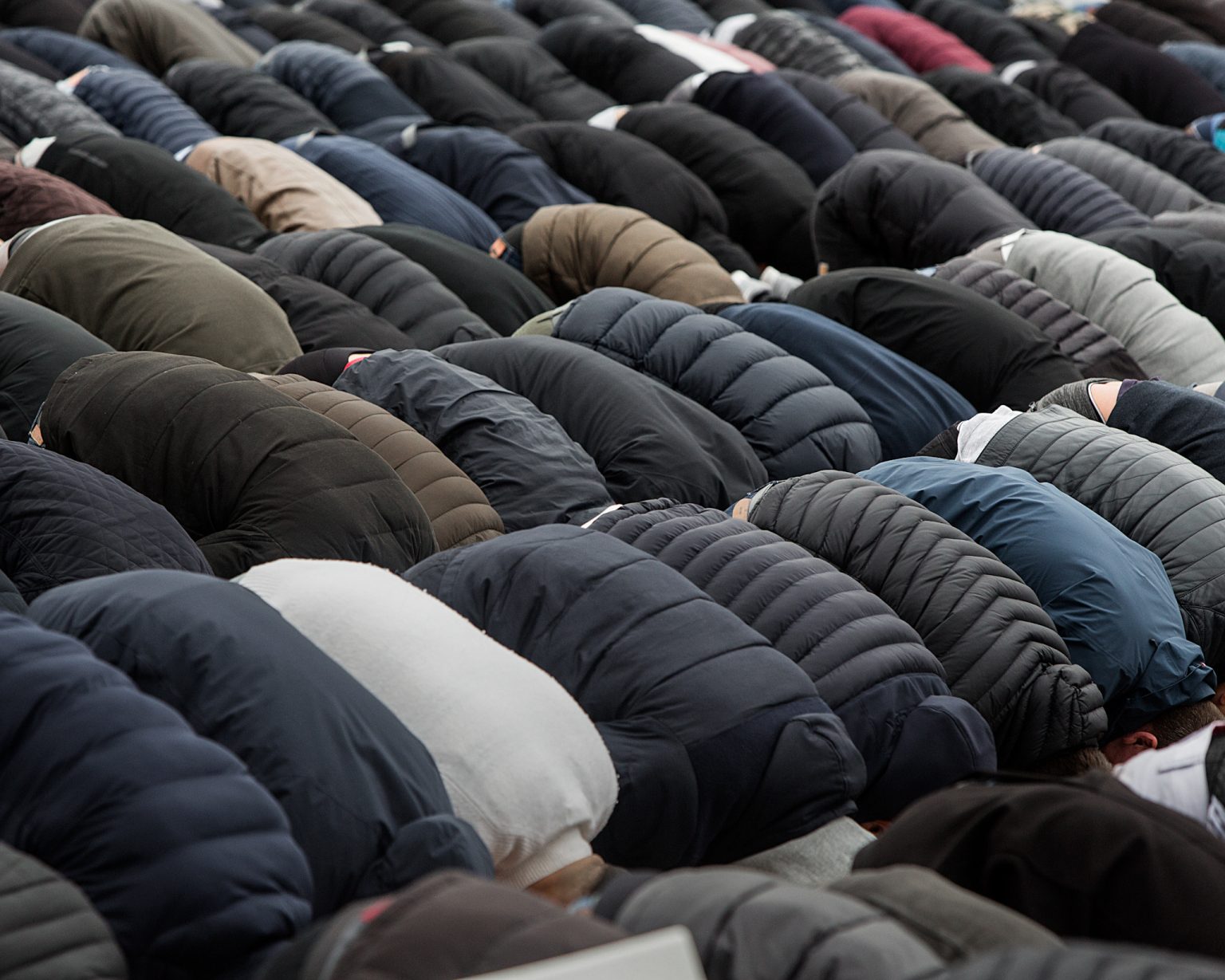
The Islamic organization Hizb ut-Tahrir holds Friday prayers at Parliament Square in Copenhagen, Denmark. Photo: Ole Jensen/Getty Images
|
Danish Integration Minister Morten Bødskov wants to remove the Islamic call to prayer from public space. The adhan should not be heard over Danish rooftops, the Social Democrat told the Ritzau news agency. It has no place in Denmark, he said. Anyone walking through the country should not feel as if he had ended up in a suburb of Islamabad.
For a European Social Democrat, that is an unusually blunt statement. Bødskov speaks of Islamization in the public sphere. Islamic symbols, he argues, are taking up too much room in Denmark. In Copenhagen, that diagnosis now comes from the government.
In parts of Denmark, local noise rules already prevent mosques from broadcasting the call to prayer over loudspeakers. But the government does not believe that goes far enough. It is now examining whether a wider ban would be possible. Bødskov is already the third Social Democratic integration minister to pursue such a review. Earlier attempts were made in 2020 and 2025.
Bødskov belongs to the Social Democrats, the party of Prime Minister Mette Frederiksen. It is left-wing on social policy and hard-line on migration, a combination that makes it almost unique among Europe’s left-wing parties. It promises to protect the welfare state and demands integration from migrants. Its voters are not expected to choose between the social safety net and internal order.
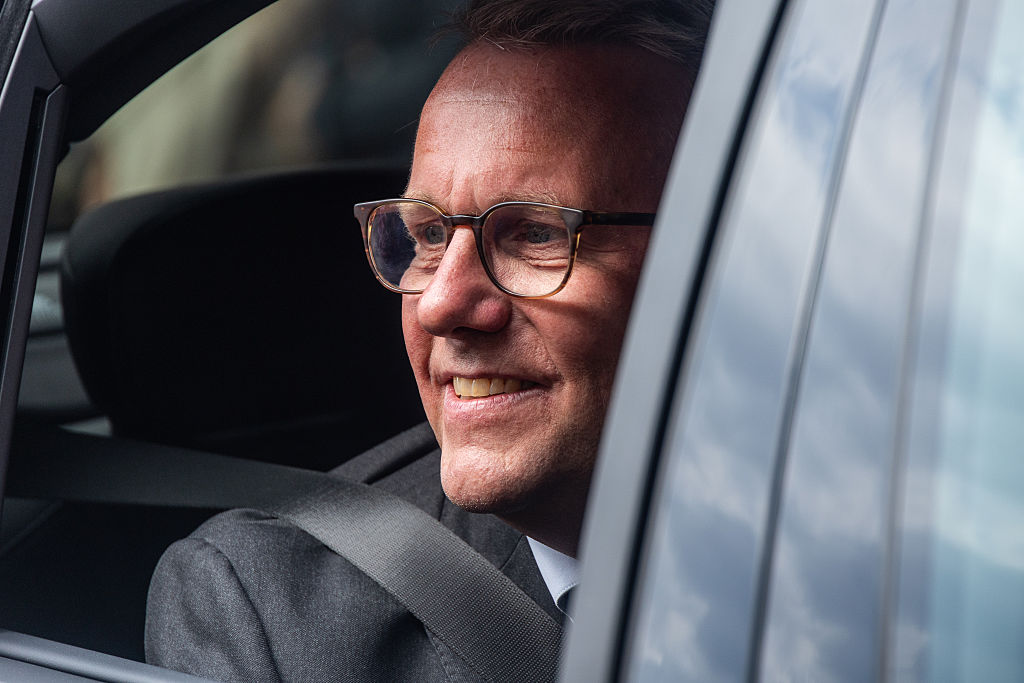
Morten Bødskov, Denmark’s minister for immigration and integration, wants to ban the Islamic call to prayer from public space. Photo: Kristian Tuxen Ladegaard Berg/NurPhoto via Getty Images
Left-Wing But Not Naive
Frederiksen has developed that line over many years. Her governments have pursued low asylum numbers, tougher returns and a harder line on foreign criminals. Denmark was prepared to withdraw protection status from Syrians when authorities classified parts of Syria as safe. Copenhagen also supported models under which asylum applications would be processed outside Europe.
In early 2026, the government announced another tightening of the rules for foreign criminals. Those sentenced to at least one year in prison for serious offenses are to be made easier to deport. Frederiksen accepted the prospect of conflict with Europe’s human rights framework.
Denmark also uses the welfare system to push migrants into work. Since 1 January 2025, migrants with protection status who receive benefits have generally been subject to a work requirement of up to 37 hours per week. That is the equivalent of a normal Danish working week. Those affected must take part in work-related activities, including internships, subsidized jobs, community work and language classes.
The state also intervenes early with children. In especially disadvantaged residential areas, children from the age of one must generally spend 25 hours per week in childcare. There, they are supposed to learn Danish and absorb Danish social norms. Parents who refuse risk losing family benefits.
Then there are the rules against parallel societies, formerly known as the “ghetto” laws. They target residential areas with a high share of non-Western residents and social problems. Social housing can be sold, rebuilt or demolished. Residents can be forced to move. By 2030, these districts are to be broken up.
The European Union’s courts see possible discrimination in the policy because the “non-Western” category is linked to origin. Denmark is holding on to its central premise. The state wants to dismantle closed migrant communities.
The planned ban on the Islamic call to prayer fits into this law-and-order approach. Bødskov treats the adhan as an audible sign of a separate social order. Legally, a ban would be difficult because Denmark’s constitution protects the public practice of religion. Politically, the direction is clear.
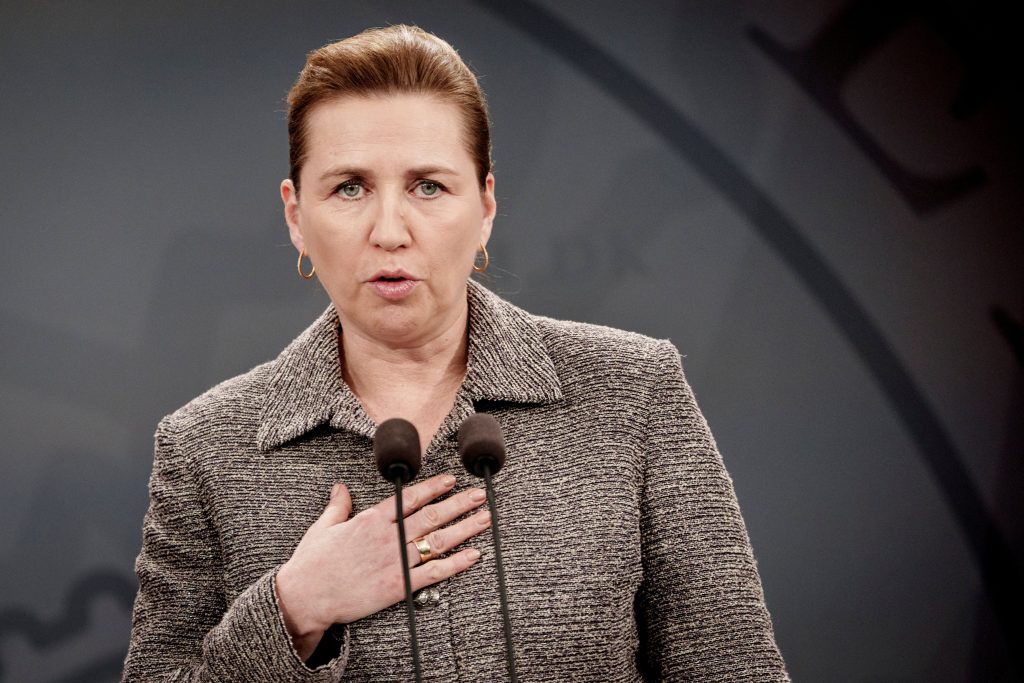
Left-wing but not naive: Danish Prime Minister Mette Frederiksen. Photo: Liselotte Sabroe/Ritzau Scanpix via Reuters
Others Set Volume Limits
In Germany, Denmark’s neighbor to the south, the call to prayer is usually treated as an administrative matter. Cologne allowed the public muezzin call on Fridays in 2022. Mosques can apply to broadcast it for a few minutes. The volume is limited, and the decision rests with the city and the authorities.
Sweden chose a similar path. In Fittja, south of Stockholm, a public call to prayer was approved for the first time in 2013. In Växjö, police allowed a weekly call to prayer lasting three minutes and 45 seconds in 2018. A poll at the time showed that a majority of Swedes wanted a ban. The authorities approved it anyway.
Norway had the debate earlier. In Oslo, the World Islamic Mission received permission for a weekly call to prayer as early as 2000. The conditions were clear: three minutes, 60 decibels and Fridays only. There, too, the adhan was turned into a technical question.
In the Netherlands, the call to prayer is essentially treated in law in the same way as church bells. Municipalities can impose limits. There is no general ban. In 2025, the Reformed Political Party (SGP) and JA21 brought forward a proposal against amplified calls to prayer. The Ulu Mosque in Utrecht reacted with outrage. The dispute remained within Parliament and the municipalities.
Germany, Sweden, Norway and the Netherlands regulate the adhan through conditions and permits. Denmark is moving further upstream. The state wants to prevent Islamic symbols of power from becoming part of the everyday soundscape of Danish cities. Bødskov’s proposal will now test how far such a ban can go under constitutional law. The political will has long been clear.
In Denmark, the adhan is not meant to sound over the rooftops.