Four migrant workers were burned alive in Calabria after demanding unpaid wages. Their deaths expose the Pakistani crime networks now embedded in Europe’s migrant labor racket.
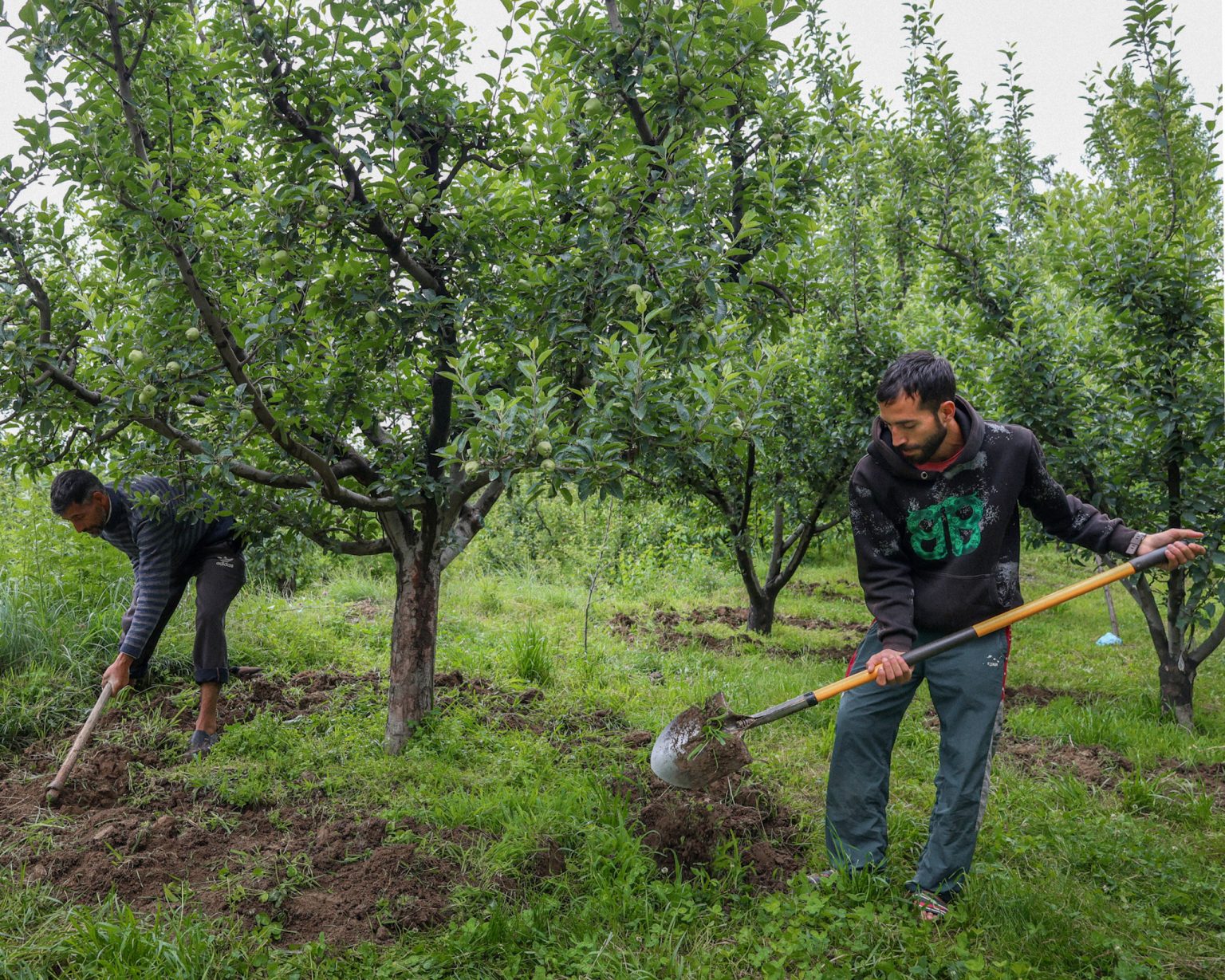
Workers from Pakistan. Photo: Firdous Nazir/NurPhoto via Getty Images
|
Four farm workers were murdered in Calabria after demanding their wages. On the evening of 1 June, the men were sitting in a van at a petrol station in Amendolara, near Cosenza. The attackers poured flammable liquid into the vehicle, set it alight and blocked the doors.
Three Afghans and one Pakistani died. One Afghan survived with burns. He told investigators that the men had worked in strawberry fields and had not been paid. When they demanded their wages, their intermediaries struck. Police arrested two Pakistanis.
Southern Italy has known exploitation in the fields for decades. The system is known as caporalato. Criminal intermediaries bring migrants to plantations, warehouses and building sites. They organize transport, accommodation and work. The laborers receive starvation wages or nothing at all. Many sleep in shacks. Those who speak up risk their lives.
In the past, attention in this business focused mainly on the ’Ndrangheta, the Camorra and other Italian clans. In Calabria, however, they are now leaving the dirty work to others: Pakistani networks. They are close to the workers. They speak their language. They know their families, debts back home and villages of origin.
The power of these networks often begins in Pakistan. Families go into debt with smugglers, while intermediaries promise visas, contracts and work. According to Italian figures, the price is often €10,000–€20,000 ($11,700–$23,400). In Italy, they end up in the fields. Pay is two or three euros an hour. Sometimes it never comes at all. The debts to the asylum mafia remain.
The workers are tied to passports, accommodation, wages and family. Anyone who objects in Calabria knows that someone at home may be made to pay the bill.
The crime expert Vincenzo Musacchio describes Pakistani organized crime in Italy as fluid, decentralized and brutal. It is not an old mafia pyramid. It has no large, visible headquarters. Family ties, clan bonds, religious circles and middlemen are enough for Europe’s shadow economy.
For Italian structures, that division of labor is convenient. The old clans let the newcomers do the dirty work while keeping territory, contacts and cash flows. Pakistani groups supply workers and intimidation. The farmer gets cheap hands. The trader gets cheap goods.
Spain knows the same type of operation. In June 2025, the Guardia Civil and National Police freed 45 workers from agricultural exploitation. The organization was based in Caspe, near Zaragoza. According to Spanish reports, it consisted of Pakistanis and Argentines. The victims came from Nepal, Pakistan and India. They lived in miserable conditions, were monitored and had to pay for accommodation, transport and access to work.
Catalonia also appears in this context. Spanish media have reported on Pakistani networks that sold work contracts in small supermarkets. The sums cited ranged from €6,000 to €30,000 ($7,000–$35,100). The contract becomes a trap. The residence card becomes a leash. The migrant works for those who brought him to Europe.
Britain shows where looking away leads. Rotherham, Rochdale, Telford and Oldham have stood for years for grooming gangs. In many cases, men of Pakistani origin or from Asian-Muslim milieus played a central role. The victims were mostly white working-class girls.
Authorities looked away for too long. Police, social services and local politicians feared accusations of racism. The girls paid the price. The British government’s Casey report confirmed in 2025 a striking overrepresentation of men of Asian and Pakistani origin in several local datasets. Greater Manchester reported that 52%–54% of suspects in group-based child sexual exploitation cases were Asian. In West Yorkshire, the share of Asian suspects was 35%. In the Rotherham investigation Operation Stovewood, almost two thirds of the 323 recorded suspects had a Pakistani background.
According to Rai News, Pakistani networks in Italy have long since expanded beyond agriculture into logistics, packaging, shipbuilding and printing. Sham cooperatives provide workers, suppress wages, evade contributions and disappear before inspections. They then reappear under a new name.
Italy’s labor inspectorate found irregularities in 74% of its inspections in 2025. After the murders, Labor Minister Marina Calderone announced special inspections in agriculture.
Welcome to the comments section of the Štandard daily. Please take note of our guidelines, comments are moderated by us. You can contact the moderators at support@statement.com.
Participate in the discussion
Comments are available to subscribers only. If you'd like to join the discussion, choose a subscription starting at €6.72 per month.
All comments 0
Register
Comments are available to registered users only. If you'd like to join the discussion, register here.