
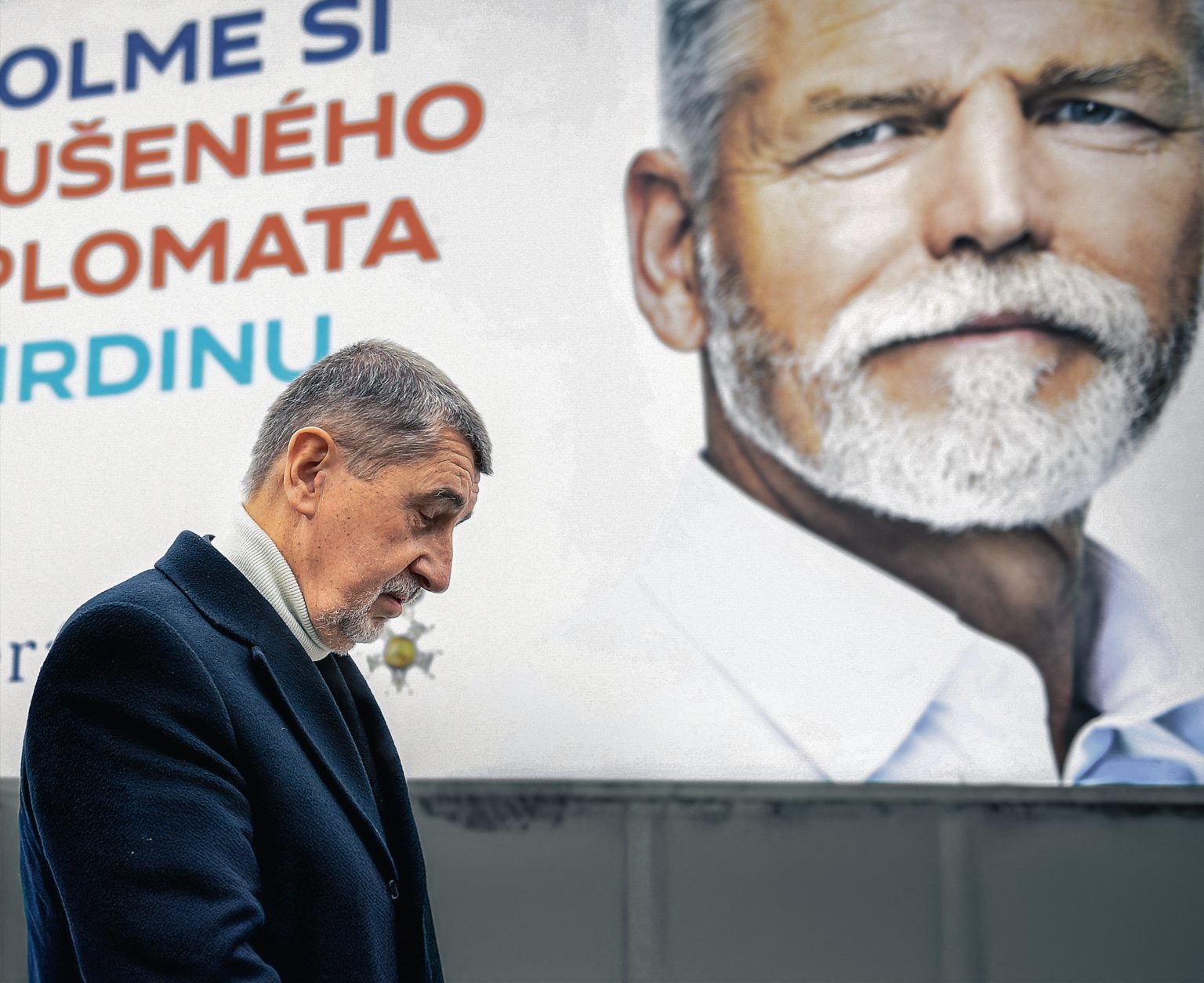
On Monday, the Czech government decided that Prime Minister Andrej Babis would lead the Czech delegation to the NATO summit in Ankara and that President Petr Pavel would stay at home. The president, who attaches great importance to the July summit, filed a jurisdictional complaint with the Constitutional Court in Brno that same day. The court responded immediately.
On Wednesday, it issued a preliminary injunction ordering the government to include the president in the delegation, stating that it would rule later on the jurisdictional dispute between the government and the president over who represents the Czech Republic at the highest level. The pro-Brussels opposition, which includes the judges in Brno, has granted its highest representative an additional power that he did not previously possess.
Foreign Minister Petr Macinka has described it as a constitutional coup. Prime Minister Babis has accepted the judges’ decision. It is the response of a weak prime minister afraid of conflict.
A Presidential Republic? No
Since their defeat in last year’s parliamentary elections, pro-Brussels forces in the Czech Republic have been trying in various ways to overturn the democratic outcome. Among other things, they have been gradually rewriting the distribution of powers in favor of a former communist intelligence officer and later American-trained general, whom they managed to install at Prague Castle three years ago as the bearer of Vaclav Havel’s legacy. In recent months, they have already succeeded twice.
It began when the president refused to appoint Filip Turek, the election leader of the Motorists for Themselves party, as a minister. Until then, there had been a consensus among constitutional lawyers that the president had to respect the prime minister’s nominations for cabinet posts.
At the time, the prime minister refused to file a constitutional complaint against the president, saying that he did not want to undermine cooperation with him. Initially, however, he feared losing before judges whom he suspected of being sympathetic to the president. If that was the case, he was not mistaken.
Now the Constitutional Court in Brno is telling him that he cannot appoint just anyone to a foreign delegation, as prime ministers have been able to do until now. The judges in Brno are now assigning the president powers that would be appropriate in a presidential republic, not a parliamentary one, and for which he lacks a democratic mandate.
The Government’s Prerogative
Both the president and the judges point to established practice, under which the Czech delegation to NATO summits has traditionally been led by the head of state. However, the composition of the delegation has always been decided by the government, which under normal circumstances would mean that the cabinet can decide otherwise.
The fact that previous governments entrusted such a mandate to previous presidents does not create an obligation for the current government to entrust the mission to someone in whom it has no confidence. But the activism of the constitutional judges defies all logic.
The dispute over participation in the Ankara summit is not merely a matter of jurisdiction. It is also a matter of substance. The president and the government hold differing positions on key points of the summit. Unlike the president, the prime minister does not support a rapid increase in defense spending to as much as 5% of GDP. Nor is he convinced that Europe should be preparing for war with Russia.
On these issues, the prime minister, not the president, has a clear democratic mandate. Moreover, after previous disputes, the president cannot even count on the prime minister’s trust.
What Babis’s Cabinet Can Do
A radical but politically correct solution would be simply to ignore the Constitutional Court. Tusk’s government in Poland did not worry too much about obstructionism from a Constitutional Court appointed by the previous administration.
In the Czech case, however, such a move would trigger a constitutional crisis and threats from Brussels to freeze European funds on the grounds that the principles of the rule of law had been violated. Nevertheless, this confrontation is probably now the only way to stop the creeping erosion of democracy by “judicracy”.
But Babis’s government lacks both the courage and the necessary public support for such a confrontation. It is reasonable to assume that it could count on lukewarm support from a majority of citizens, but it would face a well-organized radical minority linked to the mainstream media.
If the Czech government does not want to lose face entirely and surrender control over diplomacy, it also has the option of less spectacular obstruction. It could either make things as difficult as possible for the president and his team or reduce the president to a secondary member of the delegation.
The Constitutional Court did not dispute that the prime minister leads the delegation. It merely ruled that the president must be a member of it. However, high-level delegations have many members, and by no means all of them take part in political negotiations. Many simply wait outside the doors behind which the talks are taking place.
Who gets behind those doors is determined by the head of the delegation. The prime minister can therefore include the president in the delegation, but he is not required to nominate him for any negotiations. Or he could register him for events reserved for the spouses of delegation heads, if such events are offered in Ankara. But Babis apparently lacks that kind of sense of humor.
Perhaps they will not quarrel in front of their Turkish hosts over the seating arrangements, as happened years ago in Ankara when European Commission President Ursula von der Leyen attended a reception with European Council President Charles Michel hosted by President Recep Tayyip Erdogan. At the time, a diplomatic scandal erupted after von der Leyen was not given a seat as prominent as Michel’s.
The extent to which the government yields to its opponents in this dispute will foreshadow its approach in other disputes as well: over public media, freedom of expression and, above all, the right of citizens to determine the direction of the state through the government they have elected. And these are far more important issues than which seat Petr Pavel will occupy in Ankara.