

Benjamin Graham, Warren Buffett's mentor and the father of value investing, was deeply skeptical of initial public offerings (IPOs). His caution was not reflexive conservatism. A company's decision to enter the financial markets is always a carefully calculated move by management, designed to extract maximum value from the transaction.
Graham identified three reasons to avoid IPOs. The first is timing: companies go public almost exclusively during bull markets and periods of economic optimism. Owners and investment bankers are not naive; they list when sentiment is buoyant and buyers are willing to pay the highest price.
The second reason is the marketing offensive mounted by company owners ahead of a listing. The third is the complete absence of any stock market track record, which means there is no established floor beneath the share price and no telling how far it can fall.
The listing of the Czech defense holding company CSG on the Amsterdam Stock Exchange meets all three criteria. Graham, one suspects, would have been quietly satisfied to have given this one a miss.

Perfect Timing
CSG shares began trading on the Amsterdam Stock Exchange in January 2026. The timing was well judged: although interest in defense stocks had already peaked, serious doubts about the sector's valuations had not yet taken hold.
Those doubts arrived with the outbreak of war in Iran. Rising oil prices drove inflation and weighed on GDP growth, creating a difficult environment for the indebted governments whose defense contracts underpin the entire sector.
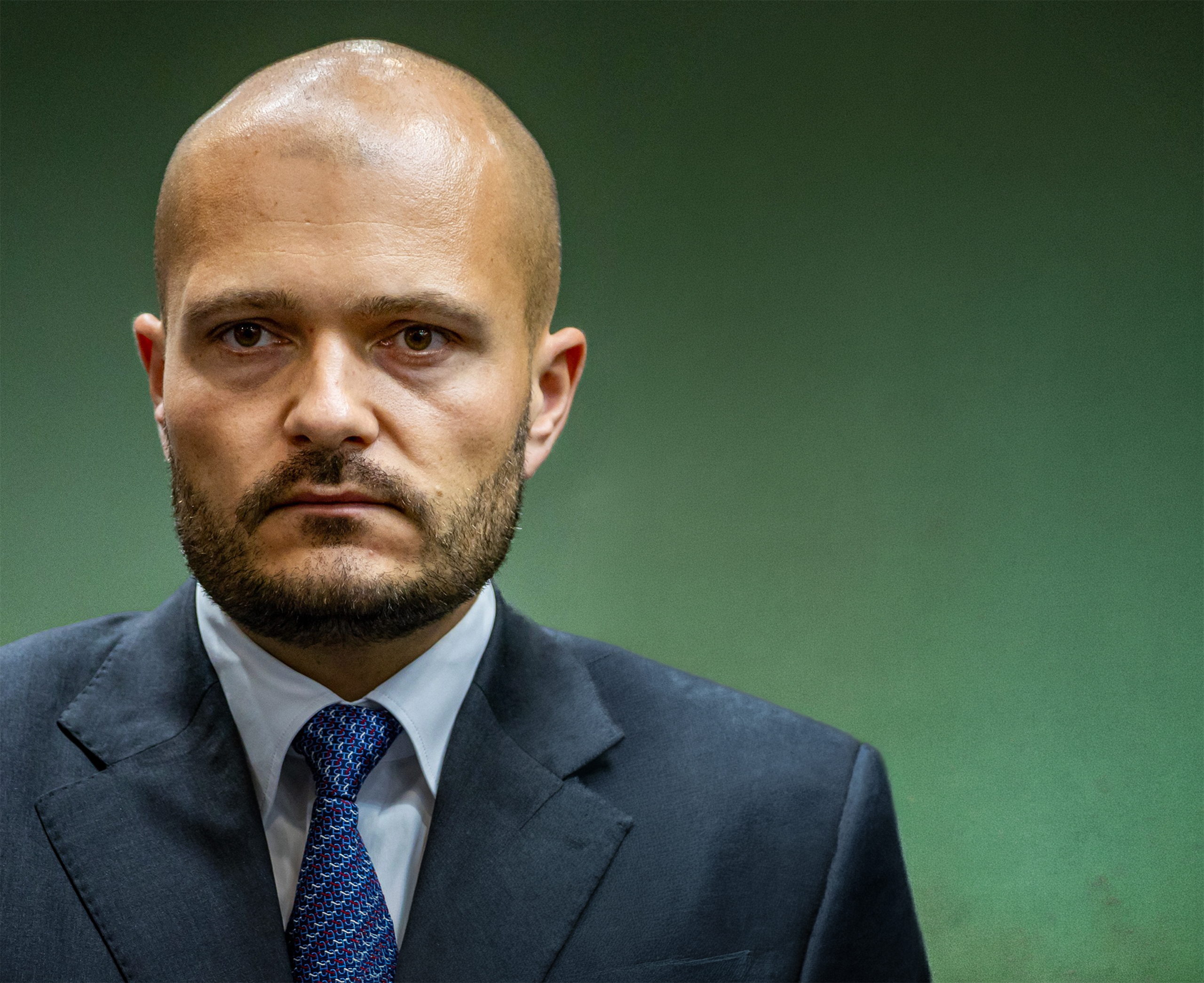
In hindsight, CSG's principal owner, Michal Strnad, timed the sale well. He missed the market peak by a few months, but given the operational complexity and time pressures of any IPO, the outcome could hardly have been better.
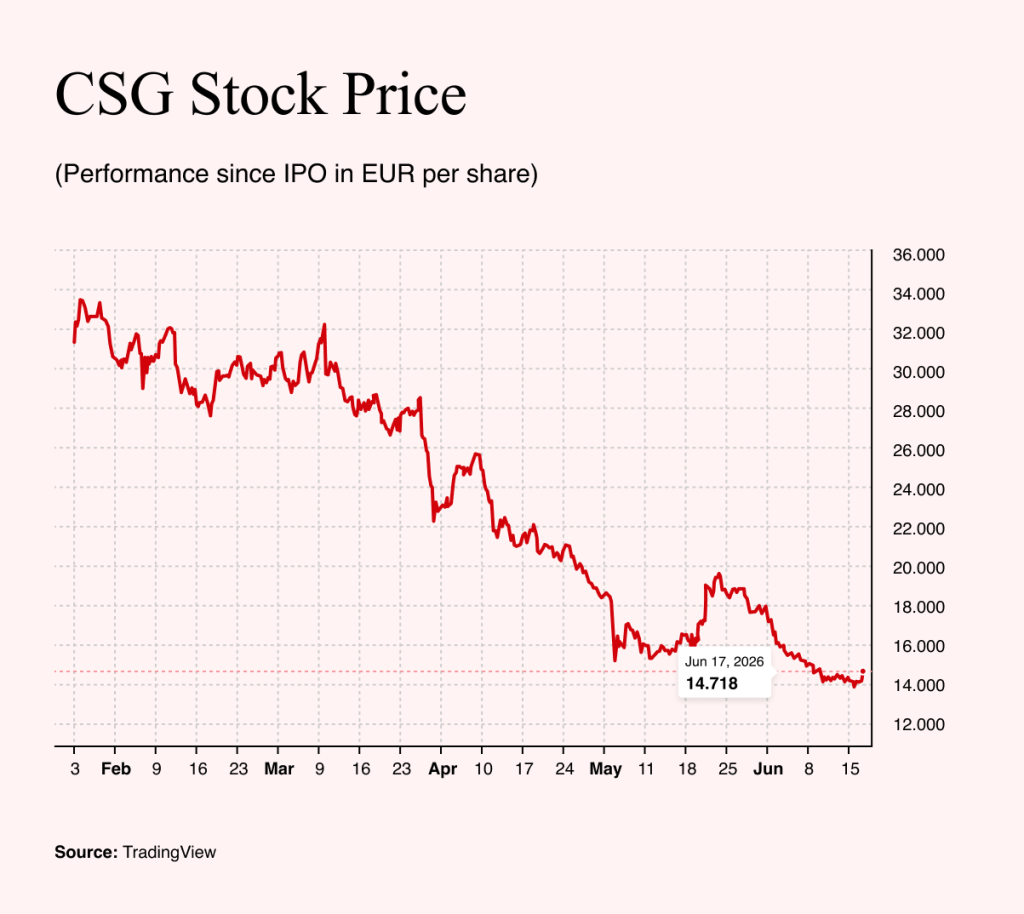
And for a time, the numbers bore that out. CSG quickly surpassed its offering price of €25 ($28.65) per share, and by the second trading day the stock had climbed to €33.90 ($38.85), setting an all-time high that looks unlikely to be threatened any time soon.
Too Good a Story to Last
CSG's marketing was equally impressive. The choice of Amsterdam was itself a statement: for a Central European company, a direct debut on one of the continent's premier financial markets signals ambition of a different order. In football terms, it was a jump from the regional leagues to the top flight. It was, after all, the largest IPO the region had ever produced.
The listing made Michal Strnad by far the wealthiest Czech, with CSG's opening-day valuation surpassing even the energy giant CEZ in market capitalization. The praise was effusive and the marketing brilliantly effective, leaving investors with the nagging sense that they risked being left behind. For a brief moment, the stock appeared to have no ceiling.
The turning point came on 27 March 2026, roughly two months after the IPO, when the market price fell below the offering price of €25 ($28.65). At that moment, losses were no longer confined to retail investors who had rushed to back Europe's defense champion. The large institutional buyers who had participated directly in the offering were in the red as well. CSG had become a losing proposition for virtually everyone who had acquired the stock after its debut.
The story did not stop there. Hunterbrook Media escalated the pressure by publishing an extensive investigative piece under the headline: "Why the Largest Military IPO in European History Is Combusting". The publication also disclosed that its affiliated fund held a short position in CSG shares, which meant the article was something more than journalism. It was a market attack – a public indictment of a company whose decline would directly benefit the authors' own financial interests.
That said, the article's content could not simply be brushed aside. Hunterbrook did not train its sights on a single weakness but on several at once. It raised questions about CSG's actual production capacity and its reliance on the resale and refurbishment of old ammunition. It pointed to ambiguities surrounding a Slovak framework contract worth tens of billions of euros and the suspension of the Spanish FMG factory from contracts with the Alliance's procurement agency. It also disclosed a dispute with minority shareholder Petr Kratochvil, who is demanding a substantial sum for his stake. Any one of those allegations would have given management considerable explaining to do.
Michal Strnad's response followed the crisis communications playbook closely. Rather than addressing each allegation in turn, he dismissed the report in its entirety as utter nonsense in an interview with Bloomberg and declared CSG shares to be significantly undervalued. Investors have not yet been convinced.
In the weeks since, the group has kept up a steady flow of positive announcements: AviaNera Technologies has signed an agreement with Ukrainian Armor intended to pave the way for the licensed production of thousands of jet engines per year directly in Ukraine, while the Paris debut of the new four-wheeled Tadeas armored vehicle from Tatra Defence offered another opportunity to project strength.
The Numbers Will Decide
A further unwelcome development is the arrival of professional short sellers. Qube Research & Technologies reported a net short position of 0.50% of CSG shares as of 11 June, precisely the threshold at which such positions must be disclosed under Dutch rules.
That figure alone does not amount to a concerted attack on the stock, but the attention of professional short sellers is rarely a benign sign. Investors are beginning to wager that CSG's difficulties are not yet over.
Both camps will be watching the financial results due on 7 August 2026 with close attention: those who bought CSG shares in the belief that the stock is undervalued and those who bought them in order to profit from a further fall.
In the current climate, those results are the only thing that matters. This is where Graham's framework reasserts itself. CSG may yet demonstrate that it is a genuinely undervalued European defense champion, but promises, marketing headlines and trade show premieres will no longer move the needle. The numbers will decide – and they will show whether this was a serious investment opportunity or another illustration of how willingly IPO investors pay for a well-timed story.