As Germany swelters in a brutal heat wave, families looking for relief are increasingly finding police, ID checks and closed pools instead. The Freibad has become a daily test of failed integration.
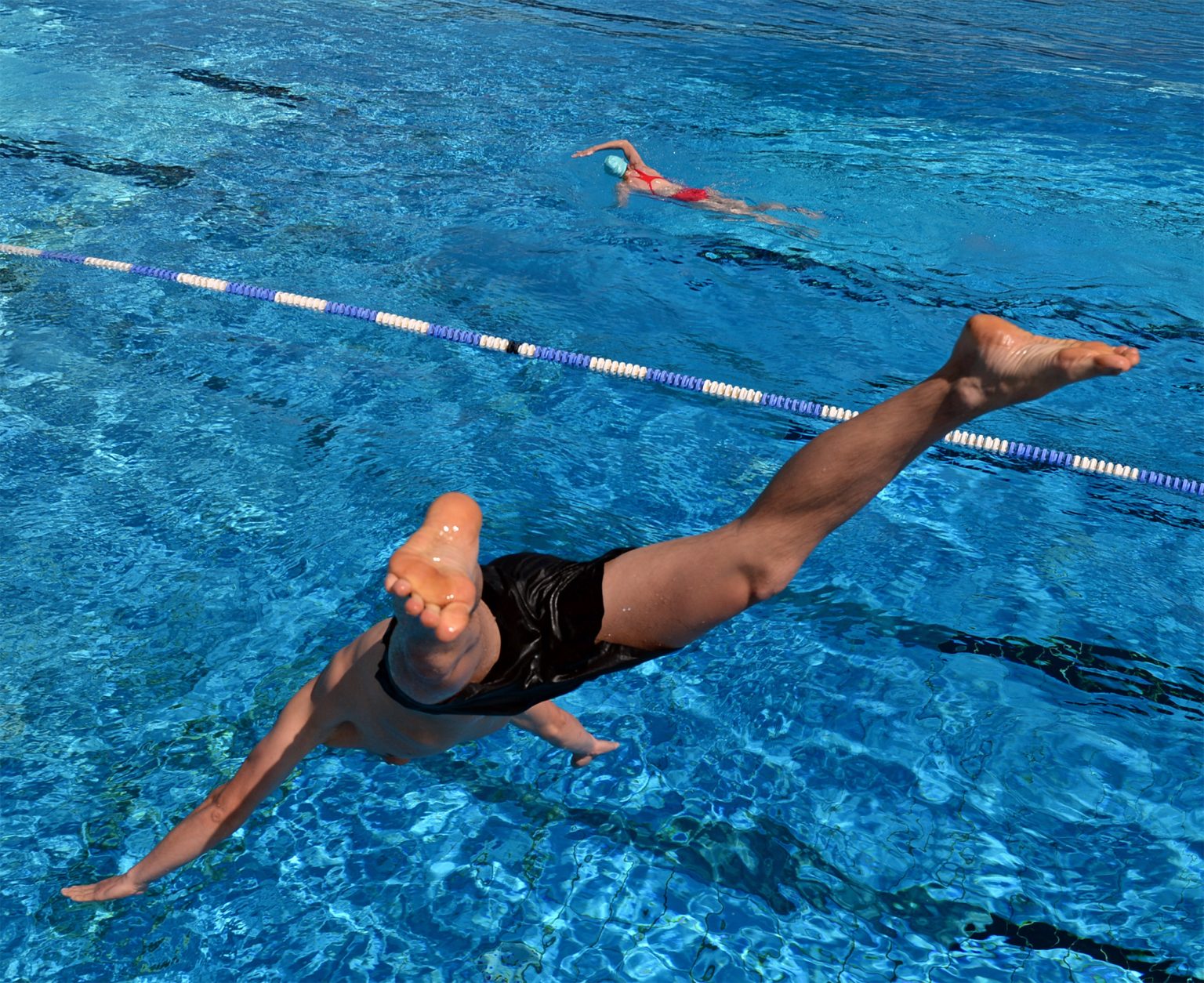
A summer ritual under strain: public pools across Germany are increasingly marked by disorder, closures and tighter controls. Photo: Ralf Hirschberger/picture alliance via Getty Images
|
Germany is in the grip of a heat wave. The German Weather Service expects temperatures in parts of the country to reach 41C.
Cooling off in outdoor pools? What used to be the summer highlight for many families has become a dangerous undertaking in Germany. Today, visitors are met with ID checks, bag searches and security guards. The country’s Freibads now have to be better protected than some airports. And there is a reason for that.
In Schwäbisch Gmünd, a 21-year-old Afghan man is alleged to have sexually harassed at least four girls aged between 12 and 14 at the Bud-Spencer-Bad. In at least one case, he is said to have tried to pull down a girl’s swimsuit bottoms by force. The incidents took place in the leisure pool. The girls fought back. Police arrested the man. An arrest warrant was issued and then suspended subject to conditions. The man is back on the streets. His punishment: he is no longer allowed to enter outdoor pools.
In Bochum, at almost the same time, the Werne outdoor pool had to be cleared. Police had initially been alerted to a brawl involving around 30 migrants. Once at the scene, officers later spoke of several confrontations. The operator closed the pool for the day. Around 4,000 guests had to be evacuated.
Wasserwelten Bochum responded by tightening the rules. Visitors aged 14 and over must show ID. For younger guests, a school ID is sufficient. Bags are checked. More security staff will be brought in.
The events of the past week form part of a wider pattern. At the Barbarossabad in Gelnhausen, several girls reported sexual assaults as early as June 2025. Four Syrian men were initially under suspicion. In January 2026, prosecutors in Hanau brought charges against two Syrian nationals aged 18 and 28.
Hesse Interior Minister Roman Poseck (CDU) spoke plainly after the allegations. In his view, any asylum seeker who commits sexual offenses in swimming pools has no right to remain in Germany.
North Rhine-Westphalia has faced the same debate. WDR reported ten complaints of harassment in Cologne pools within just a few weeks. In Wuppertal, a swimming pool temporarily changed its opening hours after repeated abuse, insults and assaults. Here too, the perpetrators were migrants.
Heidelberg brought in security staff after chaotic scenes at the poolside. At the Tiergartenbad, groups of young people had jostled bathers, ignored instructions and insulted staff. The pool was temporarily closed.
In Berlin, heightened security has long since become routine. Since 2023, ID has been mandatory at the outdoor pools run by Berliner Bäder-Betriebe. In 2025, police registered 208 offenses at Freibads by 31 October, including 46 violent crimes. The pools also issued 143 bans, while private security staff worked 61,678 hours during the season. Bans, private security services and entry checks are now part of normal operations there.
Pool Rules Become a Battleground
In Halle, one operator has focused on language. The Heidebad requires visitors to understand the pool rules. Anyone whose German is not good enough to follow them can, according to the operator, be turned away. Managing director Mathias Nobel points to safety. The lake is up to 13 m deep. According to his own account, he had to rescue a toddler from deep water because the parents had not understood the rules or the conditions at the site.
The city of Halle, associations and anti-discrimination bodies criticized the rule. They argued that pictograms and multilingual notices would be more proportionate. The city blocked the ban on non-German speakers.
The same tensions have reached Switzerland too. In Porrentruy, in the canton of Jura, foreign day guests were temporarily barred from the outdoor pool in 2025. This followed repeated incidents involving visitors from neighboring France.
As of June 2026, the municipality is admitting foreigners again, but charging non-residents twice the entry fee. New regulations are intended to allow the municipality to temporarily exclude specific groups again in cases of overcrowding or security problems. Because objections have been filed, they have not yet entered into force.
Then there is the old question of Islamic swimwear. In 2026, the cantonal parliament in Geneva passed rules under which swimwear may not cover the arms or knees. The measure covers burkinis as well as other long swimwear.
Germany has no general burkini ban. Some pools in Baden-Württemberg have enforced stricter dress rules. Other municipalities shy away from a legal battle.
The Freibad conflict is integration policy in everyday life. In Schwäbisch Gmünd and Gelnhausen, police and judicial authorities named the origin and residence status of the suspects. In Bochum, Heidelberg and Berlin, the consequences are visible in the security measures now required. In Halle, the issue is language. In Porrentruy, the divide between locals and troublesome non-residents now runs through the ticket price.
At 41C, families are looking for somewhere to cool off. In many German outdoor pools, they are instead finding violence, abuse and the consequences of a migration policy that has failed in plain sight.
Placeholder For Topreaded Placeholder For Topreaded
Placeholder
Placeholder
Placeholder For Topreaded Placeholder For Topreaded
Placeholder
Placeholder
Placeholder For Topreaded Placeholder For Topreaded
Placeholder
Placeholder
Placeholder For Topreaded Placeholder For Topreaded
Placeholder
Placeholder
Placeholder For Topreaded Placeholder For Topreaded
Here is placeholder for Article excerpt Here is placeholder for Article excerpt Here is placeholder for Article excerpt Here is placeholder for Article excerpt
Here is placeholder for Article excerpt Here is placeholder for Article excerpt Here is placeholder for Article excerpt Here is placeholder for Article excerpt
Here is placeholder for Article excerpt Here is placeholder for Article excerpt Here is placeholder for Article excerpt Here is placeholder for Article excerpt
Welcome to the comments section of the Štandard daily. Please take note of our guidelines, comments are moderated by us. You can contact the moderators at [email protected].
Participate in the discussion
Comments are available to subscribers only. If you'd like to join the discussion, choose a subscription starting at €6.72 per month.
All comments 0
Register
Comments are available to registered users only. If you'd like to join the discussion, register here.