How a Turkish Child Molester Lived Freely in Germany Before Becoming a Mass Murderer
A man who faced allegations of child sexual abuse and escaped from a Turkish prison nevertheless ended up in a German child welfare meeting without police protection. After killing six people, he fled in a getaway car driven by a migration NGO worker from a taxpayer-funded network.
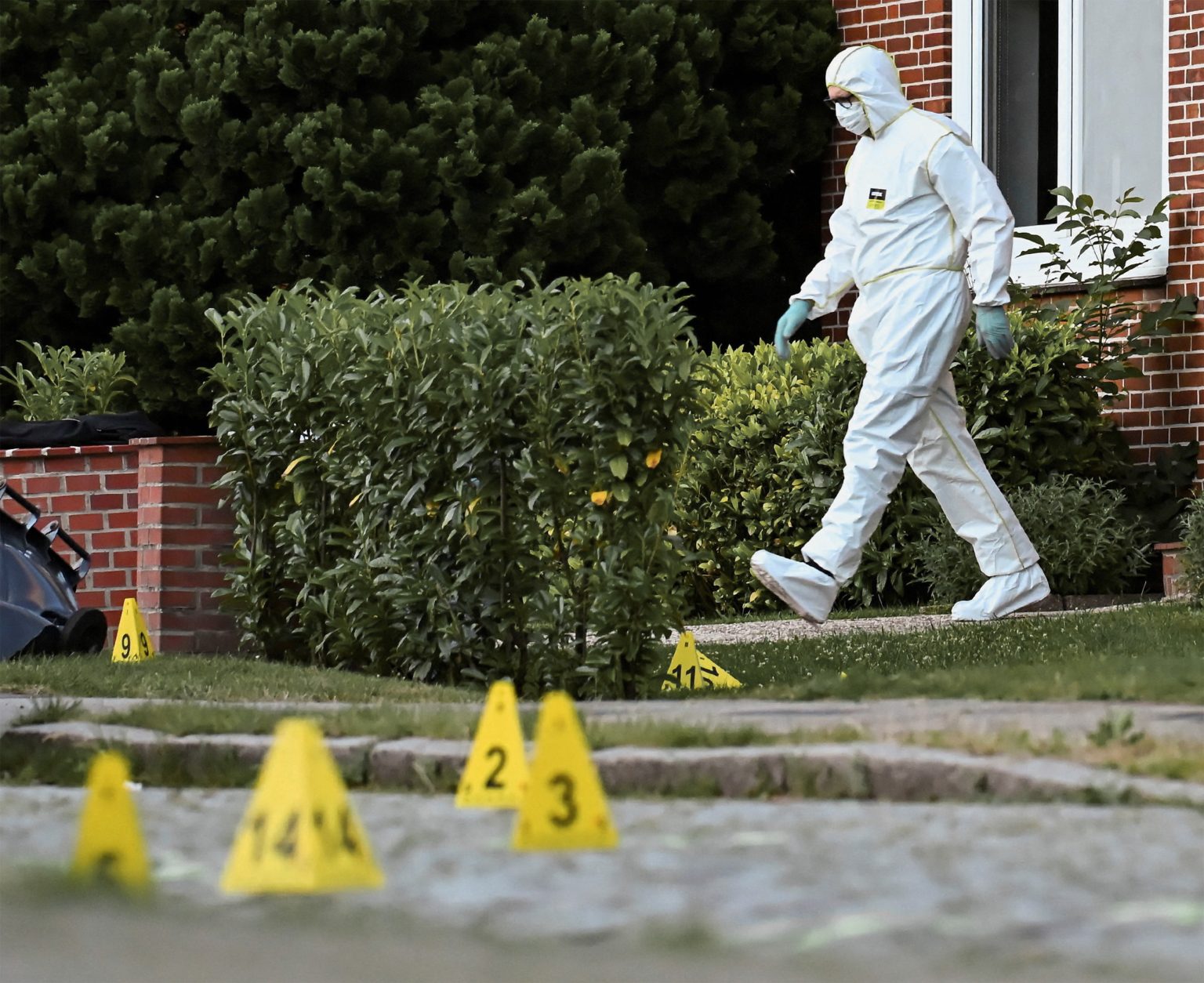
A forensic expert works at the scene of the Stade massacre, where six youth welfare workers were killed after officials allowed a Turkish prison escapee into a child welfare meeting without police protection. Photo: Jonas Walzberg/Reuters
|
According to Turkish authorities, the man who would later become the six-time murderer in the Stade case had escaped from prison in Turkey and was still wanted there. Fatih Khan G. was living freely in the Hanover area, apparently undisturbed by German authorities who had no idea who he was. On 29 June, the 45-year-old Turkish citizen appeared at a mother-and-child facility in Stade for a care planning meeting concerning his three-month-old daughter.
The baby girl had previously been taken into the care of the youth welfare office on suspicion of shaken baby syndrome. The district court in Neustadt am Rubenberge had already withdrawn both parents’ right to determine where the child lived and their right to make health decisions for her. To allow at least the mother to remain with her daughter, the two had been placed in a state-run home for mothers and children.
The meeting began at around 11:30 a.m. According to reports so far, three employees of the Hanover regional youth welfare office, three staff members from the facility, the baby’s mother and Fatih G. were in the room. There was no police protection. The meeting was meant to decide what would happen next to the child and her parents.
According to the reconstruction of the crime, an employee of the facility was the first to leave the building. Fatih G. is then said to have gone to the Mercedes parked outside, retrieved his weapon and shot the man outside the building on his way back. He then returned inside. In the meeting area, he is said to have killed four women and another man with shots to the head and chest. The child’s mother and the baby were not physically injured.
Prosecutors now accuse Fatih G. of six counts of murder, alleging malice aforethought and base motives. The Stade public prosecutor’s office is also investigating the child’s mother on suspicion of murder. It remains unclear whether she knew anything of her husband’s plans, and if so what. She is at liberty and is not in pretrial detention.
In Germany, Fatih G. was under investigation on suspicion of abusing a person in his care after doctors at Hanover Medical School detected a possible shaken baby injury in his infant daughter. The father is said to have behaved aggressively at the hospital and threatened doctors.
According to media reports, he even called the police in an attempt to prevent emergency surgery for the baby’s brain hemorrhage. He later filed complaints against hospital staff and youth welfare officials, accusing them of child abduction and false suspicion. Despite the man’s plainly aggressive behavior, apparently no one considered bringing in even a security service for the meeting with the youth welfare office.
The suspect’s Turkish file is also serious. According to reports citing documents from Turkey’s UYAP judicial system, several proceedings were pending against him there. They include suspicion of a serious sexual offense dating back to 2007 and suspicion of sexually abusing his own daughter from an earlier relationship. That alleged offense is said to have taken place in Gaziantep in 2022.
According to the documents, Fatih G. was in pretrial detention in 2021 over another offense before escaping from prison. German investigators reportedly knew nothing about this background at first. A few days before the attack, Fatih G. allegedly bought a Beretta Model 70 pistol and 21 rounds of ammunition on Berlin’s Kurfürstendamm for €4,000 ($4,700) in an illegal deal.
After the shots were fired, Fatih G. got into a Mercedes-Benz GLE Coupe driven by Sylvia S., a 65-year-old woman from Bremen who is described as the baby’s godmother. Police fired several times at the car before the escape ended at a tractor roadblock on a federal road. Sylvia S. is now also under investigation on suspicion of murder. According to information available so far, however, no arrest warrant has been issued, and she has been released. She says Fatih G. forced her to drive at gunpoint.
Sylvia S. had intervened on behalf of the family ahead of the attack. Three days before the bloodbath, she sent a 20-page letter to several media outlets. In it, she presented the custody case from the parents’ point of view, rejected the allegations against the father and attacked the hospital, the youth welfare office and the judiciary.
The 65-year-old is active in migration and family counseling. According to media reports, she works for the Association of Binational Families and Partnerships. It is part of the Cooperation Network Against Racism under the federal program Living Democracy. The program’s project overview shows around €425,000 ($498,000) in funding for the association in 2025. For 2026, almost the same amount appears again.
The SPD Connection
Sylvia S. is not only the baby’s godmother. She is also the mother-in-law of Deniz Kurku. The Social Democratic Party (SPD) politician is, of all things, Lower Saxony’s state commissioner for migration and participation. Through a lawyer, Kurku said he had no prior knowledge of the attack, did not know the suspect and had not been involved in the custody dispute.
The SPD backed Kurku. The family connection had no direct impact on his office, the parliamentary group said. Kurku was highly respected.
The matter becomes sensitive, however, because Kurku had previously been responsible in Bremen’s social affairs department for awarding funding to the very association for which his mother-in-law works. In that role, he had already faced criticism together with the former SPD integration politician Hulya Iri over a funding scandal. Kurku himself is not currently under investigation. But his name is now appearing for a second time in the wider context of prosecutorial investigations involving the same association.
The six victims were all employees of the youth welfare facility and the youth welfare office. Among them was a young woman aged just 25. According to media reports, another woman who was killed leaves behind two small children aged three and four, who have now tragically been orphaned because the family’s father had died only a few weeks earlier.
The Stade case is therefore far more than just a murder case. It exposes a publicly funded network of migration aid associations in which activist commitment, migrant backgrounds, political responsibility and family ties appear to overlap.
The case also raises the explosive question of whether Germany knows who is living in the country. Apparently, not even the police background check of the man who would later become a mass murderer, conducted during the custody proceedings concerning his daughter, brought his criminal record from Turkey to the attention of German authorities.
In the end, a Turkish prison escapee wanted over child sexual abuse allegations enjoyed the committed support of German migration organizations and their staff, who appear to lack any professional distance from their work.
Welcome to the comments section of the Štandard daily. Please take note of our guidelines, comments are moderated by us. You can contact the moderators at support@statement.com.
Participate in the discussion
Comments are available to subscribers only. If you'd like to join the discussion, choose a subscription starting at €6.72 per month.
All comments 0
Register
Comments are available to registered users only. If you'd like to join the discussion, register here.