In Ireland, Another Brutal Murder Puts Judgment Itself in the Dock
Jamey Carney, a pro-Palestinian activist, took the cause into her home, literally. Now she lies dead, and her adopted homeland faces difficult questions about its own judgment.
The death of pro-Palestinian activist Jamie Carney raises difficult questions about trust, radicalism and judgment in her adopted homeland. Photo: Tyler Miller/Sportsfile via Getty Images
|
Jamey Carney, a 43-year-old American-born woman, was murdered in her home in Ireland this week, in a killing carried out, police suspect, by the 28-year-old Palestinian refugee with whom she had embarked upon a romantic relationship. Whatever else is said about this case, it should begin with the obvious: Carney did not deserve to die, and her 13-year-old daughter did not deserve to discover her mother’s body in the bedroom of their home.
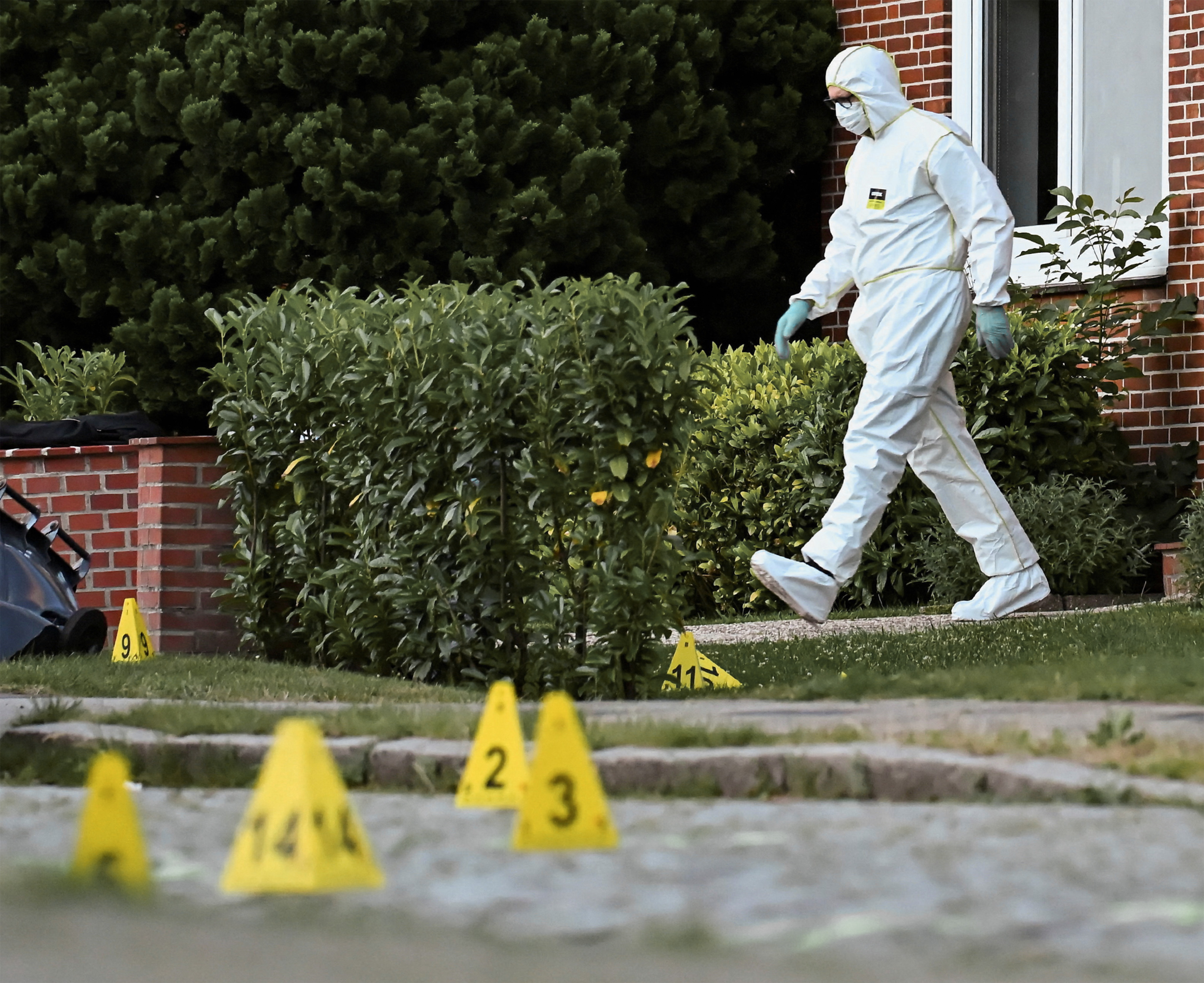
That body, according to reports, was found at a murder scene covered in blood, having suffered what are euphemistically being referred to as “catastrophic head injuries”.
The murdered woman was a left-wing, anti-Israeli activist whose public life was devoted to the cause of Palestine and to opposition to Donald Trump’s immigration policies. “Fuck ICE. Free Palestine”, her social media channels read. She had posted various updates to her social media platforms extolling the virtues of dating “an Arab man”.
“A fit of jealous rage”
Irish police say she was murdered in a “fit of jealous rage”. The prime suspect in the case, a 28-year-old Jordanian-Palestinian man born and raised in the Palestinian refugee camp at Husn in Jordan, has now fled Europe. Irish police suspect that he is in Turkey, navigating his way back to Syria or Jordan – ironically enough, perhaps, to seek a form of asylum from extradition back to Ireland.
Briefing the Irish Independent this morning, Irish police told reporters that they understand the suspect has “extensive contacts” in Syria and Jordan – places to which, despite his asylum claim in Ireland, he apparently has no fear of returning.
The case has all the ingredients of a horror story for the Irish – and, more broadly, European – political establishments, combining several things at once that, according to the prevailing wisdom, simply never happen. Therefore, the response of the Taoiseach, Micheál Martin, was unsurprising. In his view, this latest murder is cause for reflection on an epidemic of violence by men in general against women.
It is true, of course, that men commit violent acts against women at a vastly more elevated rate than women commit violent acts against anybody else. That state of affairs, sadly, is true in every society.
Violence of a Very Specific Character
However, it is also true that in this latest incident, as in so many like it, the violence has a very specific character: police suspect this latest killing to have been a crime of jealousy and “honor”, and its perpetrator to have been an Arab-Palestinian migrant.
Then there is the sensitive matter of the victim’s judgment. Whatever her views, and whatever her flaws, Carney did not deserve to die the horrible death that she suffered, and her child does not deserve to be a traumatized orphan.
However, it is difficult to observe this case without noticing the plain facts: the victim, a Western white woman whose empathy for the Palestinian cause was plastered across every public-facing profile she owned, embarked on a relationship with a much younger man from one of the world’s more violent and sexually conservative societies and cultures. She advertised this decision as a virtue, rather than a risk. Now she is dead, and her suspected killer has fled back toward a part of the world where, it can reasonably be feared, he may be protected from extradition for his alleged crime.
First, the suspected killer was an asylum applicant. This means, ludicrously, that the Irish media – Statement is not an Irish publication – is barred from naming or identifying him. His name has been reported outside Ireland as Ahmed Al-Saqar, or Al-Sadr, depending on spelling, and he is a 28-year-old man from the Husn Palestinian refugee camp, which is inside the borders of the Hashemite Kingdom of Jordan. Irish law protecting asylum applicants from being identified under any circumstances means that Irish journalists are in the ludicrous position of reporting that a nationwide manhunt and search is underway for a man whom they cannot identify and whose photograph they may not publish.
Then there is his asylum application itself: Al-Saqar did not come to Ireland directly, but had spent time in other EU states, most prominently France. It is not clear what, or whom, he was ever seeking asylum from – and the fact of his reported flight back to the Middle East would tend to pour cold water on the idea that he was fleeing from anything immediately threatening to his life or well-being.
Ireland’s pro-Palestinianism, however, is essentially unconditional. It is not simply a foreign-policy position, or even a sentimental attachment to the underdog. It is a moral identity, perhaps the dominant moral identity of the Irish political class. The Palestinian cause is not treated as a cause to be examined, weighed or subjected to the ordinary standards of prudence applied to other peoples and other conflicts. It is treated as a sacrament.
That matters here because it has consequences. When a country teaches itself that some people are to be viewed not as ordinary human beings – capable of good and evil, virtue and vice, gratitude and exploitation – but as almost Christ-like avatars of suffering, it disables its own capacity for judgment. The asylum seeker becomes not a man, but a symbol. The Palestinian becomes not an individual with a background, a history, a character and, possibly, a temper, but a walking indictment of Western cruelty. The migrant from a conservative, patriarchal and often violent society becomes, in the Irish imagination, a victim of borders rather than somebody who may also bring with him assumptions about women, sex, honor and ownership which are wholly incompatible with the rights and freedoms of the women among whom he has arrived.
This is the thing the Taoiseach cannot say and will not say. Therefore, he retreats to the approved language: violence against women. Misogyny. Male rage. All true, to some extent. But also naked evasions, expected to be both recognized as evasions and excused because Ireland as a whole would rather not admit the fallibility of its national consecration to Palestine.
For there is a very great difference between saying that women are sometimes murdered by men and asking whether Ireland is importing, at scale and without sufficient scrutiny, men from cultures where women’s autonomy is viewed very differently from the way it is supposed to be viewed in Ireland. There is a very great difference between asking whether Gardaí need more resources to tackle domestic violence and asking why a man who had apparently passed through multiple safe jurisdictions before arriving in Ireland was here at all. There is a very great difference between lamenting the murder of a woman and asking whether the ideology she herself embraced helped blind her, and the state around her, to obvious risks.
The answer, from official Ireland, will be that to ask any of those questions is to exploit a tragedy. This is the last refuge of the politician who would prefer that no tragedy ever teach them anything.
And so Ireland will once again have the candles, the statements and the minutes of silence. We will be told that Jamey Carney was a beloved mother, which she was. We will be told that her daughter deserves privacy, which she does. We will be told that violence against women must end, which it must. But we will not be told why a European state with a housing crisis, a policing crisis, an asylum crisis and a public-order crisis remains legally and morally committed to importing unknown men from unstable societies, placing them in Irish towns, concealing their identities and then denouncing as hateful anybody who notices when something goes catastrophically wrong.
Nor will anyone in authority ask a more uncomfortable question: what duty does a society owe to its own citizens before it congratulates itself for its compassion toward strangers?
The cruelest irony of this case is that Jamey Carney appears to have believed deeply in the worldview which now makes honest discussion of her death almost impossible. She believed, by all appearances, in the innocence of the outsider, the wickedness of borders, the romance of resistance and the moral superiority of those who say “welcome” when others say “be careful”. None of that made her a bad person. On the contrary, it may well have made her, in many ways, an unusually generous one. But generosity without judgment is not a virtue.
Ireland’s leaders have made a national policy out of refusing judgment. They refuse to judge asylum claims with sufficient speed. They refuse to judge the cultural assumptions migrants may bring with them. They refuse to judge whether compassion for the foreigner can coexist with indifference toward the safety of citizens. They refuse even to judge whether the public has a right to basic information when a murder suspect is being hunted across borders.
Instead, they judge the Irish public. They judge it suspicious, bigoted, dangerous and in need of moral correction. They judge ordinary concerns about immigration to be sinister. They judge the request for transparency to be a demand for hatred. They judge the desire for safety to be a form of racism.
But reality has a way of entering the room whether or not politicians have invited it. This week, it entered a bedroom in Killarney and left a child standing over the body of her mother.