One such story emerged this week: The Gulf Stream, it turns out, is not in quite as much peril as has been previously laid out.
A recap: Two years ago, a widely cited paper in the climate science journal Nature predicted that the Gulf Stream might collapse entirely in the coming years, which would have the net effect of plunging Europe into a period of extreme cooling – dramatically referred to by some publications as a second ice age. Just last year, for example, the New York Post told its readers that the ice age was coming. The Associated Press wrote that the prospect of Gulf Stream collapse might plunge Europe into a period of “extreme cold”.
Hold Off on Researching Igloos for Now
So the good news: Readers do not, at least for the moment, need to spend much time researching the architectural principles behind igloo construction. As the Daily Skeptic reports, the actual data now shows that the Gulf Stream has been relatively stable since 2010.
This is not a story that will get nearly so much attention as it deserves. The prospect of a Gulf Stream collapse has been deployed repeatedly as an argument for radical and immediate political action. It has been presented not as one possibility among many, but as a looming catastrophe: a climatic tipping point which, once crossed, would transform the European continent beyond recognition.
And yet the latest evidence suggests that the system has remained remarkably stable over the period in which the warnings have become most intense.
This is, unfortunately, a recurring feature of the climate change debate. A prediction is published with great fanfare; the media ensures that any uncertainty about it is buried several paragraphs down; and of course the uncertainty disappears entirely by the time the story reaches the ears of most normal people.
Years later, when the catastrophe has not occurred, there is seldom – actually make that never – a front-page headline announcing that the models were too pessimistic or that the evidence has changed. The original warning remains lodged in the public imagination, while the correction passes almost unnoticed, other than for readers of Statement and a select few other publications.
Scientific Asymmetry
The same asymmetry applies to weather attribution. When Europe experiences a heatwave, scientists are invited to explain precisely how much more likely it was made by climate change. When Europe experiences a cold snap, climate change may also be invoked, this time on the grounds that warming has disrupted some other part of the climatic system.
There may, in individual cases, be respectable scientific arguments for both propositions. The difficulty is that the theory thereby becomes almost impossible for the ordinary citizen to test against experience. Hot weather confirms it. Cold weather confirms it. Drought confirms it. Flooding confirms it. Fewer hurricanes may be attributed to changing atmospheric conditions; more powerful hurricanes are attributed to the same thing.
Beware the Unfalsifiable Position
A proposition which explains every possible outcome and cannot ever be falsified by weather events is one that should make the public more skeptical, not less.
Nor is skepticism about all of this any evidence of hostility to science. On the contrary, science advances through skepticism: by testing predictions, examining contrary evidence, revising theories and acknowledging uncertainty. The political presentation of climate science increasingly operates as the precise inverse of this. Doubt is treated as irresponsibility; failed predictions are forgotten; and every new event is assimilated into an argument whose conclusion has been decided in advance.
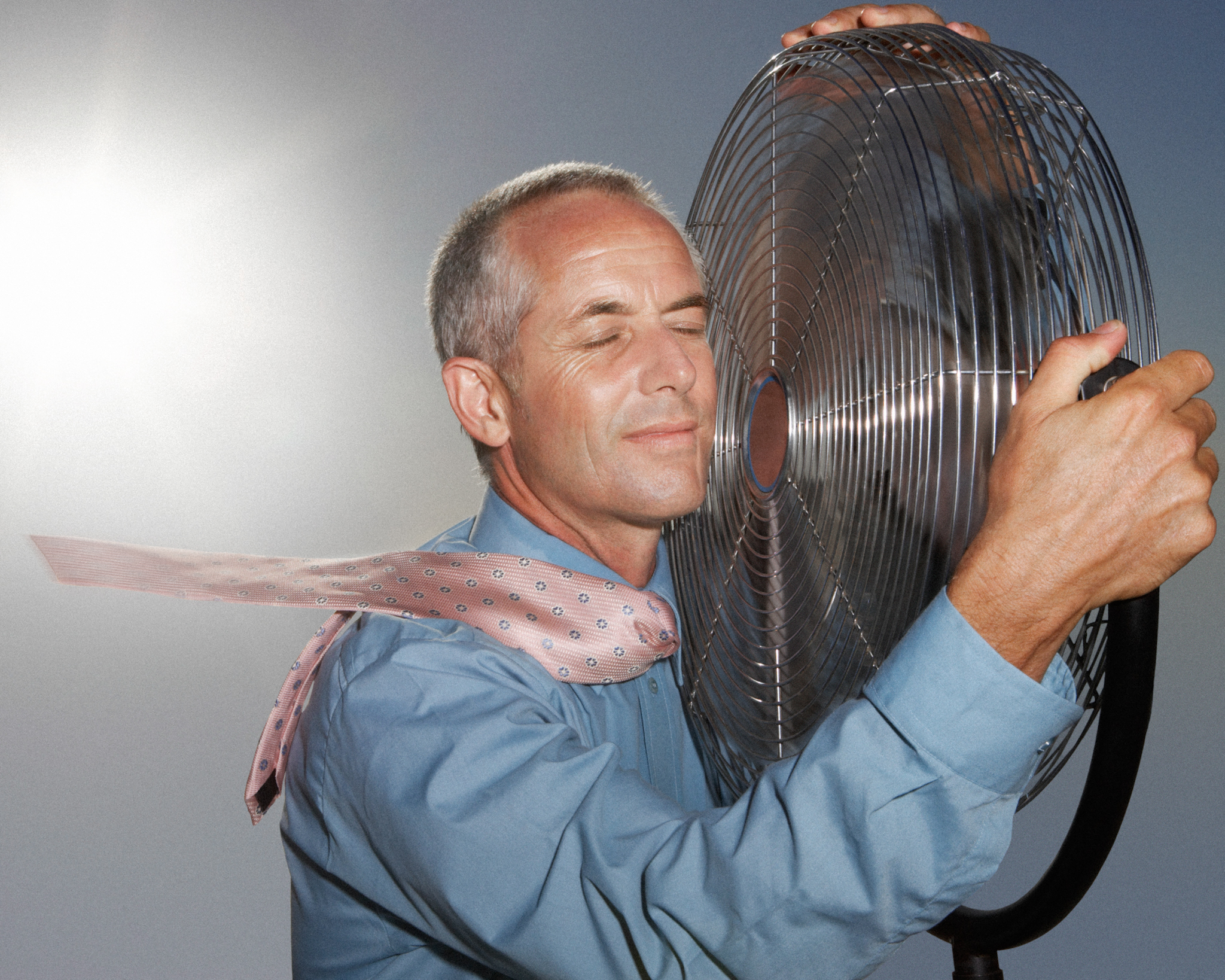
And so Europeans endure the heat while being instructed that it confirms the darkest warnings of climate science. Had the Gulf Stream collapsed and plunged the continent into bitter cold, no doubt that too would have been presented as confirmation – but the failure of the Gulf Stream to collapse is not evidence that scientists were wrong. Just evidence, perhaps, of a lucky break. That is how it is presented.
Or in other words, Heads, the alarmists win. Tails, they also win.
The Gulf Stream is not collapsing – at least not yet. Europe is not entering a new ice age. And the people who spent years warning that both scenarios might be imminent should be expected to acknowledge the evidence with something approaching the enthusiasm with which they announced the danger.
That, however, will not happen.