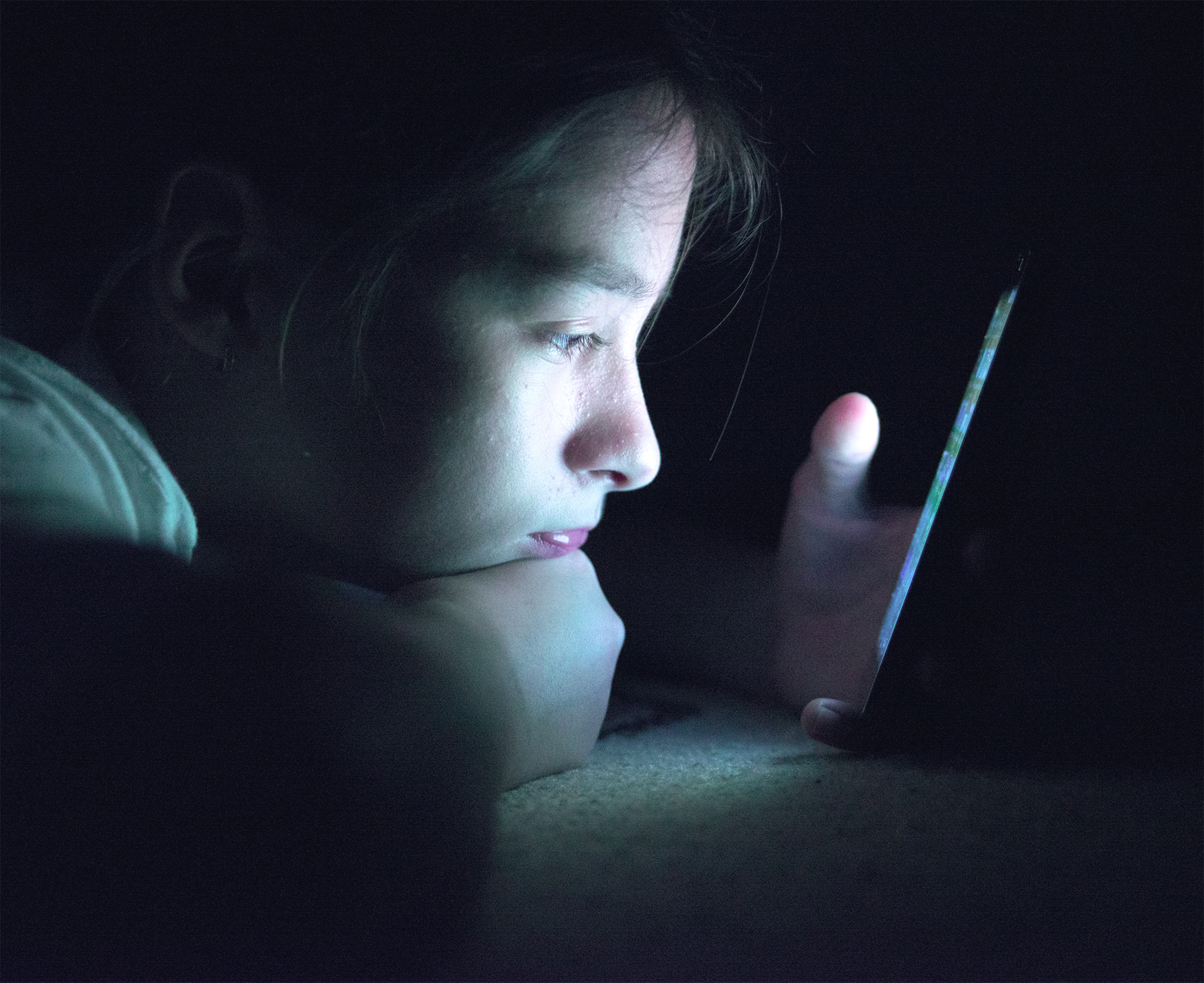
Ursula von der Leyen wants Brussels to intrude into family life. An EU report sets out detailed recommendations on minors’ use of digital devices and social media. This goes far beyond child protection: it is an attack on families and on parents’ right to raise their own children.
Following the submission of an expert report on children’s online safety, the European Commission announced that it would present proposals for binding rules after the summer. For the first time, the report sets out specific age-based restrictions on access to social media and other digital services.
Children under 13 would be allowed only limited access to the internet across the EU. They could go online solely with parental consent and oversight or in an educational setting, such as a state school. Screens are to be avoided altogether for the youngest children.
That may sound caring. In reality, the proposals go far beyond protecting minors. The EU is interfering in how children are raised. At the very least, that intrusion conflicts with Germany’s Basic Law, for which the president of the European Commission appears to have little regard. It is also likely to breach provisions in other European constitutions. More broadly, the proposals represent a clear overreach by the EU, which has no authority over family policy.
Imagine for a moment that the EU wanted to regulate not digital content but print publications. Imagine that it drew up lists of books, newspapers and magazines, specifying the age at which children should be allowed access to each of them. The outcry would be immediate.
This is not about requiring platforms to stop exploiting children, end addictive design practices and protect minors from grooming, cyberbullying and pornography. The state, and indeed the EU, can and should help parents shield their children from such dangers. That would be a proper and important priority. But the primary right and responsibility for raising children rest with their parents.
Brussels as Nanny-in-Chief
The Commission can already regulate platforms through its powers over the single market. The Digital Services Act is itself an intolerable censorship machine that urgently needs to be abolished.
Extending online child-protection rules this far would give the EU sweeping powers to intrude into the home. It would exceed any legitimate European mandate. Such legislation would impose general rules on family life, drawn up centrally in Brussels.
The Commission does not merely want to decide when and for how long a child may look at a screen. It wants to turn those limits into intrusive laws based on age brackets, risk categories and access regimes.
But how exactly does Brussels intend to enforce rules governing family life inside the home? Parents are not there to enforce parenting advice issued by Brussels.
What comes next? An EU regulation stipulating when children between the ages of three and 13 must go to bed?
A report commissioned by the EU, however well intentioned and carefully written, should serve at most as a contribution to the debate. Its role should end there. In a democracy, it cannot become a set of instructions, let alone the framework for legislation that parliamentarians are then expected merely to rubber-stamp.
Political decisions should emerge from public debate. Every voice must be heard, not only those of experts appointed to tell those in power what they want to hear.
Families are neither outposts of the European Commission nor answerable to an intrusive federal minister. The warning signs from Germany, which appeared just over a month ago, were equally alarming.
Germany’s federal family minister, Karin Prien, has shown support for enshrining rules on children’s media use in the Civil Code. She has also placed young children’s media use in the same context as domestic violence against children. Prien, too, was responding to a report ordered by her ministry.
Creating a Culture of Informers
At the report’s presentation, the minister was asked whether neighbors might one day report that a three-year-old had spent all day in front of a tablet. She replied that, in particularly extreme cases, the youth welfare office could become involved.
Because a neighbor believes that a child spends too much time using a smartphone, tablet or television?
This is an open threat to remove children from their parents if they fail to comply. The state no longer wants merely to advise families on media use. It wants to regulate and punish them.
Germany’s Basic Law takes a different view. It states that the care and upbringing of children are the natural right of parents and a duty primarily incumbent upon them.
The relevant authorities may intervene only when a child’s welfare is genuinely at risk. Even when the youth welfare office steps in, court approval is required for the overwhelming majority of measures that interfere with parents’ right to raise their children.
Why should media use be treated differently? Unless children are seriously endangered, the state has no right to intervene.
It is troubling enough that a German family minister should openly discuss such scenarios. That Brussels is considering similar measures at the same time is unlikely to be a coincidence.
Parents Are Children’s Best Protection
Once neighbors, schools, nurseries or friends are encouraged and empowered to report parents’ decisions about media use to the youth welfare office, the result is a climate of surveillance that evokes deeply troubling memories.
In the former East Germany, teachers would sometimes ask children whether they recognized the logo of the West German broadcaster ZDF, which they were forbidden to watch. If a child could draw it on the blackboard, the parents could soon expect a visit from the secret police or other authorities. Encouraging people to inform on one another is never a good idea.
Defenders of both the European and German proposals now insist that this is merely about protecting children. Were that really the case, every effort would be made to strengthen families and include them in the debate. The best protection children have is parents who are able to devote time and attention to them.
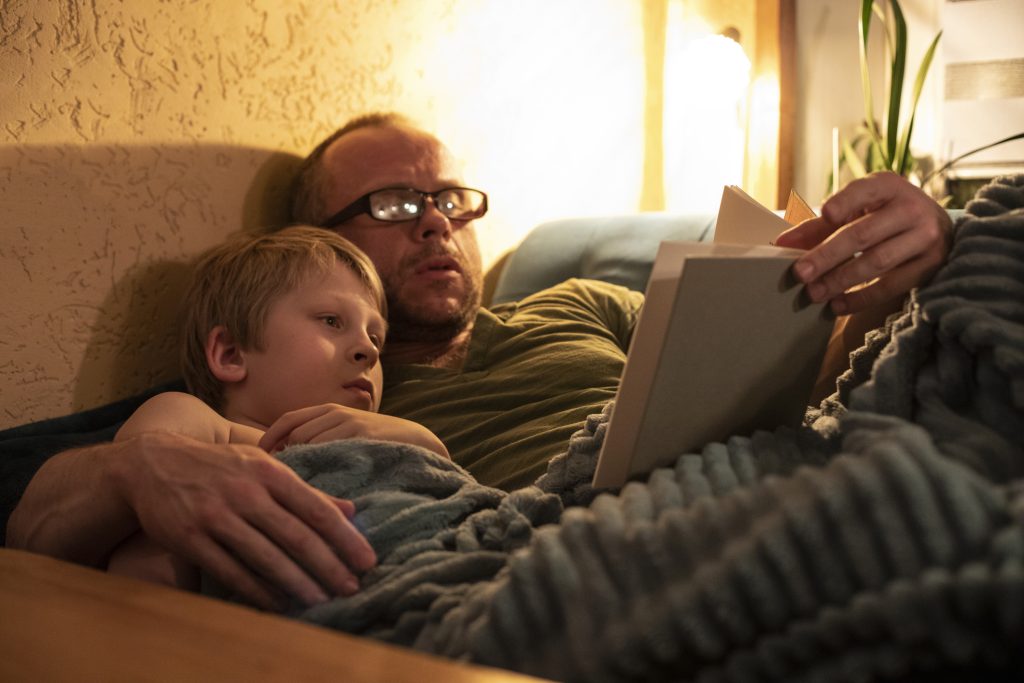
A three-year-old being read a book will not even think of asking for a screen. The story comes alive in the child’s imagination instead. Yet parents are neither being consulted nor included.
A father reads to his son at bedtime. Children absorbed in a story are less likely to ask for a screen. Photo: Getty Images
When Should a Child Get a Smartphone?
Children certainly need protection from technology companies. That means they need parents who set an example, guide them and help them navigate the digital world – parents who make them strong and resilient. As they grow older, they need schools that teach media literacy.
What they do not need is a European child-rearing policy that extends into their bedrooms.
The German theologian and philosopher Johannes Hartl once gave the best answer to the question of when children should get a smartphone. His answer is as simple as it is harsh: not until their parents believe they are old enough to face unlimited pornography and violence.
There is nothing to add. Certainly not an EU regulation.
Here is placeholder for Article excerpt Here is placeholder for Article excerpt Here is placeholder for Article excerpt Here is placeholder for Article excerpt
Here is placeholder for Article excerpt Here is placeholder for Article excerpt Here is placeholder for Article excerpt Here is placeholder for Article excerpt
Here is placeholder for Article excerpt Here is placeholder for Article excerpt Here is placeholder for Article excerpt Here is placeholder for Article excerpt
Welcome to the comments section of the Štandard daily. Please take note of our guidelines, comments are moderated by us. You can contact the moderators at [email protected].
Participate in the discussion
Comments are available to subscribers only. If you'd like to join the discussion, choose a subscription starting at €6.72 per month.
All comments 0
Register
Comments are available to registered users only. If you'd like to join the discussion, register here.