The government says the purpose is to ensure that authoritative journalism is not crowded out by unreliable material, particularly because younger people increasingly get their news through social media. It specifically says that the policy could be especially important during periods of “social unrest or crisis”, when misinformation may spread rapidly.
This latter element is what has sparked American concerns.
State-Approved Media
Critics note that the British government’s plan amounts to stamping the label “state-approved” on a select number of media outlets in order to prioritize their output over that of competitors. Or that it would, in essence, have precisely the inverse effect to that intended for audiences who are already skeptical of the state and state-aligned institutions.
Indeed, the existence of the government proposal raises a question that almost nobody alive is qualified to answer: who, exactly, has the right to decide which news is “authoritative” and which is not?
The existence of such a framework poses risks for the state, the media and the public, all at the same time.
For the state, the obvious risk is a drift toward authoritarianism: once it has the power to stamp “approved” on a particular media outlet, it will naturally acquire the right to remove that label subsequently. Given that the ideological color of governments in a democracy changes quite frequently, the risk is that future governments with an authoritarian bent are essentially granted a statutory instrument under which they can lavish rewards or impose punishments on various media outlets.
This is magnified by the nature of the policy: state interference in algorithms to promote certain media outlets has a monetary value as well as a reputational one. More views mean more revenue and more sponsorship and advertising opportunities. These commercial boons, being conferred by a government, are valuable and provide an incentive to remain in the good graces of whoever that era’s rulers might be.
A Reputational Risk for Journalists
This risk is greater again for media outlets themselves, which are already vulnerable to pressure campaigns targeting their advertisers or other revenue sources. For those who become reliant on government patronage, it is simply impossible to conceive of a scenario in which their independence is not compromised by state favoritism, even if there are good-faith attempts to avoid it.
And for the public? There can be few more counterproductive acts, if one seeks to boost public trust in the news they consume, than to have the very government journalists are supposed to hold to account point at various outlets and say: “We trust these ones.”
Indeed, distrust between the media and politicians is natural, required and healthy in any democracy. A democracy in which politicians like the media and seek to favor it is one that has lost something essential – the contest between the rulers and those over whom they rule over the legitimacy of the rulers’ actions.
The very problem that the UK government seeks to address – the alleged rise in misinformation online – is a well-worn one, and one with a long record of legislative failure.
The Ever-Shifting Definition of Misinformation
That is because “misinformation” has an awkward habit of changing its definition over time.
History is littered with examples of ideas once dismissed as dangerous falsehoods and lies which later became accepted fact, and of official narratives that collapsed under the weight of subsequent evidence. During the Covid pandemic alone, questions about the origins of the virus, the effectiveness of various interventions and the balance between liberty and public health were all, at various stages, treated as settled science before becoming matters of legitimate public debate.
Whatever conclusions one reaches about those issues today, the lesson is obvious enough: governments cannot be trusted to adjudicate objective truth because objective truth is often unknowable in real time, and governments have a strong self-interest in both asserting that they are the sole fonts of truth and distributing information that is at least misleading.
Nor is journalism exempt from that reality. Every major news organization has, at one time or another, confidently reported stories that later proved false or materially incomplete. They do so not because journalists are dishonest, but because journalism is an imperfect process, regardless of who engages in it.
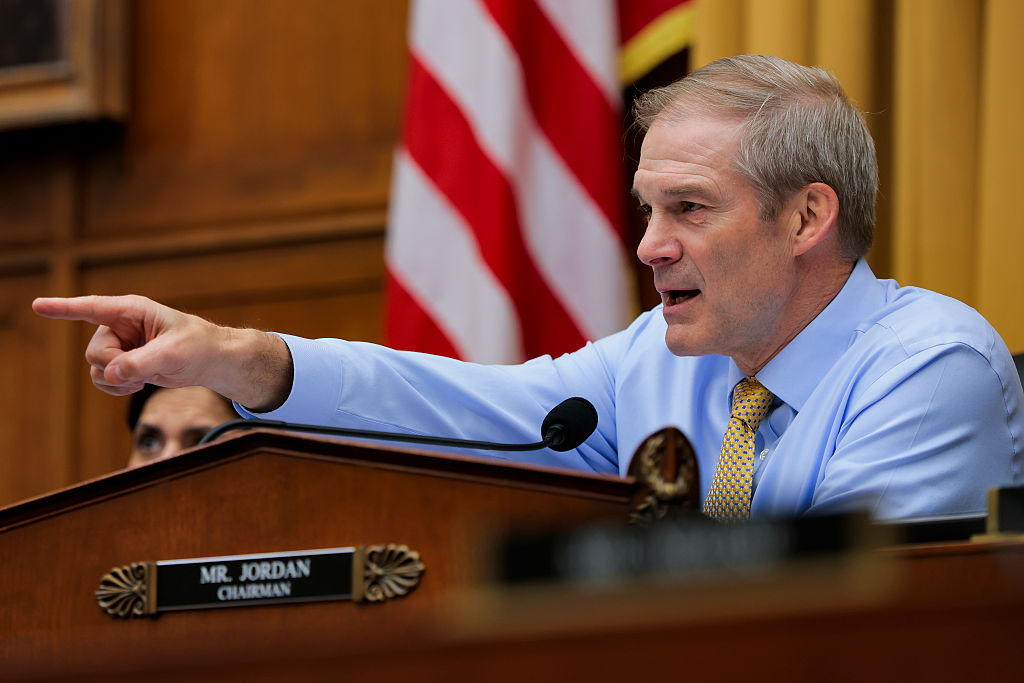
To build a regulatory system that favors incumbents over challengers is not merely to distort the market. It is to misunderstand the very mechanism by which public knowledge improves. Jim Jordan, American though he may be, articulates this better than most of Britain’s domestic opposition.