Left Pushes to Reclaim Control of the European Parliament
Left-wing groupings are attempting to wrest control of the European Parliament from the right in a crucial midterm reshuffle.
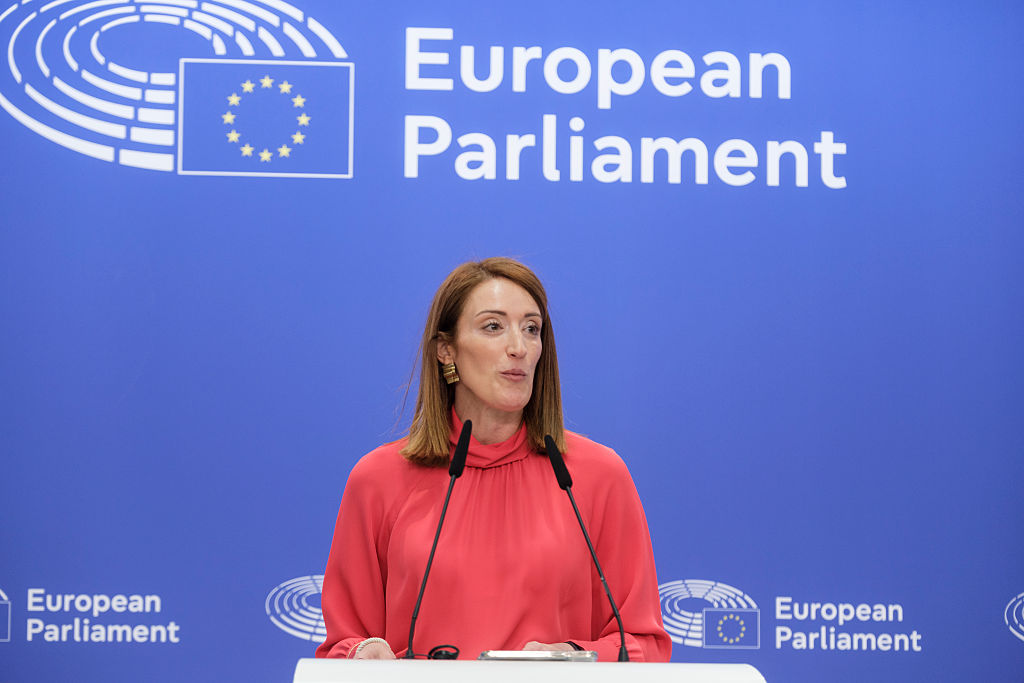
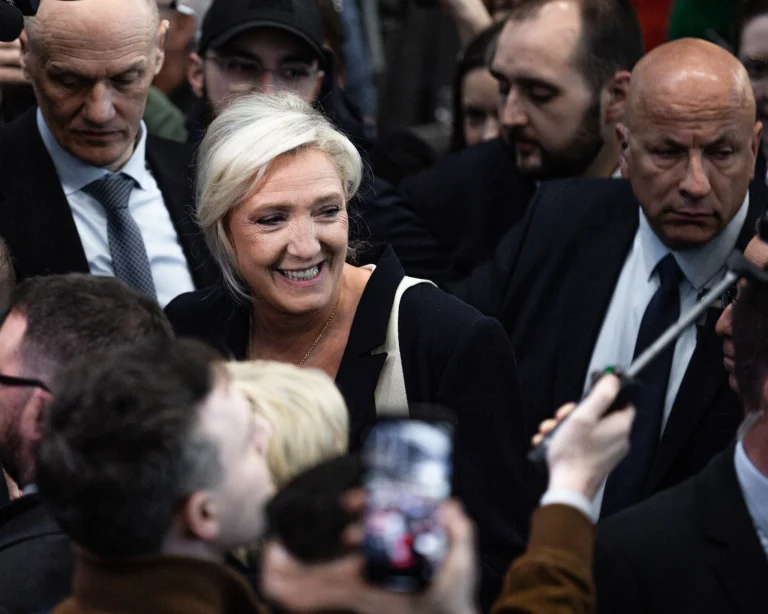
Left-wing and centrist groupings are hoping to win President Roberta Metsola's support in a key midterm reshuffle. Photo: Thierry Monasse/Getty Images
|
After the right has scored several victories at the European level with changes to migration and climate policies, left-wing and centrist groupings within the European Parliament (EP) are attempting to woo the chamber's largest party back to their side.
However, the balance of power is almost even in the chamber and, since the 2024 elections, the center-right European People's Party (EPP) has developed a close working relationship with right-wing parties.
The moves by the Socialists and Democrats (S&D), the Greens and Renew to secure an agreement with the EPP come ahead of a midterm reshuffle of senior posts within the Parliament, with a plethora of leadership positions up for grabs.
When lawmakers return on 31 August, negotiations will intensify over who will gain control of the presidency, 14 vice-presidencies, 26 committee chairmanships, 78 vice-chairmanships and influential coordinator posts within the chamber.
The Left’s Great Fear
The left fears that the EPP will break the cordon sanitaire, the informal policy blocking parties deemed far-right from holding senior leadership posts.
To head this off, a loose alliance of left-wing parties is considering trading support for EPP politician and sitting President Roberta Metsola in her bid for a third term as parliamentary president, in return for a written agreement that her party will not hand out posts to members of Patriots for Europe, home to France's National Rally.
"We need to know where President Metsola stands", Irish liberal MEP Barry Andrews told Brussels' news site Politico, questioning whether the "far right" will get "top political roles if she is reelected" and if they will "increasingly shape decisions".
Renew leader Valérie Hayer has argued that any candidate for president must guarantee the pro-European majority holds together, and has called on the EPP to stop turning to the right to pass legislation.
Meanwhile, the next presidency was meant to be handed over to the S&D under an unpublished agreement between Renew and the EPP. The Socialists are still signaling their desire to put forward a candidate for the position, which traditionally changes hands between the EPP and the Socialists every 2.5 years.
However, they are likely to step back in exchange for a bargain worked out jointly with other left-wing parties: extra posts for S&D in return for backing Metsola, plus a package of policy commitments to keep everyone on board.
Balance of Power
In this regard, Brussels is mirroring the trends of national politics, where the right has made significant gains, only to run into an alliance between traditionally centrist and left-wing parties blocking its path to power.
But the balance of power within the Parliament is such that Metsola may not need support from the left to secure a third term, given her popularity within right-wing and far-right circles, owing to her willingness to work with them.
There are 720 seats in the EP, with Metsola's party holding 188 of them. The Socialists are the second-largest grouping with 136 seats, followed by the Patriots (84) and the European Conservatives and Reformists (ECR) (78).
The center-left Renew has 77 seats, followed by the Greens (53), the far-left grouping the Left (46), and Europe of Sovereign Nations (25), which is generally regarded as far-right. A further 32 members sit as non-attached, many of them on the political right. As a result, with the backing of right-wing parties, the EPP would have just enough votes to secure a majority.
This has meant that, since the 2024 European elections, the right has achieved significant political success by aligning with the Parliament's largest grouping. This has included winning vice-presidency posts for the ECR, which includes Giorgia Meloni's right-wing Brothers of Italy, as well as shaping the implementation of the Migration Pact and subsequent migration proposals.
Hope for the Right
Even so, a liberal consensus continues to hold sway across the European institutions, and the EPP has, thus far, largely preserved the cordon sanitaire on senior posts, much to the chagrin of the Patriots.
Under a strictly proportional system, the senior posts distributed in 2024 should have gone to the far-right grouping, but went instead to Renew, the Greens and S&D. The European Parliament's third-largest group therefore holds no vice-presidencies, committee chairmanships or vice-chairmanships.
Yet the willingness of EP President Roberta Metsola to work with the right has frustrated left-wing MEPs, long accustomed to setting the agenda in Europe.
The EPP's working relationship with the Patriots, in particular, appears especially strong at present. On 14 July, for example, the EPP joined the far-right grouping to block a push for further scrutiny of Patriots' spending. The following day, Patriots votes helped the EPP protect one of its MEPs from losing parliamentary immunity in a case brought by Slovenian prosecutors.
Patriots for Europe, headed by Jordan Bardella, marks two years since its founding as one of the European Parliament's fastest-rising groupings.
Manfred Weber, the EPP's Leader, has confirmed his commitment not to hand any post to the far-right. Even so, the vote is private, and the present trajectory suggests the Patriots have reason for optimism.
According to the well-sourced Politico, a senior EPP lawmaker suggested that if the Patriots ask for only one vice-presidency, "they are more likely to get it".
If that proves to be the case, the next reshuffle would be historic on several counts, most notably producing the first president to serve three consecutive terms, as well as marking a breach of the cordon sanitaire.
But the maneuvering has only just begun, and the left is doing everything it can to draw Metsola and the EPP back to its side of the chamber.
Welcome to the comments section of the Štandard daily. Please take note of our guidelines, comments are moderated by us. You can contact the moderators at support@statement.com.
Participate in the discussion
Comments are available to subscribers only. If you'd like to join the discussion, choose a subscription starting at €6.72 per month.
All comments 0
Register
Comments are available to registered users only. If you'd like to join the discussion, register here.