Romance of the Other: Cultural Blindness and the Murder of Maren Sømme
Norway has been rocked this week by the murder of 30-year-old Maren Sømme, allegedly at the hands of a 34-year-old Afghan asylum seeker who was already subject to a deportation order. Yet while the state bears its share of the blame, another pattern demands to be discussed.
The killing of Maren Somme has shaken Norway and renewed debate over failed deportations, public safety and immigration policy. Photo: Statement/AI
|
The horrific murder of Maren Sømme in Norway this week is a tale that is becoming depressingly familiar to Europeans.
The dead woman, a 30-year-old from Stavanger, was found critically injured at a private house in Nærbø, on Jæren, on Sunday 26 July 2026, and taken to Stavanger University Hospital, where she died the following afternoon. Details of her killing remain scant, but authorities have confirmed the severity of her injuries, and her family have described her death as "brutal".
They also say, notably, that she died because she "encountered the wrong man".
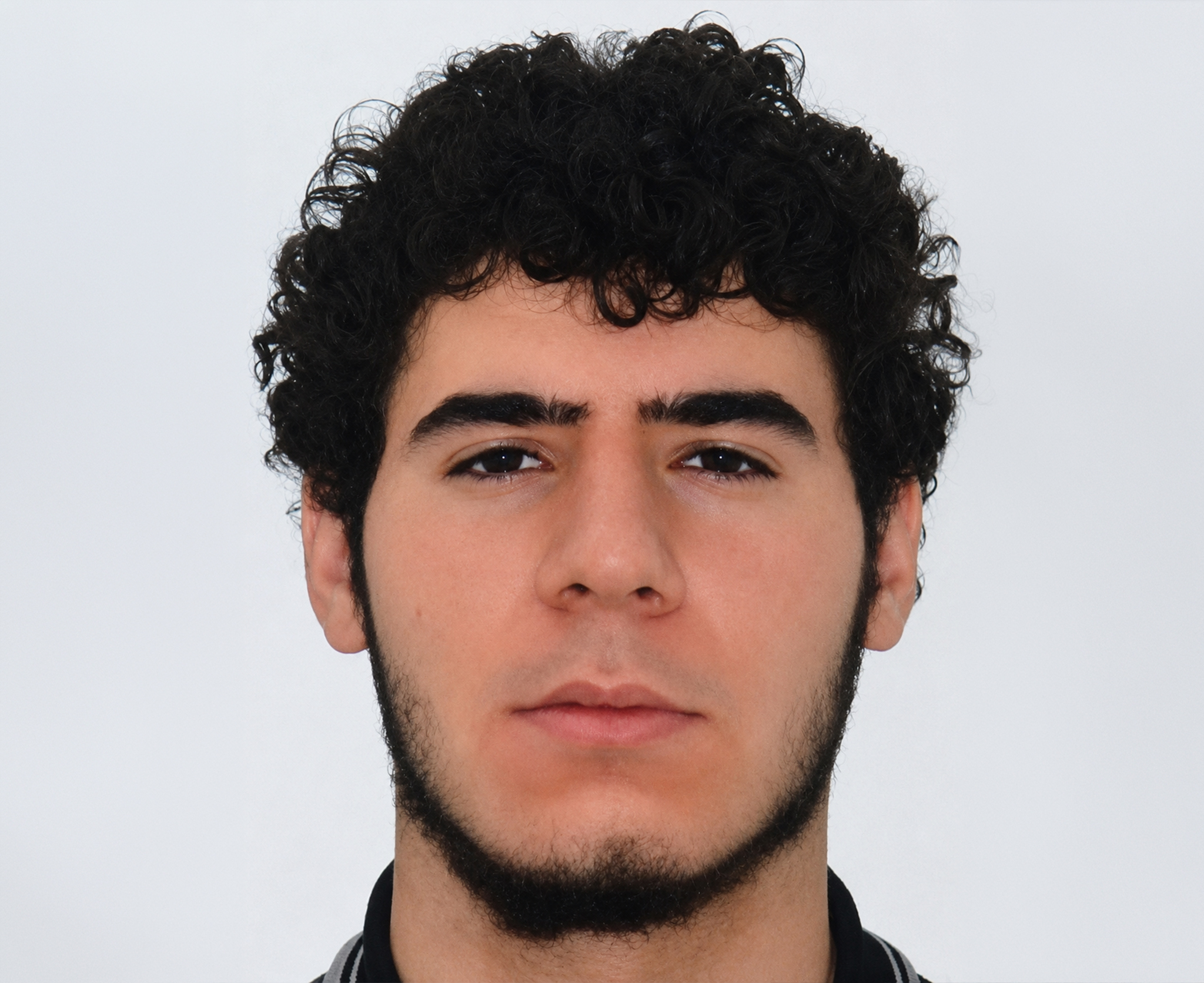
That man, who remains, of course, innocent until proven guilty, is Nawid Byan, a 34-year-old Afghan asylum seeker who was already subject to a deportation order. He had also been arrested just weeks earlier, on 17 July, for a serious incident of domestic violence involving Ms Sømme.
Norwegian court records reviewed by the newspapers Aftenposten and Stavanger Aftenblad show that Byan had been convicted repeatedly since his youth. In 2019, he received a sentence of one year and two months for a string of offenses that included violence against a previous girlfriend, threats against police, criminal damage and drink-driving. A former girlfriend reportedly described him as jealous and increasingly controlling, and said he had demanded that she remove male contacts from social media.
Born in Kabul in 1991, Byan came to Norway at around the age of 13. Norwegian authorities issued an expulsion order against him in 2021, reportedly on the strength of his criminal convictions, but he was never actually removed to Afghanistan. Norway had suspended forced returns following the Taliban takeover, so although he was legally expelled, the state never carried out the deportation. He therefore remained in, or returned to, the local community around Jæren. He was officially registered as having emigrated in 2024, reports say, yet he still held a Norwegian postal address in Nærbø in 2025.
Beyond State Failure: A Pattern Too Often Ignored
The facts are these: a woman is dead, and the main suspect is a man the police knew well to be dangerous, one whom Norwegian authorities had already determined, in 2021, should be removed from the country. Nevertheless, those authorities appear to have allowed him to remain within reach of the public they were supposed to protect.
In the case of Maren Sømme, there is little doubt that the great preponderance of blame for her death lies first with her alleged killer, assuming he is convicted, and then with the state that failed to remove him after determining that he posed a danger.
But there is another element of this case that has become familiar, although it is often considered taboo to discuss: a European woman entering a relationship with a man from a culture in which attitudes towards women, family, obedience and male authority can be profoundly different from those prevailing in modern Western Europe.
A similar tale unfolded in Ireland some weeks ago in the case of Jamey Carney, an American left-wing woman whose devotion to the cause of Palestine was absolute, and who became romantically involved with a Jordanian-Palestinian asylum seeker. She was later found dead, and he was found to have returned to Jordan, whence he came, beyond the reach of Irish justice.
It is, of course, true that no single individual is the perfect representative of his culture, and that Europe produces its fair share of home-grown misogynistic and violent men. It is also true that not every cross-cultural relationship is dangerous, or even unusually risky. Many are loving and entirely peaceful.
However, this should not stop the obvious from being discussed: culture matters. Social expectations about women, family, sexual jealousy, male honor, obedience and shame do not disappear merely because a person crosses a border. Nor are these expectations always immediately conveyed or obvious.
Men raised in cultures where women’s independence is more tightly policed, and where male authority is more socially entrenched, may carry some of those assumptions with them. Where those assumptions meet Western norms of female freedom and autonomy, the result can be dangerous.
And there is another taboo topic: some women, particularly those with strong ideological or romantic commitments to the “other”, can be drawn to the romance of the exotic and the foreign. There is little doubt of that, for example, in the case of Jamey Carney, who repeatedly shared on social media her view that the love of a Palestinian man was meaningfully different from that on offer from a Westerner.
Such relationships can be validating. They offer external evidence that the woman who embarks on them has a social conscience and is very far from racist. They provide excitement, enchantment and declarations of love in a way that is culturally unavailable from a woman’s native culture, or that she feels is so unavailable. They can also provide emotional validation by casting the woman in the role of rescuer and protector, the person who, through marriage or attachment, saves her lover from deportation or racial discrimination.
Willful Blindness
Yet those feelings, overwhelming romance coupled with a degree of moral superiority, can induce blindness. Strong declarations of eternal devotion and an inability to live without the woman, for example, might be considered red flags if they came from a white European. Coming from a man from Afghanistan or Syria, by contrast, they may be mistaken for an intense devotion that a woman's native culture simply does not permit.
That blindness matters. All of us – male and female – bear some responsibility for our own safety and security. Part of that responsibility lies in understanding the values, beliefs and instincts of those we allow to become close to us, and in confronting openly the risks we take when we embark on relationships with people whose moral, religious and cultural values may be entirely different from our own.
Societal Silence
There are many women in Europe who could tell a similar tale, though one that did not end in their deaths. Every year, women wake up to discover that their children are gone, vanished with their father into the impenetrable legal systems of Islamic and Arab states, from which they mostly never return. Countries such as Pakistan and Afghanistan are rarely willing to send children away from their father and back to Europe to live with a non-Muslim mother, no matter how unjust their removal from her was to begin with.
These are risks that the great preponderance of people instinctively understand, and at least consider carefully before even thinking about a new relationship. Yet there remains, it seems, a subset of people – mostly women – who are willing to ignore these risks, to their cost. At least in part, one suspects, because society is unwilling to discuss these issues openly.
That refusal to discuss risk does not protect women. It leaves them alone with dangers that others are too embarrassed, too polite or too politically constrained to name.
And sometimes, as in Norway this week, that danger ends in a coffin.