EU Gambling Tax Pits Staunch Brexiteer Against Mediterranean Alliance
A proposed EU gambling tax has pulled together strange bedfellows on opposing sides of the political divide, forcing a wider reckoning with the rapid growth of Big Gambling.
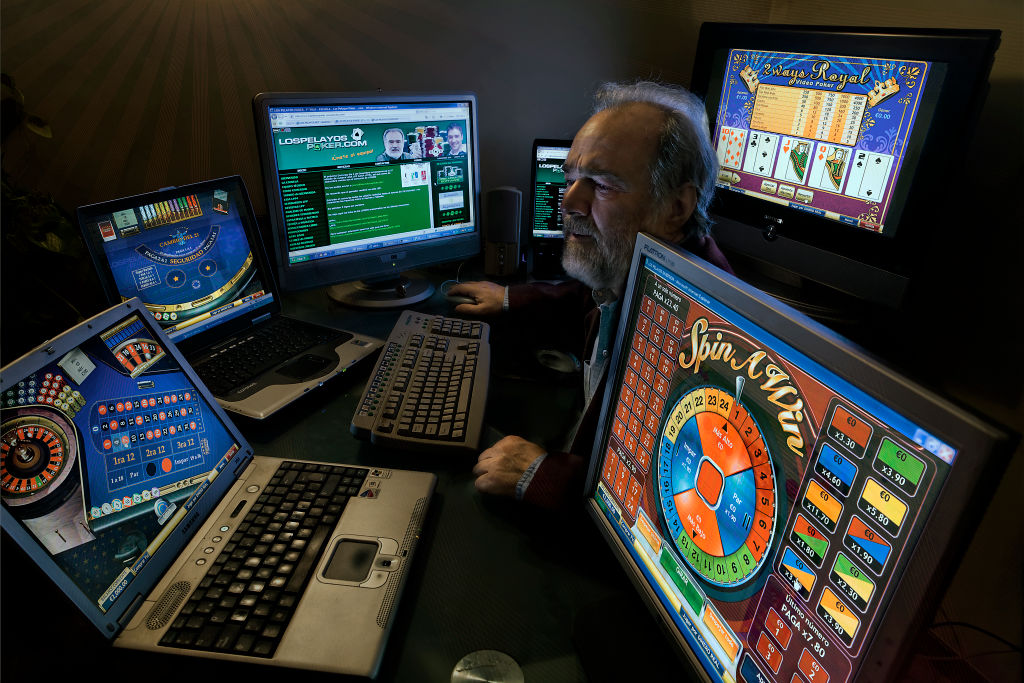
The growth of the gambling industry has led to increased scrutiny of its practices and impact on punters. Photo: Luis Davilla/Cover/Getty Images
|
It seems unlikely that a Brexiteer and English conservative could be the poster child for any European Union law, or that socialist Spain and conservative Italy could find common cause against a new tax. But the bloc’s proposal to impose a hefty tax on Big Gambling, as part of a bid for an enlarged European budget, has brought all three together in an unwieldy mix.
In Europe, the gambling industry's growth has been concentrated largely in the south, along the sun-drenched Mediterranean coast.
Malta is especially reliant on the gambling industry, but so too are Spain, Italy and Portugal, all of which oppose the EU's proposed tax on online betting for fear of the damage it could inflict on their economies.
But amid fraught debate over whether to cut or enlarge the bloc's budget, countries such as France are pushing for the tax, which would net just over €13bn ($15bn) over the next budget cycle. They have found an unlikely ally in Peter Shilton, the former England international footballer and staunch Brexit supporter, who is also a recovering gambling addict.
Shilton has founded a charity to help those struggling with gambling addiction and now campaigns for tighter regulation of the industry, arguing that addiction is fundamentally a public health issue.
These unlikely alliances and tussles have drawn attention to a broader debate over the rapid growth of the gambling industry, a phenomenon unfolding not only in Europe but across the globe.
The European Parliament (EP) announced over the summer that it would push for a tax on online betting in a bid to help finance the bloc's much-debated €2tn ($2.3tn) budget.
Were the tax to pass, it could ease tensions in the ongoing budget negotiations, which have produced conflicting calls for expansion or contraction from national leaders across the EU's 27 member states.
National capitals will have to approve new EU-wide taxes unanimously to cover rising defense spending and post-Covid debt repayments, unless they wish to increase their own contributions to Brussels.
The gambling tax, first proposed by the EP's socialist lawmaker Victor Negrescu, is one of a range of options put forward by the EP, Politico reports. The European Commission estimates that a 3% tax on the net turnover of the online gambling sector would generate around €1.9bn ($2.2bn) a year.
Resistance from the Mediterranean
However, the proposal has met stiff opposition from countries that are themselves lobbying for an enlarged EU budget, wary of the harm such a tax could inflict on their national economies.
The small island nation of Malta is chief among the opponents of the tax. It has invested heavily in the gambling industry, from lotteries to casinos, in person and online, and gambling now accounts for roughly 12% of its gross domestic product (GDP).
Securing a Maltese license is crucial for gambling firms, granting them access to banking services and a foothold in the EU market, with the added advantage of Malta's balmy climate.
Malta-based firms dominate online gambling markets across other European countries, bringing the island nation into conflict with the likes of Germany and Austria over national regulations, court rulings and sanctions targeting the industry.
Spain, meanwhile, is expected to be the biggest financial loser if the tax goes ahead, with estimates putting its bill at €414m ($477m) a year. Although the socialist government has typically favored progressive taxation policies, it has given the EU's proposal a lukewarm reception.
Italy, too, opposes the tax, even though online betting is a less significant source of income for it than for its neighbors. According to 2024 figures, the country now has Europe's largest gambling industry, worth an estimated €21bn ($24.2bn).
Balancing Budgets and the Common Good
For some, though, balancing budgets is not the primary concern, but rather the question of addiction and public health. On this issue, some within the EU have found themselves aligned with diehard Brexit supporter Shilton, the England goalkeeper beaten by Diego Maradona's Hand of God goal in 1986.
Having overcome a decades-long addiction, the former international footballer has forged a new life as an anti-gambling advocate. He now runs his own gambling addiction charity and strongly favors higher taxes, hoping to shrink the advertising revenue used to lure in new gamblers.
Shilton argues that gambling is an illness and believes the industry has no interest in its customers, saying "deep down they're after everybody's money".
While betting lobbies argue that higher levies would merely fuel appetite for the illegal market, anti-gambling groups counter that higher taxes would curb the sector's advertising spending. This, they argue, would help prevent new punters from being drawn into gambling in the first place, something many would regard as "a public benefit", according to Derek Webb, founder of the Campaign for Fairer Gambling.
The European debate reflects growing interest in, and concern about, the rapid worldwide growth of the gambling industry. The number of people gambling has surged following advances in phone and internet technology, alongside legal changes in the United States.
Europe's gambling market was estimated to be worth €123bn ($142bn) in 2024, up 5% from 2023, with online gambling accounting for 39% of revenue. Globally, gambling revenue is projected to reach $655.3bn in 2026, before breaking the trillion-dollar mark for the first time in 2030.
Gauging how many people actually gamble is difficult, given the prevalence of illegal markets, but a 2026 study from the United Kingdom found that just under half (47%) of adults had gambled in the four weeks prior to the survey, with 37% having gambled online.
In the US, the figures are starker still. Since a 2018 Supreme Court ruling legalized sports betting nationwide, households have spent an average of $1,100 a year on sports betting alone.
Americans are now more likely to place a bet than to read a single book, and they now spend more on gambling than on movies, arts, museums and music combined.
The rise of prediction-market platforms such as Polymarket and Kalshi has further expanded the betting industry, with wagers now placed on everything from election results to whether a missile launched by Iran will explode in Israel.
Debt, Bankruptcy and Health Concerns
Some countries, like the UK, have already raised their levies on the gambling industry, particularly targeting the online sector. The growth of gambling has brought states increased revenue, but it has come alongside growing concern over bettors' financial health.
In the US, the financial impact of betting has been tracked by examining rates of bankruptcy, debt and credit scores in states that introduced sports betting following the 2018 Supreme Court ruling.
Researchers found troubling signs in all three factors, including debt collection amounts jumping by 8% and bankruptcy filings soaring by 28% following the introduction of sports betting.
There were some social benefits, such as increased spending at restaurants and bars, but these were outweighed by worrying patterns elsewhere. Rather than cutting back on other hobbies, studies suggest bettors dip into, or draw down, their savings to fund their gambling habits.
https://www.youtube.com/watch?v=i97V-DOOcZ8
The Australian government is facing criticism from the political left and right over accusations its gambling ad regulation does not far enough.
Betting companies stand accused of exploitative practices toward those showing signs of addiction. While more than 90% of money staked by bettors is returned to them in winnings, just 5% of users account for 95% of the losses.
Critics argue that the gambling industry is well aware that this 5% forms its chief source of income, and that it entices them back through push notifications and targeted offers that perpetuate the cycle of loss and addiction.
The gambling industry has repeatedly rejected accusations of exploitative practices, pointing instead to its investment in responsible gambling initiatives as evidence of its concern for punters.
Cause for Bipartisan Concern
Yet these patterns of spending and debt, together with accusations of exploitative business practices, continue to raise concern across the political spectrum.
In Australia, the Labor government is facing criticism from both the left-wing Australian Greens and the right-wing Coalition, with both sides arguing its proposals for tightening regulation on gambling advertisements do not go far enough.
In the US, meanwhile, Republican and Democratic lawmakers alike are seeking to pass bipartisan legislation imposing new rules on the booming business of sports gambling and prediction markets.
Although that legislation has stalled, it stands as further evidence that the rapid expansion of the gambling industry is drawing increased scrutiny, both of its practices and their impact on punters, and prompting regulatory proposals aimed at reining in what critics call Big Gambling's excesses.
Here is placeholder for Article excerpt Here is placeholder for Article excerpt Here is placeholder for Article excerpt Here is placeholder for Article excerpt
Here is placeholder for Article excerpt Here is placeholder for Article excerpt Here is placeholder for Article excerpt Here is placeholder for Article excerpt
Here is placeholder for Article excerpt Here is placeholder for Article excerpt Here is placeholder for Article excerpt Here is placeholder for Article excerpt
Welcome to the comments section of the Štandard daily. Please take note of our guidelines, comments are moderated by us. You can contact the moderators at [email protected].
Participate in the discussion
Comments are available to subscribers only. If you'd like to join the discussion, choose a subscription starting at €6.72 per month.
All comments 0
Register
Comments are available to registered users only. If you'd like to join the discussion, register here.