Dirty Dealings: How Hezbollah Launders Money Through Luxury Goods and Crypto
A study by Austria’s Documentation Center for Political Islam shows how Hezbollah uses Europe as a hub for money laundering and terrorist financing. Legitimate businesses, criminal networks and state structures in Lebanon are closely intertwined.
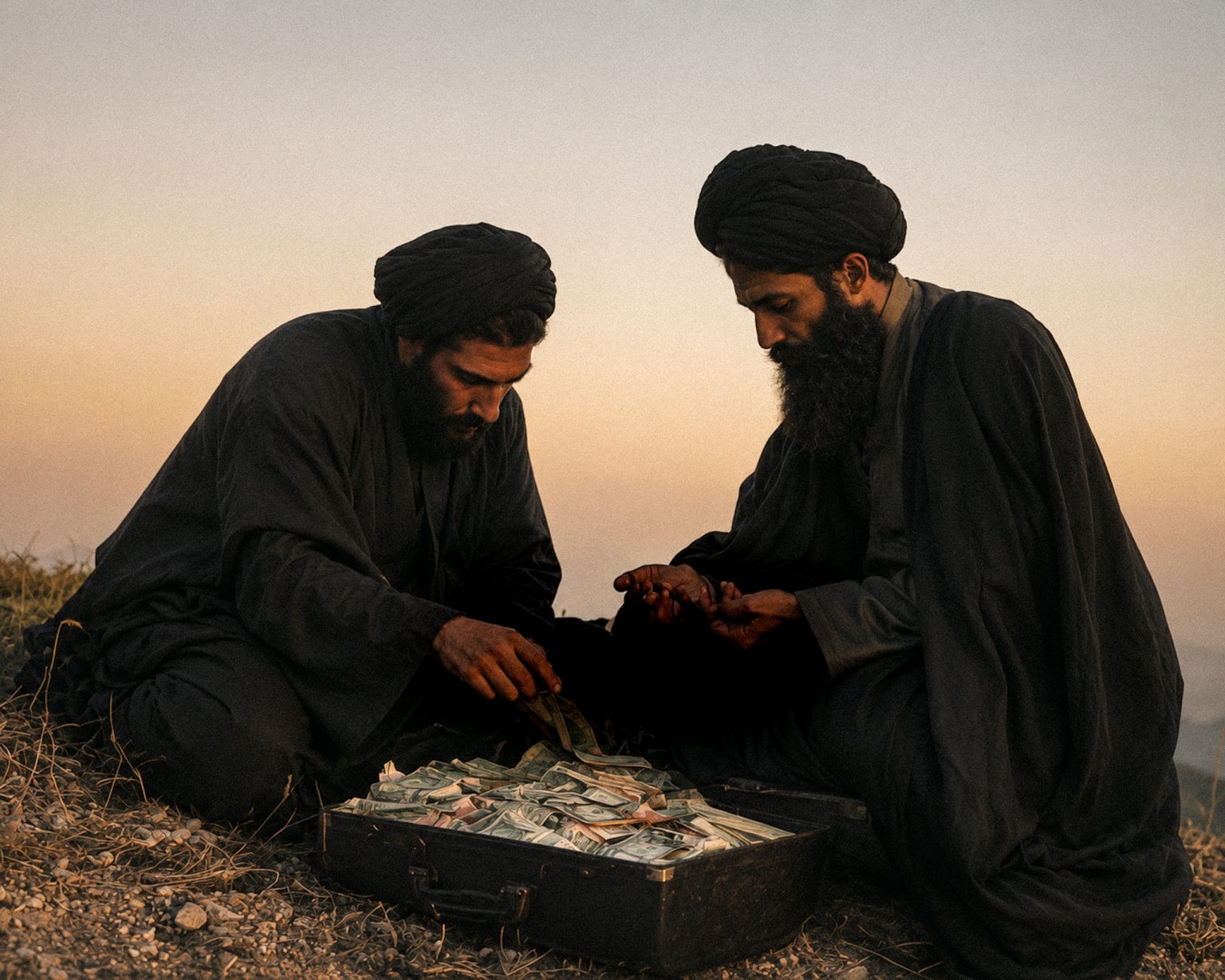
Money-laundering networks disguise the origins of illicit cash by moving it through intermediaries, commercial transactions and informal payment systems. Photo: Statement/AI
|
Around a third of Hezbollah’s annual budget of more than $1bn comes from illegal activities. Hezbollah is an Iran-backed Shiite Islamist organization in Lebanon, where it simultaneously operates as a political party, social welfare organization and armed militia. Numerous countries in Europe and elsewhere designate Hezbollah in its entirety as a terrorist organization.
Europe serves as a hub for the organization’s criminal activities, including drug trafficking, money laundering and the smuggling of luxury goods. An analysis by Lina Khatib, an internationally recognized Middle East expert, director of the SOAS Middle East Institute and co-founder and director of the Program on Arab Reform and Democracy at Stanford University, examines how these operations work through case studies from several European countries, including Austria, France and Germany.
Khatib prepared the study for Austria’s Documentation Center for Political Islam (DPI). It also describes how legal and illegal activities overlap and identifies security gaps that remain in Europe’s efforts to combat terrorism.
The Cedar Money Laundering Network
The study illustrates a typical model through the international Cedar network, which focused on drug trafficking and money laundering. Latin American cartels supply cocaine to Europe. Once the drugs are sold, large amounts of cash are generated whose criminal origin must then be concealed. The money is used to purchase apparently legitimate commercial goods, including luxury cars, expensive watches, usually from high-end brands, works of art and diamonds.
These goods are resold through various companies and countries, including in West Africa. The resulting proceeds disguise the original money as revenue from legitimate commercial transactions. Some of the money reaches Lebanon or is directed to Hezbollah-linked actors. Another portion is returned to the Latin American cartels after deducting a fee for money-laundering.
Hezbollah as a Major Drug Trafficker
Under this model, Hezbollah sometimes acts as a drug dealer itself, as a logistics provider and ultimately as a professional money-laundering service for other criminal organizations. The Cedar network, uncovered by the US Drug Enforcement Administration (DEA) in 2016, was a Europe-wide Hezbollah money-laundering operation.
It allegedly collected cash from cocaine sales in France and Belgium. A German car dealership was used to convert the money into vehicles that could be exported. Investigators at one point estimated that around $1m worth of money was being laundered each week. The newly published DPI study draws not only on findings from US and European investigations but also on official sanctions documents.
Art, Diamonds and Hezbollah’s Money Trail
Three further case studies illustrate typical transactions involving art and diamonds, cases of sham charities and the sale of diplomatic passports, as well as criminal activities involving cryptocurrencies. According to the study, the art market is particularly well suited to money laundering because of its discretion and subjective valuations.
A central figure identified in the study is Beirut art dealer Nazem Said Ahmad, whom US authorities describe in investigative records as a major Hezbollah financier and personal financial supporter of Hezbollah leader Hassan Nasrallah, before he was killed in 2024.
Since 2012, Ahmad acquired works of art worth more than $54m, including pieces by Warhol, Picasso and Basquiat. Invoices were issued to front companies, family members or business associates in an attempt to conceal his beneficial ownership. The diamond trade also flourished despite US sanctions in place since 2019. Around 482 diamond parcels containing approximately 1,546 carats were sent to a US gemological institute for appraisal.
In one example, a single 45-carat diamond belonging to Ahmad was valued at $80m in 2021. When the goods were imported into Lebanon, Hezbollah’s influence at the ports ensured that they entered the country without duties being paid.
Another example in the study concerns associations posing as charitable organizations. In Germany, the Interior Ministry banned the Islamic Center Hamburg (IZH), along with affiliated organizations, because they were apparently part of this network.
The stablecoin Tether (USDT) is more difficult to trace than Bitcoin. Photo Illustration: Timon Schneider/SOPA Images/LightRocket via Getty Images
Organizations linked to the Islamic center included the Al-Mustafa Community Center and Waisenkinderprojekt Libanon e. V., or Orphan Children Project Lebanon, which transferred a total of $4.5m to the Hezbollah-affiliated Shahid Foundation between 2007 and 2013.
Hezbollah’s Digital Finance Network
For cryptocurrencies, Hezbollah relies primarily on the Tether stablecoin (USDT) on the Tron network. This technology makes tracing transactions considerably more difficult for law enforcement authorities.
One key actor is Syria-based hawala operator Tawfiq Muhammad Said al-Law, who provided Hezbollah with digital wallets for proceeds from commodity transactions conducted by Iran’s Islamic Revolutionary Guard Corps (IRGC). A hawala operator is an informal money broker who processes payments through a network of trust without the money itself being transferred conventionally through banks or across borders. This makes tracing funds extremely difficult for investigators.
The system is relatively widespread across the Islamic world. A customer gives money to a hawala broker, who instructs a partner at the destination to pay the corresponding amount to the recipient. The brokers settle their accounts later, often through offsetting transactions or trade in goods.
In May 2023, Israel’s authority responsible for combating terrorist financing seized $1.7m in cryptocurrency from 40 wallets controlled by al-Law.
Cutting the Terrorists’ Financial Lifelines
To combat this form of organized crime, which is in part intertwined with state structures, Khatib advocates a uniform EU designation of Hezbollah in its entirety. She also calls for greater transparency over beneficial ownership, stricter oversight of so-called gatekeepers such as lawyers, accountants and art dealers and the development of dedicated blockchain forensics capabilities within the relevant authorities. Deeper transatlantic cooperation modeled on the existing Law Enforcement Coordination Group involving the US and Europol is another part of her proposed approach.
In the long term, Khatib argues that governance reforms in Lebanon are unavoidable. Hezbollah’s entrenchment within the country’s state structures provides the organization with both protection and resources.
The study’s conclusion can be summarized as follows: Hezbollah has reshaped the Lebanese state into a co-financier of its power structure. Public funds support its fighters and their families, finance the reconstruction of its strongholds and thereby preserve both Hezbollah’s own resources and those of Iran. This creates a systemic contradiction: the state that is supposed to disarm Hezbollah instead helps sustain its military and political power.
Placeholder For Topreaded Placeholder For Topreaded
Placeholder
Placeholder
Placeholder For Topreaded Placeholder For Topreaded
Placeholder
Placeholder
Placeholder For Topreaded Placeholder For Topreaded
Placeholder
Placeholder
Placeholder For Topreaded Placeholder For Topreaded
Placeholder
Placeholder
Placeholder For Topreaded Placeholder For Topreaded
Here is placeholder for Article excerpt Here is placeholder for Article excerpt Here is placeholder for Article excerpt Here is placeholder for Article excerpt
Here is placeholder for Article excerpt Here is placeholder for Article excerpt Here is placeholder for Article excerpt Here is placeholder for Article excerpt
Here is placeholder for Article excerpt Here is placeholder for Article excerpt Here is placeholder for Article excerpt Here is placeholder for Article excerpt
Welcome to the comments section of the Štandard daily. Please take note of our guidelines, comments are moderated by us. You can contact the moderators at [email protected].
Participate in the discussion
Comments are available to subscribers only. If you'd like to join the discussion, choose a subscription starting at €6.72 per month.
All comments 0
Register
Comments are available to registered users only. If you'd like to join the discussion, register here.