The abysmal deficit in France’s public finances is no secret to anyone, revealing the government’s inability to turn things around. For the past 20 years, the escalation of institutional messaging has served as a convenient tool to mask its incompetence. Today, as the time has finally come to cut these lavish budgets, the harsh truth about the sheer scale of the waste is coming to light.
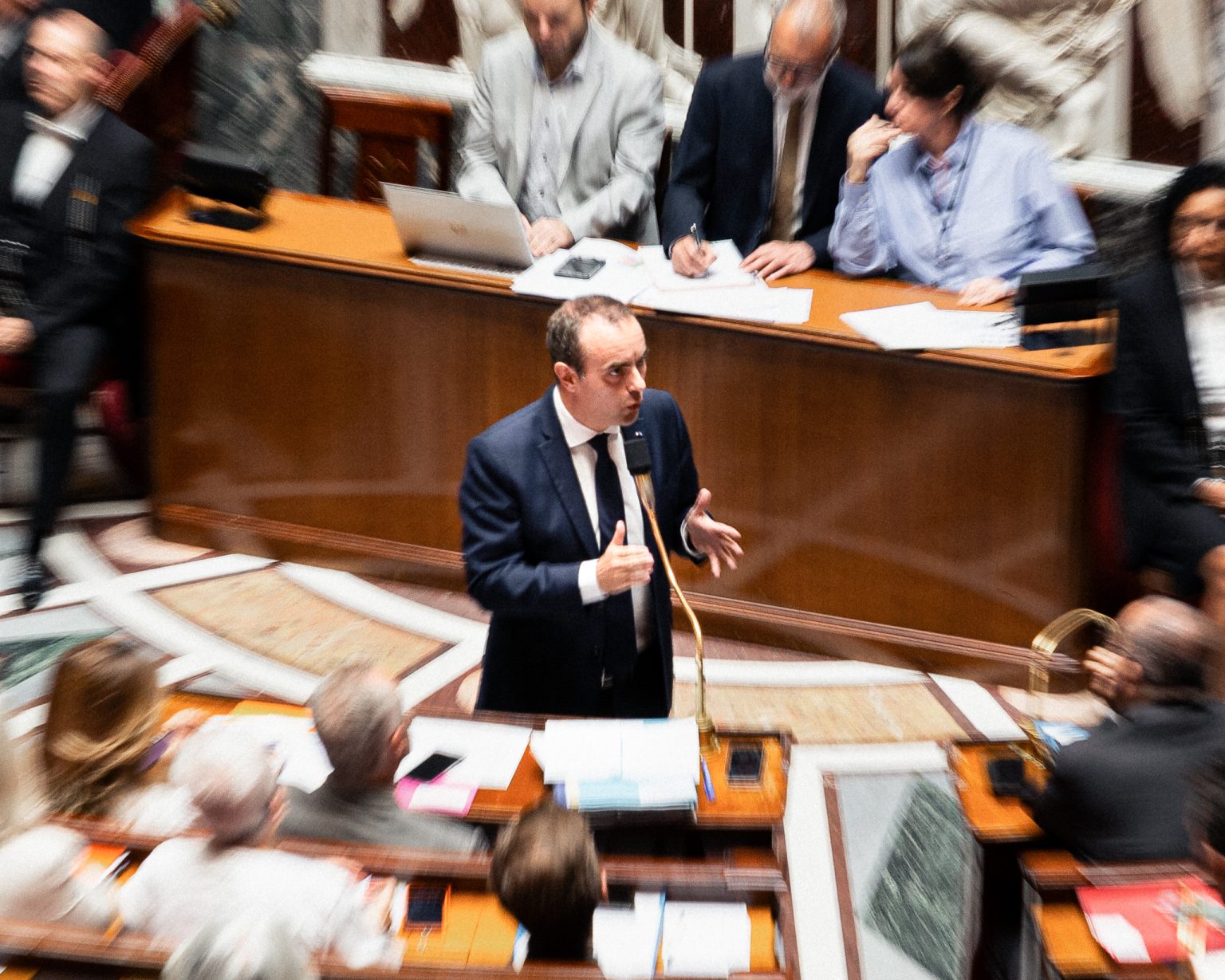
French Prime Minister Sébastien Lecornu has detailed plans to make drastic cuts to the government’s and ministries’ communications budgets. While the intention is commendable, it reveals a deep-seated problem: the explosive growth in the amounts allocated to communications efforts by those in power in recent years, a symptom of a political class that no longer knows how to speak to the people.
The prime minister reported a significant 45% increase since 2019 – three times the rate of inflation.
Lecornu has set a target of €300m ($350m) in savings. The figure is impressive and could signal a welcome political initiative at a time when France continues to push the limits of its public finances. But what is most troubling is what this figure hides: an overall communications budget that reached €1bn ($1.17bn) in 2024 – bearing in mind that this is a retrospective assessment, not a budget line item.
A Communications Budget Spiraling Out of Control
This trend is not new. Even during President Nicolas Sarkozy’s administration (2007–2012), the Government Information Service (SIG) alone saw its operating budget more than quadruple, rising from €4.6m ($5.4m) in 2007 to €21m ($24.5m) in 2009.
Under Macron, a new trend has taken hold – that of under-budgeting, as pointed out by the Senate: announced appropriations tend to be regularly exceeded. A peak was observed during the COVID-19 pandemic, with a chaotic proliferation of toll-free hotlines, public health campaigns, informational materials, surveys and dedicated websites.

You might be interested
France’s Debt Trap Tightens as Borrowing Tops €3.5tn
Yet the staggering figure of €1bn reached in 2024 represents much more than just the SIG, which accounts for only a tiny fraction of the spending. This is the new perspective Lecornu has brought to the issue. Until now, the government had not truly been aware of the sums committed to communicating with citizens. For the first time, government agencies are attempting to take a comprehensive approach to these cumulative expenditures, which had previously been tracked piecemeal and scattered across various ministries and administrative bodies.
To arrive at this figure, one must include the ministries and their communications departments, government contractors and public agencies, the purchase of advertising space, digital communications and communications campaigns, as well as event planning, audiovisual and video production and all outsourced consulting and communications services.
Studies and surveys commissioned by government agencies are also included in this figure. These services involve numerous service providers who do not hesitate to bill the government handsomely for their contributions.
Where France’s Communication Bill Goes
The Court of Auditors, responsible for auditing public accounts, also notes recurring budget overruns for contracts awarded to private companies for communications projects. In 2022, a contract with Publicis – one of France’s largest communications firms – estimated at €1.6m ($1.9m) ended up costing more than €8m ($9.3m). The outsourcing rate reached as high as 80% for the Ministry of the Interior’s Information and Communication Directorate (Dicom), covering external services such as press reviews, campaigns, media buys and monitoring tools.
While some expenditures may be justified – for example, increased budgets for digital monitoring during periods of geostrategic risk – others have sparked outrage and revealed a habitual tendency to multiply contracts for frivolous projects.
The satirical newspaper Le Canard enchaîné, for example, revealed that the Élysée Palace spent more than €100,000 ($117,000) to deploy a giant 400-square-meter banner bearing the slogan “Choose France”, which appeared on screen for only a few seconds during the official Bastille Day ceremonies. Today, ministries are squabbling over who will bear the burden of an expense deemed unnecessary and incongruous.
To achieve the required savings, several approaches are being considered. Each ministry should stop viewing its communications efforts in isolation. A shared communications strategy should be developed based on overarching government-wide objectives. A list of 23 interministerial objectives has thus been drawn up, including, among other things, the fight against drug trafficking and measures to improve road safety.
Simplification must also take place at the local level, with a centralized office for communications operations in each prefecture. Finally, the use of artificial intelligence has been identified as a major source of potential savings.
Lecornu intends to push the reform through at full speed, with a target effective date of January 2027. The presidential campaign will then be in full swing, and it will be particularly timely to assess the results of Macron’s two terms in office and the explosion in government spending.
From Informing Citizens to Selling Government Policy
While the call for fiscal restraint in communication is welcome, it would be even more pertinent to ask why the budget has ballooned so dramatically. The need to resort to communication tactics is, by implication, a sign of difficulty in convincing citizens of the effectiveness or relevance of the policies being implemented.
You might be interested
Europe’s Debt Divide Is Turning Upside Down
The example of Prime Minister François Bayrou illustrates particularly well how education tends to become an argument justifying the increased use of government communication. In April 2025, as public debt reached approximately €3.3tn ($3.85tn), Bayrou set out to raise awareness among labor and management representatives, elected officials and the French public about the need to restore public finances to health.
Then, in July, he presented a draft budget for 2026 based on €44bn ($51.3bn) in savings, including particularly unpopular measures such as a freeze on social benefits and the elimination of two public holidays. To defend this plan, Bayrou chose to speak directly to citizens, notably through his series of Facebook Live videos, explicitly designed to raise awareness about the risk of excessive debt and to justify the required efforts.
The reasoning is revealing: when reforms are difficult to accept, their implementation can no longer be limited to political decisions and administrative information; it requires an educational approach aimed not only at making the reform understandable but also at securing public support for it. The line between informing citizens about a public policy and promoting that policy to them thus becomes particularly thin.
This shift is what makes the current debate over government communication spending so compelling: if every unpopular reform requires its own explanatory campaign, communication ceases to be a peripheral function of the administration and becomes an integral component of government action. A very bad habit, one that will be difficult to break.