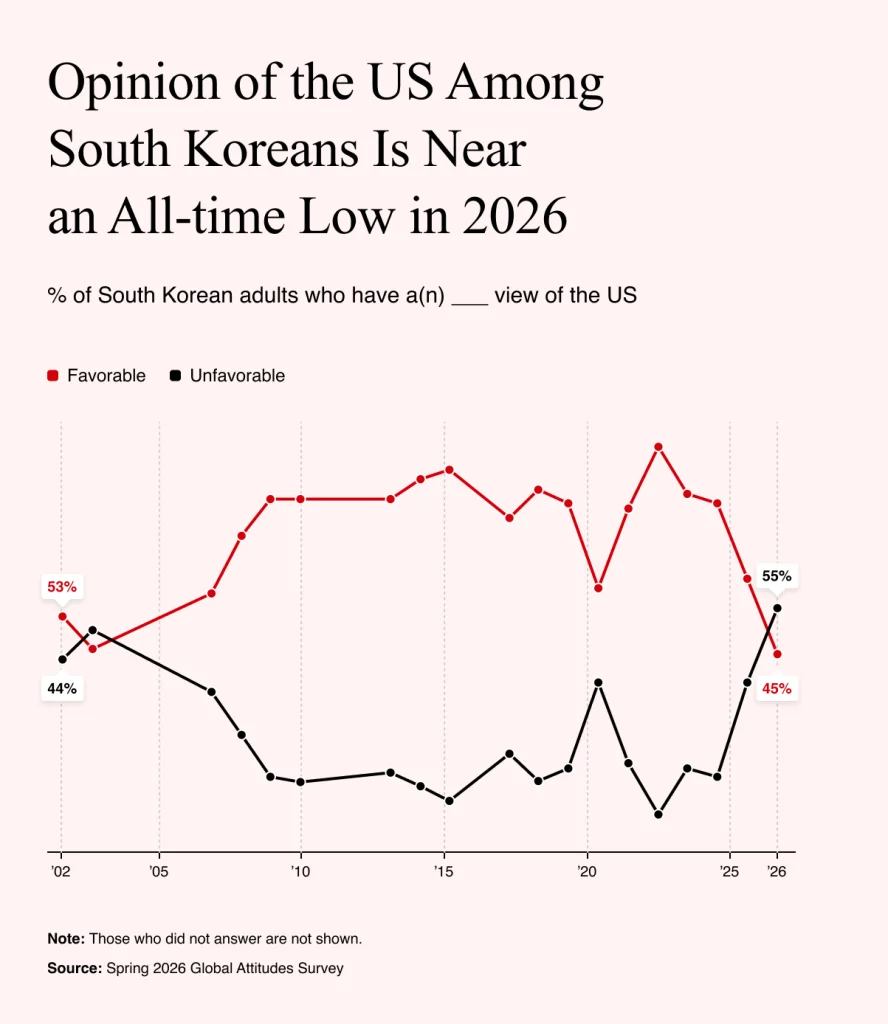
As a result, fewer than half of South Koreans (45%) have a favorable view of the US at present, down 16 points from 2025’s result (61%) and 35 points from the second year of Trump’s first term (2018), when 80% of South Koreans had a favorable view of their longstanding ally.
The share of South Koreans who consider the US a reliable partner for their country also declined steadily.
South Korea Questions America's Reliability
The same survey revealed that while a majority of South Koreans view America as reliable (57%), the figure was down significantly from 2022’s 83%, when the Pew Research Center last asked the question.
Meanwhile, the share of South Koreans who think that the US does not take their country’s interests into account in making foreign policy decisions rose by 17 points, from 61% in 2023 to 78% this year.
Conversely, the share of South Koreans who think the US takes their country’s interests into account when formulating its foreign policy fell from 38% in 2023 to 21% in 2026.
Just 47% of South Koreans now say that the US contributes “a great deal or a fair amount” to global peace and stability, down from 74% in 2023.
The Pew research gives reason to believe that Trump’s tariff strategy played a role in undermining South Korean perceptions of the US. A majority of respondents (85%) disapproved of the way Trump was implementing tariffs, with 63% “strongly” disapproving. Just 14% approved of Trump’s way of handling tariffs.
The US campaign against Iran initiated by Trump was also viewed negatively by a large majority of South Koreans, with almost half (47%) of the respondents saying that they “strongly” disapprove of the president’s dealings with Iran.
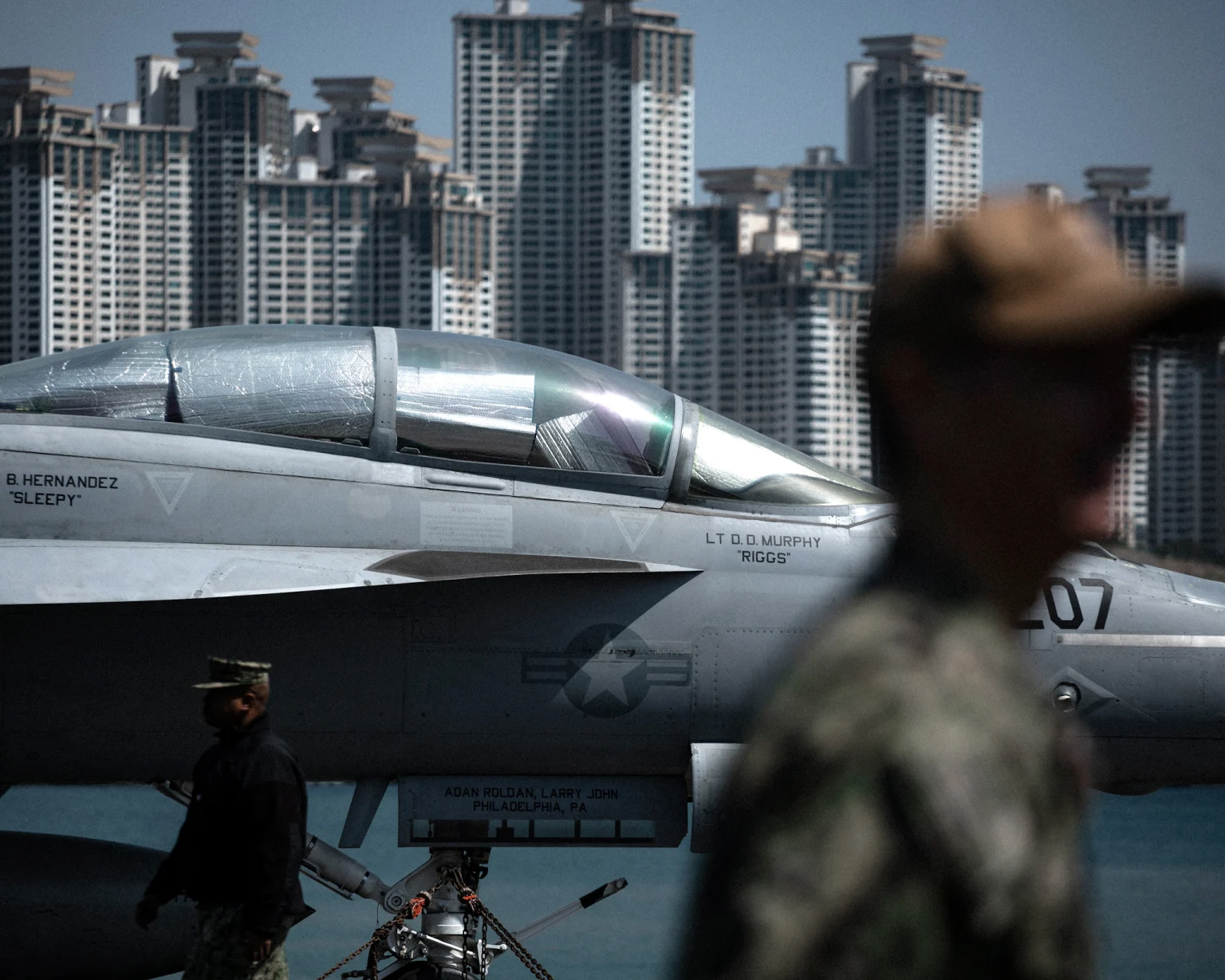
When announcing the reduction in exercises between the countries’ militaries, Trump cited South Korea’s lack of involvement in the conflict.
Trump Turns North
In a post on Truth Social, Trump expressed his unhappiness with his country’s prior agreement to participate in the annual Ulchi Freedom Shield military exercises with South Korea. This, he said, was because of his “very good relationship with Kim Jong Un, of North Korea”.
“These exercises are not only costly, with much of these costs paid for by the United States of America (as usual!), but send a signal that is totally inappropriate and hostile, to a Country that, as long as Donald J. Trump has been President, has been unthreatening and respectful”, Trump wrote on 16 August.
Describing it as “somewhat unrelated” to the downgraded exercises, Trump added that South Korea had said “No thanks” to his request that the Asian nation join in the “Denuclearization of the Islamic Republic of Iran”.
Despite the downward slide in US-South Korean relations evidenced by the survey results, South Koreans were still found to identify the US as their country’s most important ally.
The share of respondents saying so decreased only slightly, from 89% in 2025 to 84% in 2026. According to Pew, South Koreans last year were more likely to name the US as their most important ally than people in all but one of the other 24 countries surveyed, Israel.
South Korean analysts lamented Trump’s decision to reduce this year’s joint military exercises, with Seoul-based Atlantic Council fellow Bee Yun Jo warning that the unilateral reductions “carry a cost in South Korea”.
“They strengthen those who question the reliability – or necessity – of the alliance”, Jo said.
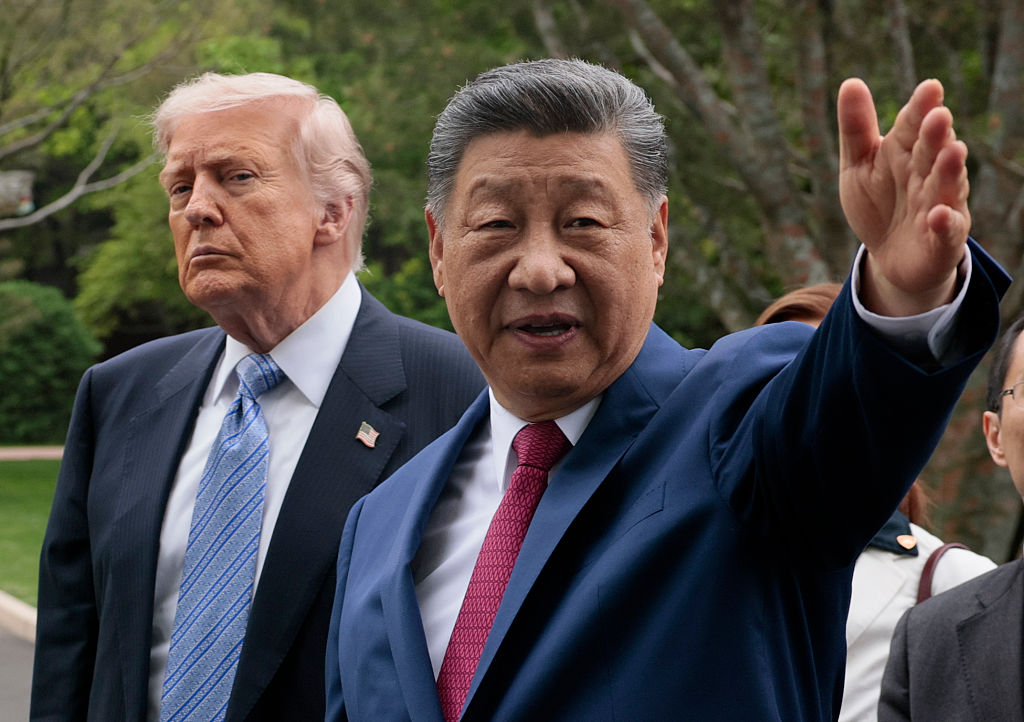
In the days that followed, Trump announced on 19 August that he plans to meet with North Korea’s leader Kim Jong Un later this year. The US president hopes to pick up what was one of the more successful foreign policy threads of his first administration, the thawing of relations between Washington and Pyongyang.
However, the supreme leader’s influential sister, Kim Yo-Jong, cast doubt on the apparent communications, saying that she knew nothing of any meeting later this year.