How China's Rising Influence and US Decline Are Shifting Global Balance
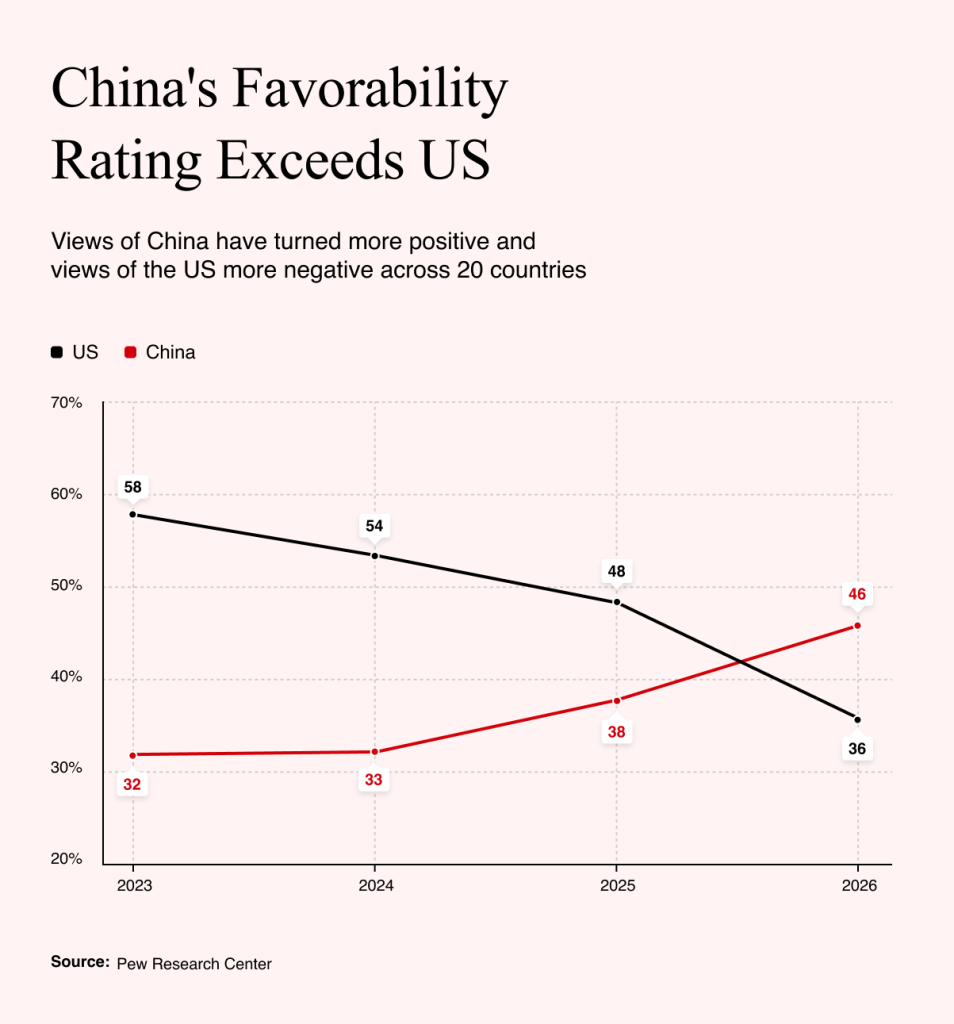
China is viewed more favorably than the US for the first time in two decades across 36 countries polled by respected data-gatherer Pew Research Center.
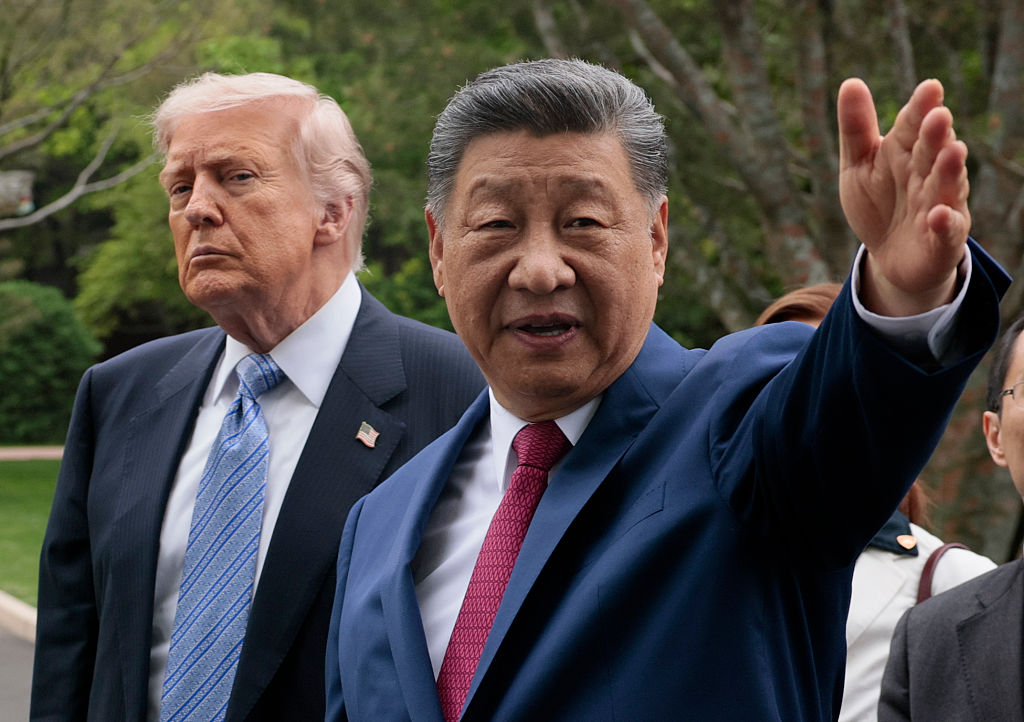
Chinese President Xi Jinping is marginally more popular than US President Donald Trump, according to a new global poll. Photo: Evan Vucci-Pool/Getty Images
|
America, the leader of the free world, is viewed less favorably than communist China for the first time in almost 20 years, according to a new poll conducted by Pew Research among the citizens of three dozen nations.
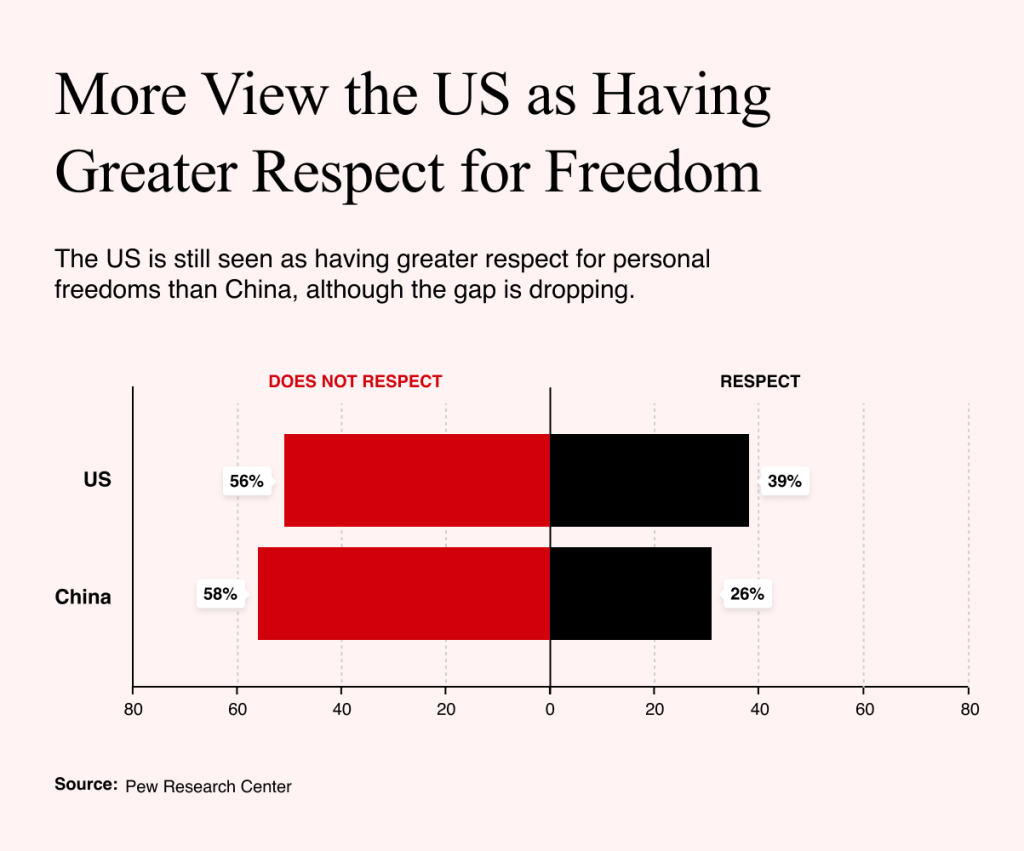
However, while confidence in US President Donald Trump has also dipped behind that of Chinese President Xi Jinping, more respondents still believe America better respects the freedom of its people than the communist nation does.
The shift in favorability stems from two forces: a decline in trust among America's traditional allies, driven by their perception of Trump's conduct and policies, and the growth of China's soft power, fostered through trade links and development loans to nations across the Global South.
The poll offers further evidence of the growing confidence of developing nations, which are increasingly pushing back against what they see as the liberal excesses and punitive economic policies of the West.
In some cases, as with the nations making up the BRICS coalition (including Brazil, Russia, India, China and South Africa), this has seen a shift in alignment toward centers of power outside the developed world.
For all its fallibilities, America is still recognized as the greater defender of freedom. But China's growing influence, and the respect it now commands, are a worrying sign, and one that deserves careful consideration from policymakers in America and the wider West.
As China's economy has grown over the past three decades, it is an increasingly potent rival for the US.
China Overtakes America in Global Favor
Pew's annual report charts a small but steady rise in favorable views of China over the past five years, set against a sharp decline in favorable views of the US, a slide that began toward the end of former President Joe Biden's term and has continued apace under Trump.
Its 2026 report was less a bolt from the blue than a continuation of a trend picked up in Gallup's global ratings for 2025, in which China's median approval rating (36%) edged past that of the US (31%) across more than 130 countries, the widest margin in China's favor that Gallup has recorded for nearly 20 years.
According to Pew's survey, China is now seen more positively than the US in most of the 36 countries surveyed, particularly among middle-income countries in Africa and Latin America.
The shift is also being driven by increasingly negative views among America's traditional allies in Europe and its neighbors. In these countries, favorable opinion of China, though often well short of a majority, consistently outpaces that of the US.
For instance, in Germany the US has a favorability rating of 27% compared with China's 33%. In France, the figures are 27% and 36% respectively. In Italy and Spain, the gap is even more marked, with China's favorability 20 and 24 percentage points higher than that of the US respectively.
Confidence in both Trump and Xi is generally low, though the Chinese president has edged ahead of his American counterpart in Pew's latest poll. Only in a handful of countries does either leader command majority confidence.
Source: Pew Research Center
The Freedom Gap Narrows
Some of China's nearest neighbours, however, such as South Korea and Japan, continue to view the US significantly more positively, although Singapore bucks the trend.
Given their proximity to Chinese power, and its meddling in their maritime and military affairs, these Indo-Pacific nations are unlikely to be surprised that more countries see the US as having greater respect for personal freedoms than the Chinese government does.
That gap is narrowing, however, driven largely by the fact that people in nearly every country surveyed have grown less likely to say the US government respects personal freedoms than they were in 2021, when Pew last asked the question.
In many countries, majorities now view both governments as failing to respect their citizens' personal freedoms, even as China's ratings see marginal improvement worldwide.
This is despite mounting evidence that China itself is backsliding on political, religious and personal freedoms, with high-profile cases such as the jailing of Jimmy Lai in Hong Kong and the treatment of Uyghur Muslims regularly making headlines.
Source: Pew Research Center
The Rise of China's Soft Power
However, while much of the polling reflects America and Trump's declining popularity, it is clear that China is making significant gains through its approach to foreign policy and international relations.
China has, for instance, built a successful rapprochement with coalitions in the Gulf and Southeast Asia, selling its model of state-driven economic development, nicknamed the Beijing Consensus, as an alternative to liberal, market-driven models.
Beyond building trade agreements that could be worth trillions of dollars in the future, it has invested heavily in development projects across Africa and Latin America, extending loans worth hundreds of millions of dollars.
As one Moroccan think tank, the Policy Center for the New South (PCNS), puts it, China has successfully utilized its soft power to sell itself "not through coercion, but through competence", offering its own economic development as a compelling example of growth for post-colonial nations.
Confidence of the Developing World
China's quiet maneuvers come at a time when the developing world is showing signs of growing confidence, seeking new ways to exert its influence on the world.
This has manifested in a variety of ways, from rejecting the imposition of foreign ideologies such as abortion, contraception and gender identity, to a concerted push for a multinational union that would oppose what PCNS describes as "Western hegemony".
The growing influence of the BRICS coalition is a prime example of this effort to establish mutually beneficial partnerships, demonstrating that economic transformation is possible "outside the Washington framework".
These unions are built not on ideological unity but on economic pragmatism and a dislike for the West.
Given China's record on its own people's freedoms, its soft power and pragmatic economic ties seem unlikely, in the long run, to sustain relationships without giving rise to a new and deeply unpleasant hegemony.
Yet this year's Pew polling, together with last year's from Gallup, makes clear that America and Europe must take a renewed interest in how they engage with middle-income countries.
For instance, while Trump has built a platform on putting America First, this polling suggests he must also consider the influence America exerts as the leader of the free world.
So while protecting borders and cutting international aid, could he not also support the development of middle-income nations through the exact kind of pragmatic thinking the Chinese have used, such as loans and bilateral trade agreements?
Such arrangements could prove more economically beneficial for America, and would spare recipient nations the subservient position of aid recipients, placing them instead on the footing of trade partners.
The Battle for the West
Much of China's success, though, appears to rest on divisions within the West itself. That suggests the defense of freedom and the promotion of democratic standards worldwide depends chiefly on the outcome of cultural and political battles within Europe and America.
China's growing cultural strength and strategic influence are not guaranteed to last. But as long as the West remains a house divided, it hands the communist nation its best chance yet of winning the rest of the world over to its model of prosperity paired with unfreedom.
Here is placeholder for Article excerpt Here is placeholder for Article excerpt Here is placeholder for Article excerpt Here is placeholder for Article excerpt
Here is placeholder for Article excerpt Here is placeholder for Article excerpt Here is placeholder for Article excerpt Here is placeholder for Article excerpt
Here is placeholder for Article excerpt Here is placeholder for Article excerpt Here is placeholder for Article excerpt Here is placeholder for Article excerpt
Welcome to the comments section of the Štandard daily. Please take note of our guidelines, comments are moderated by us. You can contact the moderators at [email protected].
Participate in the discussion
Comments are available to subscribers only. If you'd like to join the discussion, choose a subscription starting at €6.72 per month.
All comments 0
Register
Comments are available to registered users only. If you'd like to join the discussion, register here.