Germany to Close Russian Consulate over Leipzig Drone Attack
German ministers say police evidence, intelligence and methods used in previous Russian sabotage operations point to Moscow. Berlin will close a consulate, end the Russian House agreement and push for further EU sanctions.
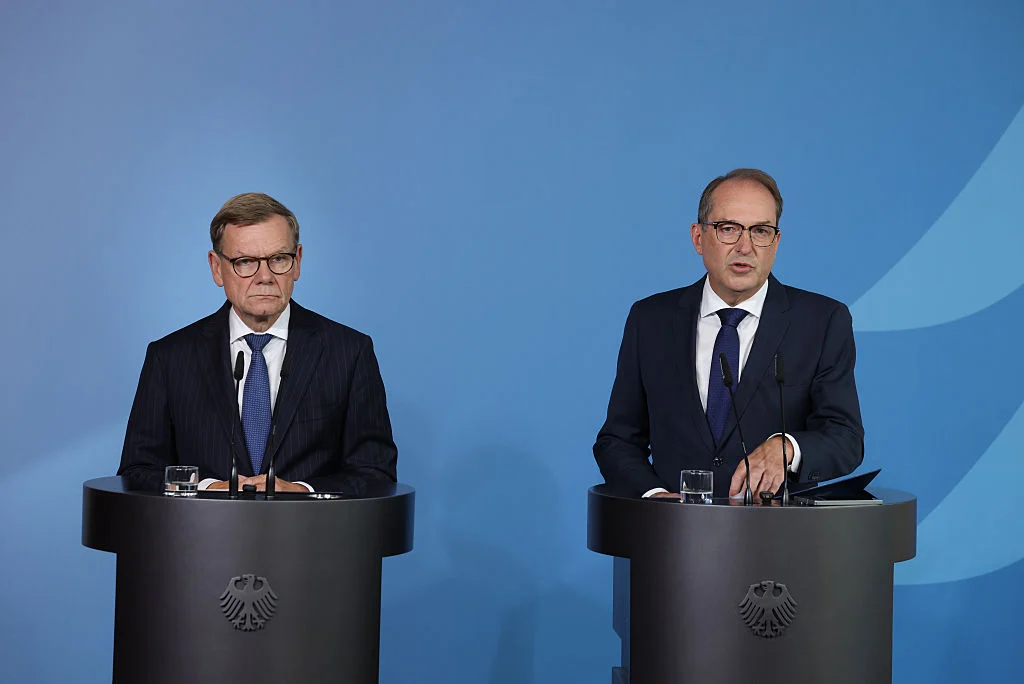
Foreign Minister Johann Wadephul, left, and Interior Minister Alexander Dobrindt address the media in Berlin on 1 September 2026 to announce Germany’s response to the failed drone attack at Leipzig airport. Photo: Sean Gallup/Getty Images
|
"Russia is responsible for the hybrid attack in Leipzig on 4 August." With those words, Federal Interior Minister Alexander Dobrindt formally blamed Moscow on Tuesday, exactly four weeks after the attempted attack on Leipzig/Halle Airport.
In a joint statement with Foreign Minister Johann Wadephul, he said police investigations, intelligence findings and the modus operandi together painted a clear picture. The drone had been fitted with explosives and an ignition system used in previous Russian operations.
The operation had been professionally planned, but its execution was left to recruited "low-level agents". Intelligence indicated that those involved had acted on behalf of Russian state agencies, Dobrindt said. He did not name them or identify a specific intelligence service.
The German government believes the country is likely to face further Russian attacks and that those behind them are willing to risk causing more serious damage.
Wadephul summoned the Russian ambassador and announced that the Russian Consulate General in Bonn would close on 18 September. Germany will also terminate the agreement on the operation of the Russian House in Berlin, tighten entry checks for Russian citizens and press for further EU sanctions against people involved in hybrid attacks.
Berlin also plans to increase pressure on Russia's so-called shadow fleet. Germany is not at war with Russia, Wadephul said, but Moscow regards it as a wartime target. The Russian embassy had already denied any involvement in August, describing the incident as a "fabricated provocation".
The political response followed a blunt statement from Chancellor Friedrich Merz. On 25 August, he said the German government would name those responsible "shortly", adding: "They will pay for it."
Berlin attributed the delay to the continuing investigations and the need to coordinate with EU and NATO partners. Dobrindt said at the time that Russia was easy to suspect but difficult to prove responsible.
What Is Known About the Leipzig Airport Attack
On the evening of 4 August, an airport employee found a drone near the southern runway, fitted with professional-grade explosives and a detonator. The Federal Prosecutor's Office believes the device was intended to cause an explosion on the airport grounds and is investigating the attempted detonation of explosives and dangerous interference with air traffic.
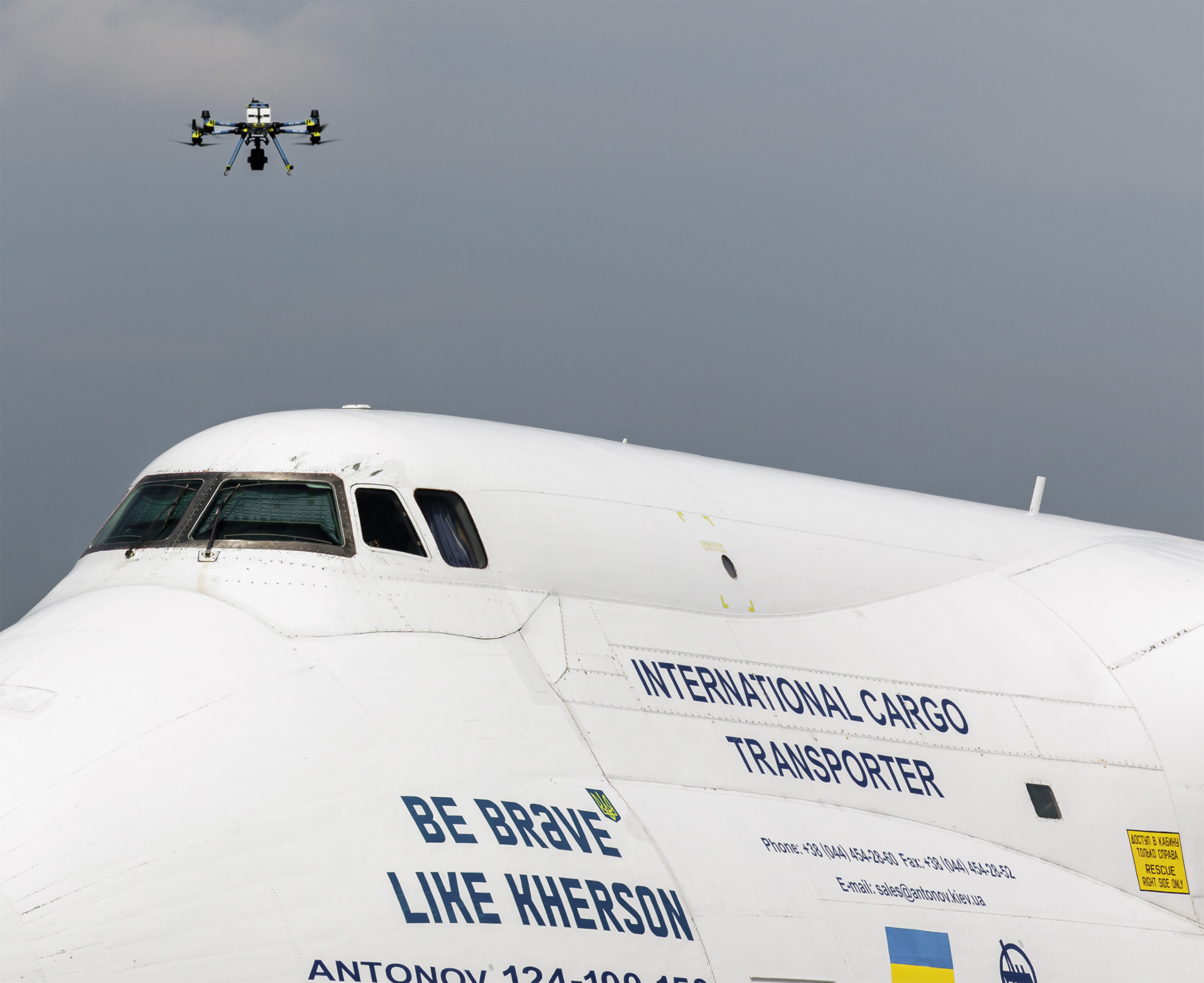
The drone was found near Ukrainian Antonov cargo aircraft. The explosive device was defused.
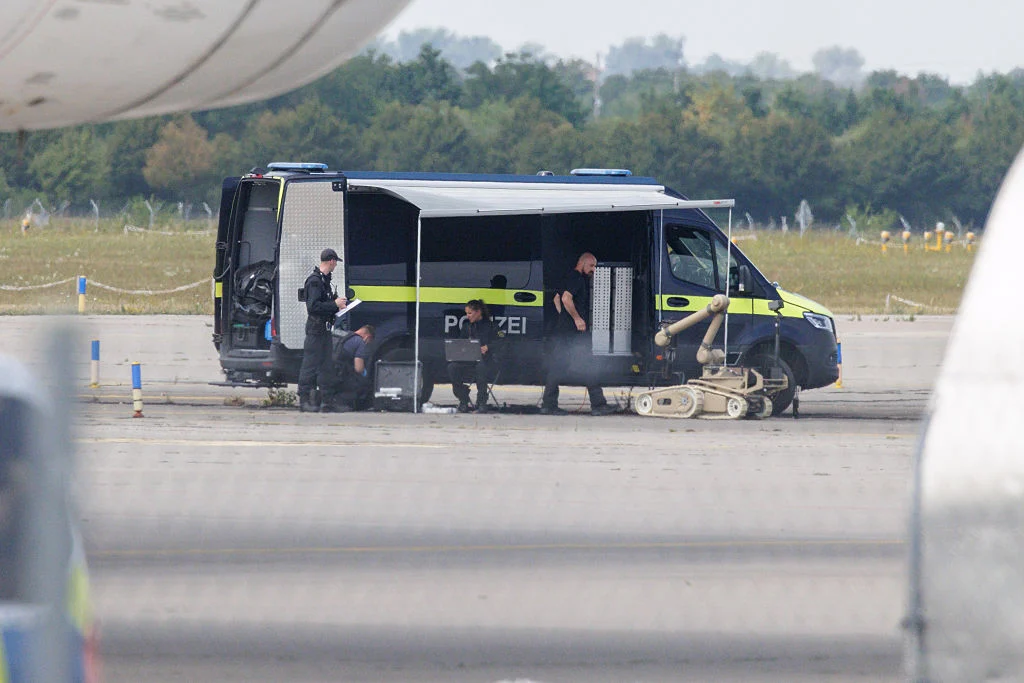
Police investigators deploy a bomb-disposal robot near a Ukrainian Antonov cargo plane at Leipzig/Halle Airport on 5 August 2026. Photo: Jens Schlueter/Getty Images
At almost the same time, a cargo aircraft apparently collided with another drone following an aborted landing approach. It was diverted to Hanover and sustained minor damage. Whether the second drone was part of the same attack has not yet been publicly confirmed.
Media reports also said a third drone had been found in a field west of the airport 10 days later, along with around 50 g of suspected RDX. The Federal Prosecutor's Office has not yet confirmed those details.
Leipzig/Halle is one of Europe's largest air cargo hubs. It also hosts Ukrainian Antonov aircraft and is part of NATO's Strategic Airlift International Solution (SALIS) program, through which heavy equipment is transported to the alliance's eastern flank.
In July 2024, an air cargo parcel rigged with an incendiary device caught fire there before it could be loaded onto an aircraft. Investigators in several European countries have attributed a series of similar parcel attacks to Russian military intelligence.
The scale of the threat is considerable, but not every suspicious drone is Russian. An internal assessment by Germany's Federal Criminal Police Office (BKA) recorded 1,289 reported incidents involving 2,310 individual drone overflights in 2025.
There were also 321 suspected sabotage cases involving railway lines, military sites, power plants, substations, airports and other infrastructure. The BKA considered Russian involvement possible in some of the cases, but not all.
A Correctiv survey of Germany’s states identified at least 104 reported offenses in 2025 in which authorities suspected involvement by a foreign state in acts of sabotage. These were initial police reports rather than cases in which responsibility had been conclusively established.
Several investigations into drone flights over German military sites were closed because the pilots could not be identified.
The wider European context is nevertheless well documented. An AP database recorded 145 acts of sabotage and disruption by December 2025 that Western authorities attributed to Russia, its proxies or Belarus.
Poland blamed Moscow for explosive attacks on a key railway connection to Ukraine and subsequently deployed 10,000 soldiers to protect critical infrastructure. In February 2026, the Swedish Navy jammed a drone that the armed forces said had been launched from a Russian reconnaissance ship and was heading toward the port of Malmö, which was hosting the French aircraft carrier Charles de Gaulle.
On the day Germany attributed the Leipzig attack to Russia, the Brandenburg State Criminal Police Office took over another sabotage case. Investigators found numerous improvised devices at the Turnow-Preilack substation near the Jänschwalde power plant that were designed to fire conductive material into extra-high-voltage lines.
In two cases, the devices caused short circuits, although the power supply remained stable. According to rbb, the perpetrators and their motive remain unknown. There is so far no evidence linking the case to Russia or any other foreign sponsor.
Placeholder For Topreaded Placeholder For Topreaded
Placeholder
Placeholder
Placeholder For Topreaded Placeholder For Topreaded
Placeholder
Placeholder
Placeholder For Topreaded Placeholder For Topreaded
Placeholder
Placeholder
Placeholder For Topreaded Placeholder For Topreaded
Placeholder
Placeholder
Placeholder For Topreaded Placeholder For Topreaded
Here is placeholder for Article excerpt Here is placeholder for Article excerpt Here is placeholder for Article excerpt Here is placeholder for Article excerpt
Here is placeholder for Article excerpt Here is placeholder for Article excerpt Here is placeholder for Article excerpt Here is placeholder for Article excerpt
Here is placeholder for Article excerpt Here is placeholder for Article excerpt Here is placeholder for Article excerpt Here is placeholder for Article excerpt
Welcome to the comments section of the Štandard daily. Please take note of our guidelines, comments are moderated by us. You can contact the moderators at [email protected].
Participate in the discussion
Comments are available to subscribers only. If you'd like to join the discussion, choose a subscription starting at €6.72 per month.
All comments 0
Register
Comments are available to registered users only. If you'd like to join the discussion, register here.