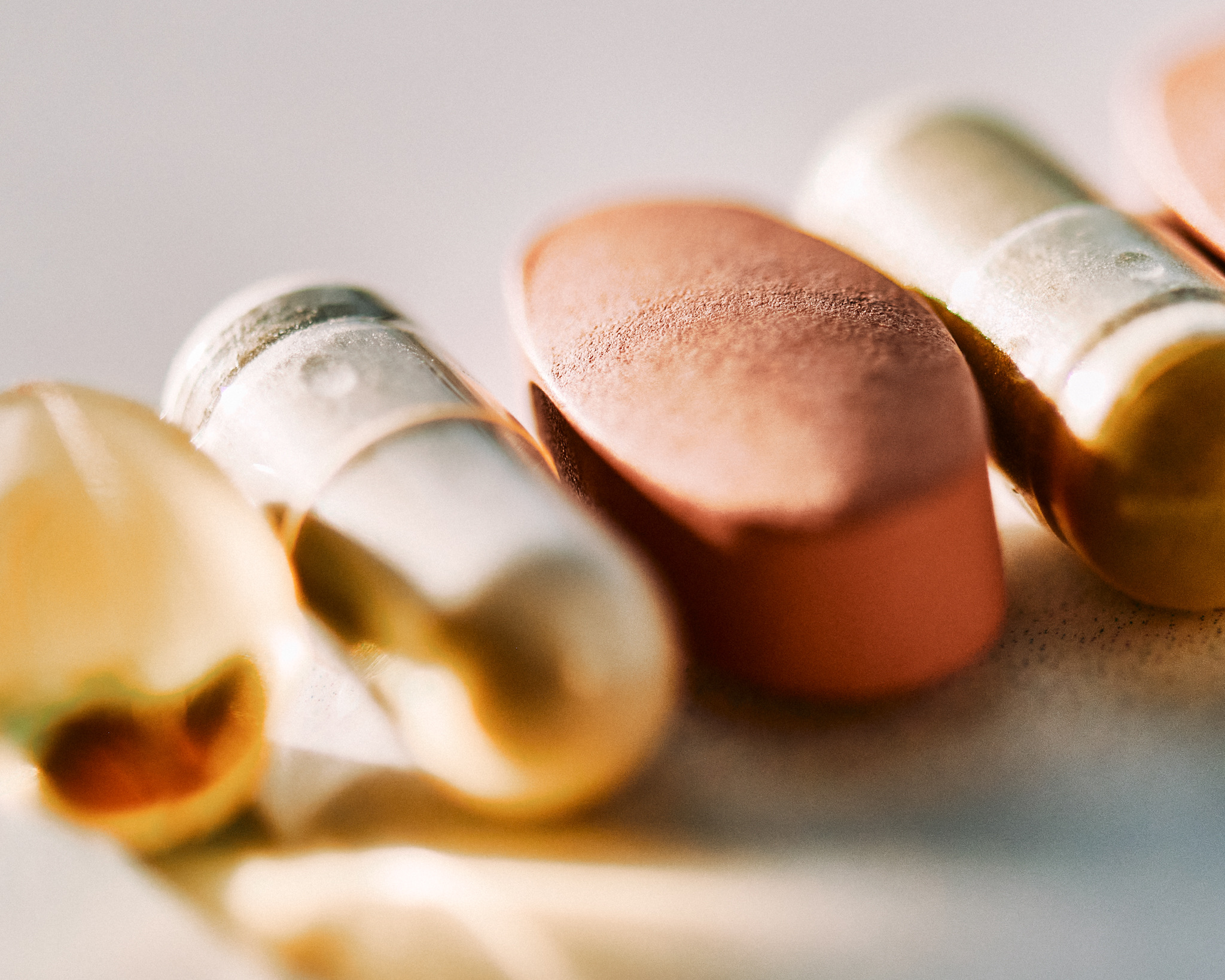
Weight-loss drugs and the healthmaxxing boom are transforming how people eat, forcing food giants to rethink products built for an age of indulgence. Photo: Statement / AI
The Ozempic Era Is Coming for Big Food
Weight-loss drugs and the healthmaxxing boom are transforming how people eat, forcing food giants to rethink products built for an age of indulgence.
Retail shelves and restaurant menus are starting to look a little strange, flooded with odd products like protein chips and nutrient-rich ice creams, while the list of supplements in the ingredients grows and grows.
These developments reflect two major forces reshaping the food industry, weight-loss drugs and dietary supplements, and threatening the bottom line of major companies, from McDonald’s to Magnum and beyond.
The growing desire to optimize our lives through food and supplement consumption cuts across political and social divides, from crunchy moms interested in alternative health to muscle-bound male influencers.
Food companies and restaurants are responding to the demands of an increasing number of health-conscious consumers by expanding their product range, fitting their brands to the fitness age.
Yet doubts remain about the long-term viability of companies specializing in high-calorie foods and sweet treats, with share prices falling and, in some cases, factories shutting down.
Meanwhile, healthmaxxing continues to divide experts as to its ultimate benefits, with some seeing it as evidence of excessive body consciousness and others as an important rebalancing of eating priorities.
Optimizing Our Eating
Health fads have come and gone for decades, going back at least as far as the 19th century in America. Back then, health-food crusaders such as John Harvey Kellogg of Kellogg’s cereals combined scientific research, new technology and eugenic beliefs to manufacture what they considered more nutritious foods.
Now, second-hand bookstores are littered with cookbooks promoting low-fat diets, intermittent fasting and the virtues of only eating potatoes, while the trend of splashing calorie or fat content on restaurant menus has died away.
But while these movements came and went, appetite-suppressant GLP-1 drugs, which belong to a broader class of peptide-based medicines, are already affecting food companies’ bottom lines, and their use is expected to grow.
They tie into a broader concern regarding what goes into our foodstuffs and their nutritional value, with the desire to optimize our eating coming from currents within both the political left and right.
Make America Healthy Again
On the left, the battle with Big Food is over its use of science to create products they say deliberately bypass natural restrictions within the body on how much we consume and what we are drawn to.
On the right, the launch of the Trump administration’s Make America Healthy Again platform included not dissimilar criticisms of the food industry over its use of chemicals and additives that critics say are harmful to health.
High-fructose corn syrup is just one of the ingredients US Health Secretary Robert F. Kennedy Jr. is seeking to banish from American products.
The rapid improvement in the effectiveness and affordability of GLP-1 drugs such as Ozempic and Wegovy means they have become a new weapon in both sides’ battle against unhealthy eating.
One in eight Americans is estimated to take a peptide for weight loss or to control an illness. More than 1.6 million Britons also used one for weight loss alone, with the numbers predicted to grow as cheaper versions hit the market.
Food Giants’ Dietary Issues
Surveys of GLP-1 users in America and the United Kingdom already show signs that they are consuming less fast food and junk food. Along with their influence on the average Joe’s food bills, the drugs are making their presence felt on the market.
For instance, the ice cream giant Magnum reported falling sales in the last quarter of 2025, and in June 2026 it was the most shorted large-cap stock in Europe.
The global ice cream industry is worth $115bn and Magnum controls 20% of it, so the stakes are high, with investors betting against the company because of doubts about how ice cream will survive in the age of Ozempic.
Even McDonald’s has seen a small drop in its market value, with analysts warning that the spread of weight-loss drugs could affect demand.
Chipotle and Nestlé have both launched products specifically aimed at GLP-1 users over fears that once-reliable customers will abandon their products.
The signs may not be all bad for food businesses, as studies suggest weight-loss drug users are still more likely to eat out than those who are not on a GLP-1.
In fact, for some restaurants, the trend creates an opportunity to offer smaller portion sizes suited to reduced appetites without having to cut prices.
For outlets offering high-calorie, processed foods, which have come under increasing scrutiny over the past decade because of concerns about their effects on gut health and weight, a healthy-eating mindset does not gel with marketing built around indulgence.
The development of weight-loss drugs is cutting heavily into the food industry’s revenues.
The trend is becoming increasingly difficult to ignore. JM Smucker has lost billions on Twinkies, while snack producer Frito-Lay closed factories last year, and Magnum is testing a protein-rich range aimed at gym-goers.
On social media, influencers battle it out over who can make the best low-fat, high-protein ice cream alternative, while everyone, it seems, has their own variation of shakes and protein balls that promise to fill you up without compromising your weight-loss ambitions.
As some shareholders pull out of the fast-food industry, others are seeing opportunities in burgeoning alternative foods markets, with investments rising in protein-rich food sources.
The Rise of the Supplement Generation
Running alongside the use of peptides is the trend for taking supplements, ranging from reputedly gut-boosting probiotics to a cocktail of vitamins purported to do everything from boosting immunity to improving your mental health.
Supplements are meant to complement a diet but have quickly helped create a market worth $18bn in Europe alone, with its own body of experts, manufacturers, retailers and influencers.
Some 70% of European adults now use supplements, driven in part by an aging population trying to manage their health, but also by greater health consciousness following Covid-19.
Interest is particularly strong among younger generations, especially Gen Z, helping to create a nearly $3bn gummy industry, with gummies their preferred form of supplement.
Predictably, this rising interest in alternative, natural medicine is controversial, although again it cuts across political divides. It can be seen both among women who believe science does not understand their bodies and among those reacting against the authoritarian actions of scientists and politicians during Covid-19.
Both groups say that science does not fully grasp what their bodies need and argue that alternative medicines and supplements are more natural and better attuned to the human body than artificially created drugs or highly processed foods.
There are different types of supplements, including botanicals derived from plants such as elderberry and ginseng for mood and stress relief, as well as vitamins and minerals taken in pill form.
The Race for a Healthier Label
With this supplement boom, food producers are finding that people are paying much closer attention to what is in their food, seeking out products that are rich in beneficial vitamins and minerals while being low in chemicals and additives.
In a bid to meet their needs, companies are trying to innovate by incorporating botanicals, often to replace artificial alternatives now treated with suspicion, and simplifying ingredient lists.
Whether it is a burger or ice cream, an aging population on the one hand and health-conscious younger consumers on the other increasingly want to know what is in their food.
Clean labels, meaning minimal ingredients and no additives, and scientifically validated ingredients are becoming priorities for consumers and companies, according to global food company Glanbia.
But trying to make traditional indulgences like chocolate and ice cream healthier can require increased use of chemicals that drive away health-conscious consumers. This presents a conundrum for fast-food and junk-food producers.
However, the success of the prestigious chocolate maker Lindt may offer a model for the future. It has seen premium chocolate sales among GLP-1 users increase by 16.6% in the year to February 2026, compared with 6.5% among non-users.
Although the quantity of sweet treats may be decreasing, the appetite for a small bite of something nice appears to be growing. Reading the signs of the times, companies like Magnum are testing bite-sized versions of their products, emphasizing quality over quantity in the hope of capturing a corner of the market.
Unhealthy Obsession or Necessary Intervention?
For some critics of the fast-food and junk-food industries, the use of GLP-1s and increased interest in natural ingredients are an opportunity to address concerns about companies using scientific research to create seductive and unhealthy products.
Some food scientists worry that artificial components drive overconsumption. For instance, former fast-food consultant Barry Smith argues that maltodextrin, an artificial carbohydrate, and artificial sweeteners leave the body feeling cheated because it does not properly recognize them. This, he told The Guardian, drives people to eat more without realizing they are full.
Public officials are also hopeful that weight-loss drugs will help reduce pressure on hospitals and medical services. Rising rates of obesity have long been a concern because of the health problems associated with excess weight.
However, the healthmaxxing trend has critics of its own, who fear that the level of body consciousness that young people are demonstrating is unhealthy. Certain elements within it come with health warnings of their own, such as lookmaxxers going to extreme lengths, both dietary and medical, to alter their appearance.
The End of Business as Usual for Big Food
Regardless of these debates, the food industry is having to respond quickly to a shift in consumer priorities away from indulgence and toward a greater interest in maximizing health and well-being.
The change in people’s food priorities comes at an already difficult time for restaurants and food companies. American chains are being squeezed by inflation, which is driving up costs and has also been identified as a key cause of declining footfall.
With estimates suggesting that almost 55 million Americans will be on GLP-1s by 2035 and the supplements industry growing apace, the future is uncertain for producers of high-calorie, heavily processed foods.
JPMorgan warns that as early as 2030, weight-loss drugs could cost the food and beverage industry $30bn–$55bn in annual revenue.
It is too early to predict that ice cream, crisps and burgers will become endangered species. But food companies are being forced to innovate to keep pace with social trends and medical developments that are reshaping their market and disrupting their business models.
Welcome to the comments section of the Štandard daily. Please take note of our guidelines, comments are moderated by us. You can contact the moderators at support@statement.com.
Participate in the discussion
Comments are available to subscribers only. If you'd like to join the discussion, choose a subscription starting at €6.72 per month.
All comments 0
Register
Comments are available to registered users only. If you'd like to join the discussion, register here.