
This assumption is supported by the PCE core inflation figures for July published at the end of last week. Core inflation reached 2.9 percent year-on-year, which is the highest level in five months.
Prices in the US are rising slowly but steadily. The good news is that this is not a significant jump. Similarly, the rise in inflation means that American consumers are continuing to spend money.
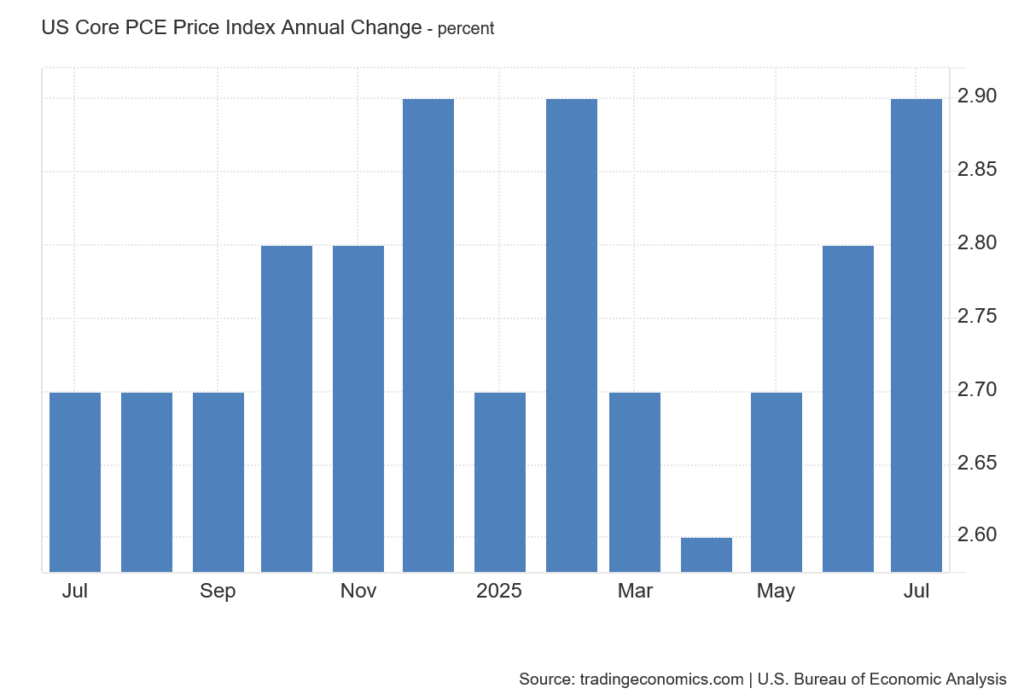
Nevertheless, prices have once again moved further away from the Fed's 2% target. The US Federal Reserve considers PCE inflation to be the most reliable indicator. However, those who expected higher inflation to undermine market confidence in further growth were disappointed.
The markets concluded that inflation is in line with forecasts and that the Fed therefore does not need to change its plans, meaning that an interest rate cut will indeed take place in September. Although Fed Chair Jerome Powell has not officially confirmed this, the markets consider it almost certain.
Waller is ready to support Trump
In this regard, Fed Governor Christopher Waller's statement reassured the markets. This candidate to succeed Jerome Powell clearly signaled to the White House that he fully supports Donald Trump's vision.
According to Waller, it is not enough to be satisfied with two interest rate cuts by the end of this year. Instead, he proposes a six-month plan that would bring interest rates to a non-restrictive level, ideally between 1.25 and 1.50 percent.
In his opinion, the risks in the labor market should not be underestimated, and the Fed should take a proactive approach, i.e., not wait for the situation to deteriorate, but act preventively. This is exactly what US President Donald Trump wants to hear. Waller has thus done everything he can to increase his chances of being nominated.
The name of the new Fed governor could be announced any day now, as it is traditional to announce the name of the Fed chairman's successor well in advance. What is certain so far is that Powell's term ends in May 2026. Waller's rapid change of opinion is commendable, given that in May all Fed members voted to keep interest rates unchanged. It remains to be seen whether this change will convince President Trump or whether he will decide to appoint someone who is completely independent of the previous Fed leadership.
Threat to Nvidia shares
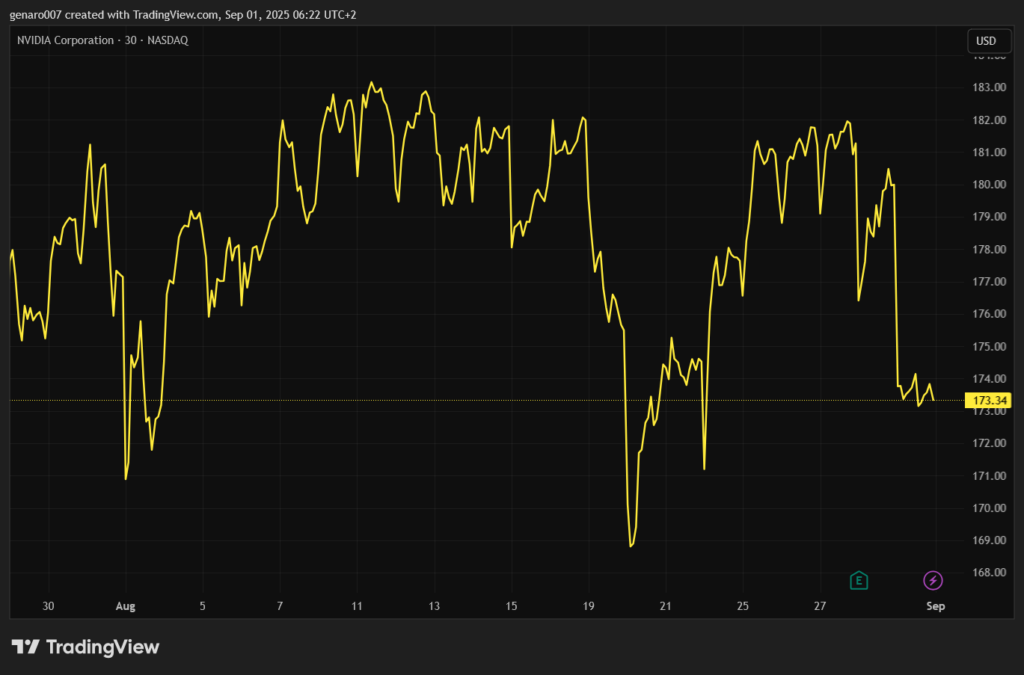
Although Nvidia's business results were very good and many of the 50 largest companies would give anything for such a year-on-year increase in sales, the market reaction was negative.
This negative attitude can be explained by the fact that investors expect a top company like Nvidia to consistently exceed analysts' forecasts. However, the semiconductor manufacturer only slightly exceeded expectations. Investors therefore took a close look at the company's report and came across a disturbing fact.
In the second quarter of 2025, just two companies accounted for 39 percent of Nvidia's revenue. Nvidia has not disclosed which companies these are, but there is speculation that they could be companies from the so-called Magnificent Seven.
Such a high dependence on two customers is a risk for any company. Companies such as Microsoft and Amazon are currently developing their own chips. Even if these attempts have been unsuccessful so far, it is not certain that this will remain the case forever. In addition to technological developments, this situation poses further risks.
Nvidia is not so much dependent on overall demand, but rather on the demand from these two customers. If, for any reason, they decide to reduce their capital expenditure (capex), this would pose a serious problem for Nvidia. In the event of a decline in demand, unsold chips could pile up at the company. An even worse scenario is that these companies could pressure Nvidia to lower prices for its major customers.
Given that Nvidia continues to generate high margins, this pressure is realistic. There are major financial players in the technology business, and the markets are currently extremely sensitive to any fluctuations. A decline in margins could, for example, lead to a significant drop in Nvidia's share price.
These are not disaster scenarios, but a realistic assessment. The heavy dependence on two customers could cause significant problems for Nvidia. Investors will therefore also be watching this statistic closely in future earnings releases. An increase in the concentration of orders would also not be good news for Nvidia's share price.
New stars on the horizon
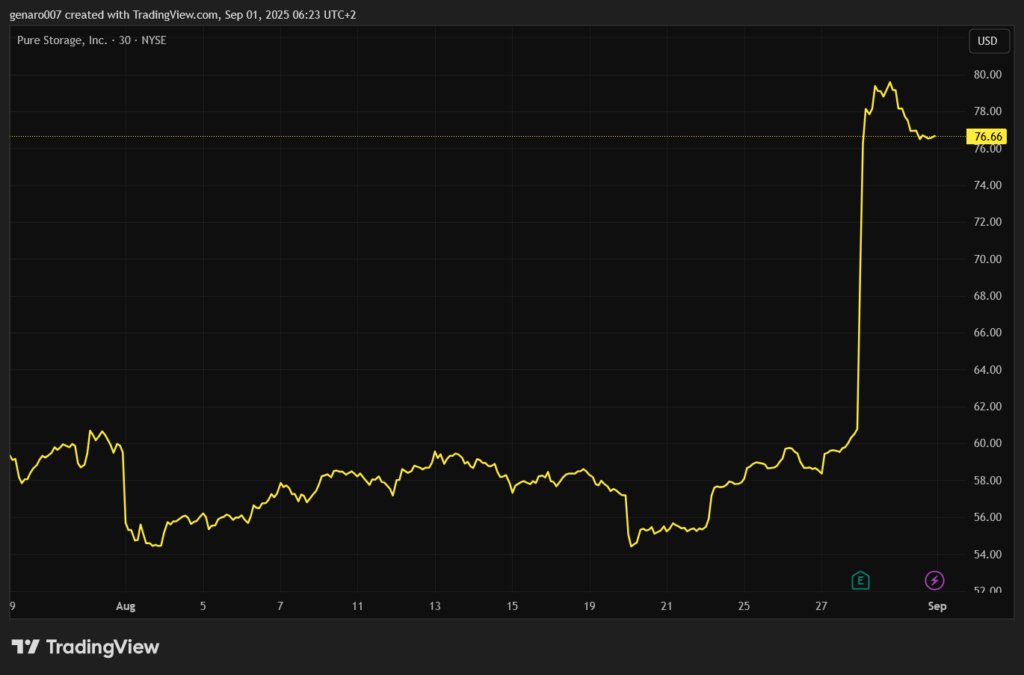
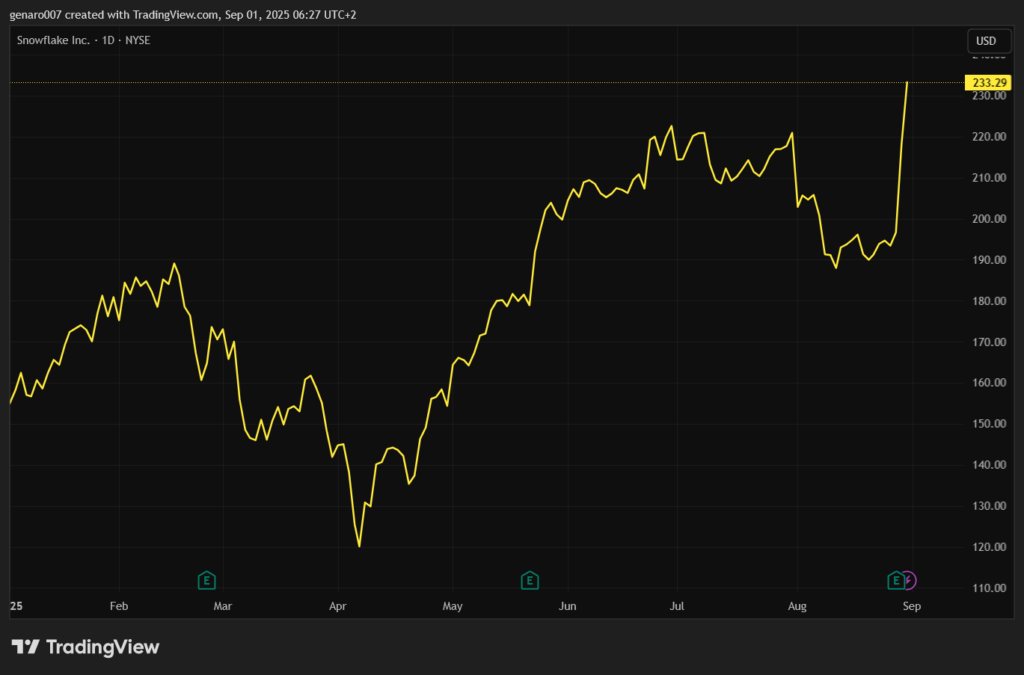
Despite the decline in Nvidia's share price, the US markets gained ground at the end of the week. How is that possible? In addition to Nvidia, other technology companies also published their results, which were very well received. These were primarily companies such as Pure Storage, which specializes in flash memory and has developed storage modules for modern data centers in recent quarters, as well as CrowdStrike and Snowflake, which focus on cloud services.
What these companies have in common is that they develop services related to artificial intelligence. While Nvidia has long been perceived as a supplier of “hardware,” investor attention may now shift to companies that can transform their businesses or even change the world with the help of Nvidia chips.
This development would be a natural continuation of the trend we saw with the advent of personal computers. Initially, hardware manufacturers were valued, but as hardware progress slowed, interest in software companies increased.
A similar scenario could now repeat itself in the field of artificial intelligence. Enthusiasts of investing in modern technologies should therefore look for other opportunities instead of putting all their eggs in the Nvidia basket.
What to watch out for this week
The start of the new week will be slow, as US markets are closed on September 1 due to a public holiday. This gives investors one last chance to recover before a challenging month of September.
September is traditionally a turbulent month on the stock markets, and this year looks particularly complicated. The most important event will be the long-awaited meeting of the US Federal Reserve, which is expected to result in the first interest rate cut this year.
In addition, there is the threat of a debt crisis in France, which is not an isolated case. Germany and the UK are also facing significant economic problems. France could therefore be the proverbial stone that triggers an avalanche.
The most important data this week will be the figures from the US labor market. We will learn the results of the JOLTS indicators, non-farm payrolls, and the unemployment rate for August. The markets expect a slight increase in unemployment, which, paradoxically, could be positive news, as it would confirm expectations that the Fed will indeed cut interest rates.
At the last minute, uncertainty was caused by a US court's decision to overturn Trump's tariff measures. The US president has not been particularly concerned by this decision so far, as he will appeal to the Supreme Court. However, this could cause a little more uncertainty in the markets, which is not exactly desirable in an already complicated month of September.