
The stock markets seem to be living a life detached from reality. They are not bothered by the fact that unemployment is slowly rising in the US and worldwide, that inflation is not fully under control, that Israel has carried out an attack in Qatar, or that Poland has shot down drones over its territory.
Gold prices continue to rise, which in itself signals that investors are looking for a safe haven. The decline in oil prices, in turn, can be interpreted as concern about future demand and thus as an indication of a possible economic recession. This list of unfavorable events could go on and on.
Nevertheless, stock markets are at record levels. Why? The simple explanation lies in the expectation that the US Federal Reserve will cut interest rates in September.
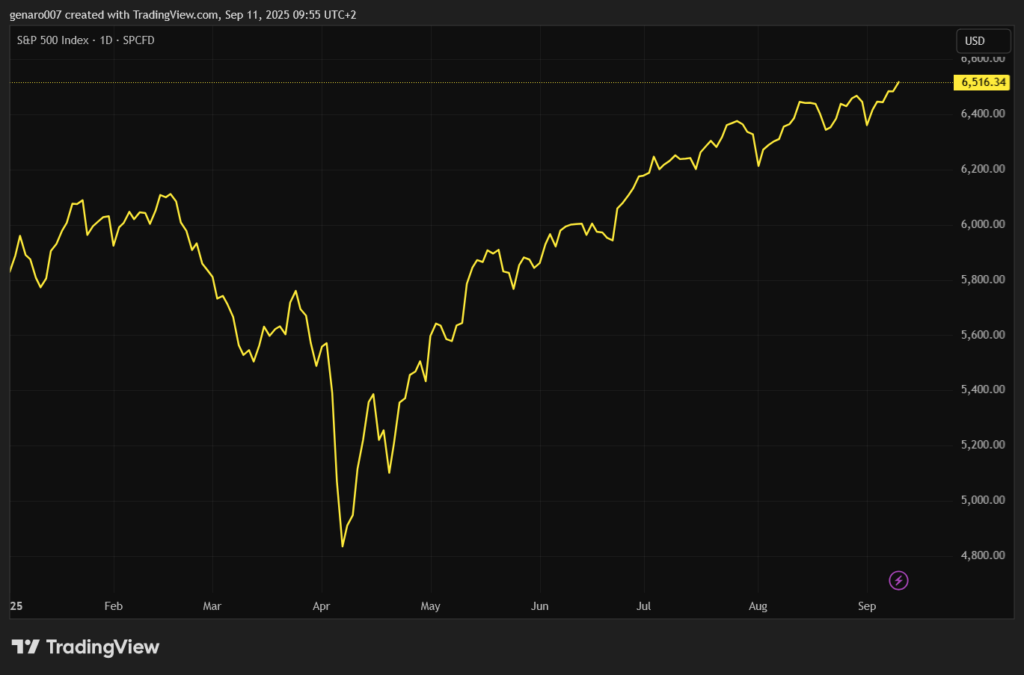
The markets believe in the omnipotence of interest rate cuts, which is the biggest risk today. Apart from the worst-case scenario, in which the Fed would not cut interest rates, it is rather risky to rely on interest rate cuts as a panacea. One swallow does not make a spring.
The outlook for interest rate cuts next year will be much more important. The Fed will update its forecast at its upcoming meeting. If it remains strongly hawkish, this could shake the markets, although any slump is unlikely to last long as Jerome Powell's term is coming to an end.
Everything could be different by May next year. The markets will certainly use this argument to put the situation into perspective if the outlook does not bring falling interest rates.
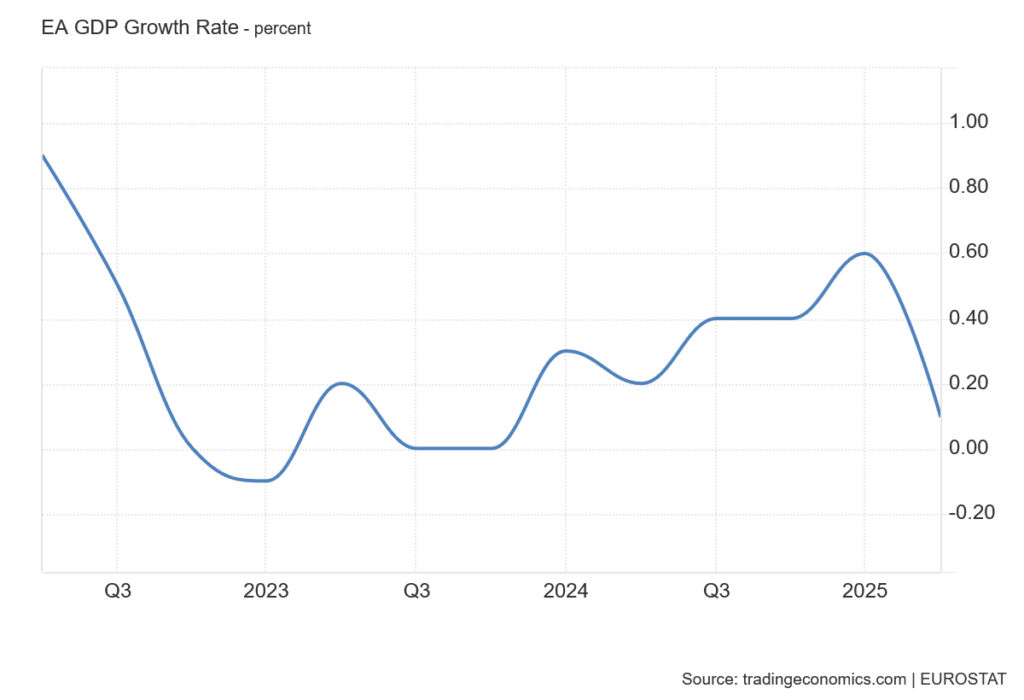
However, investors are overlooking one important point. The effect of interest rate cuts is felt with a considerable delay, and it is questionable whether we will feel it at all. A good example of this is the European Central Bank, which has cut interest rates dramatically, but this has not been enough to significantly boost the European economy.
European GDP is waiting in vain for stronger growth. Even if the Fed's forecasts were sufficiently cautious, which could further stimulate market growth, this would not solve the problem of the delay between the interest rate cut and its actual economic impact. Low interest rates help the economy, but they do not solve its structural problems.
Apple's new iPhones have failed to revive the brand
At first glance, it is obvious that the hype surrounding the launch of Apple's new iPhones and other products has significantly subsided. The launch of new iPhone models used to be one of the most anticipated events among both tech fans and celebrities.
The new iPhone 17 is thinner and, according to the manufacturer, more durable, and has an improved camera. These parameters—physical dimensions and a higher-quality camera—were decisive five years ago. Today, however, users are primarily interested in the connection with artificial intelligence.
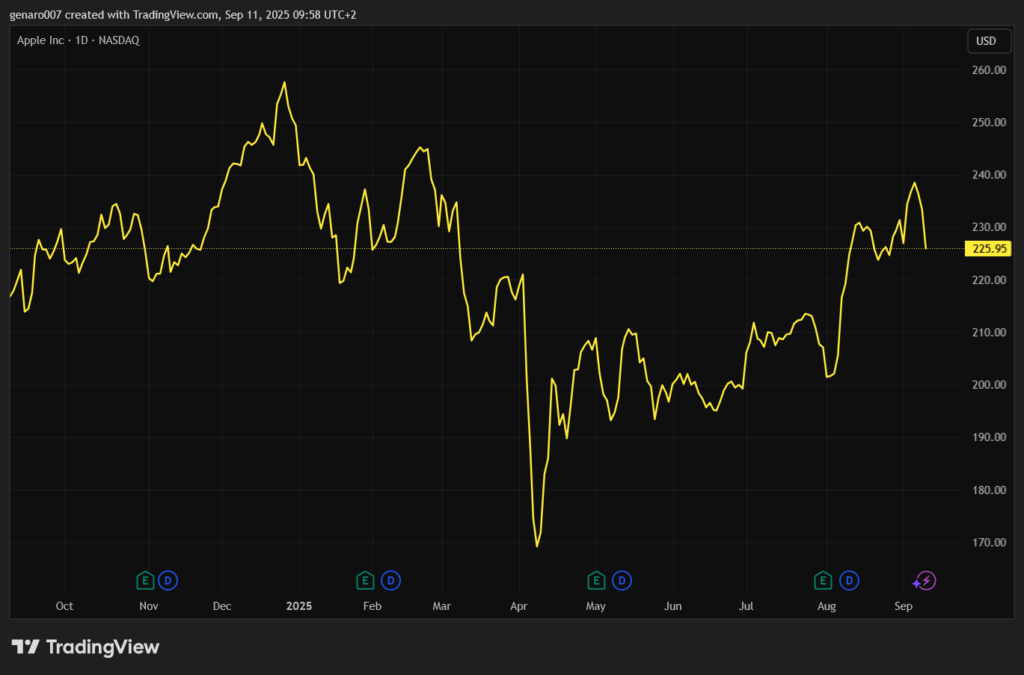
Here, Apple has once again confirmed that it is lagging behind the competition. The company has not attempted to establish its own model of artificial intelligence, and its development in this area is lagging behind. If it turns out that the company is unable to effectively integrate artificial intelligence into its devices, its “cash machine” is in danger of stalling.
Losing its position in the smartphone market would have a significant impact on its financial results, as iPhones account for about 51 percent of the company's total revenue. Investors know this. The performance of Apple shares is not particularly encouraging – last year, they rose by only 1.85 percent. Now we understand better why Warren Buffett started selling these shares, and – as is his wont – much earlier than most other investors. Apple does not have an easy time ahead.
Champagne at Oracle
Even a very old and robust technology company can surprise. Oracle, founded in 1977, is one of the giants of the technology world. These technology giants face the same challenge as Apple – constantly adapting to new technologies.
Unlike Apple, however, Oracle has taken on the challenge of artificial intelligence. Before the release of its financial results, the company achieved a market capitalization of more than $600 billion. After the results were announced, the stock price rose 40 percent. And that was despite the fact that the financial results were in line with expectations. What has changed?
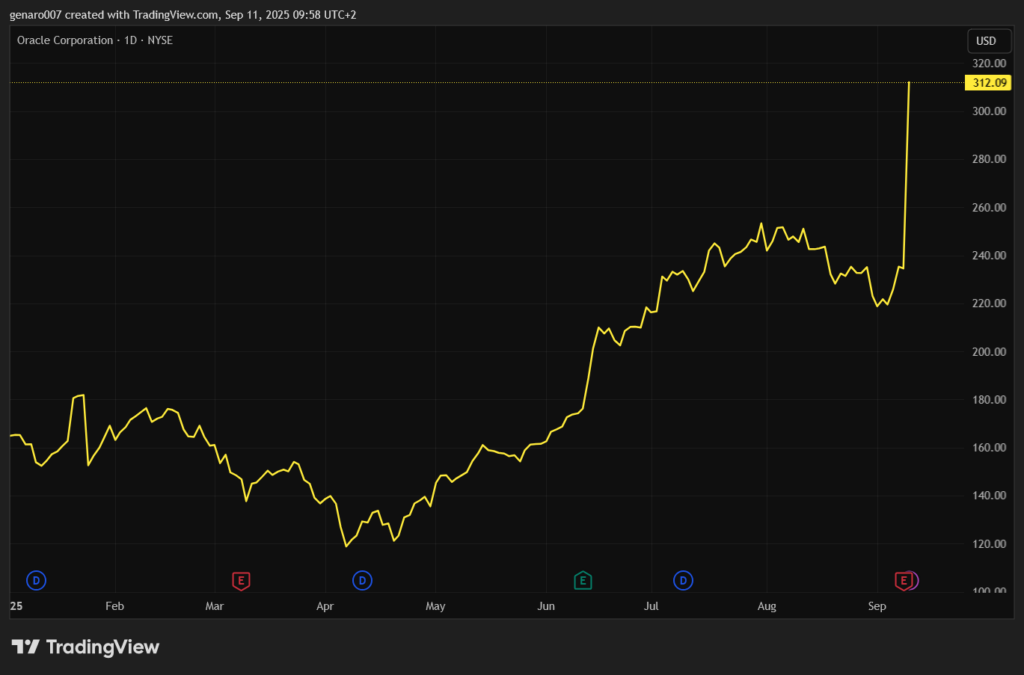
Investors are primarily interested in the outlook. And Oracle has a bright future ahead of it thanks to its Oracle Cloud Infrastructure division. This division generated revenue of $18 billion this year, representing growth of 77 percent over the previous year.
The company expects a steep rise in revenue in the near future, as it has more than $455 billion worth of orders on contract for this business segment. Oracle has signed major cloud contracts with leading players in the field of artificial intelligence, including OpenAI, xAI, and Meta. New customers are constantly being added, so it is not unrealistic to expect the order volume to exceed half a trillion dollars.
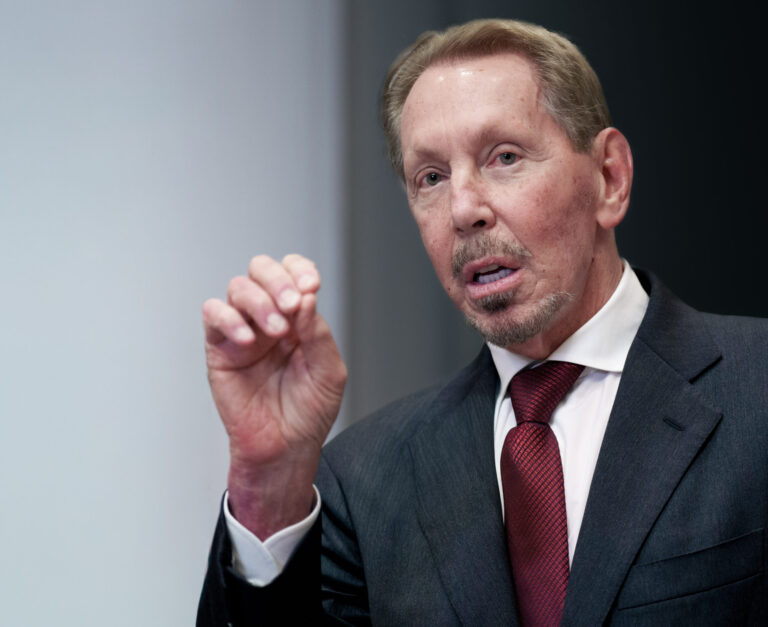
The rapid rise in Oracle's stock price had other implications beyond just delighting investors. Larry Ellison has overtaken Elon Musk in the ranking of the world's richest people. Ellison owns 40 percent of Oracle and has become $100 billion richer thanks to the rapid rise in stock prices. His fortune has thus reached a theoretical value of $389 billion, five billion more than Elon Musk.
Even though these rankings can be misleading—if Ellison were to suddenly sell his shares, his fortune would quickly shrink—the phenomenon of artificial intelligence is having a huge impact on the redistribution of wealth. This is true both among the world's richest people and among the less wealthy. Anyone who believed in artificial intelligence two years ago is certainly not disappointed today.