
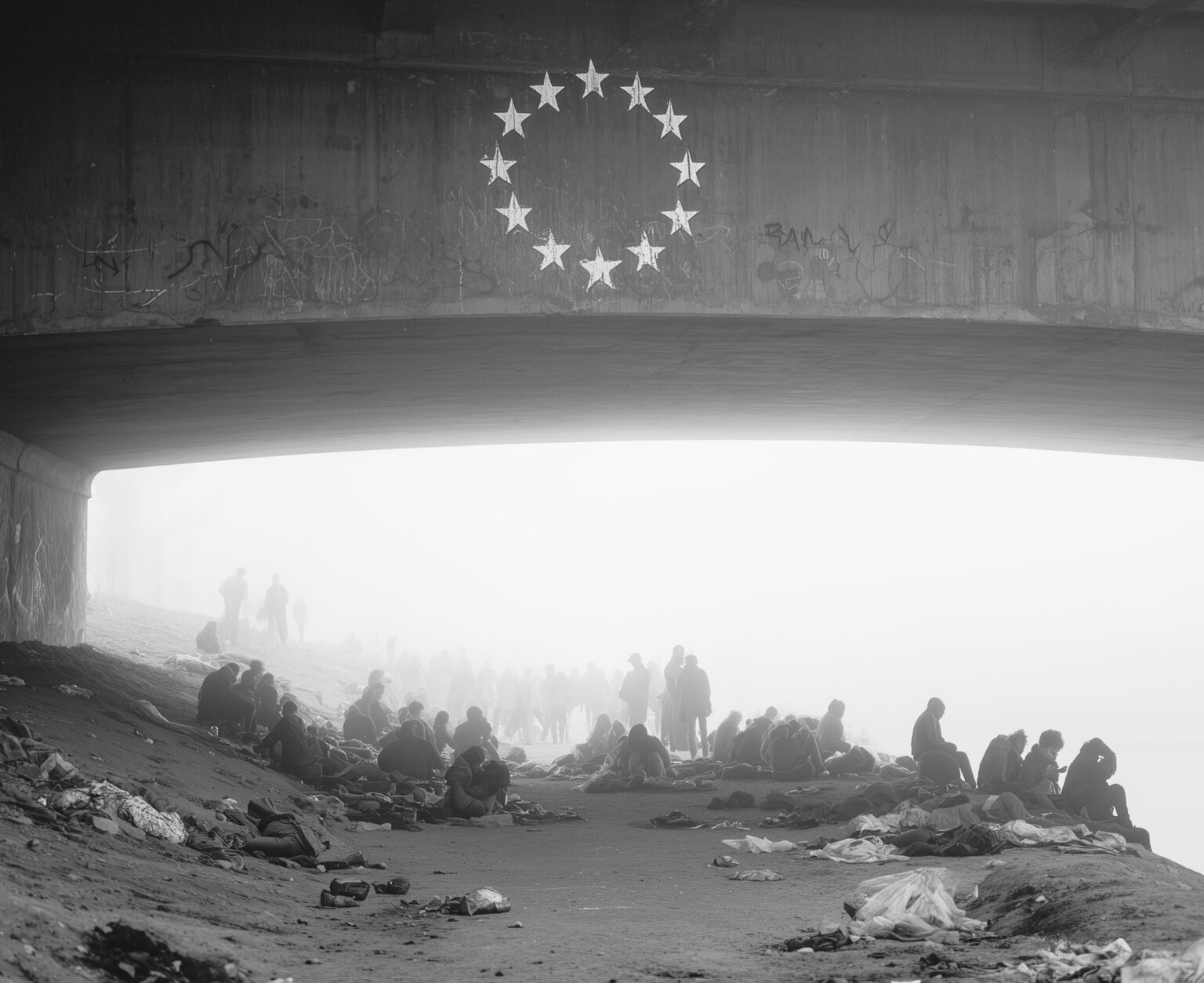
The traditional Italian understanding of home-owning as a basic aspiration, a social staple, and a foundational feature of even modest wealth isn’t ageing well. In recent years, Italian Millennials and Zoomers have vigorously lamented that the real estate market is impossible to navigate, and have blamed that on the older generations.
Italy’s housing market is certainly a textbook case of how intergenerational imbalances can become entrenched. Post-war economic growth, rapid urbanisation, and generous tax incentives enabled Baby Boomers to accumulate real estate assets on a scale unmatched by their children and grandchildren. According to the Ministry of Economy and Finance’s 2023 report, only around 6% of housing owners are under 35, while nearly 40% are over 65. The highest average values of housing wealth are also concentrated in this older cohort.
The impact of these trends on younger Italians is stark. With stagnant wages, precarious employment, and tighter credit requirements, many are locked out of the property ladder. Eurostat notes that the average age at which Italians leave the parental home is 30, the latest in Europe. Meanwhile, rents keep surging, fuelled by investor activity and the conversion of long-term housing into short-term tourist accommodation. Nomisma’s 2024 rental market survey similarly highlights how affordability pressures weigh most heavily on the young, singles, and lower-income households.
This combination of older owners holding property and younger people struggling to secure it has produced what sociologists describe as a dual housing market: one for those who entered decades ago under favourable conditions, and another for those facing inflated costs and barriers today. The result is a widening chasm in wealth accumulation between generations—feeding economic insecurity and social disillusionment as much as resentment among Italy’s youth.
Self-Defying Urbanisation
Italy’s demographic dynamics suggest that resentment might be partly unwarranted. In fact, the country’s working-age population (15–64) is projected by Istat to fall by 20% between 2024 and 2050, while the share of over-65s is expected to rise from 24% to 35%. Concurrently, Italian fertility rates remain among the lowest in Europe, and the outmigration of younger Italians accelerates. Yet, despite these demographic contractions, the demand for housing remains paradoxically intense—sustained by migration inflows and tourism.
Immigration plays a dual role in this respect. On the one hand, it provides a demographic buffer: new arrivals occupy housing left vacant by shrinking Italian families and contribute to tax bases. Southern towns in Calabria, Sicily, and Molise have experimented with hosting refugees and migrant families to counterbalance population decline. In places like Camini, migrants have breathed life back into abandoned homes and businesses. On the other hand, the drive towards urbanisation and its comforts, which sustains the aspirations of many young Italians, is hindered by intense immigration and the worsening of housing competition it generates in already tight markets.
Tourism further complicates the picture, enhancing the vulnerability of younger generations. Italy is a global magnet for travellers, with Eurostat recording 854 million nights booked via platforms like AirBnb and Booking.com across the EU in 2024 —an 18% year-on-year rise. Italian cities such as Rome, Florence, and Venice bear the brunt of this surge, as landlords opt for short-term and lucrative options. This conversion siphons supply away from long-term residents, and drives up the price of rents along with demand. It also creates seasonal volatility, where housing becomes treated more as an investment commodity than a social asset.
Overall, the interplay of low natality, emigration, immigration, and mass tourism creates a housing environment radically uneven and unstable: depopulated rural areas with abandoned stock on one side, and overheated urban markets on the other. The losers in both settings tend to be the young—priced out of cities yet reluctant to settle in rural areas still burdened by weak services and limited jobs.
Policy Shortage
Recognising the gravity of the housing crisis, both the Italian government and the EU have advanced a patchwork of legislative measures to counter it. Domestically, tax policy has long favoured property owners. The IMU exemption for primary residences effectively shields most households from annual property taxation, disproportionately benefiting older, established owners. At the same time, the flat-tax regime for landlords (called ‘cedolare secca’) has made rental income attractive, reinforcing property as a financial asset. The 2024 Budget Law raised the tax rate on second short-term rental properties to 26% (from 21%), aiming to discourage speculative use of multiple units.
Other interventions have tried to target structural shortages. Under the 2020 National Recovery and Resilience Plan, the Italian government pledged to add 60,000 student housing beds by 2026, attempting to address one of the most acute pressures facing younger cohorts. Yet implementation lags, and critics argue its scale remains insufficient compared to demand. Similarly, the government has supported initiatives like the ‘€1 homes’ scheme in depopulated rural municipalities, offering derelict housing at symbolic prices to encourage revitalisation. While useful in attracting international buyers and remote workers, these efforts often struggle to generate sustainable repopulation without accompanying investments in infrastructure and employment. Though it’s part of a wider set of initiatives, the law on mountain communities recently passed by the Italian Parliament also seems little more than a placebo, in this respect.
At the European level, housing is increasingly seen through the lens of regional cohesion. The EU has acknowledged rural depopulation as a structural risk, with funding streams under the Common Agricultural Policy aimed at revitalising ‘inner areas.’ Multipurpose service centres—involving childcare, healthcare, and digital access—have been piloted in rural Tuscany and Calabria, supported by EU and national co-financing. The European Pillar of Social Rights also affirms access to housing as a key entitlement, pushing member states to balance investment flows with social protections.
Yet the scale of intervention still pales against the depth of the problem. Without tackling the structural imbalance between housing as a financial asset and as a social good, policies risk papering over cracks. As Italy’s demographic collapse collides with the property entrenchment of older cohorts, the stakes keep extending far beyond real estate—they test the country’s social contract and its sustainability. Italian youngsters may have more options than they realise, when it comes to blaming their homelessness.
Statement
Italy’s housing crisis sits at the intersection of intergenerational inequality, demographic decline, and the commodification of space. Boomers hold the lion’s share of real estate wealth, leaving young Italians struggling against unaffordable rents and blocked from ownership. Immigration and tourism inject excessive demand into already stretched cities, while rural areas empty out. National and EU policies—from tax tweaks to revitalisation schemes—offer partial relief, but often fail to confront structural imbalances and an urbanising culture. Unless property is reimagined less as a speculative asset and more as a social foundation, Italy risks a decade-long, hard-to-reverse worsening of both demographic decline and generational fracture.