
Commentators agree: for the shutdown to cause real economic damage, it would have to last until at least mid-October. US politicians could opt for a wait-and-see approach, assuming that pressure on the government will only increase in the second half of the month.
This is a dangerous game, as fears of slowing economic growth and inflation triggered by new tariffs remain. However, the markets once again paid little attention to this: both US and European indices continued to rise. Bitcoin reached a new all-time high (ATH) over the weekend.
And as if the situation weren't complicated enough, the price of gold also rose. This poses an initial problem in the current situation. Gold should not rise so sharply when stock indices – like other risky asset classes – are reaching record highs. Something doesn't add up here: either the stock market is right or the gold market is.
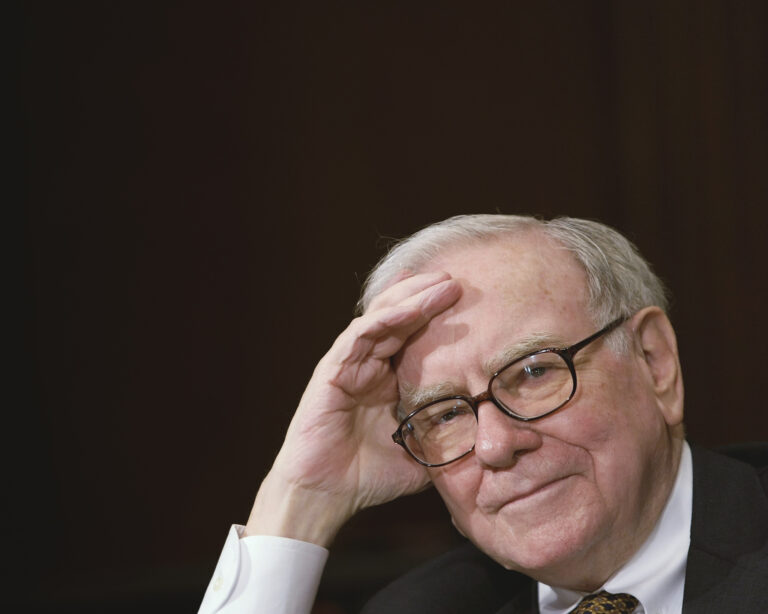
Buffett's indicator: warning of a bubble
This imbalance in the valuation of the stock markets is particularly evident in the so-called Buffett indicator. This is a simple calculation that compares the market capitalization of US companies to US GDP. If the indicator is below 70 percent, the markets are considered undervalued. If, on the other hand, it exceeds the 100 percent mark, the markets are very expensive. Today, the value is around 220 percent.
According to this classic benchmark, the markets are massively overvalued. Critics argue, however, that the indicator was particularly relevant in the industrial era, when the stock market was dominated by traditional companies. Today, in the age of technological revolution driven by artificial intelligence and cloud services, the economy has accelerated significantly. Most US technology companies operate globally, and their share of US GDP is not as large as it was when the indices were dominated by companies whose core business was domestic.
These arguments carry weight, but they do not change the fact that stocks are extremely expensive today. Even technology companies have to generate real revenue. A good example is the valuation of OpenAI.
Although this company is not yet publicly traded, its value is estimated at $500 billion, making it one of the twenty largest US companies. At the same time, it is the largest privately held US company.
It is clear that the ChatGPT language model has a bright future, with a growing number of subscribers and a global brand. Nevertheless, OpenAI's annual revenue is only $13 billion. This is the lowest figure in the ranking of the twenty largest US companies.
OpenAI needs to significantly increase its revenue to justify such a high valuation. This will not be an easy task, because given the growing competition among language models, raising subscription prices is not necessarily the best solution.
The company will therefore have to find new business models to increase its revenues. While it is very likely that it will succeed in doing so, this does not change the fact that OpenAI is currently extremely highly valued. The markets are thus clearly showing signs of overheating.
Trucks as a barometer of the economy
One reason for the high prices of American stocks is certainly the boom in artificial intelligence. However, the overall economic situation cannot be reduced to this alone. AI reflects the dynamics of economic progress, but the real economy is more complex. It is precisely at this level that a slowdown can be seen.
A typical example is truck sales. This indicator is very reliable: if sales figures rise, it is a sign of a healthy economy. Goods circulate quickly, companies are producing at full capacity, and trucks wear out and need to be replaced.
Transport companies have accurate figures and insights into the real economy. If the outlook is good, they do not hesitate to invest in renewing their fleets. If it is poor, the number of trucks sold declines. Looking at the development of truck sales in the US over the last five years, the situation is far from as optimistic as the steady rise in Nvidia's share price.
Intel shares rise again
Intel shares have slowly but surely become a candidate for the stock of the year in 2025. This technology giant, which many had already written off, scored again this week. Intel is currently attracting investors. After the US government, Nvidia, and Japan's SoftBank got on board, more positive news followed. This time, it was not about the entry of another investor, but speculation that long-time direct competitor AMD could become a customer.
Even if the size of the contract is not known exactly, such a large order could significantly support the loss-making chip division. Intel could thus soon be back in the black.
Such a collaboration would also make sense from AMD's perspective. The company currently produces most of its chips at Taiwanese manufacturer TSMC. Relocating part of its production to the US would help AMD in the eyes of Donald Trump, who would certainly welcome this “patriotic effort.”
Intel shares responded to this speculation with another seven percent jump in price. Since the beginning of the year, Intel has gained 83.7 percent. If these impulses are soon reflected in the business figures, the end of the price rise is still a long way off.
Where is the Bitcoin price heading?
As the US Bureau of Labor Statistics is closed due to the shutdown, we will have to get used to the lack of macroeconomic data for a short time. This week, only the detailed minutes of the last Fed meeting will be published.
In the absence of statistics from the US labor market – currently the most important for the US Federal Reserve – investors will pay closer attention to figures from the Canadian labor market. The unemployment rate there stands at 7.1 percent. If it continues to rise, this would confirm the weakening labor market across North America.
However, the lack of macro data will not stop stock market trading. One chart that will be closely watched is the development of the Bitcoin price. It reached another record high over the weekend and is currently trading at around $123,500.
However, this may not have been the last record high this month. A large part of the crypto scene is betting that the peak of this halving cycle will be reached on October 17-18. So things could still get very turbulent in relation to Bitcoin. If it manages to break through the $130,000 mark this week, a new wave of FOMO could set in for the most famous cryptocurrency.