
The war in Ukraine has changed the image of modern warfare. The icons of the last century—expensive tanks, supersonic fighter jets, and huge aircraft carriers—have lost some of their luster. Cheap, quickly manufactured drones have entered the scene, capable of disrupting supply routes, blinding sensors, or threatening infrastructure—all at a fraction of the cost of a single fighter jet.
This is not just a tactical shift, but a strategic change: conflict is turning into a race between production and countermeasures, a competition between improvisation and defense. Defense is thus becoming a key issue – whether in the form of jammers, sensors, or anti-drone weapons.
Building a drone defense system is not only a technical and strategic problem of what and how to protect, but above all an economic one. Who will pay for it and how will the subsequent operation of the new line of defense be financed?
Intuitive but unclear vision
The idea of a drone defense system is intuitive and easy to understand. The aim is to create a system for detecting, tracking, and neutralizing drones on the eastern borders of the EU – from the Baltic Sea to the Black Sea, a distance of around 3,800 kilometers.
The initiative comes from the Baltic states (Lithuania, Latvia, Estonia), Finland, Poland, Romania, and Bulgaria, which are responding to the Russian threat. This sounds appealing, but there are also objections. Critics argue that the drone wall should primarily protect European airports, which are most at risk from drones.
Further doubts concern the effectiveness of the wall. Despite intensive efforts to strengthen drone defenses, large numbers of Russian drones continue to enter Ukraine. This experience shows that even a multi-layered defense allows up to 30 percent of drones to pass through, which increases maintenance costs.
The fundamental problem is the vagueness of the project. When we ask how much it will cost, we encounter the question of what exactly it should include. There is political consensus on the need for a defense against drones, but the specific design remains unclear. Given this vague task, it is no wonder that there are doubts about the success of the entire project.
Financial question mark: How much will it cost?
If we put aside the uncertainties surrounding the project and focus on the finances, we find that it is currently impossible to determine a final price. Estimates range into the billions, but these are very rough assumptions.
However, EU representatives are not deterred by this. Although they do not know exactly what the drone wall will entail and how much it will cost, they have the funds for this project. At least on paper.
In March 2025, the ReArm Europe Plan was presented, which has the potential to mobilize up to €800 billion for defense. Part of this is the Security Action for Europe (SAFE) instrument, which aims to strengthen the defense capabilities of Europe as a whole.
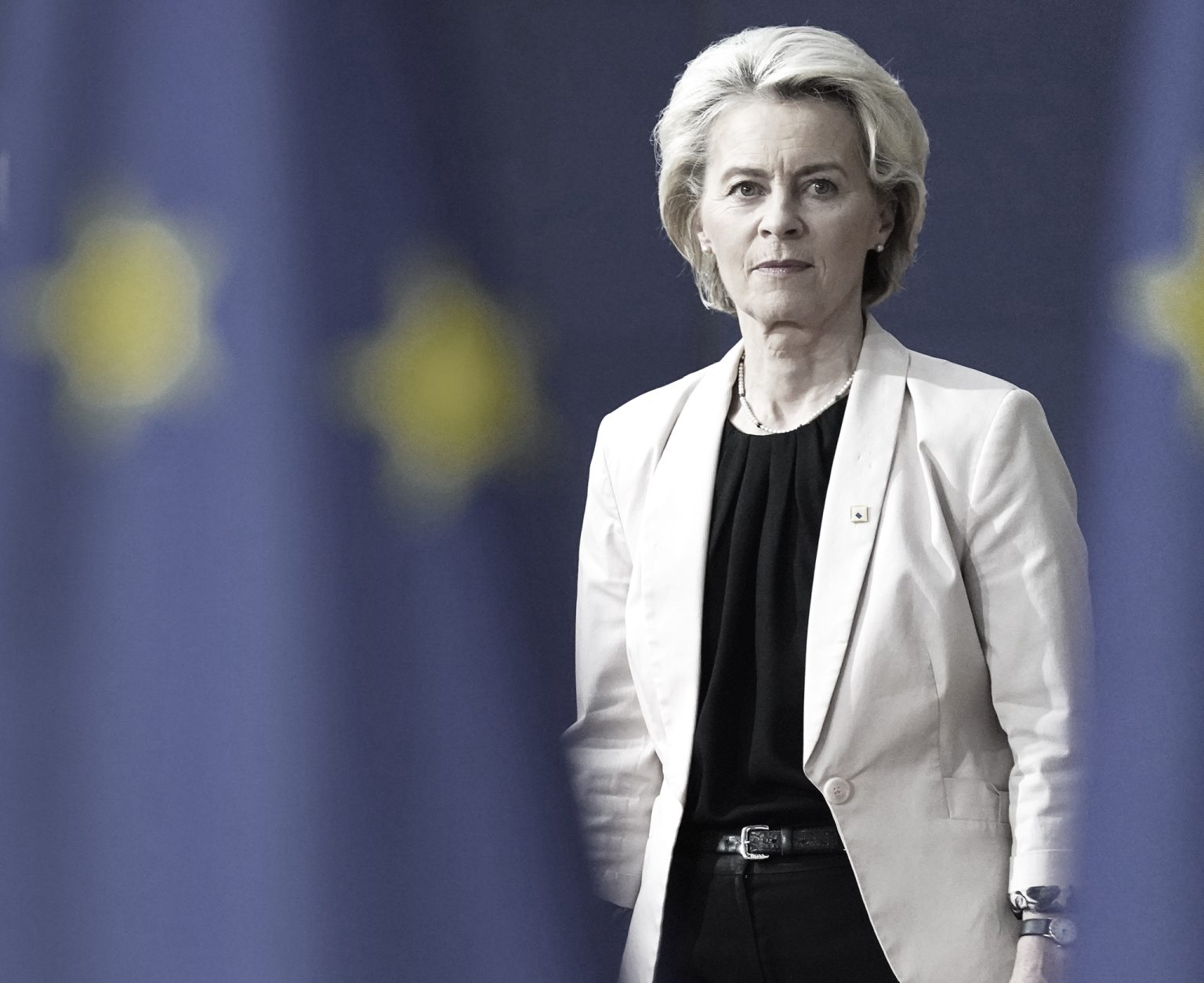
Up to €150 billion has been earmarked for this initiative, which will also finance the drone wall. Such a large sum could also cover other defense projects. According to Ursula von der Leyen, the funds have been made available – member states only need to draw up concrete national defense plans in order to access the funds.
European debt is rising
The SAFE program is based on the NextGenerationEU model, which was designed to aid recovery from the COVID-19 pandemic. This program, which received €807 billion, helps us understand how SAFE will work.
Under NextGenerationEU, the Union raised funds by issuing joint bonds (Eurobonds), which are divided into grants (€407.5 billion, which the states do not have to repay) and loans (€386.4 billion, which are repaid by the individual countries).
These bonds are to be repaid between 2028 and 2058, primarily through new EU own resources such as the digital tax or emission allowances. This plan met with resistance even during the pandemic. Critics argued that joint debt would lead to a “stealth federalization of the EU,” as the liabilities would have to be repaid regardless of the will of the nation states. Less indebted countries such as Denmark warned that joint debt would harm their economies.
Another objection concerned the use of the funds. Italy, for example, used most of the funds to renovate its railways, which was not a key priority in the fight against the pandemic. A similar risk exists with SAFE: the funds can be spent on various projects, so the drone wall may not be a real priority.
Furthermore, NextGenerationEU was supposed to be something extraordinary, but five years later comes SAFE—another massive joint debt project. Instead of resolving national debt, the EU plans to take on more debt. The main argument for Eurobonds is that the Union as a whole has a good rating, which allows it to borrow at lower interest rates than indebted countries such as France or Italy.
Dispute over loans versus grants
The Security Action for Europe mechanism is very similar to the NextGenerationEU program, although its details are not clearly accepted by all member states. France and the Baltic states, for example, are pushing for SAFE funds to be not only loans but also grants that states do not have to repay. This would facilitate the financing of projects such as the drone wall, especially for smaller economies.
Germany, on the other hand, is pushing for the funds to be used primarily for national defense projects, which would make a joint initiative such as the aforementioned wall more difficult. The disputes over the financing and design of the SAFE program distract from the crucial question: Can the drone wall deter Russia? Will its technical level be sufficient to ensure the protection of the European population?
Despite these disputes, it is good news that the EU has sufficient creditworthiness to borrow €150 billion. However, the technical implementation of the drone wall remains a challenge. The bad news is that debt is just deferred taxation.
The next generation of Europeans will therefore not only be faced with repaying government debt, but also with the burden of shared European obligations. The old continent may be able to build a wall against drones, but it will find it difficult to build a dam against its own debts.