This paradox also influences the direction of the award itself. The laureates are predominantly theorists of efficiency, growth, and market equilibrium, i.e., principles that keep the monetary order intact. The prize, which claims scientific independence, originated from an institution whose mission is to maintain confidence in the stability of money and in the order that markets assume.
From Tinbergen to Hayek
The chronology of Nobel Prize winners in economics tells us above all how this multidisciplinary science perceives itself. The first winners in 1969 were Ragnar Frisch and Jan Tinbergen for the development and application of dynamic models for the analysis of economic processes.
These first laureates set the direction of economics towards rigorous scientific theory. Tinbergen was one of the main pioneers of econometrics. A year later, economist Paul Samuelson was awarded the prize. He perceived it as a universal system of laws, which is very similar to physics.
A turning point in this scientific economics and in the approach to the prize came in 1974, when Friedrich August Hayek and Gunnar Myrdal were jointly awarded the prize. Each of these economists took a completely different approach to economics.
Myrdal was a Swedish social democrat, an advocate of state intervention, equality, and social planning. Hayek, on the other hand, represented a liberal belief in spontaneous market order. The joint awarding of these two opposites showed that economics is not only an objective science, but also a field of ideological disputes. Economists cannot be separated from their beliefs—every model carries with it a certain idea of how the world should work.
However, after the awarding of the economist and philosopher Hayek, the academic community once again leaned toward a mathematical conception of economics. It began to seek certainty in models and equations once again. Even this vision of economics as a purely theoretical discipline did not last long.
In recent years, economics has taken a different direction—toward empirical data, field experiments, and the methodology of causal relationships. In fact, this has only reopened the old epistemological question: what is the starting point of knowledge – model or experience?
This brings us to perhaps the most interesting point in the whole search for the meaning of the Nobel Prize in Economics. In an ideal world, an economist should be someone who can analyze the economic situation excellently and find practical solutions. The development of the awards only confirms this approach.
Economics should not be just an abstract science, but also a practical discipline that should be applied in the economic management of states and companies. So how are the laureates, who are mostly academics, succeeding in changing the world?
A country with three Nobel Prize winners and zero growth
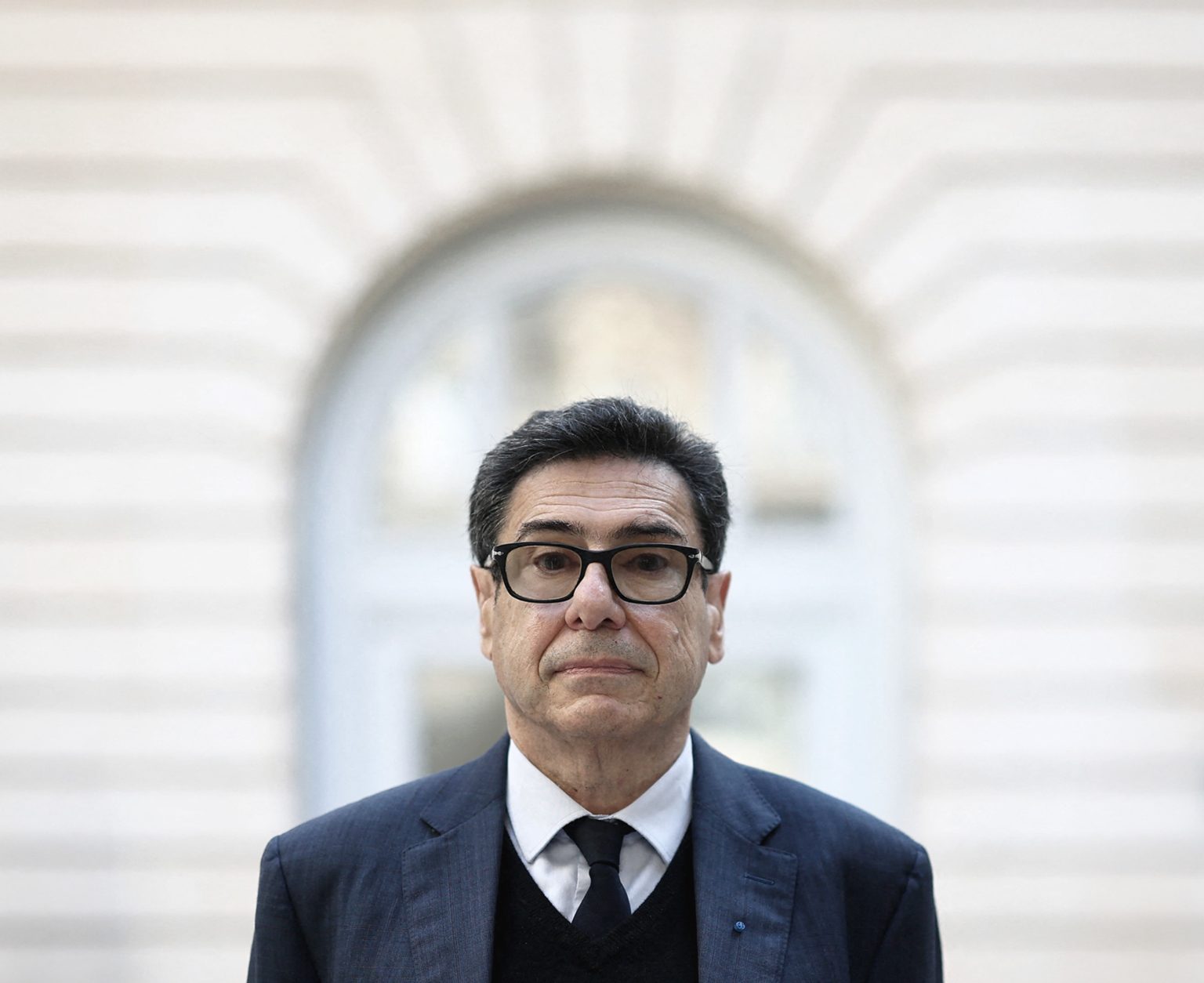
Apart from the US and the UK, France is another country that stands out in terms of the number of Nobel Prize winners in economics. Recently, three French economists have won this prize: Jean Tirole, Esther Duflo, and Philippe Aghion. The latter became the last laureate in 2025 for his theory of sustainable economic growth through creative destruction.
All three French economists conducted very precise research, which is also very practical. Tirole sought a balance between market power and state regulation. Duflo examined how specific interventions can alleviate poverty. Aghion shows that growth is the result of constant innovation and creative destruction.
French economists are thus looking for ways to innovate along the lines of American technology companies while protecting the Nordic social and economic model.
French economics thus appears to be a laboratory for the best of economic thinking. If GDP performance and public finance management were determined by the number of winners of this prize, France would be an economic powerhouse experiencing constant economic prosperity.
However, the reality is different. France is in a deep crisis, caused primarily by a poor understanding of economic principles. A debt-ridden state, growing inequalities, stagnant growth, and constant tension between the public and private sectors show that even countries with the highest theoretical performance are unable to resolve their practical contradictions.
It is a paradox that captures the very nature of economics: a discipline that can describe the world but finds it difficult to change it. Perhaps this is both the magic and the weakness of economics. It can measure, explain, and evaluate, but rarely understand itself. And so, while economists receive Nobel Prizes, their nations learn to live with the paradoxical economic consequences of their theories.